
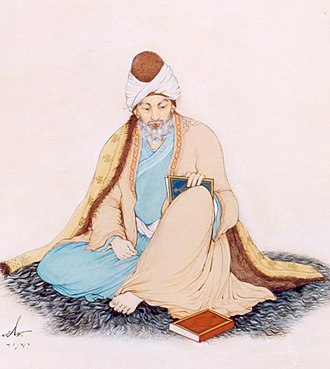
Rumi
Rumi (1207–1273)
Persian poet. Sufi mystic. The man who turned longing into language.
Rumi didn't write to teach. He wrote to transform. His poetry is ecstatic, raw, and relentlessly honest—about love, loss, God, and the human condition. He believed that words could crack you open, that beauty was a form of truth, and that the soul's real work was learning how to surrender.
Eight centuries later, his lines still stop people cold. Because he wrote for the part of you that feels too much, thinks too deeply, and refuses to settle for surface-level answers.
If you've ever felt like the world is too loud and your inner life too quiet—or the reverse—this collection is for you.
Why Rumi Still Matters
Rumi wrote during the Mongol invasions. His world was collapsing. He lost his teacher and spiritual guide, Shams of Tabriz, under mysterious circumstances—possibly murdered. And instead of retreating into grief, he poured it into poetry.
He believed that suffering could be alchemized. That love wasn't a feeling—it was a practice. That the divine wasn't distant—it was inside you, waiting to be recognized.
His work isn't about transcendence through detachment. It's about transcendence through feeling everything—and finding clarity on the other side.
This collection is for people who do the same.
Related Authors You Might Like
- Hafez — Persian poet, mystic love, wine as metaphor for divine intoxication
- Khalil Gibran — Lebanese-American poet, mysticism, love and pain as teachers
- Ralph Waldo Emerson — Transcendentalism, self-reliance, the divine in nature