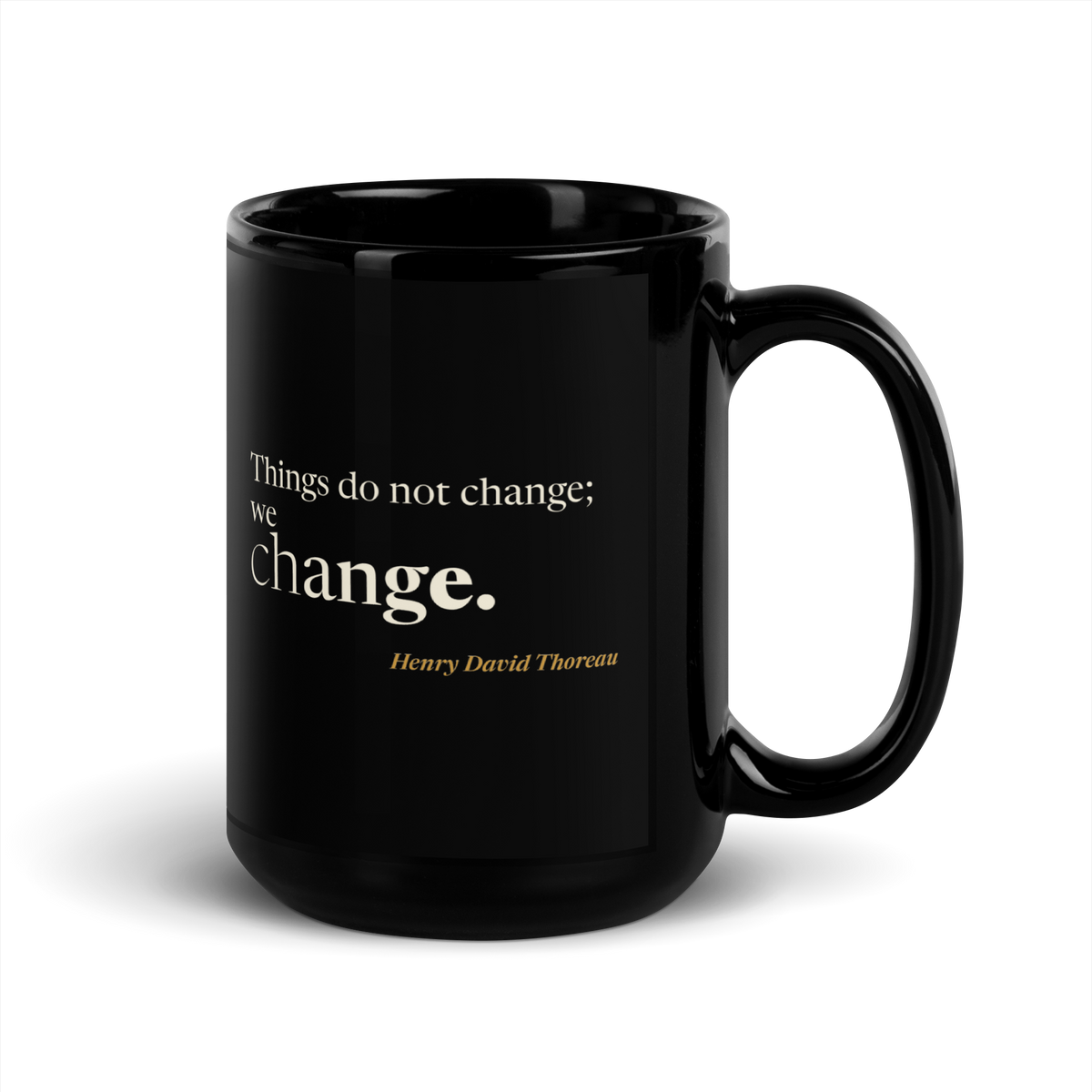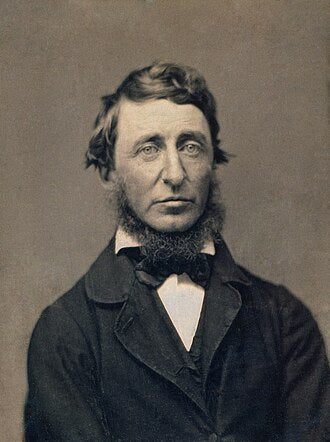
Henry David Thoreau. Photograph, c. 1856. Public domain.
Henry David Thoreau
Henry David Thoreau spent two years, two months, and two days living deliberately at Walden Pond — and produced one of the most consequential books in American literature and an essay that changed the course of nonviolent resistance worldwide.
Words We Carry
Every quote here is traced to a documented source. How we verify →
“Not till we are lost…do we begin to find ourselves…”
Walden — “The Village” (1854)
“The cost of a thing is the amount of what I will call life which is required to be exchanged for it…”
Walden — “Economy” (1854)
“Our truest life is when we are in dreams awake.”
A Week on the Concord and Merrimack Rivers — “Wednesday” (1849)
“Dreams are the touchstones of our characters.”
A Week on the Concord and Merrimack Rivers — “Wednesday” (1849)
About Henry David Thoreau
Henry David Thoreau went to Walden Pond because he wanted to see what was actually necessary and what was just habit. He built the cabin himself on land Emerson lent him, and he spent two years, two months, and two days working out the answer. He also walked to his mother’s house for Sunday dinner regularly. This is not a contradiction — it is the point. Walden was an experiment, not a retreat. Thoreau had a Harvard degree, worked as a surveyor to pay his bills, and had already improved his family’s pencil business by researching German manufacturing techniques. He was a man who engaged with the world precisely enough to know where it was wasting him.
The night he spent in jail in 1846 rather than pay a tax he considered support for slavery and an unjust war was not a dramatic gesture. It was a logical consequence of a position he had already worked out — that individual conscience is not relieved of its obligations just because the law says otherwise. Civil Disobedience, published three years later, laid that argument out plainly. Gandhi read it and built a movement. Martin Luther King acknowledged Thoreau as a philosophical source. That is a direct, documented chain from one night in a Concord jail to two of the most consequential acts of nonviolent resistance in modern history. Thoreau did not know any of that was coming. He just refused to pay.
What the reader inherits from Thoreau is a particular quality of reproach — not cruelty, but a refusal to let you off the hook. The cost of a thing is the amount of life required to be exchanged for it. That sentence from Walden is not a metaphor. It is an accounting tool, and it works on whatever you point it at. Thoreau’s questions have the quality of things you already knew but had been successfully avoiding. He does not answer them for you. He just makes it harder to keep not asking.
The Work
From the Journal
Walden Was an Experiment. Thoreau Published the Data.
On what Thoreau was actually testing — and what the results showed.
ReadHenry David Thoreau on Getting Lost to Find Yourself
The question Thoreau kept asking — and why it still doesn’t have an easy answer.
ReadHenry David Thoreau: The Man Who Went to the Woods to Find Out What Mattered
Two years, two months, two days at Walden. What he was actually testing.
ReadThe Soul Becomes Dyed: What Marcus Aurelius and Thoreau Actually Said
Two writers, a century apart, on the same idea. What they wrote vs. what circulates.
ReadThoreau Didn’t Escape Society. He Was Testing a Theory.
He didn’t go to Walden to escape. He went to test a hypothesis about how little was actually necessary.
ReadThoreau Did Not Validate “Quiet Quitting”—He Warned Against It
When “quiet quitting” went viral, Thoreau’s line about “quiet desperation” was shared as permission to coast. But read in full, Walden was never an excuse to disengage—it was a radical demand to live deliberately.
ReadIn Their Orbit