

Model photo created with AI. The printed line is real.
Words with provenance — verified literary quotes on apparel & gifts
I love my life’s dark hours, in which my senses quicken and grow deep.
Rainer Maria Rilke
Every line is verified and linked to its source.
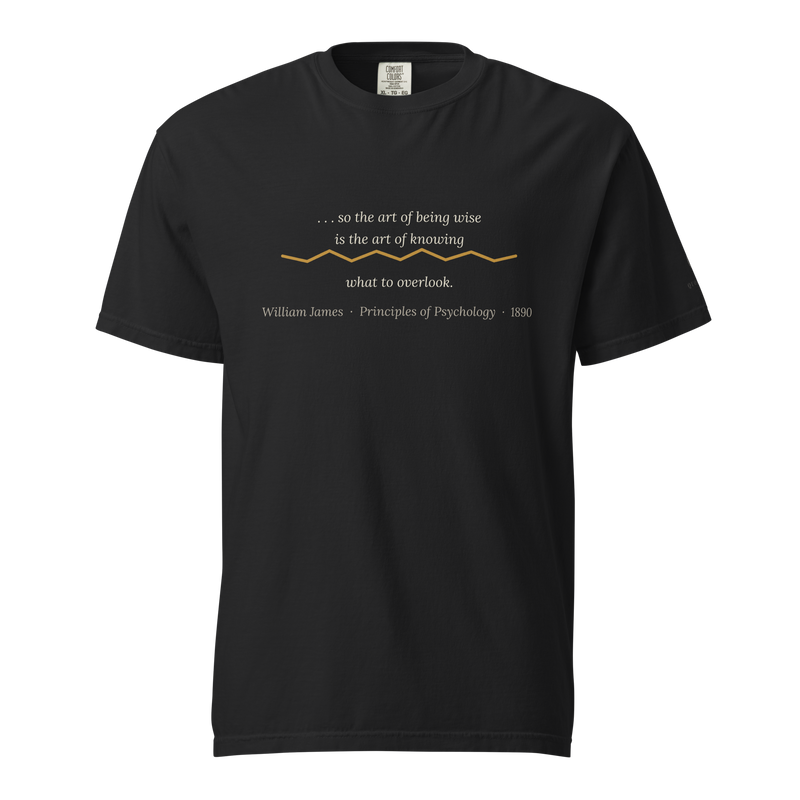
The Gold Seam
“…so the art of being wise is the art of knowing what to overlook.”
William James, The Principles of Psychology, Vol. II, 1890. Kintsugi gold seam — the break, repaired.
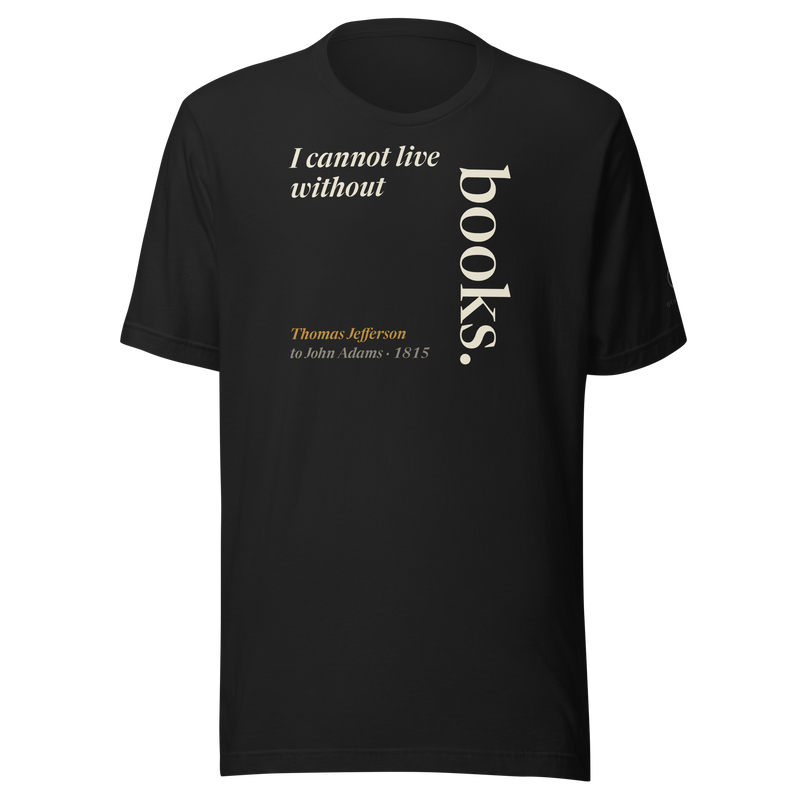
The Spine
“I cannot live without books.”
Thomas Jefferson, letter to John Adams, 1815. The spine — what a book is when you need one.
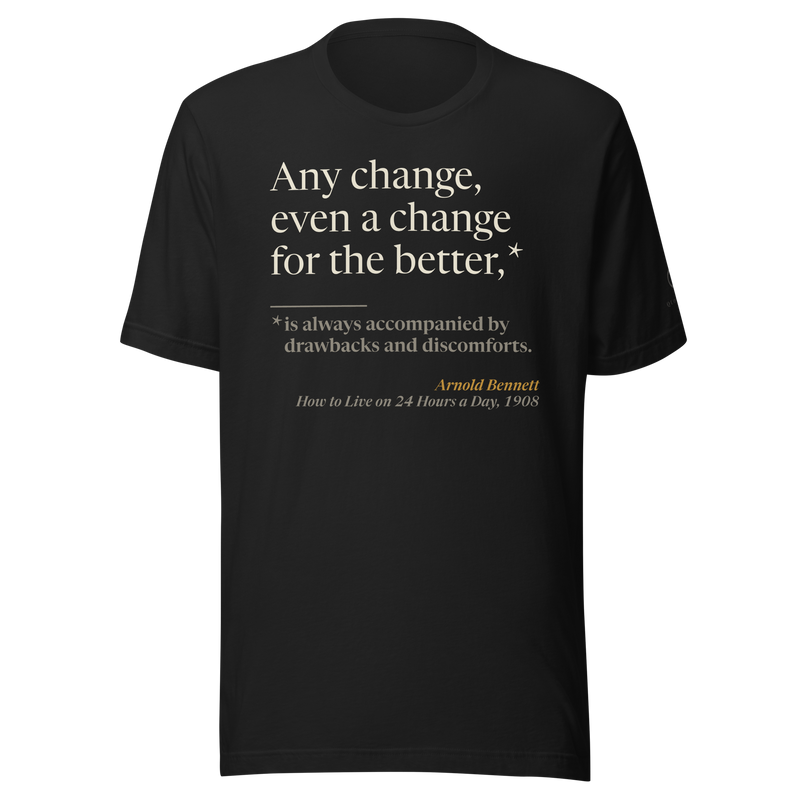
The Fine Print
“Any change, even a change for the better, is always accompanied by drawbacks and discomforts.”
Arnold Bennett, How to Live on 24 Hours a Day, 1908. The asterisk you didn't read.
SEVEN SHELVES
Not categories. States of mind — pick the one that sounds like you.

When the outcome isn’t yours
Stoic Wisdom
When you’d rather sit with the ache
Dark Romanticism
When you’ve read the fine print
The Heretics
When a question won’t let go
The Curious Mind
When you need less noise
The Quiet Mind
When it’s late, and honest
The Inner Life
When the crack is the point
Zen PhilosophyNot sure which?
Find Your Line →Model photos created with AI. The printed lines are real.
FROM THE SHELF
Three lines, and the books they came from.


“…re-examine all you have been told…”
Walt Whitman · Leaves of Grass, 1855 · VERIFIED
Shop the tee · $32 →
“Not till we are lost…do we begin to find ourselves…”
Henry David Thoreau · Walden, 1854 · VERIFIED
Shop the tee · $32 →From the journal

Gifts for Someone Who Won't Quit — Lines That Are Really Theirs
For the person who keeps getting back up: four lines that are really from the people they're credited to, each with the page, the year and who said it.
Read more
Oscar Wilde Gifts — Only Lines He Actually Wrote
For the friend with the sharp tongue: three Oscar Wilde lines he actually wrote. Each one comes with the work, the year, and who says it.
Read more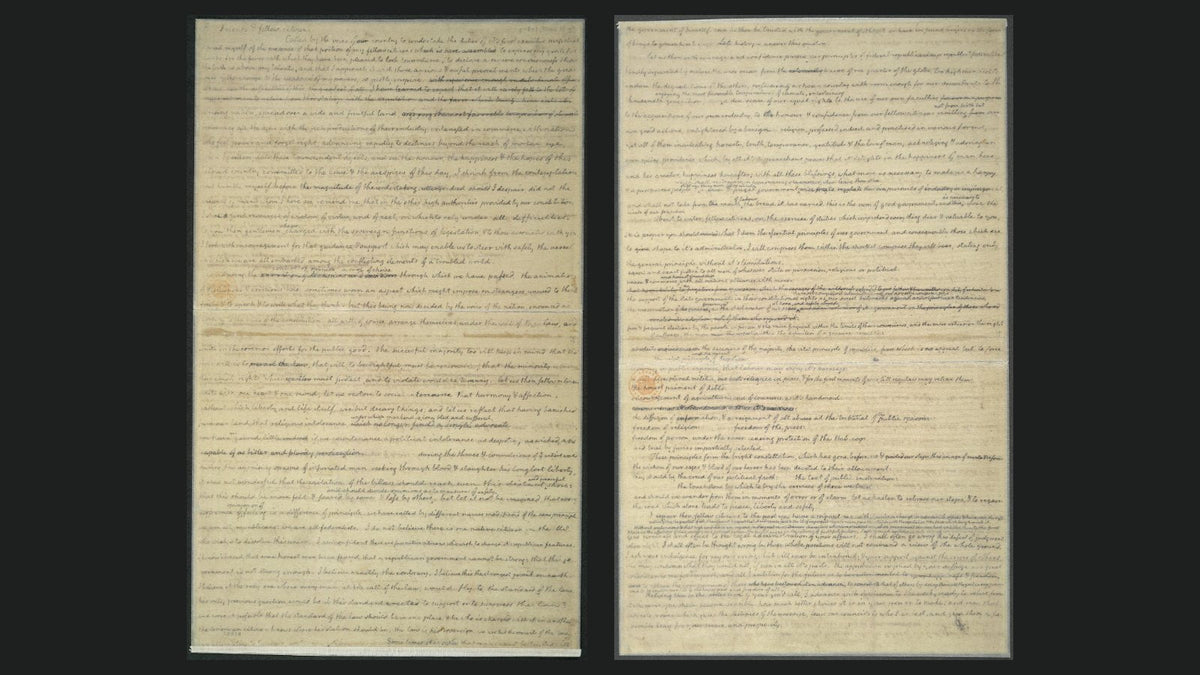
Jefferson Never Said It: The Fake Founder Quotes You’ll See Before Election Day
“When the people fear the government” isn’t Jefferson. Neither are four other founder lines you’ll see this election season. Here’s where they came from, and what the founders actually wrote.
Read moreGOOD TO KNOW
Questions, answered
Are the quotes actually verified?
Yes — that’s the whole point. Every line is traced to its primary source: the actual book, the edition, and for translated work, the translator and year. If we can’t verify it, we don’t print it. When scholarship is genuinely divided, we say so on the product page. We’d rather lose the sale than put the wrong name under a line.
Why is this quote credited to someone I’ve never heard of?
“Be the change you wish to see in the world” traces to Arleen Lorrance in 1974, not Gandhi. “Do not go where the path may lead…” isn't Emerson — it's a paraphrase of Muriel Strode, 1903: "I will not follow where the path may lead, but I will go where there is no path, and I will leave a trail." When the true source turns out to be an unexpected name, that’s not us getting it wrong. That’s verification doing its job.
What do you do with disputed or misattributed quotes?
We sort every quote into one of three buckets. Verified: traced to a primary source, clean attribution. Commonly attributed: widely linked to a name without a solid source. We’ll only produce it if we disclose that. Disputed: real evidence of misattribution. We don’t sell it under the false name, full stop.
What does “Words with Provenance” mean?
Provenance is the documented origin of a thing — where it came from, and how you know. For us it means every line on every product can be traced back to a real source. If we can’t show you where a quote came from, we don’t sell it.