
Art of Being Wise — Kintsugi Tee
James spent twelve years writing The Principles of Psychology — and what he concluded about the mind surprised him. It wasn't that brilliant thinkers processed more. It was that they filtered better. Attention, he argued, is the act of choosing what not to think about.
William James
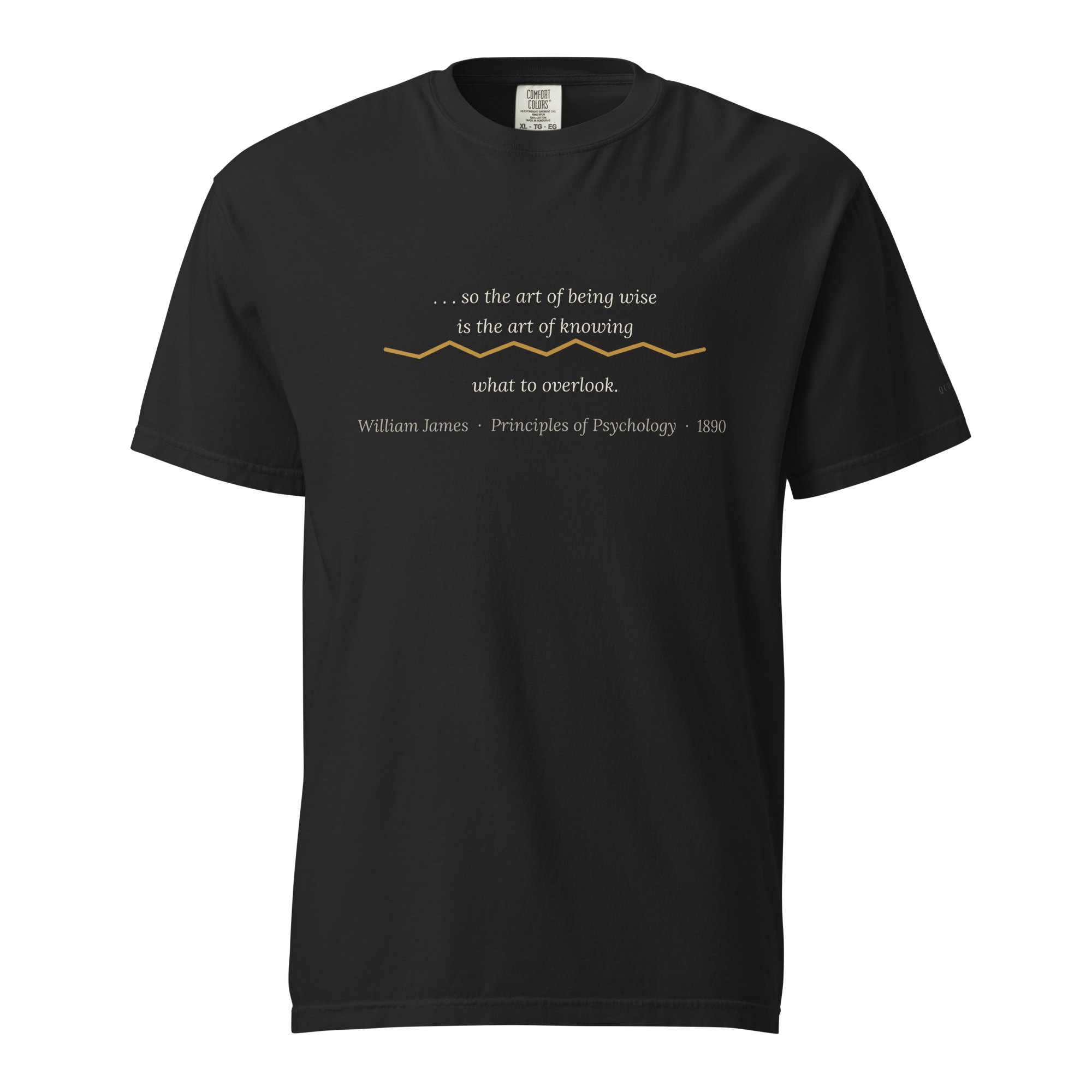
“…so the art of being wise is the art of knowing what to overlook.”
James spent twelve years writing Principles of Psychology — a 1,400-page argument about how minds work. The chapter on attention contains this line, buried in a longer passage about what separates intelligence from mere processing power. His observation: every expert in every field has learned, above all else, what not to pay attention to. The ability to ignore is not inattention. It is the thing that makes thought possible.
If you’ve ever:
- Let an argument go — not because you lost, but because winning it would have cost more than it was worth
- Looked at a full calendar and spent five minutes deciding what to cancel instead of how to get it all done
- Realized that the smartest person in the room was not the one talking most
This is for you.
The Design
A gold kintsugi seam runs across the chest — jagged, the shape of a crack repaired with gold. Kintsugi is the Japanese practice of mending broken pottery with gold, treating the fracture as the most honest part of the object.
The seam falls between "is the art of knowing" and "what to overlook" — the exact fulcrum of James's sentence.
The design makes the join visible. That's the whole point.
Read the full story behind this quote: What William James Actually Meant by the Art of Being Wise.
About This Tee
- 100% ring-spun cotton
- Made with OEKO-TEX certified low-impact dyes
- Weight: 6.1 oz/yd²
- Fit: Relaxed, slightly boxy fit (see chart)
- Construction: Seamless
- Finish: Garment-dyed for a lived-in feel, almost no at-home shrinkage
- Care: Machine wash cold, inside out; tumble dry low
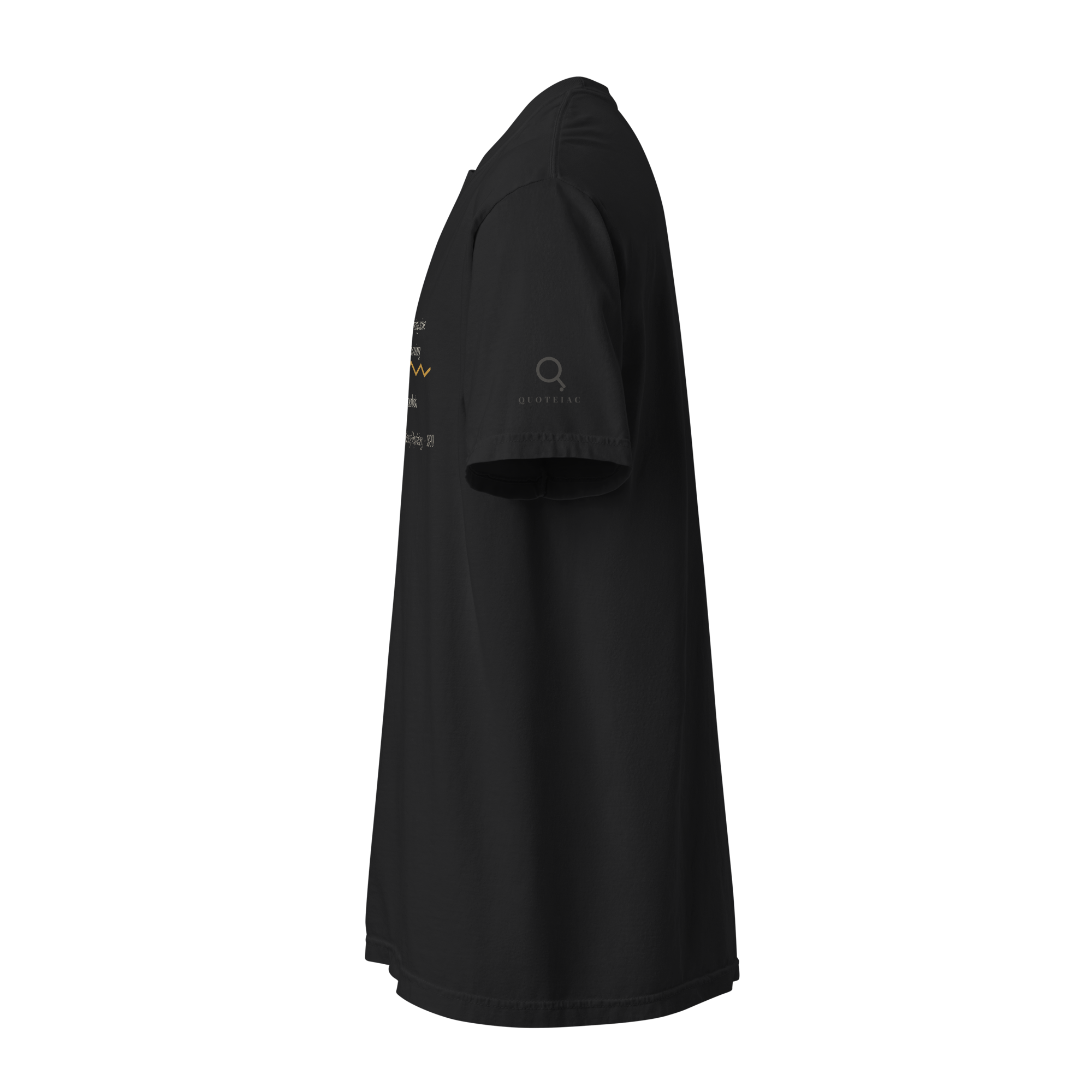
- Left Sleeve: Quoteiac logo
Who It’s For
The person who has stopped equating attention with virtue. The one who edits — their writing, their commitments, their news diet — not because they don’t care, but because they care too much to squander what’s left. The reader who found James and felt, for the first time, that selectivity was not a flaw.
Wear the oversight.
William James, in Plain English
- Lived: 1842–1910, taught at Harvard for 35 years — first in anatomy, then in psychology, then in philosophy
- Condensed his 1,400-page Principles of Psychology into a shorter volume he privately called “the jimmy” — not an endorsement
- His brother was Henry James, who wrote the novels. William once said Henry wrote psychology like a novelist; Henry said William wrote novels like a psychologist. Both were probably right.
- Argued in The Will to Believe (1897) that some beliefs are justified precisely because holding them makes certain outcomes possible — a position that has annoyed philosophers ever since
See the full William James collection.
More from this collection
Choose options