Benjamin Franklin. After David Martin, c. 1767.Pennsylvania Academy of Fine Arts.
Benjamin Franklin
He was a printer's apprentice, a scientist, a postmaster, a diplomat, and one of the architects of a new nation — and he managed all of it before deciding how to sign his name to history.
Words We Carry
Every quote here is traced to a documented source. How we verify →
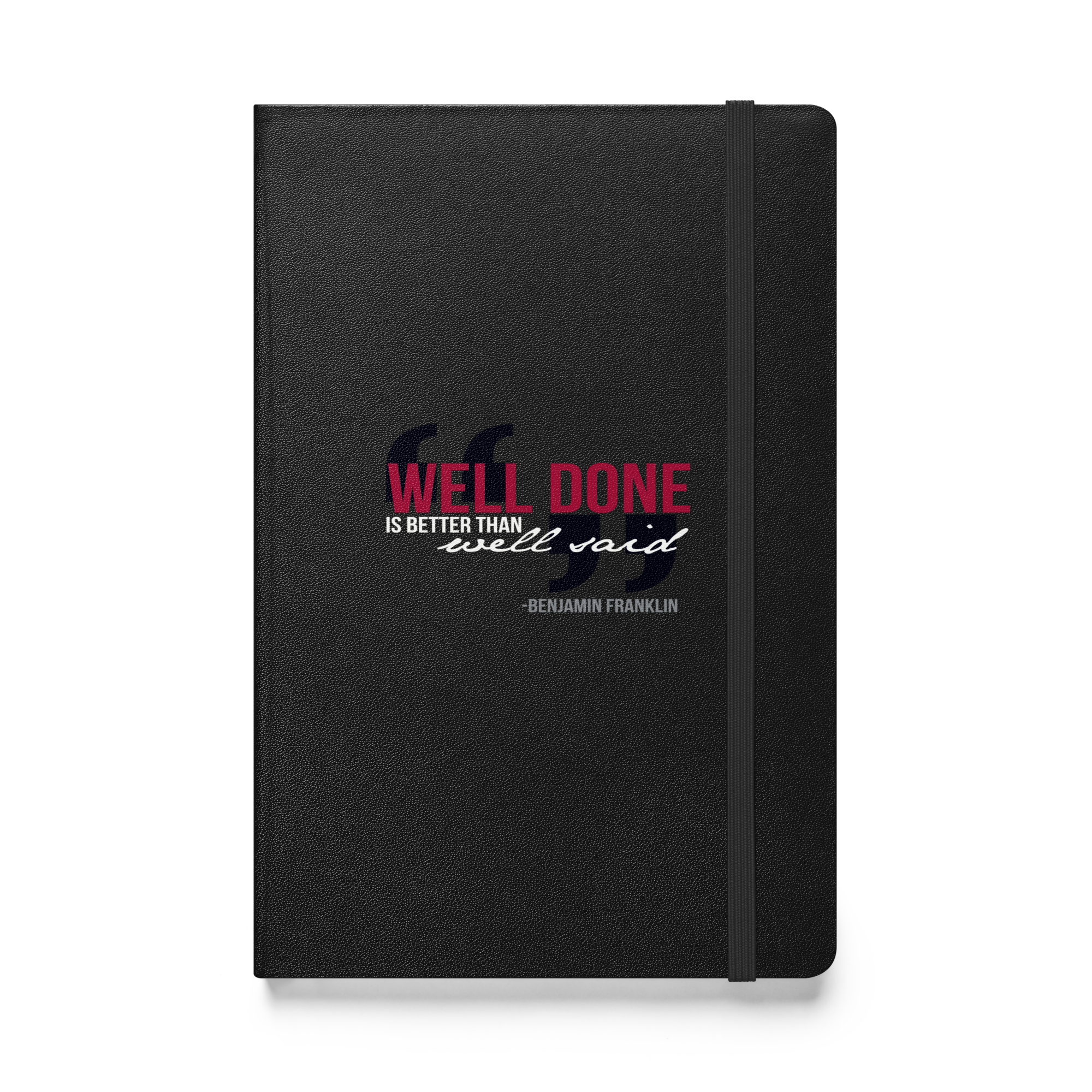
“Well done is better than well said.”
Benjamin Franklin, Poor Richard’s Almanack (1737)
About Benjamin Franklin
Benjamin Franklin was born in Boston on January 17, 1706, the 15th of 17 children of a soap and candle maker. His father pulled him from school at ten to work in the family shop. At twelve, he was apprenticed to his older brother James as a printer — an arrangement that gave him a trade, access to books, and a temper. James was difficult. Franklin taught himself to write by copying essays from The Spectator, draft by draft, until the sentences were his own. At seventeen, he broke his contract and ran — to New York first, then Philadelphia, arriving with almost nothing. What he had was a method: read everything, test everything, trust results over reputation. That instinct was not ambition in the usual sense. It was impatience with people who talked a good game and stopped there.
Franklin bought the Pennsylvania Gazette in 1729 and turned it into the most widely read newspaper in the colonies. Three years later he launched Poor Richard’s Almanack, which he wrote and published annually for twenty-five years under the pseudonym Richard Saunders. The almanack was practical — weather tables, calendar, farming notes — but the proverbs he buried in the margins are what lasted. In the same years, he was running experiments with kite, key, and storm. He didn’t theorize electricity; he proved it. The lightning rod, the bifocals, the Franklin stove, the flexible urinary catheter — he built things that worked, then explained them. He served as the first Postmaster General for the colonies and reorganized a system that barely functioned into one that did. The range is almost implausible. What held it together was a single conviction: that a problem unsolved is an argument unfinished.
In 1778, Franklin secured the French alliance that made American independence possible. He negotiated the Treaty of Paris in 1783, which ended the Revolutionary War on terms Britain resisted until he made them unavoidable. At eighty-one, he was the oldest delegate to the Constitutional Convention — still working, still revising, still arguing. He died in Philadelphia in 1790. He is the only Founding Father whose name appears on all four of the nation’s founding documents. “Well done is better than well said” comes from Poor Richard’s Almanack, 1737 — written by a man who had been saying it since he was seventeen and spent the next seven decades proving it. The irony is exact: Franklin wrote the line, and then lived a life that made the writing almost beside the point.
The Work
From the Journal
Benjamin Franklin’s Most Underrated Superpower Wasn’t Invention. It Was Self-Editing.
Franklin taught himself to write by copying Spectator essays and scrambling them until he had to reconstruct the structure. How the method made the maxims.
ReadThe Declaration of Independence Is Great Literature — Here’s How It Works
What makes the founding document a piece of craft, not just a political instrument.
ReadWhat the Founders Actually Said (And Why It Matters in 2026)
Adams, Madison, Jefferson, Roosevelt — what the record shows when you check the sources.
ReadIn Their Orbit