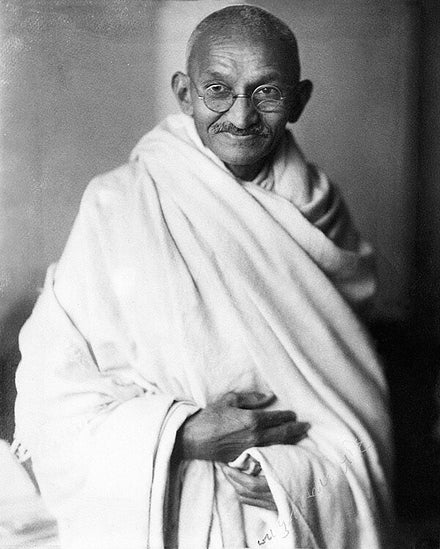
Mahatma Gandhi. Photograph, c. 1931. Public domain.
Mahatma Gandhi
Mohandas Karamchand Gandhi (1869–1948) trained as a lawyer in London, spent twenty-one years in South Africa, and led India’s independence movement through nonviolent resistance. He wrote constantly for the newspapers he ran, and that is where the line we carry first appeared, in 1913.
Words We Carry
Every quote here is traced to a documented source. How we verify →
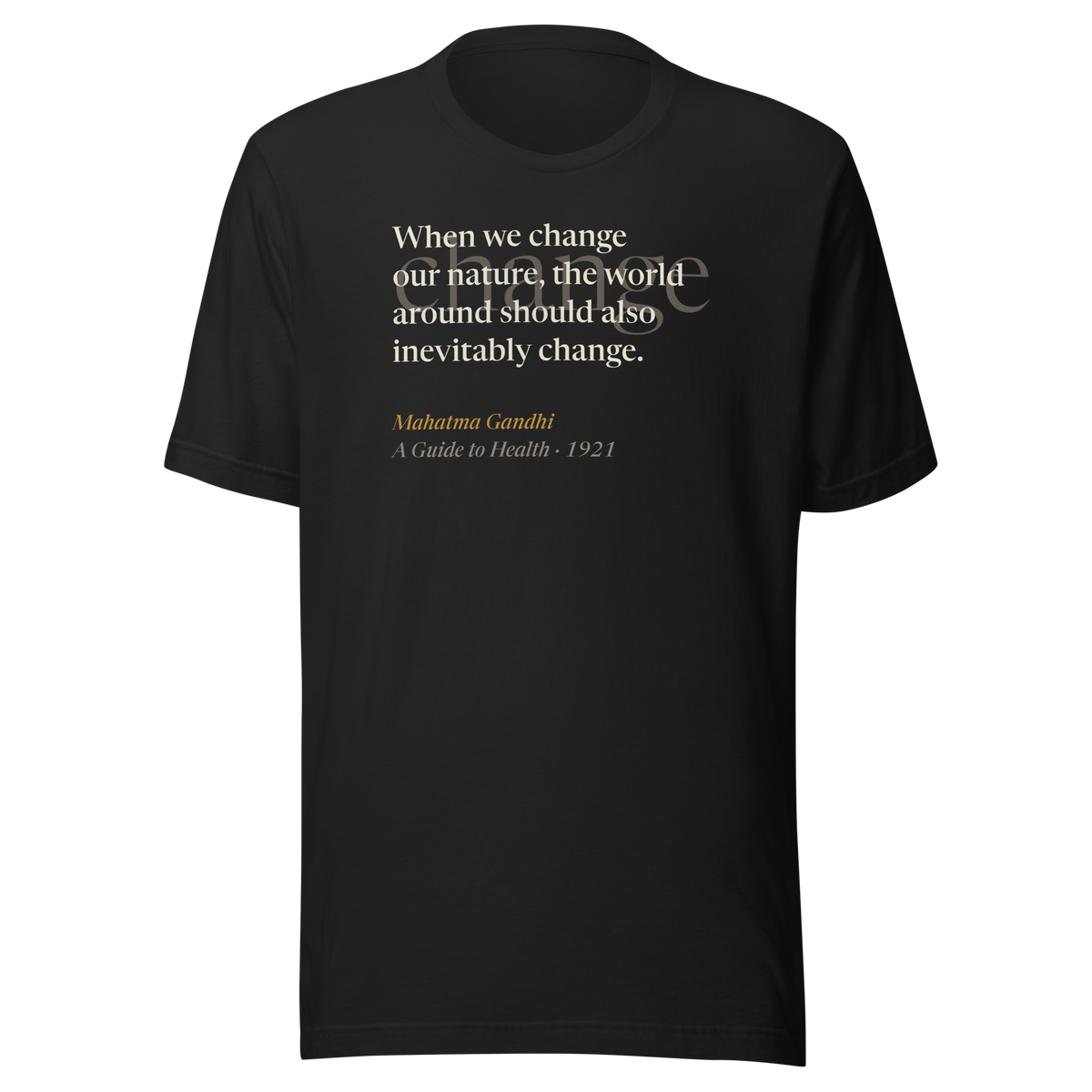
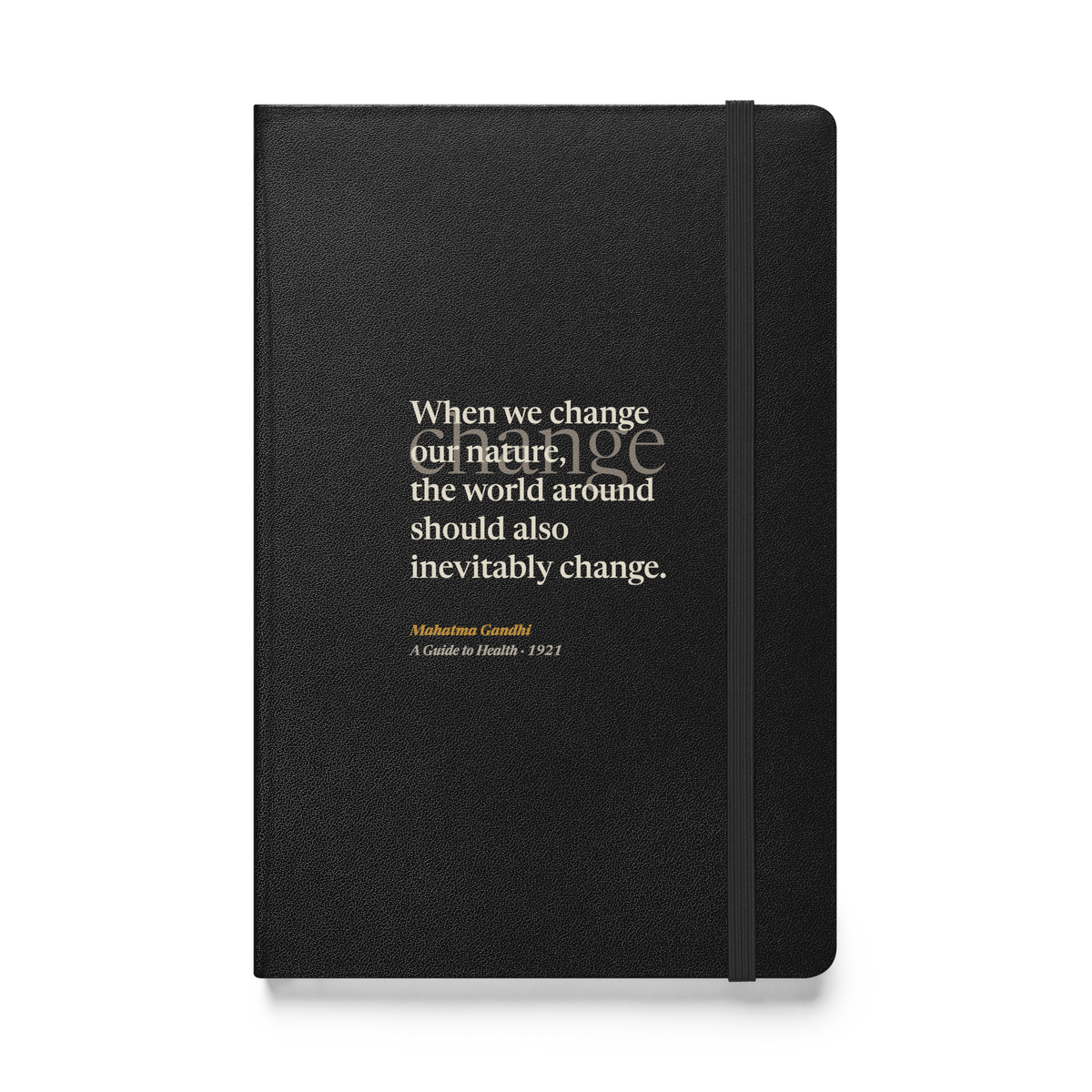
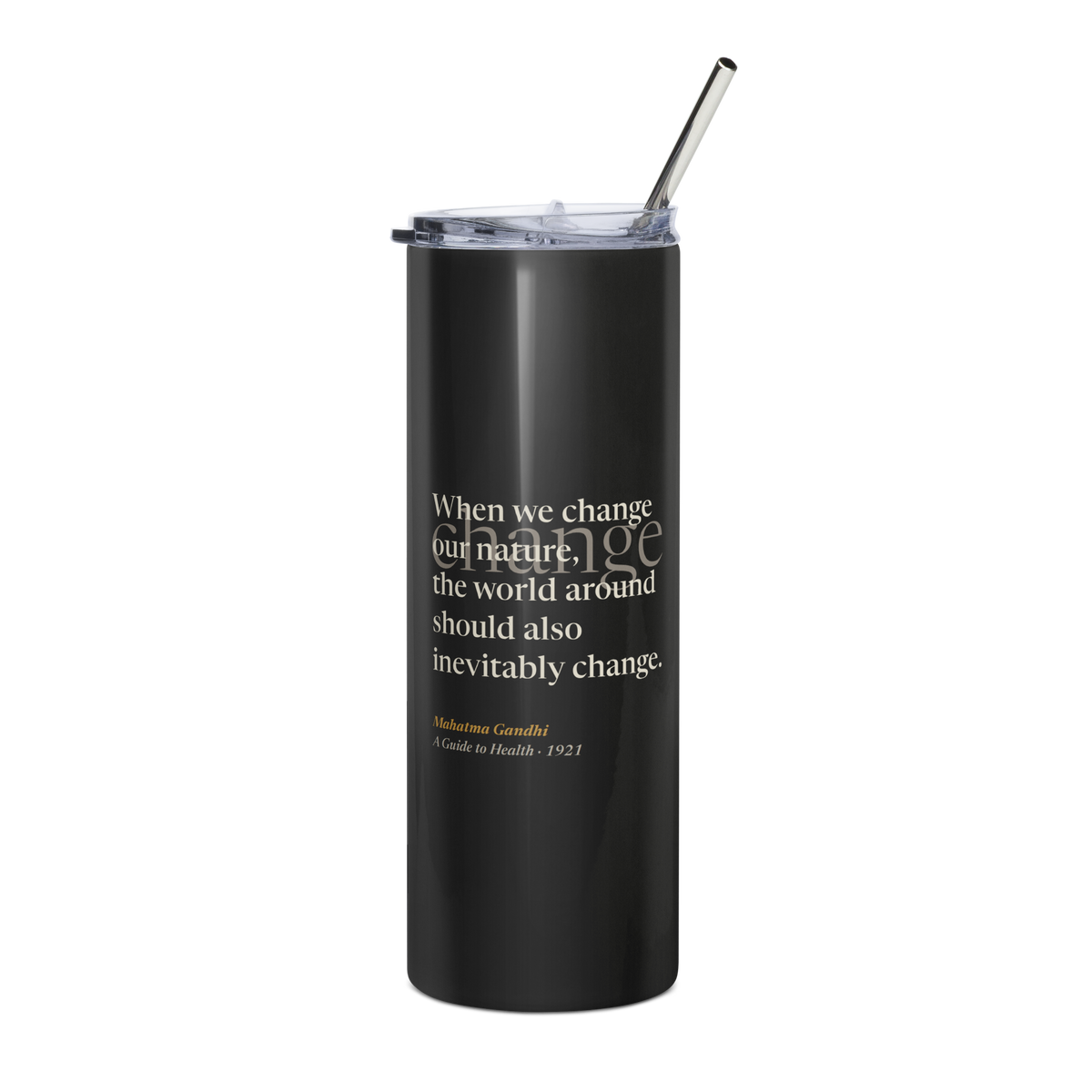
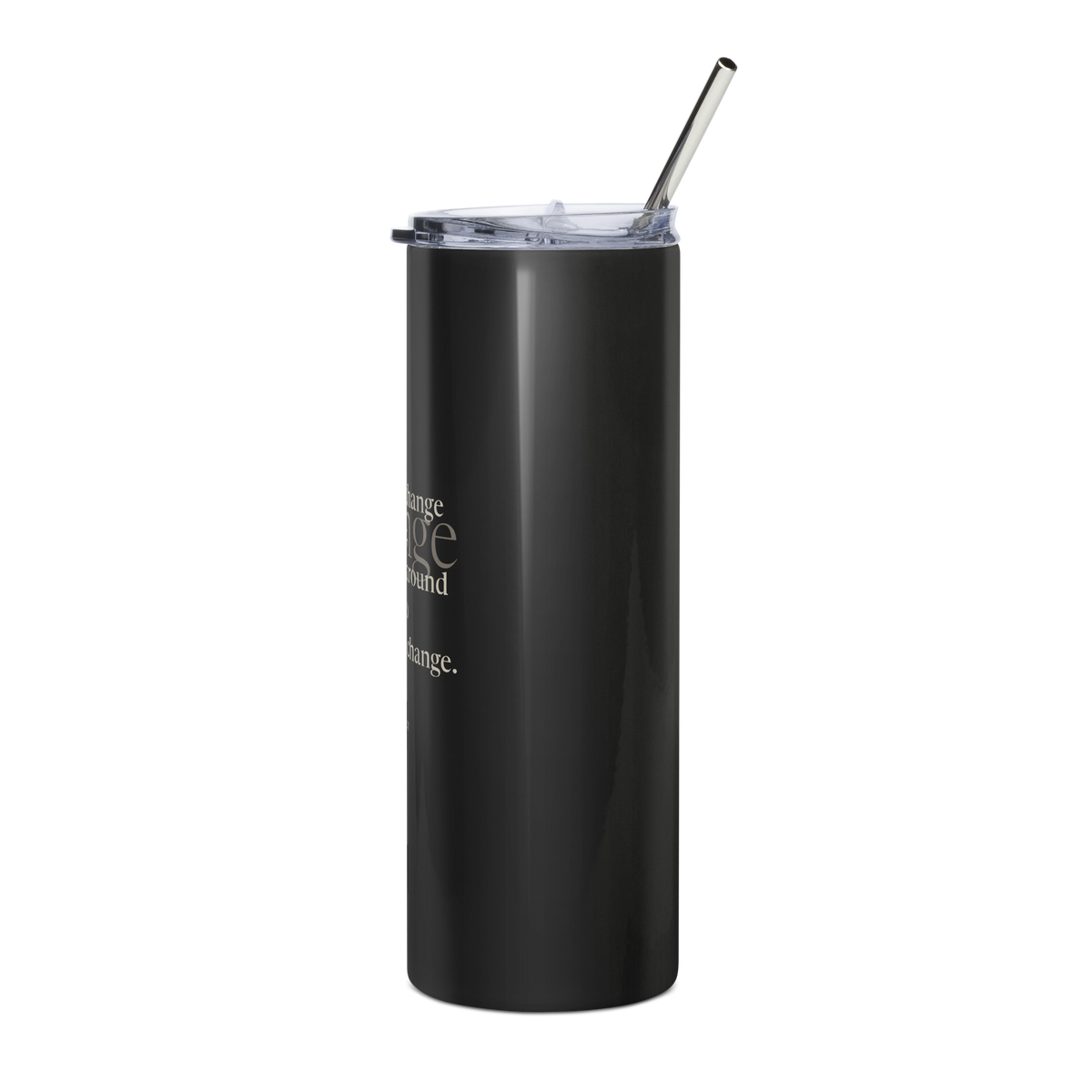
“When we change our nature, the world around should also inevitably change.”
A Guide to Health, Part II, Chapter XII — “Snake-bite” (1921) — tr. A. Rama Iyer, 1921
About Mahatma Gandhi
Gandhi was born on October 2, 1869, in Porbandar, on India’s west coast. He sailed to London in 1888 to study law and was called to the bar in June 1891.
In 1893 he went to South Africa to work on a lawsuit for an Indian merchant, and he stayed twenty-one years. On a train at Pietermaritzburg, he refused to leave a first-class compartment and was thrown off. He spent the years that followed organizing the Indian community against discriminatory laws.
In 1903 he started Indian Opinion, a paper published in English, Gujarati, Hindi and Tamil, and wrote much of it himself, often unsigned. His 1913 health columns for it came out in English in 1921 as A Guide to Health, the source of the line we carry.
He returned to India in 1915 and became the leader of its independence movement. In 1930 he led the Salt March, from Ahmedabad to the sea at Dandi, against the British tax on salt. India won its independence in August 1947, partitioned into India and Pakistan.
On January 30, 1948, he was shot and killed at Birla House in New Delhi by Nathuram Godse, a Hindu nationalist. He was seventy-eight.
The Work
From the Journal
“Be the Change” — The Most Famous Quote Gandhi Probably Never Said
One of the most shared quotes on the internet doesn’t appear anywhere in Gandhi’s collected works.
ReadThe Quote on Your Shirt Is Probably a Lie
“Be the change you wish to see in the world.” — Gandhi. Except he never said it.
ReadIn Their Orbit