Marie Curie
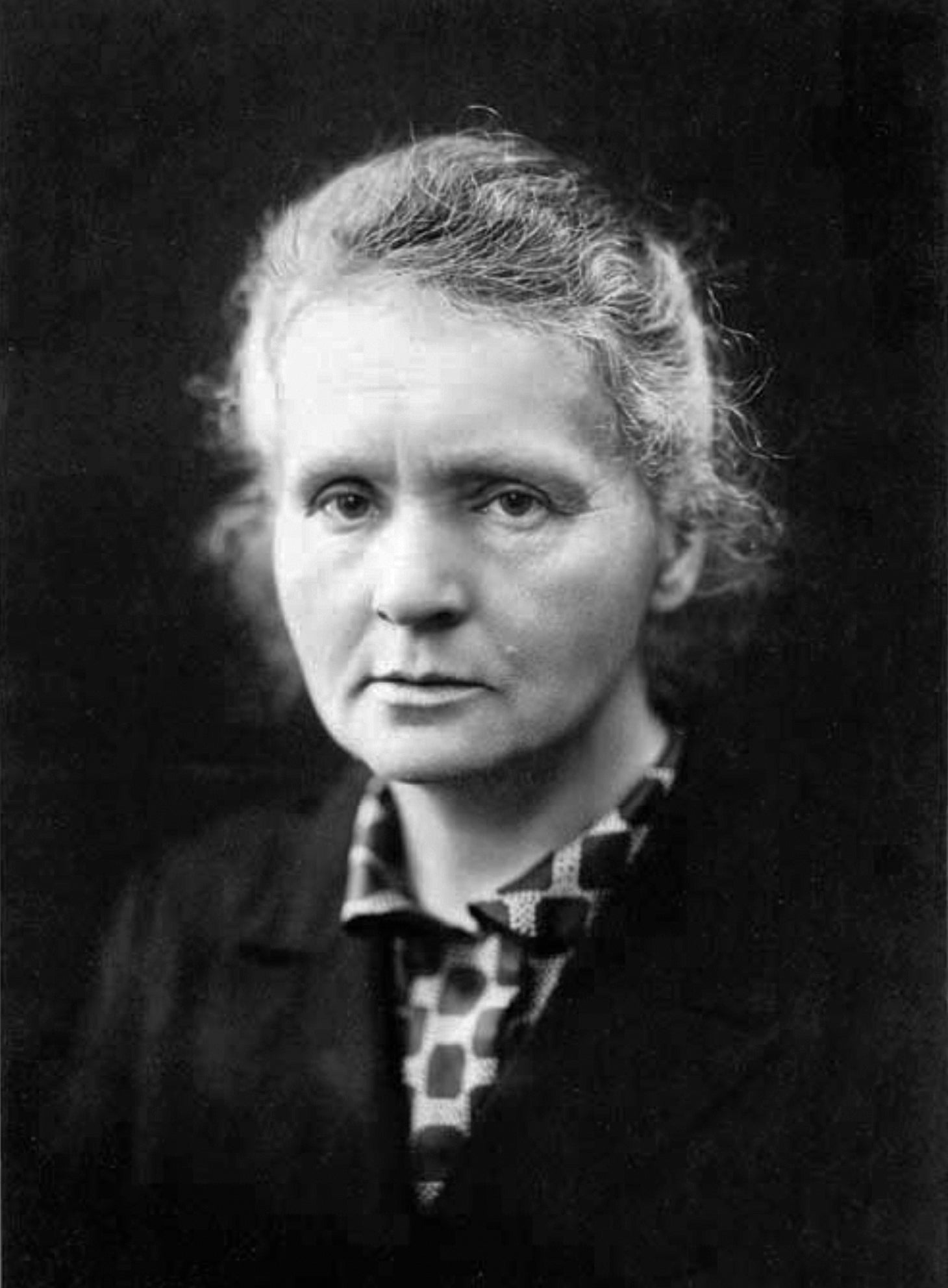
The only person to win Nobel Prizes in two different sciences. Also the first woman to win one.
Marie Curie was born Maria Sklodowska in Warsaw in 1867, at a time when women were not permitted to attend university in Poland. She moved to Paris, studied in an unheated attic flat, graduated first in her physics degree, and then — almost as an afterthought — became one of the most consequential scientists in history.
She discovered polonium and radium. She coined the term "radioactivity." She developed mobile X-ray units during World War One that are estimated to have saved over a million lives. She did almost all of this while being systematically excluded from the institutions that celebrated her work. The French Academy of Sciences never admitted her despite two Nobel Prizes. She won them anyway.
Her notebooks are still too radioactive to handle safely. They're kept in lead-lined boxes in the Bibliothèque nationale de France. Researchers who want to read them must sign a waiver.
Her quotes carry the particular authority of someone who proved, repeatedly, that the obstacles placed in her path were other people's limitations, not hers.
Filters