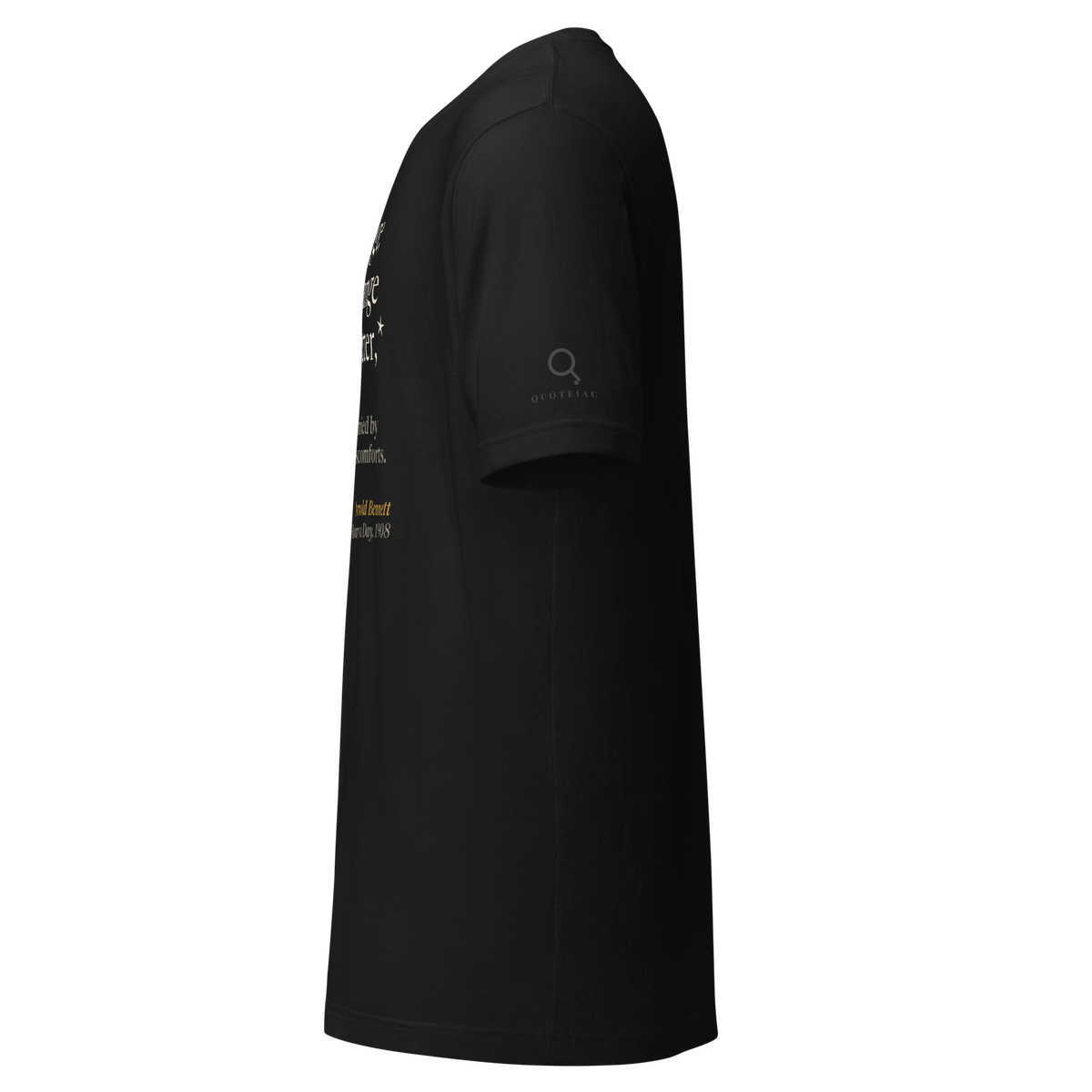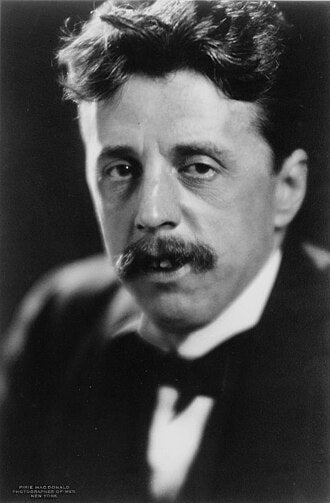
Arnold Bennett. Photograph, c. 1910.Public domain.
Arnold Bennett
Arnold Bennett grew up among the pottery kilns of Staffordshire, escaped to London at twenty-one, and spent the rest of his life writing about what it costs to be alive and awake — in fiction that nobody wanted to call literary, and in practical philosophy that sold like nothing around him.
Words We Carry
Every quote here is traced to a documented source. How we verify →
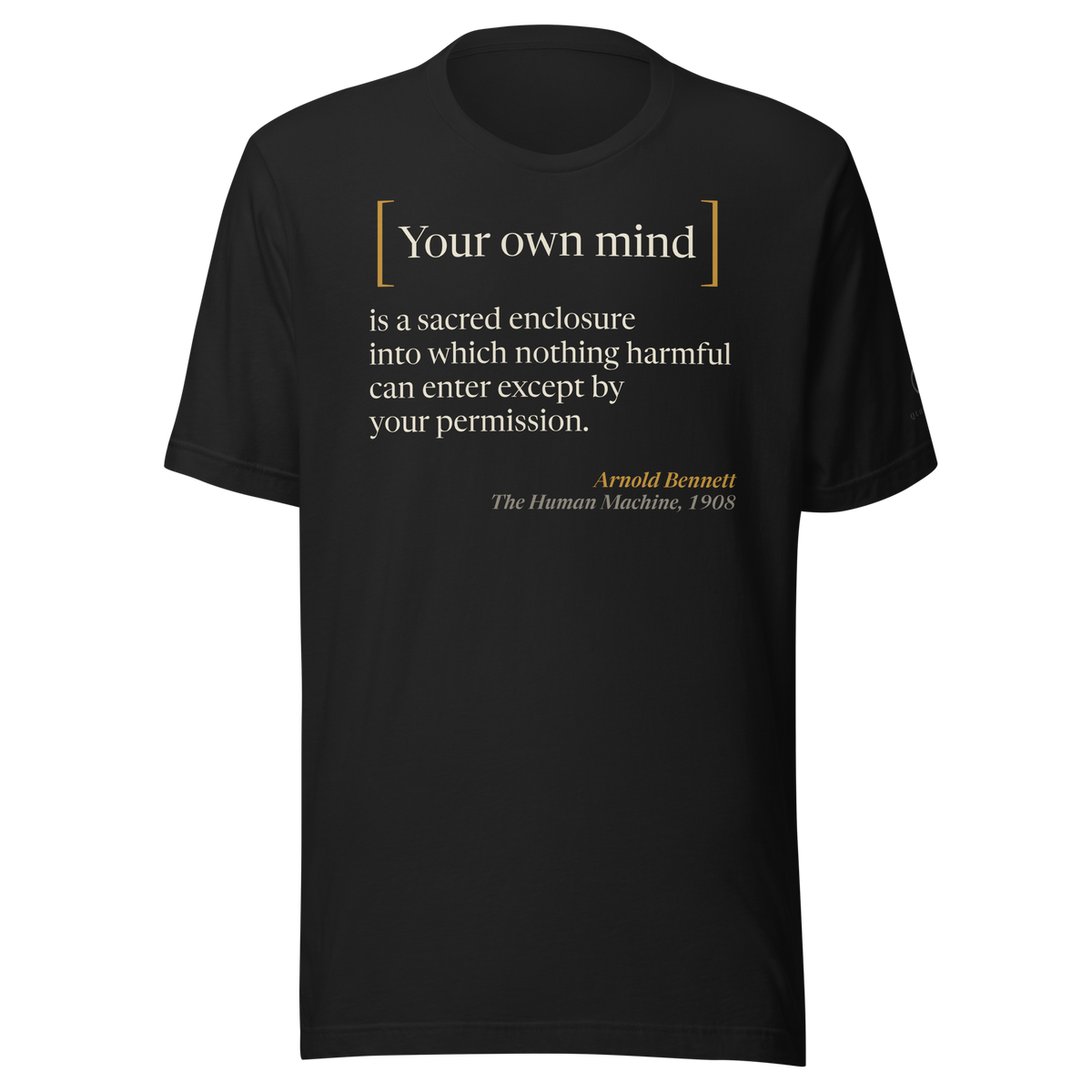
“Your own mind is a sacred enclosure into which nothing harmful can enter except by your permission.”
The Human Machine (1908)
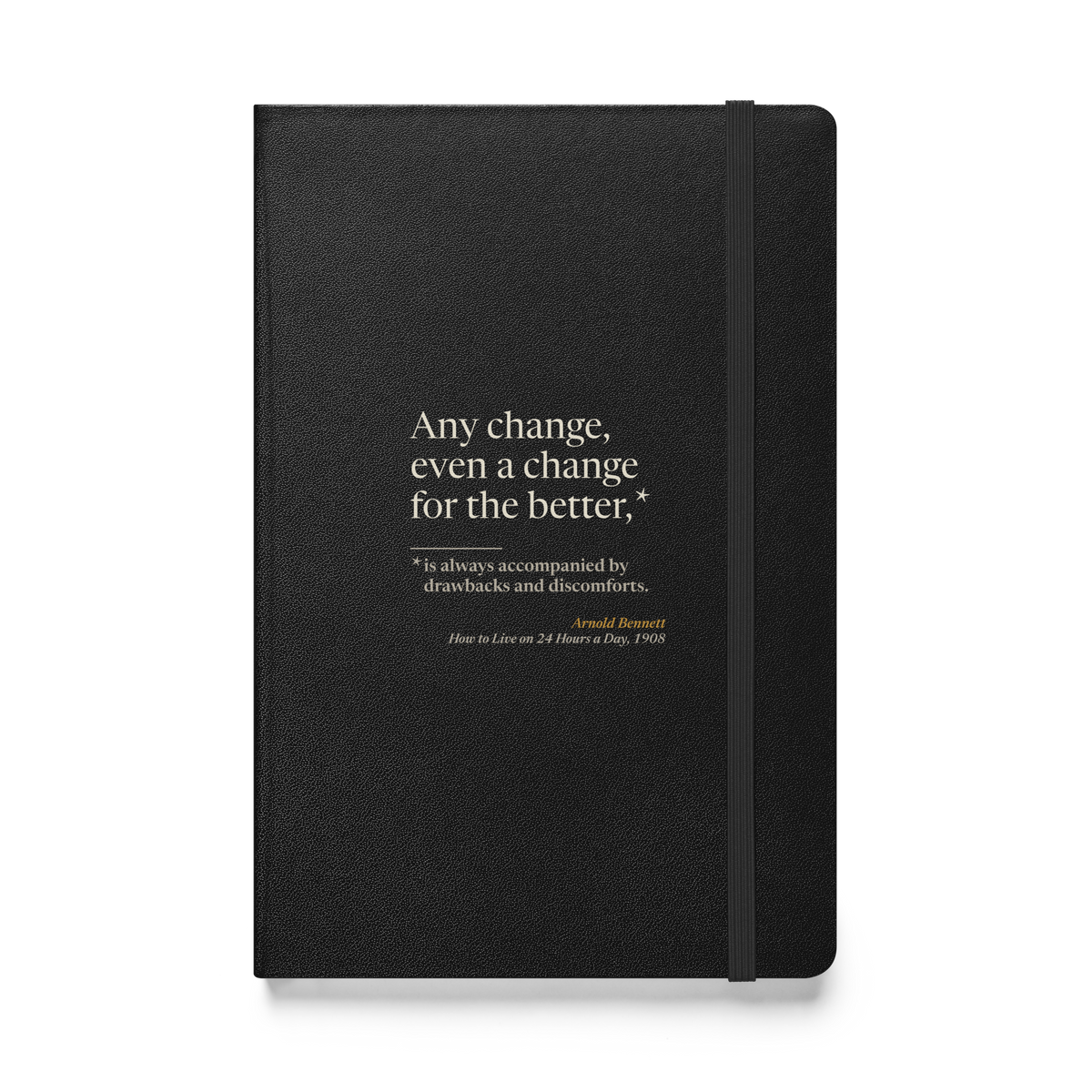
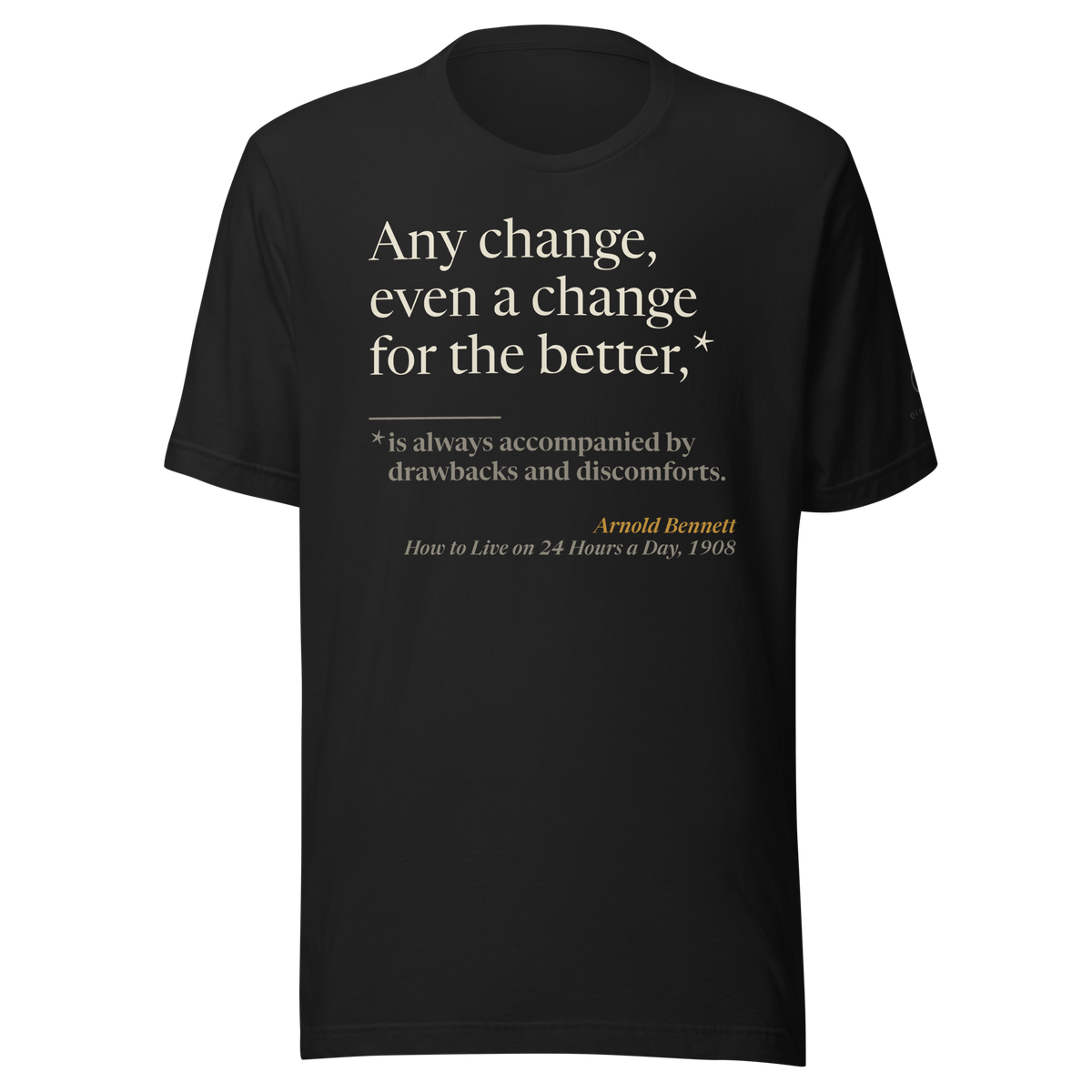
“Any change, even a change for the better, is always accompanied by drawbacks and discomforts.”
How to Live on 24 Hours a Day (1908)
About Arnold Bennett
He was born Enoch Arnold Bennett on May 27, 1867, in Hanley, Staffordshire — one of the five pottery towns that ringed each other in the industrial Midlands, fuelled by kilns and clay and the particular rigidity of lives lived in narrow circumstance. His father was a solicitor, self-made and ambitious, who had clawed his way out of the working class and fully intended his eldest son to follow him into the law. Bennett spent his adolescence under that expectation, watching the Five Towns from the inside: the commerce, the chapel, the marriages, the slow defeat of aspiration by routine. At twenty-one he packed and went to London, worked as a law clerk, and understood almost immediately that he was not going back. He began writing — first journalism, then short fiction, then novels — not as a retreat from the world he had left but as a reckoning with it. He understood the weight of ordinary life because he had lived inside it, and he never pretended otherwise.
The Five Towns never left his work. Anna of the Five Towns appeared in 1902, a quiet novel about a woman who owns everything and controls nothing; The Old Wives’ Tale came in 1908 and announced him fully — a panoramic study of two sisters across fifty years, domestic in scale, enormous in ambition, now considered one of the finest English novels of the Edwardian period. Clayhanger followed in 1910. But Bennett was living a double creative life. In the same year as The Old Wives’ Tale, he published The Human Machine and How to Live on 24 Hours a Day — two slender, practical books aimed not at readers of fiction but at anyone who had ever felt outpaced by their own existence. The self-help books sold in extraordinary numbers. Critics found the pairing suspicious: was this serious art or commercial convenience? Bennett refused the distinction. He thought rigorous self-examination and rigorous fiction were the same project with different tools.
Bennett spent the last decade of his life at the height of his fame and the center of London literary culture — reviewing books for the Evening Standard, writing columns that shaped public taste, traveling in the social circles that Virginia Woolf would later skewer in her essay “Mr. Bennett and Mrs. Brown.” Woolf accused him of materialism: of being too interested in the surfaces of things, the furniture and the facts, at the expense of inner life. He thought she had it backwards — that the surfaces were how you got to the inside, if you paid close enough attention. The argument was real and the divide was real, and both of them were partly right. He died in 1931 from typhoid fever, contracted after drinking tap water during a visit to France despite warnings that it was unsafe. Bennett, a lifelong believer in observing life firsthand, had made one experiment too many.
The Work
From the Journal
The Philosophy of Doing Hard Things — From People Who Actually Did Them
What the thinkers who shaped our shirts actually believed about effort, resistance, and getting through.
ReadWhy Wearing Your Favorite Quote Actually Changes Your Behavior
On the psychology of carrying words on your body — and why it turns out to matter.
ReadThe Original Productivity Book Is 118 Years Old: What Arnold Bennett Got Right (and Wrong)
Bennett wrote the book on time management in 1908. Most self-help since has been reinventing it.
ReadIn Their Orbit