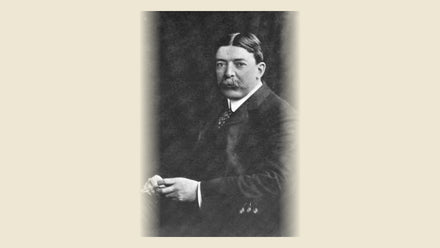
George Edward Woodberry. Portrait, c. 1900.Public domain.
George Edward Woodberry
He spent thirty years writing about literature that mattered and teaching students who became writers — then left Columbia rather than compromise what he’d built
Words We Carry
Every quote here is traced to a documented source. How we verify →
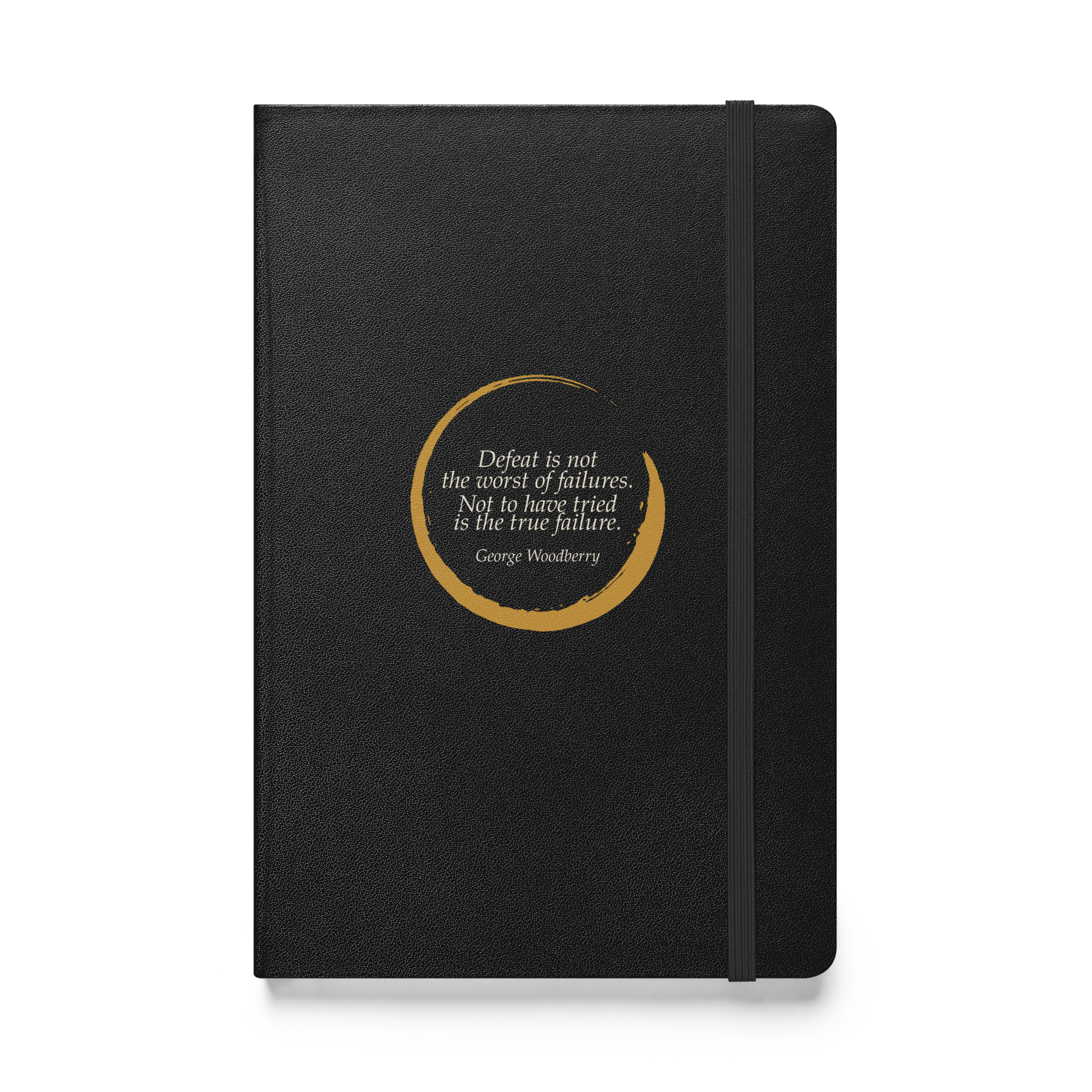
“Defeat is not the worst of failures. Not to have tried is the true failure.”
George Edward Woodberry, Wendell Phillips: The Faith of an American (1912), p. 45
“Mankind is the grandest and surest artist of all.”
George Edward Woodberry, The Torch (1905)
About George Edward Woodberry
Woodberry built his reputation the hard way — through close reading, honest criticism, and a conviction that literature was not a career subject but a moral one. He studied at Harvard under Charles Eliot Norton and James Russell Lowell, earning his A.B. in 1877, and spent the next decade producing work that got him noticed: a biography of Edgar Allan Poe in 1885, followed by Studies in Letters and Life in 1890. When Columbia appointed him Professor of Comparative Literature in 1891, he was thirty-six years old and had already earned the position. He taught there for thirteen years and shaped a generation of American writers and critics who carried his standards forward long after he was gone.
His departure from Columbia in 1904 was not a quiet retirement. He left following a sustained dispute with President Nicholas Murray Butler over the direction of the university — what it owed its students, what it stood for. Woodberry had built a department around a certain seriousness of purpose, and Butler’s institutional ambitions pulled in a different direction. Woodberry resigned rather than adapt. He was forty-nine. It cost him his platform and his professional footing, and he knew it. He spent the rest of his life writing, and the work he produced after Columbia — The Torch, the two-volume Life of Poe, Wendell Phillips — is as good as anything he did before.
The Woodberry Poetry Room at Harvard was established in 1931, the year after his death, in recognition of what he had contributed to American letters. His Poe biographies remain the most rigorous scholarly treatment of that subject produced in his era. He matters now for the same reason he mattered then: he wrote about literature as though it was worth getting right.
The Work
From the Journal
We Got One Wrong: The Poe Quote That Was Actually Washington Irving’s
The kind of correction Woodberry would have insisted on — tracing a misattribution back to the source.
ReadNullius in Verba: What Horace’s Phrase Really Means — and Why We Built a Standard on It
The principle Woodberry lived by: take nobody’s word for it.
ReadWho Was George Edward Woodberry? The Story Behind "Defeat Is Not the Worst of Failures"
The man behind the line. What he wrote, where he taught, and why the quote outlasted him.
ReadIn Their Orbit