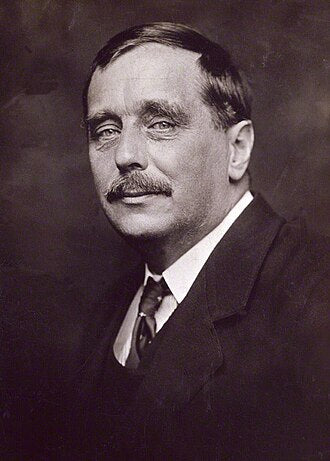
H.G. Wells. Portrait photograph, c. 1918.
H.G. Wells
He started in a draper’s shop in Bromley and ended up reshaping how the world thought about the future. H.G. Wells spent fifty years writing what we were about to become — and getting it right.
Words We Carry
Every quote here is traced to a documented source. How we verify →
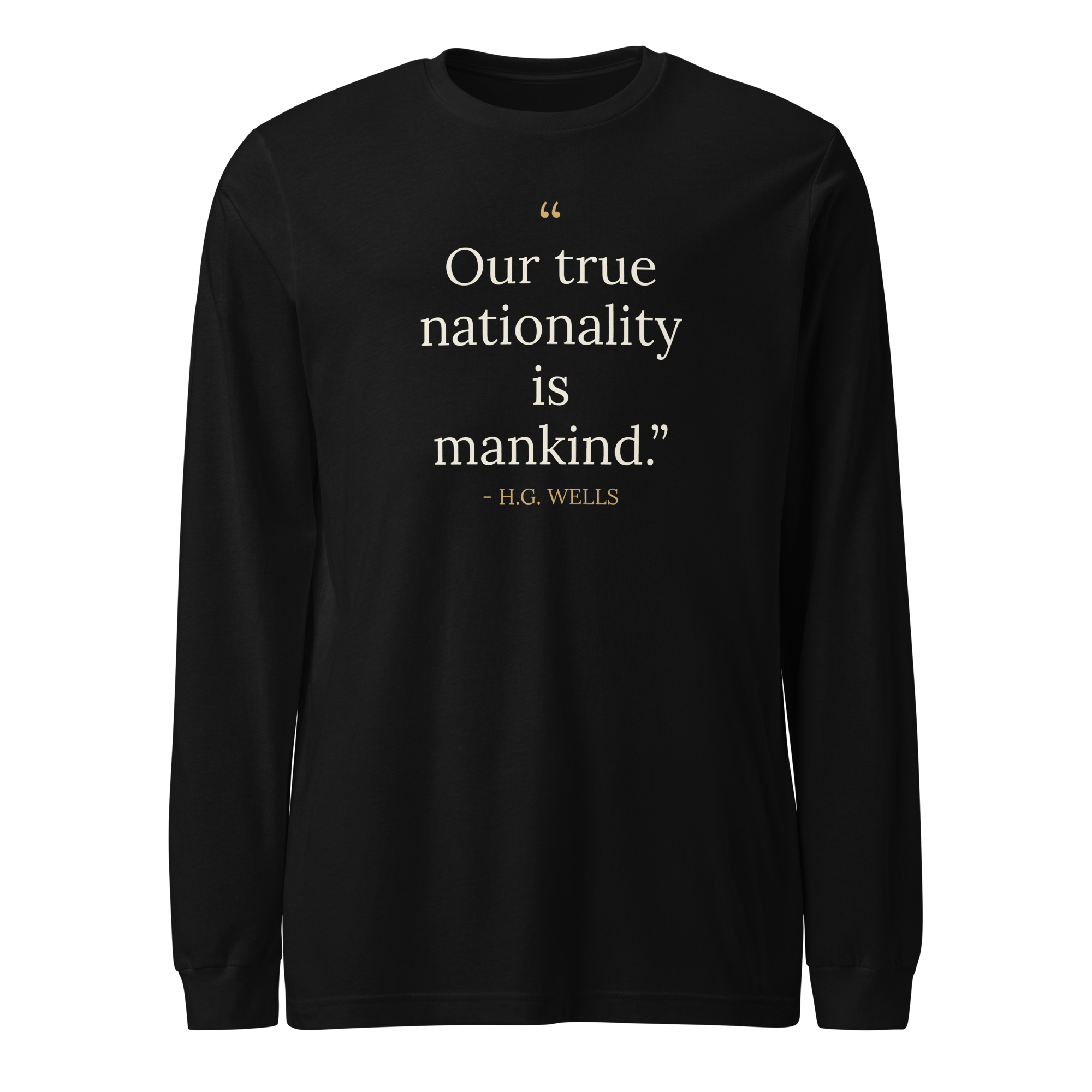
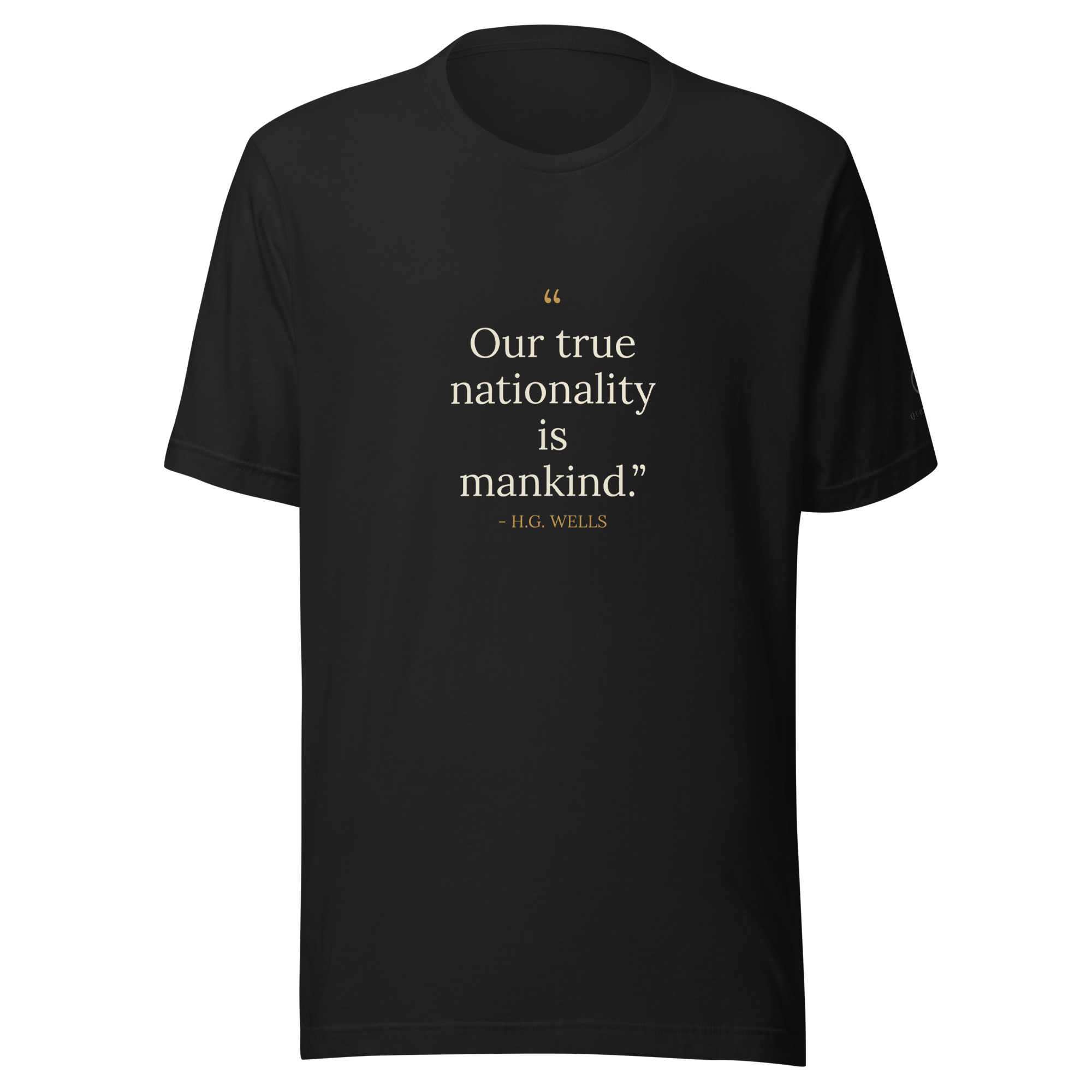
“Our true nationality is mankind.”
H. G. Wells, The Outline of History (1920)
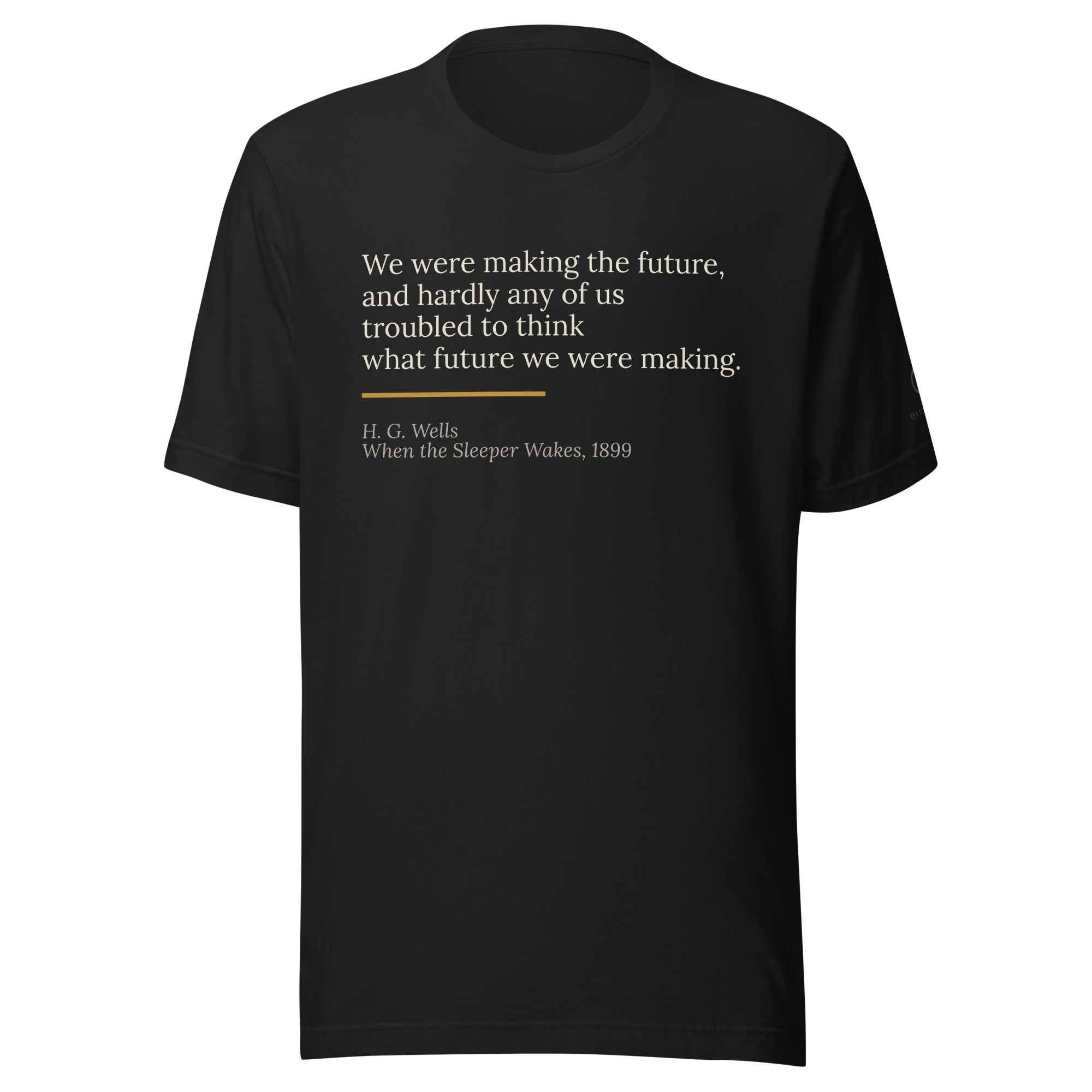
“We were making the future, and hardly any of us troubled to think what future we were making.”
H. G. Wells, When the Sleeper Wakes (1899)
About H.G. Wells
Herbert George Wells was born in 1866 in Bromley, Kent, in a house above a china shop. His father was a failed shopkeeper and professional cricketer for Kent County Cricket Club. His mother went into domestic service when the business collapsed. Wells spent his adolescence apprenticed to a draper — a trade he despised — reading every book he could borrow while folding cloth. He was eighteen when he won a government scholarship to the Normal School of Science in London, where he spent his first year studying biology under Thomas Henry Huxley, Darwin’s fiercest public defender. That year changed everything. It gave Wells evolutionary biology as a lens for history, society, and the long argument about where humanity was going. The writers who came before him had mostly been educated men from educated families. Wells came from the shop floor, and he never forgot it. His novels about lower-middle-class life — Kipps, The History of Mr. Polly — carry the specific weight of someone who had been on the wrong side of the counter. He didn’t borrow the experience. He’d lived it.
Between 1895 and 1901, Wells produced the work that would define the genre for the next century. The Time Machine sent a man into a distant future stratified by class. The Invisible Man explored what power does to a person who has nothing left to lose. The War of the Worlds asked what it feels like to be on the receiving end of a more advanced civilization — and published the question fourteen years before European empires answered it in the trenches. But Wells was never only a storyteller. He was a forecaster. In 1903 he described armored land vehicles breaking trench stalemates — what the military would call tanks thirteen years later. In 1914 he described atomic bombs dropped from aircraft on civilian cities. The Shape of Things to Come, published in 1933, predicted a Second World War beginning in 1940, sustained by aerial bombardment, followed by the collapse of nation-states and the formation of a world government. He wasn’t writing fantasy. He was running the logic of the technologies his century was building, and reporting where they led.
Wells spent the second half of his career writing non-fiction — history, sociology, politics, utopian blueprints — at a scale that matched his fiction. The Outline of History (1920) sold two million copies. He corresponded with Roosevelt, Churchill, and Stalin. He met Lenin. He was read everywhere and argued with by everyone, which was approximately what he wanted. He died in London in August 1946, seventy-nine years old, seven weeks after Hiroshima — a city destroyed by a weapon he had described in a novel thirty-two years earlier. He spent his whole life writing about what we were building. He was right about most of it.
The Work
From the Journal
H.G. Wells Predicted This. We’re Living It.
Wells published The Time Machine in 1895 and spent forty years being right about things people weren't ready to hear. The science fiction that became journalism.
ReadWhy Dark Romanticism Is Having a Moment Right Now
On the literary tradition that refused to look away from the dark.
ReadThe Philosophy of Doing Hard Things — From People Who Actually Did Them
What the people who changed the world actually believed about difficulty.
ReadIn Their Orbit