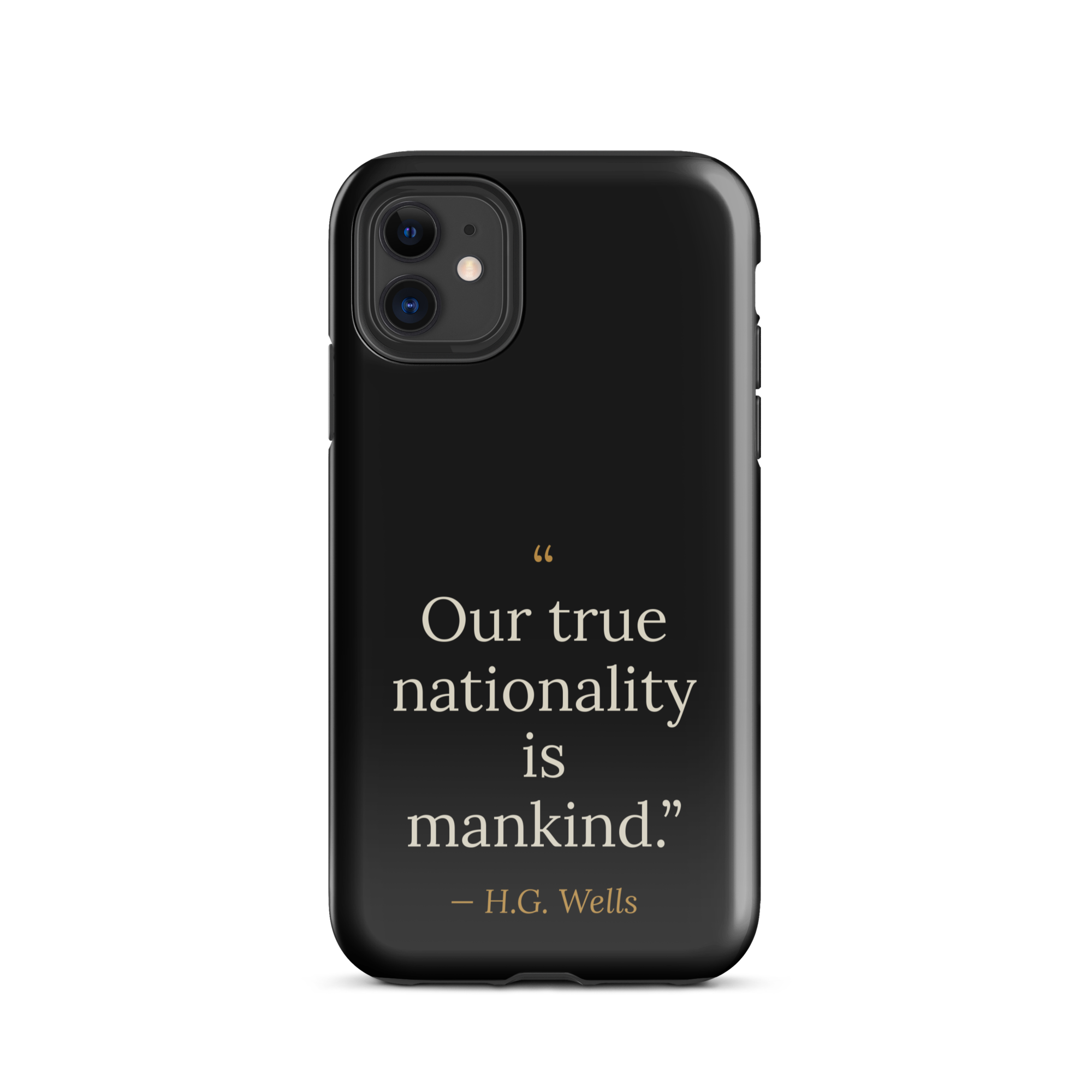
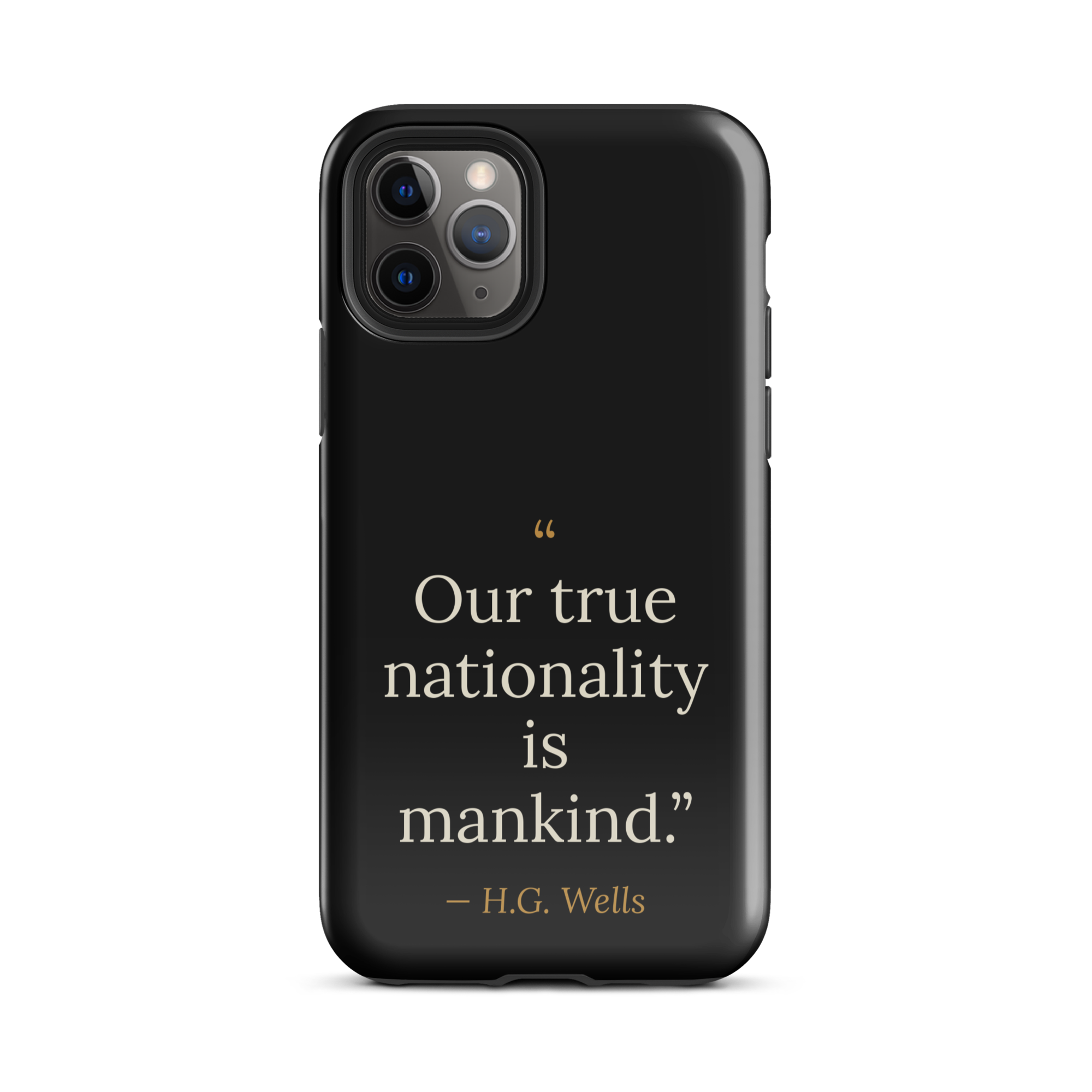
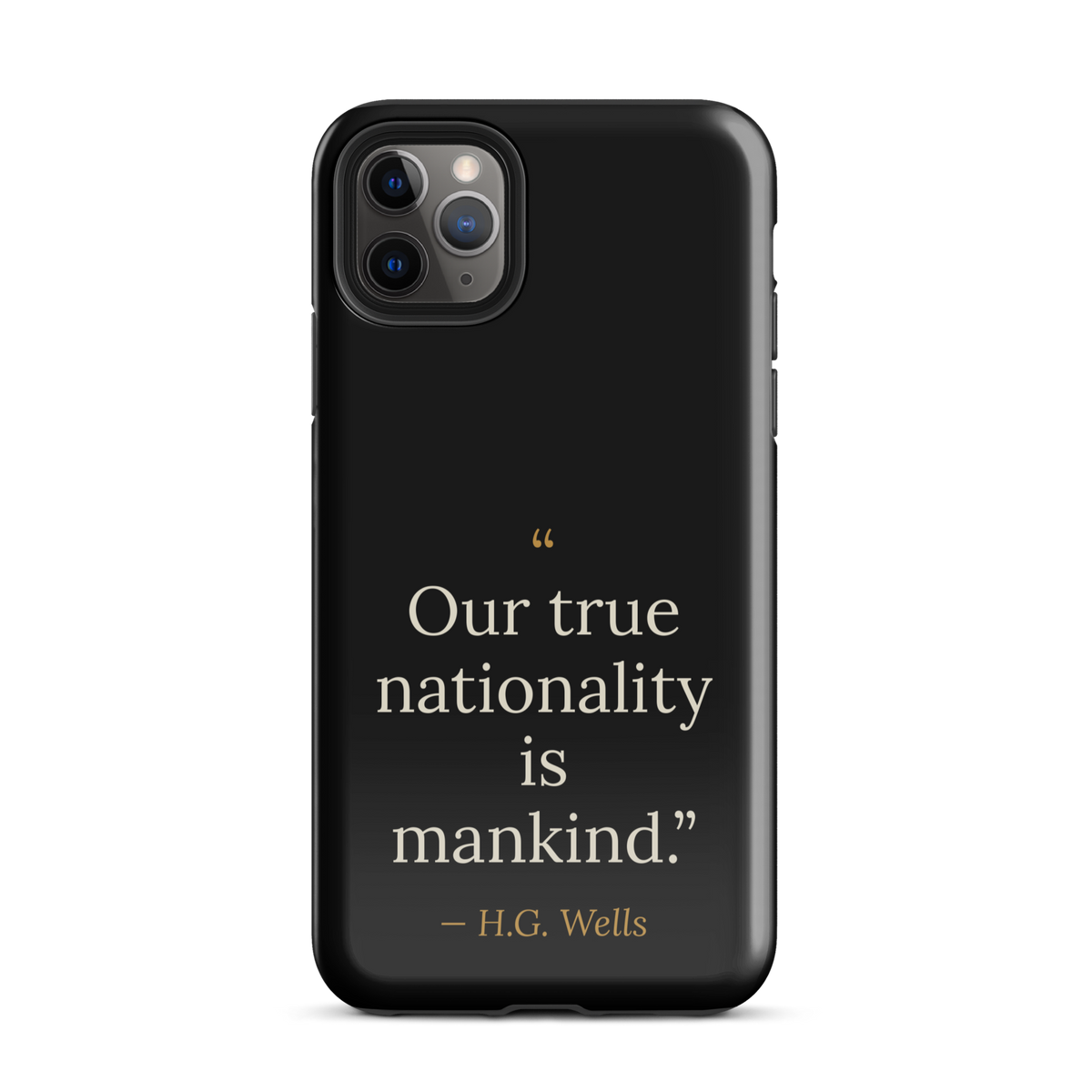
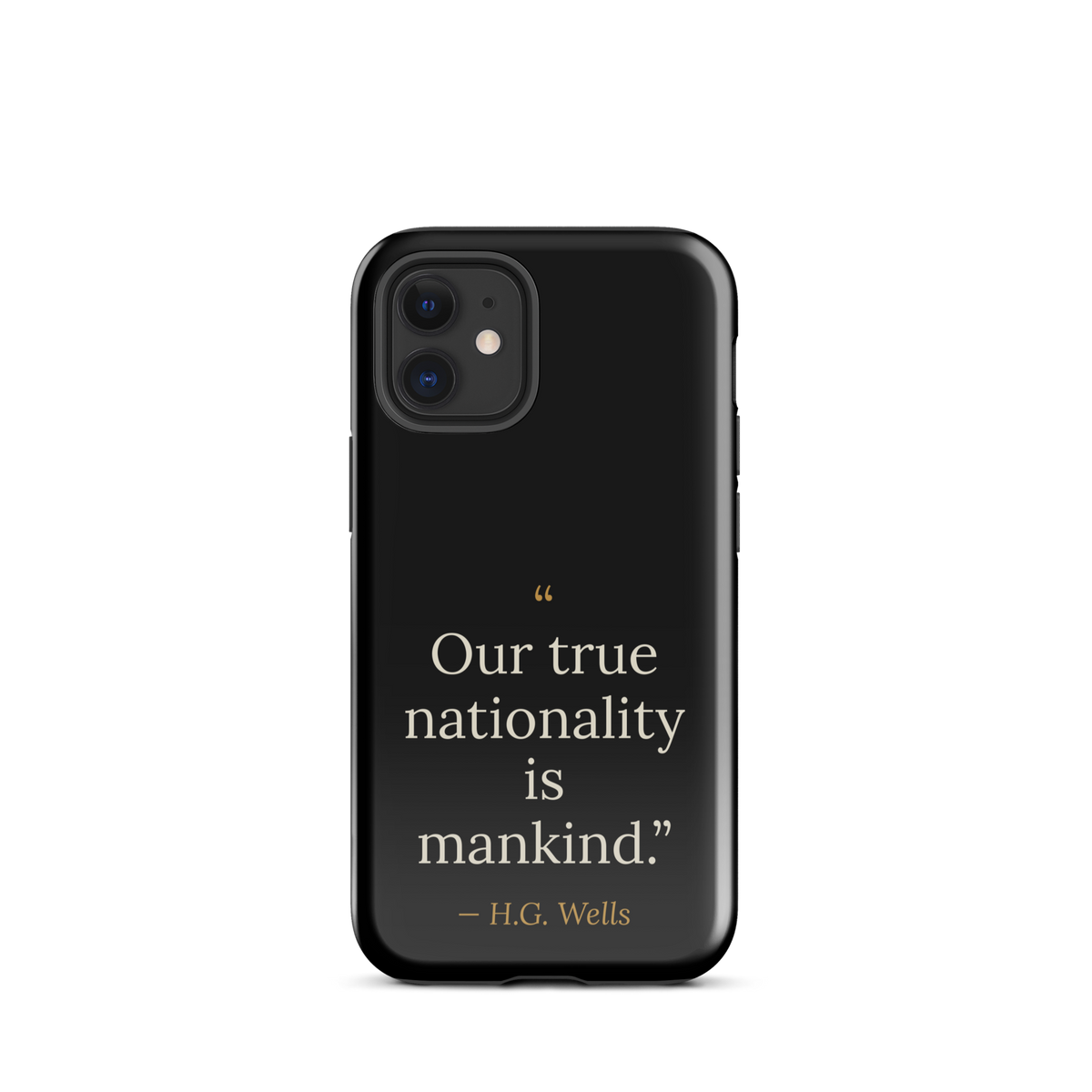
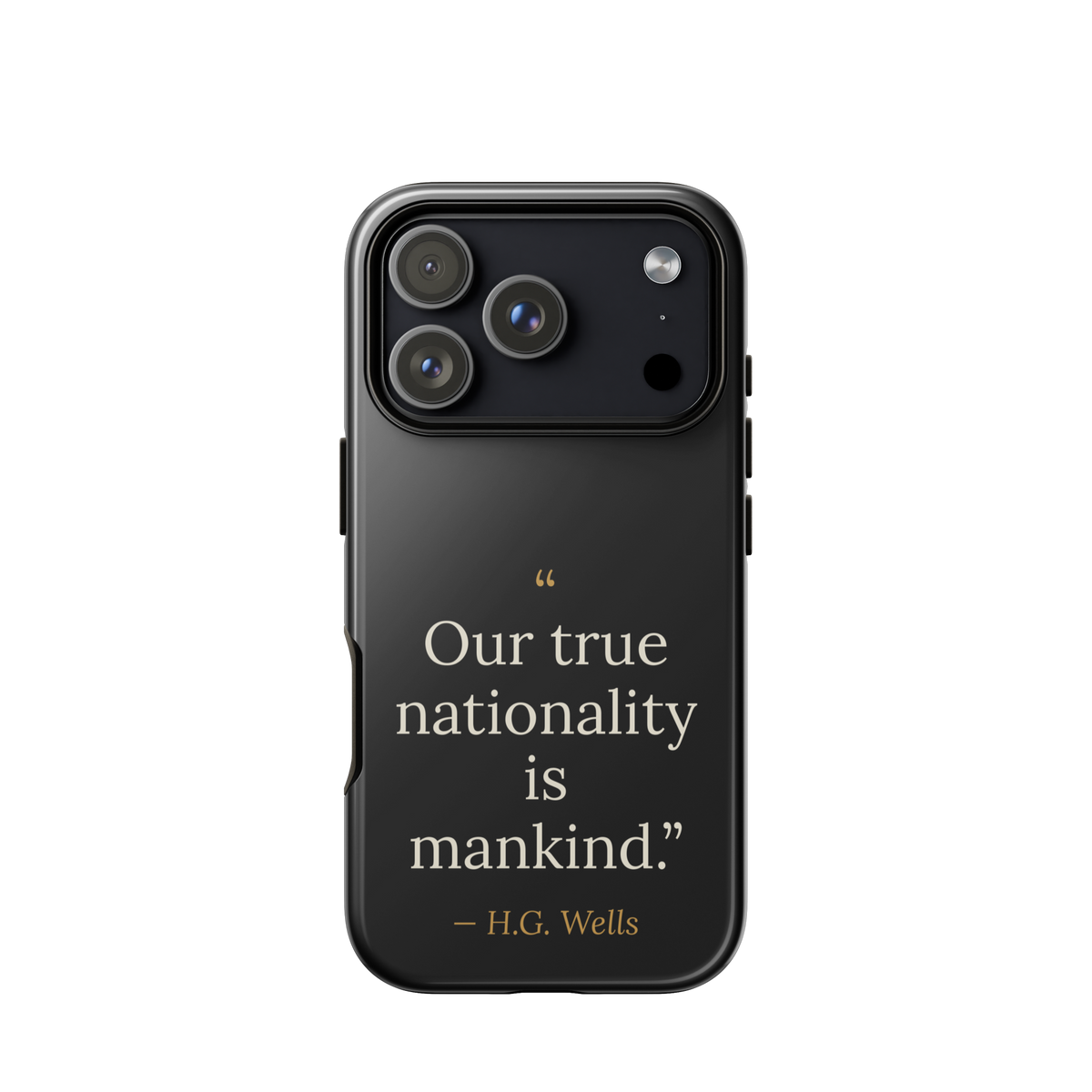


We Are Mankind — Wells Heretics Phone Case
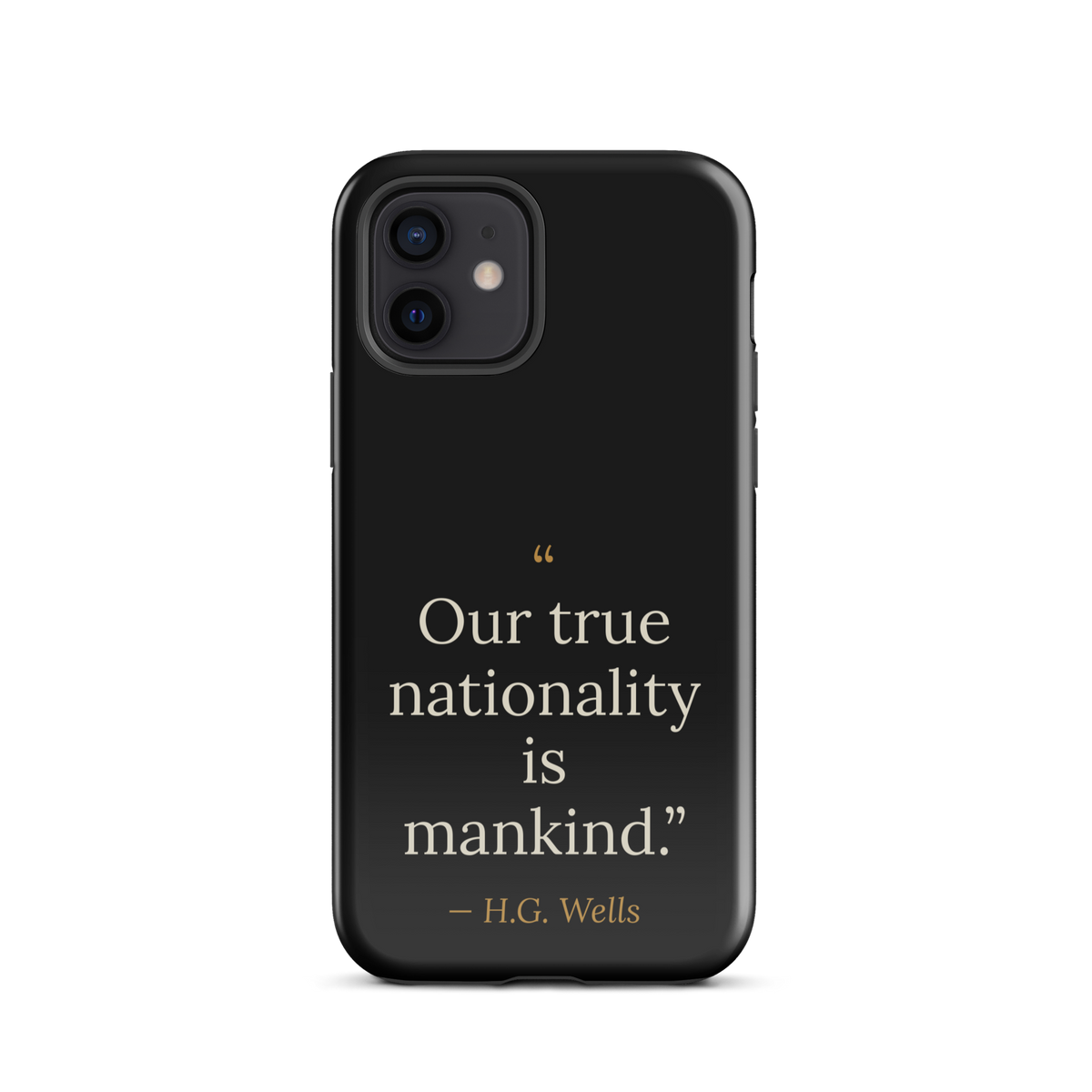
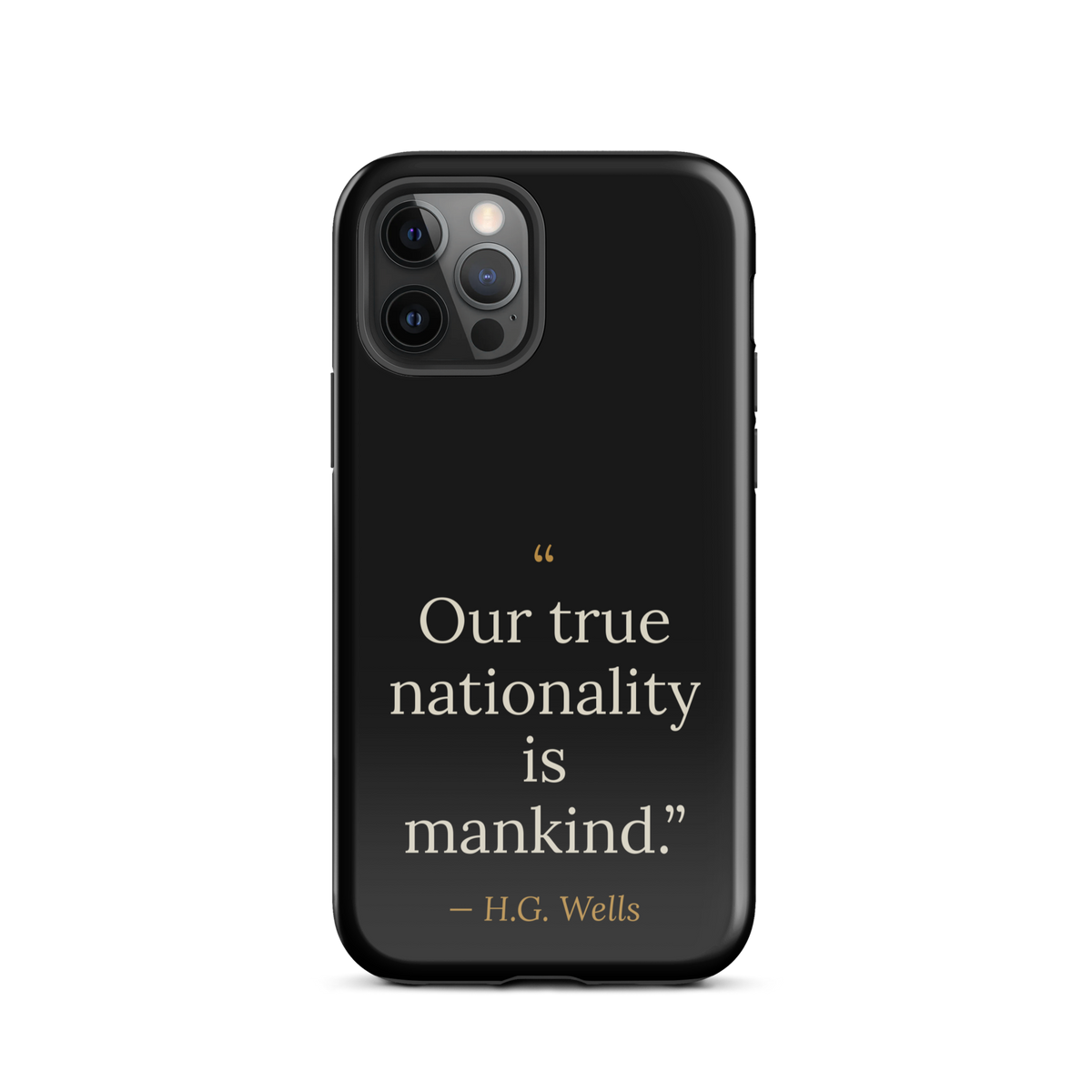
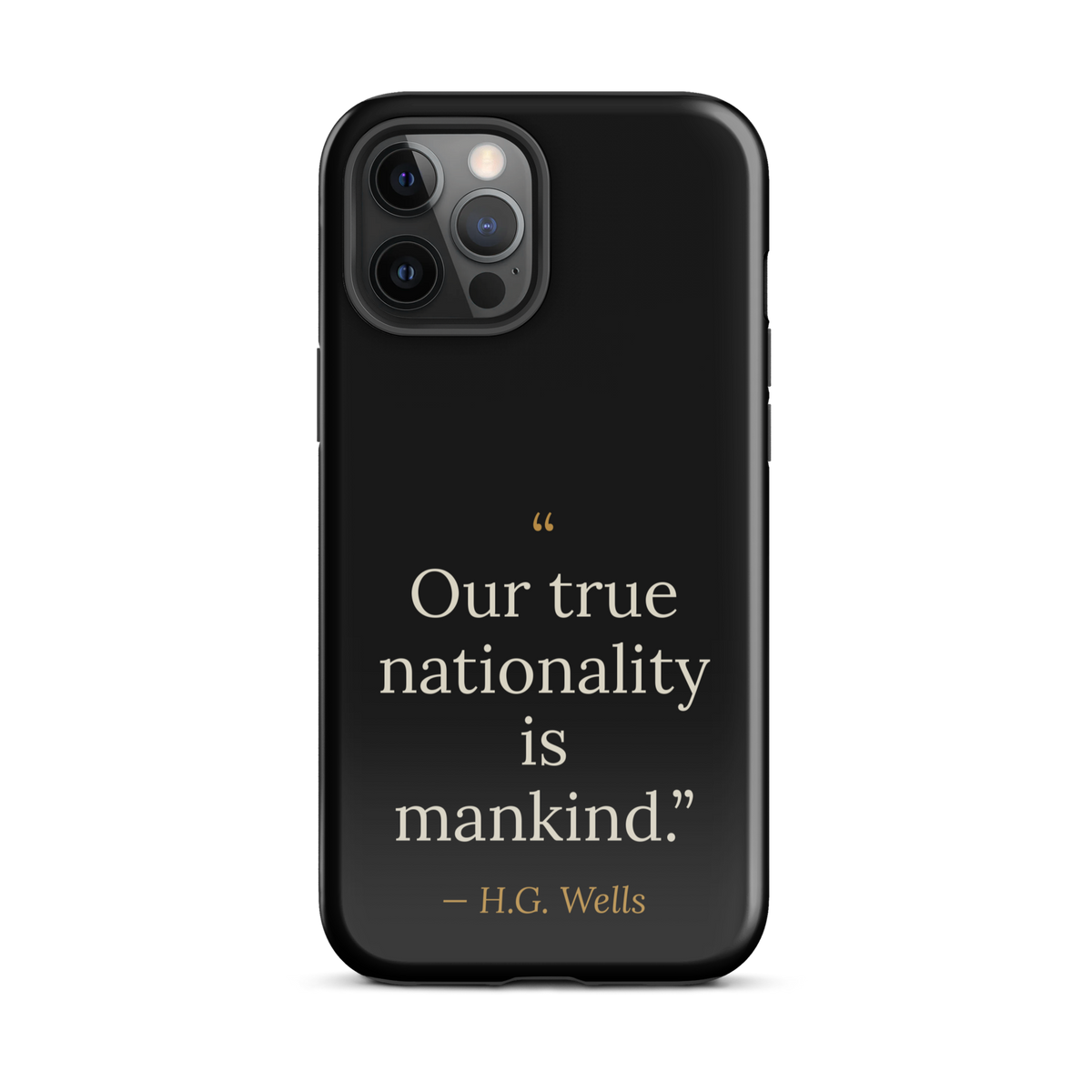
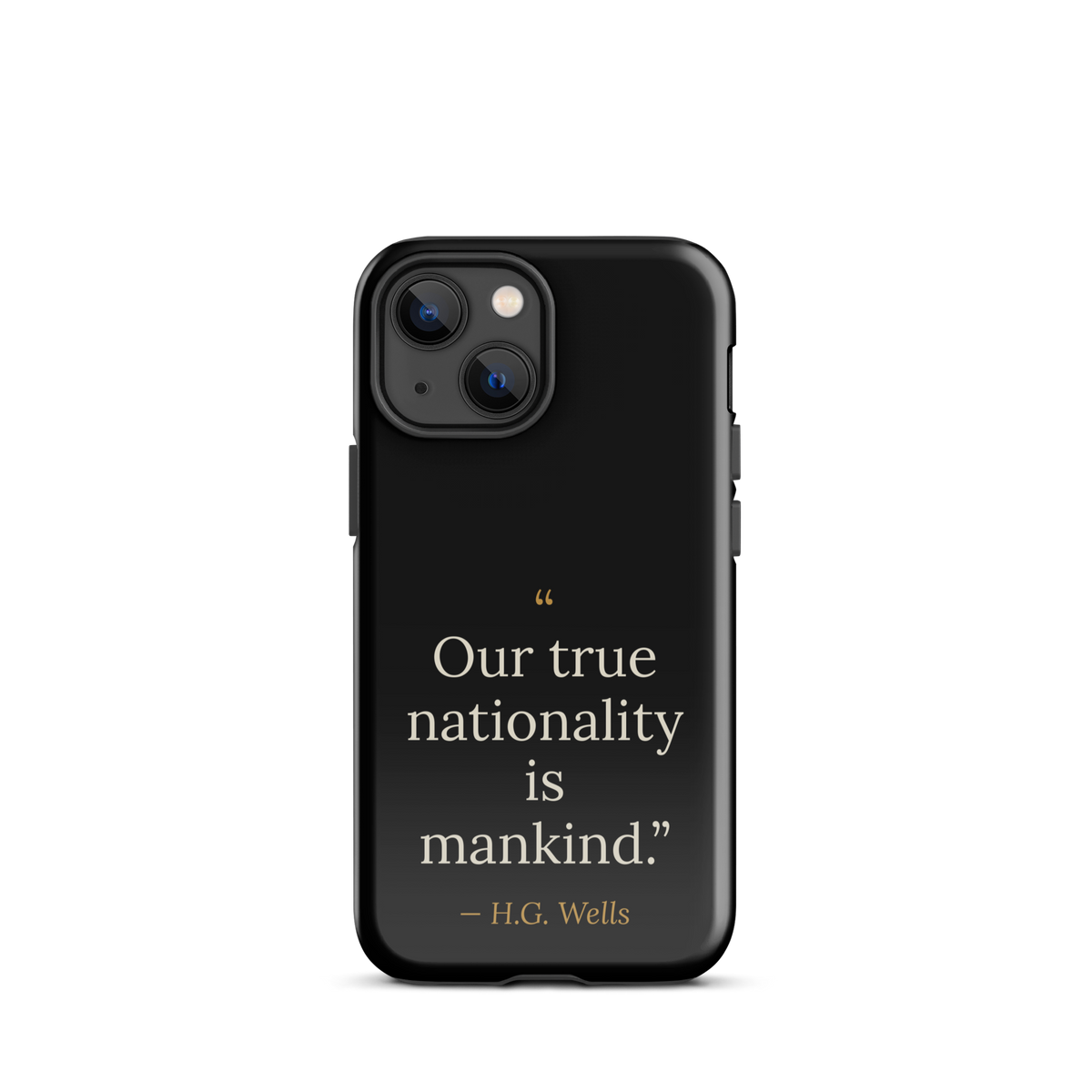
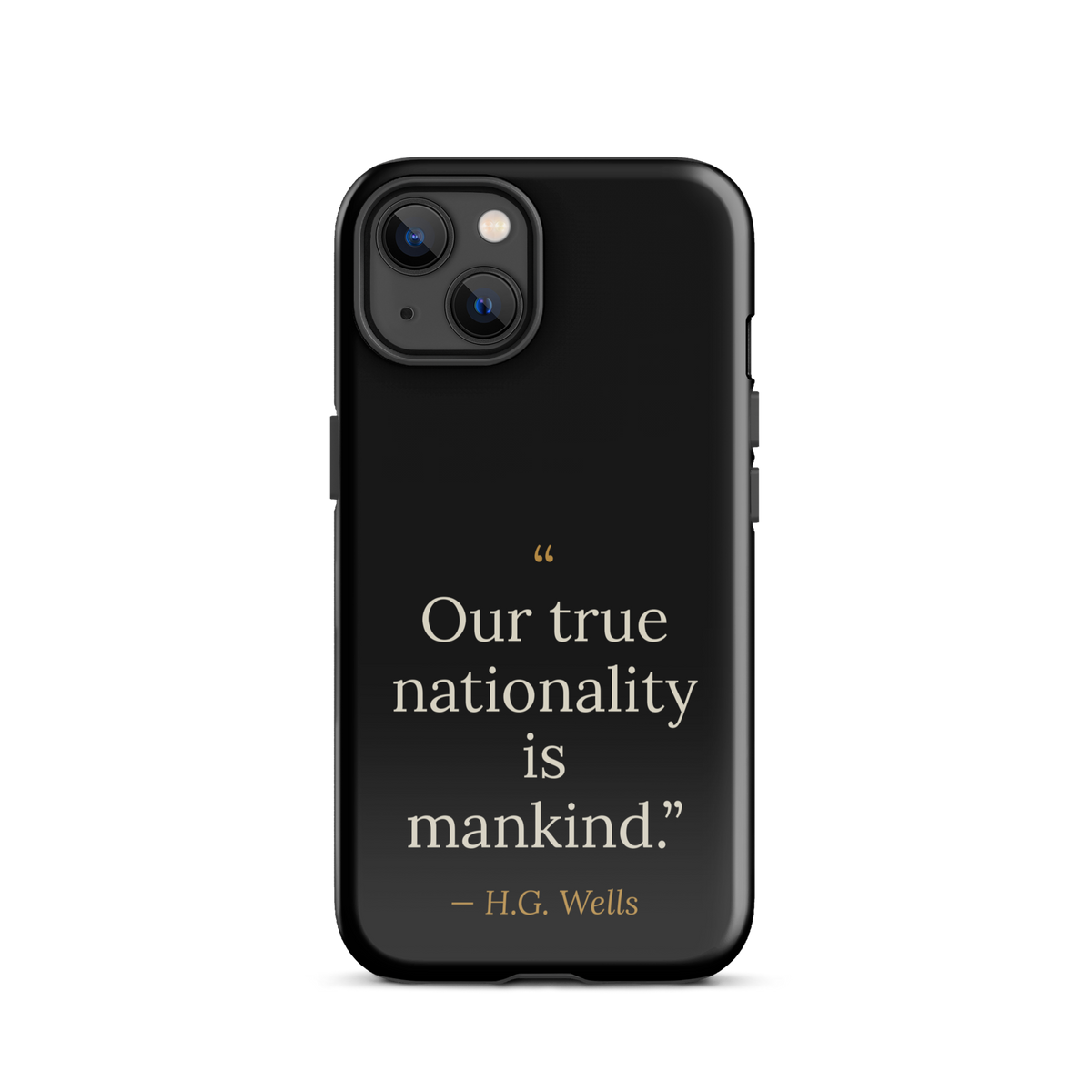
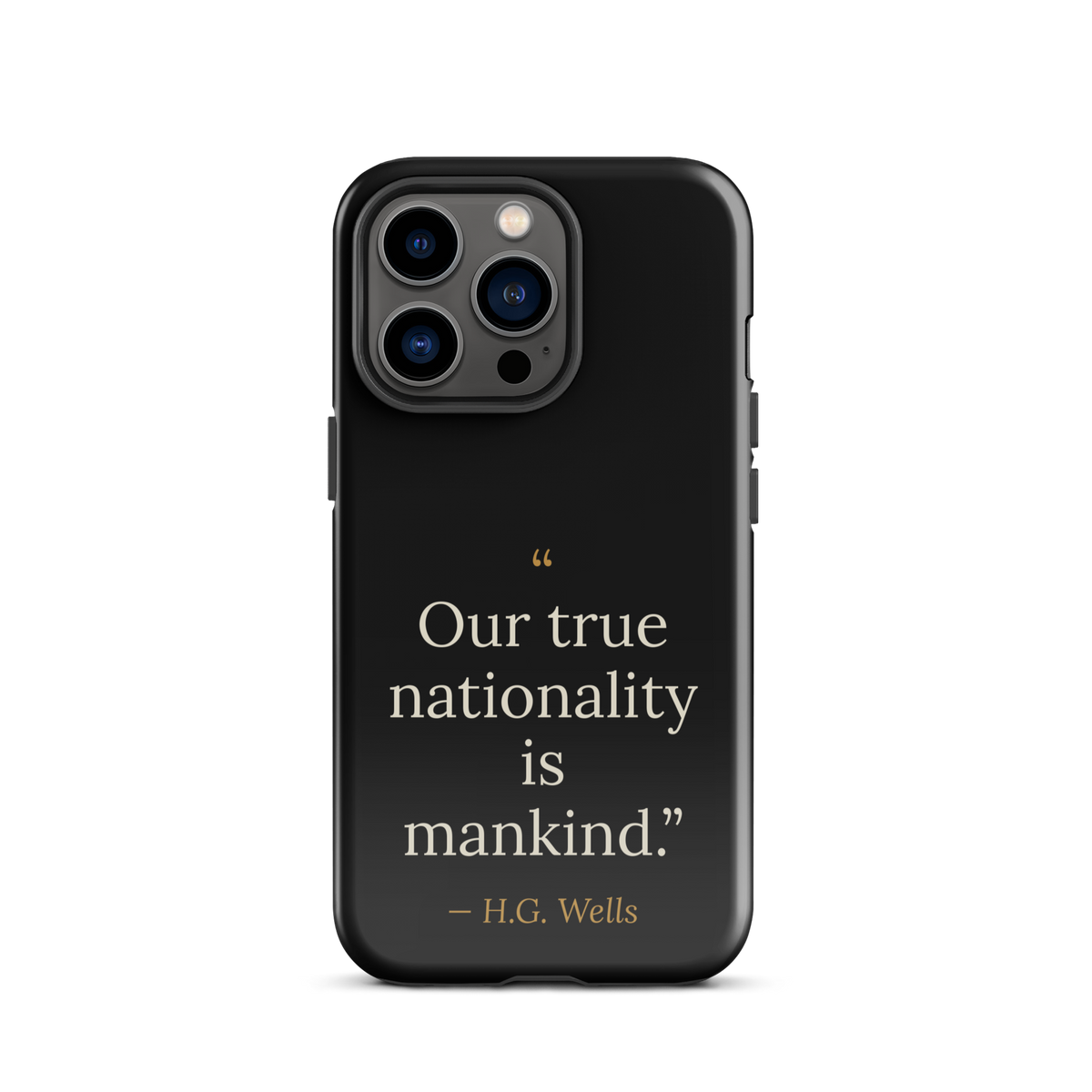
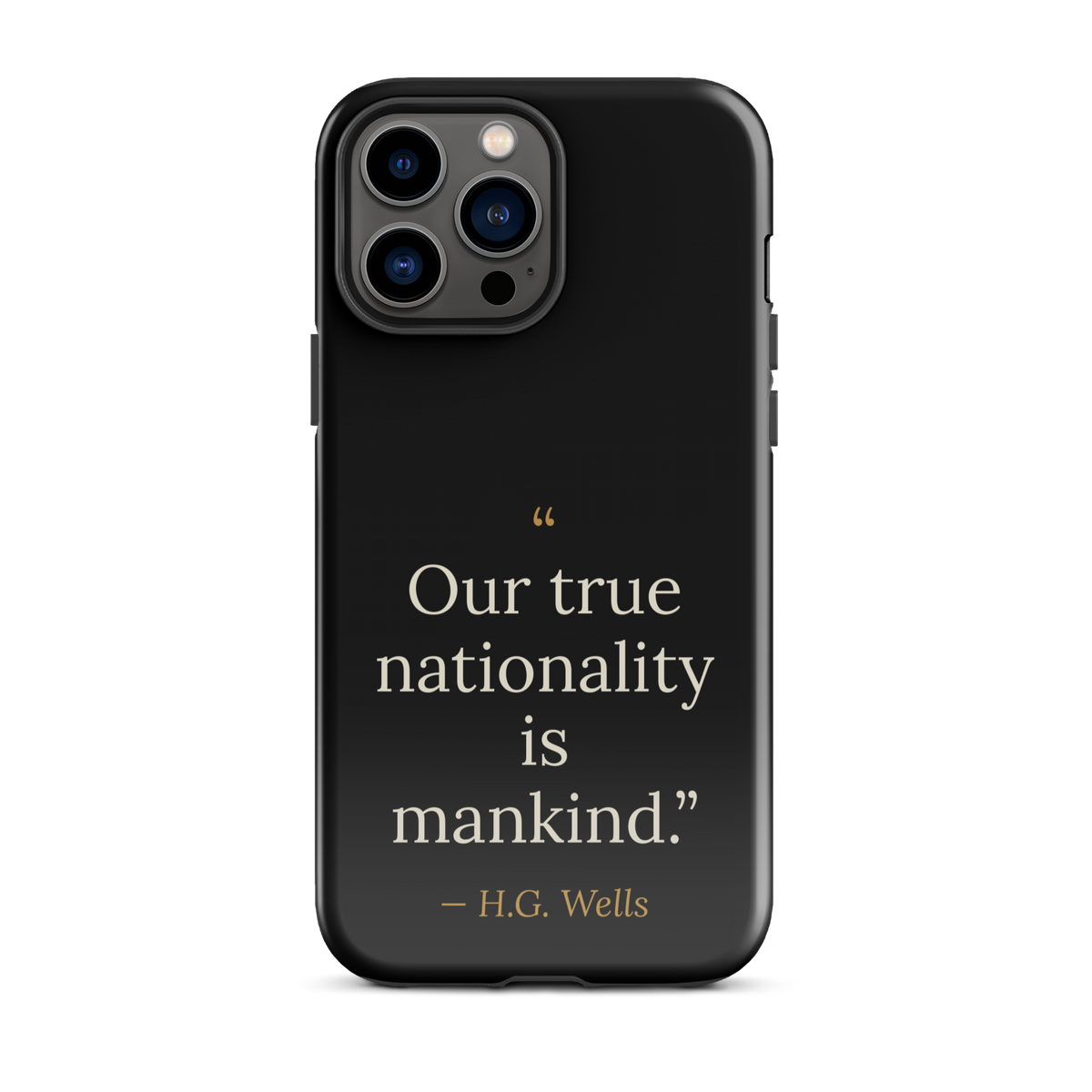
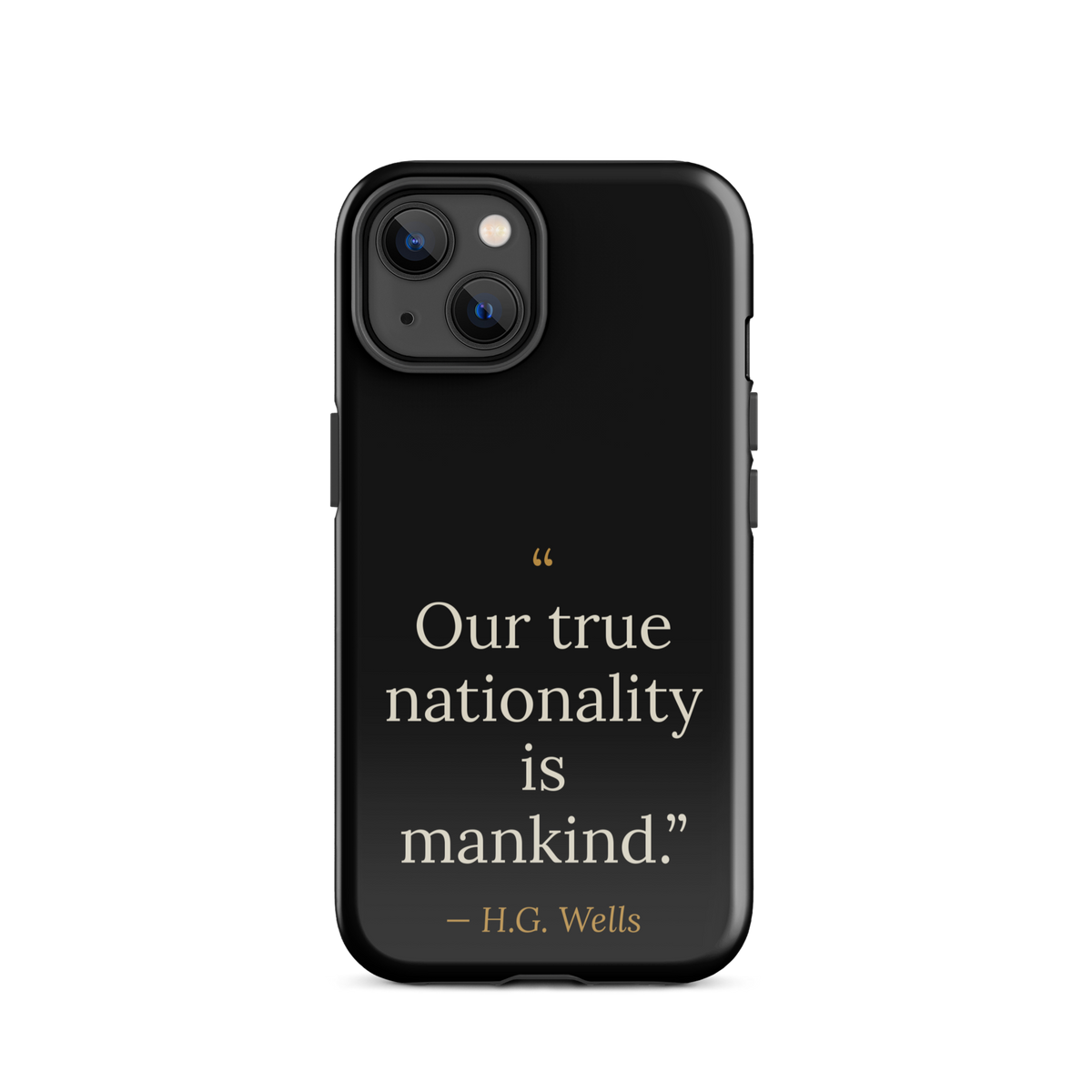
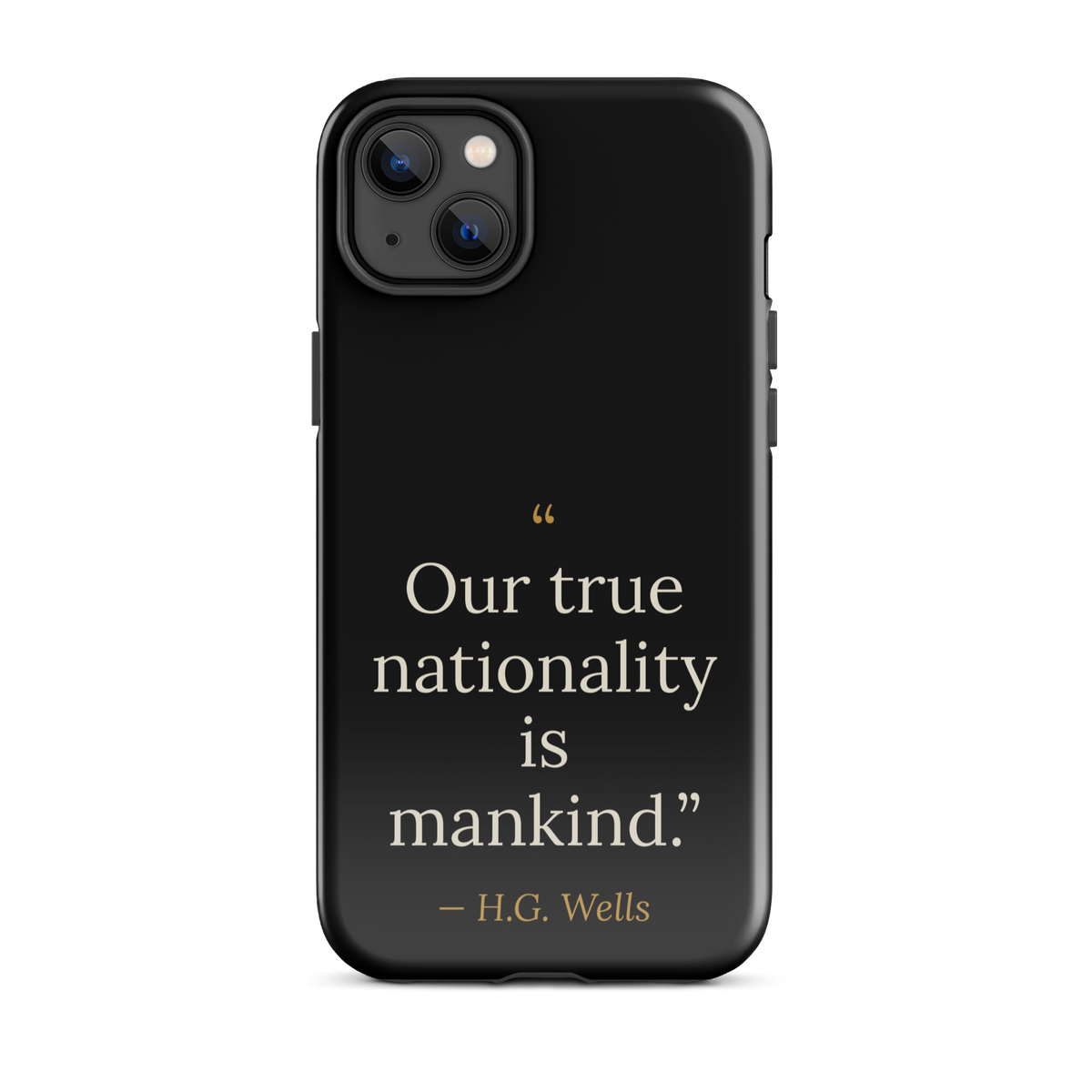
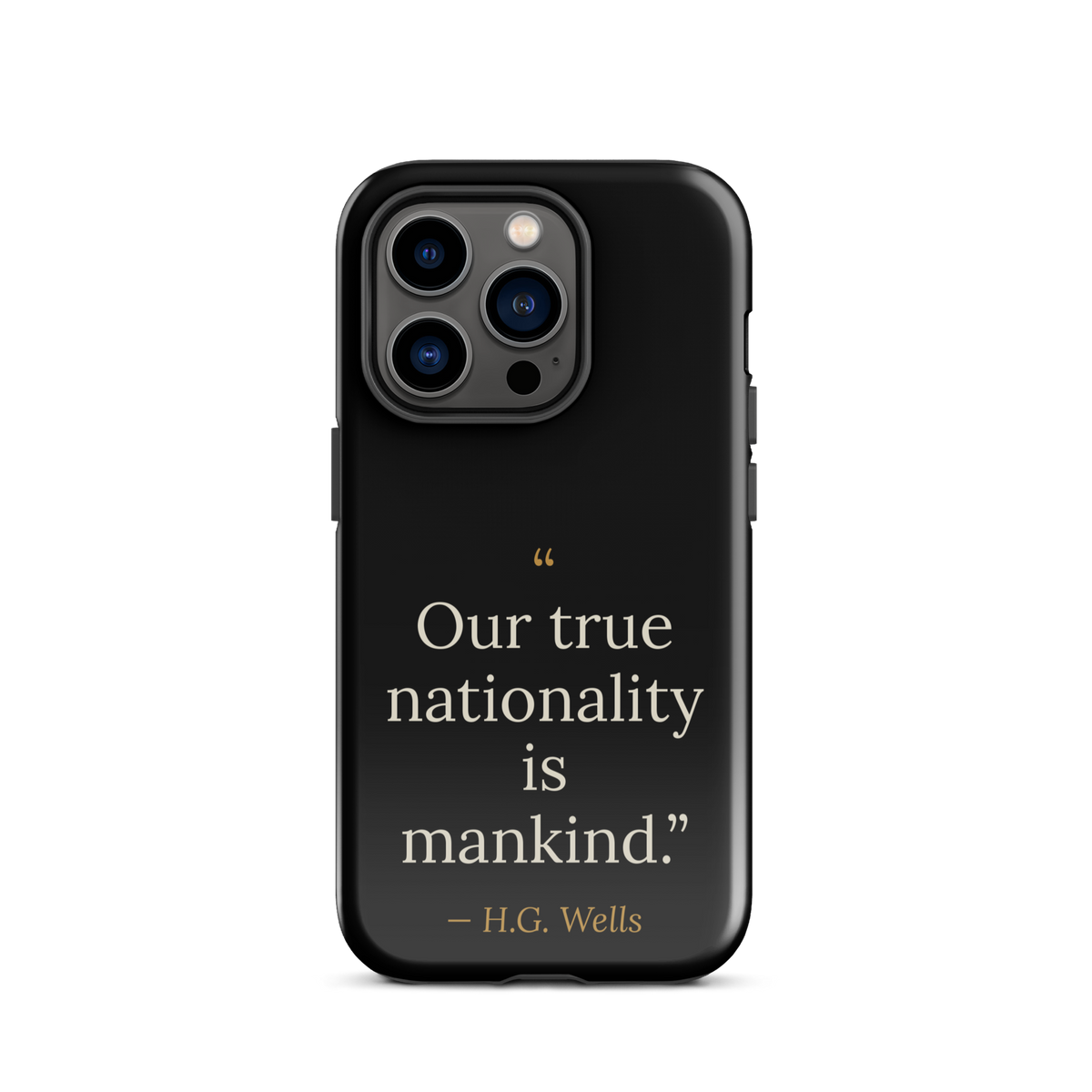
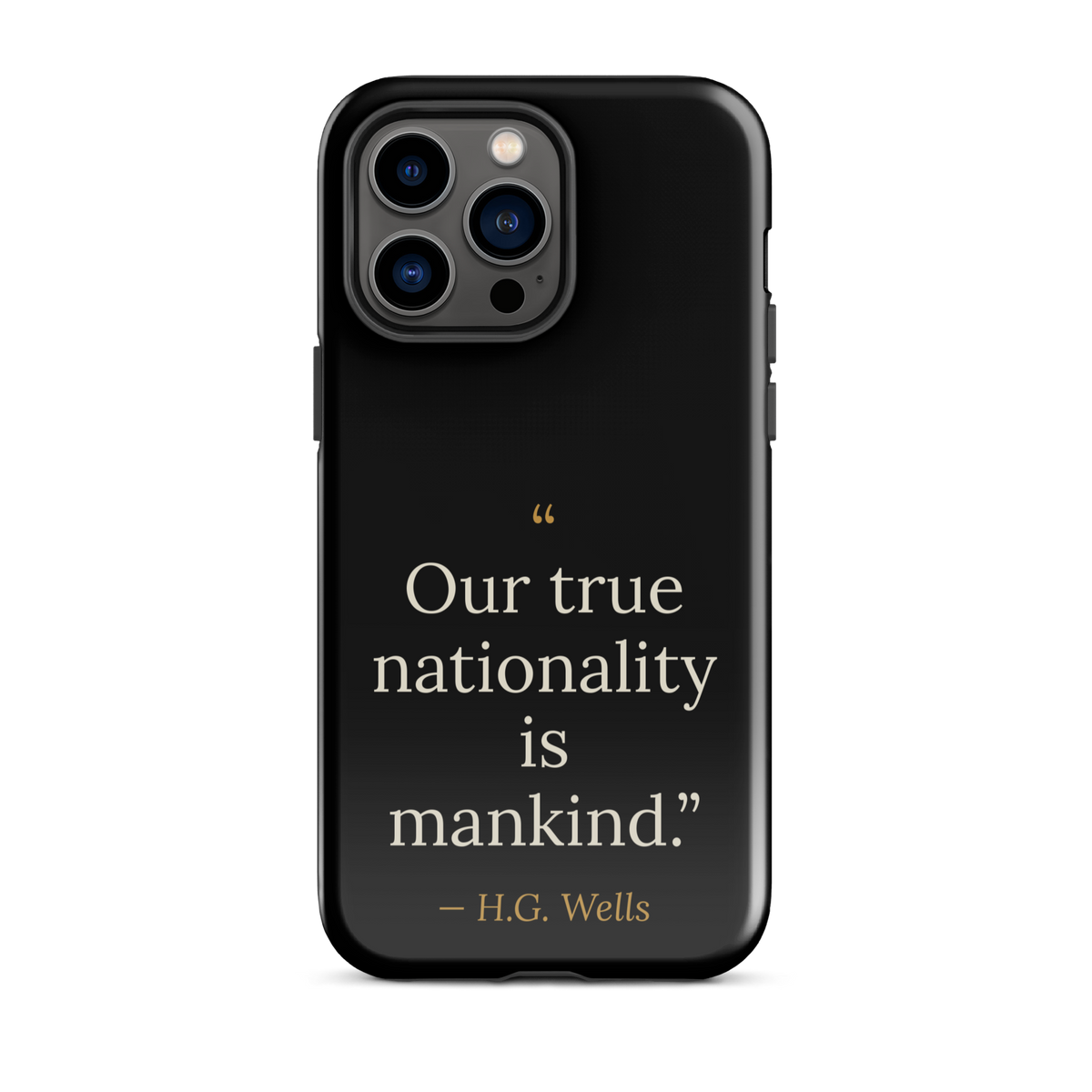
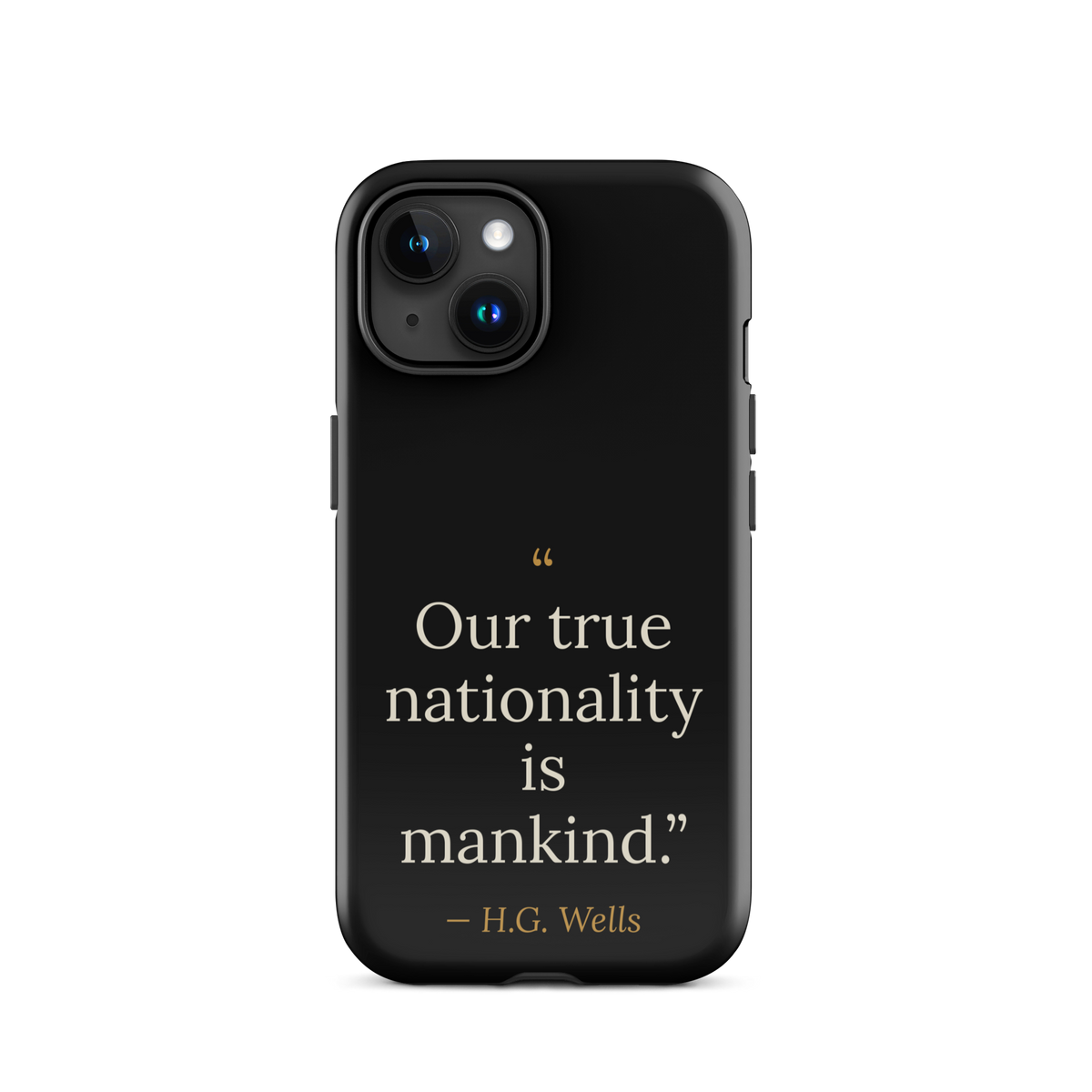
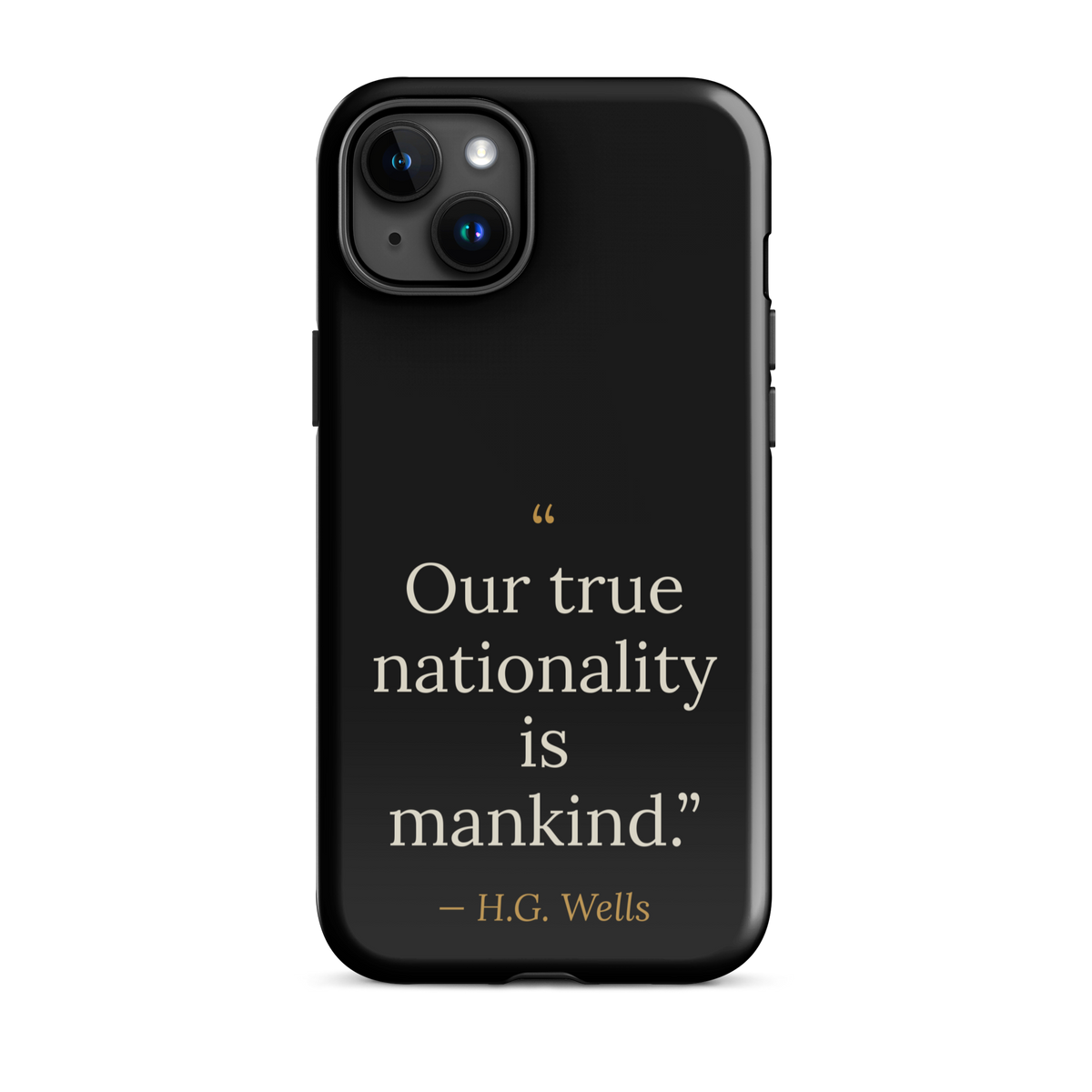
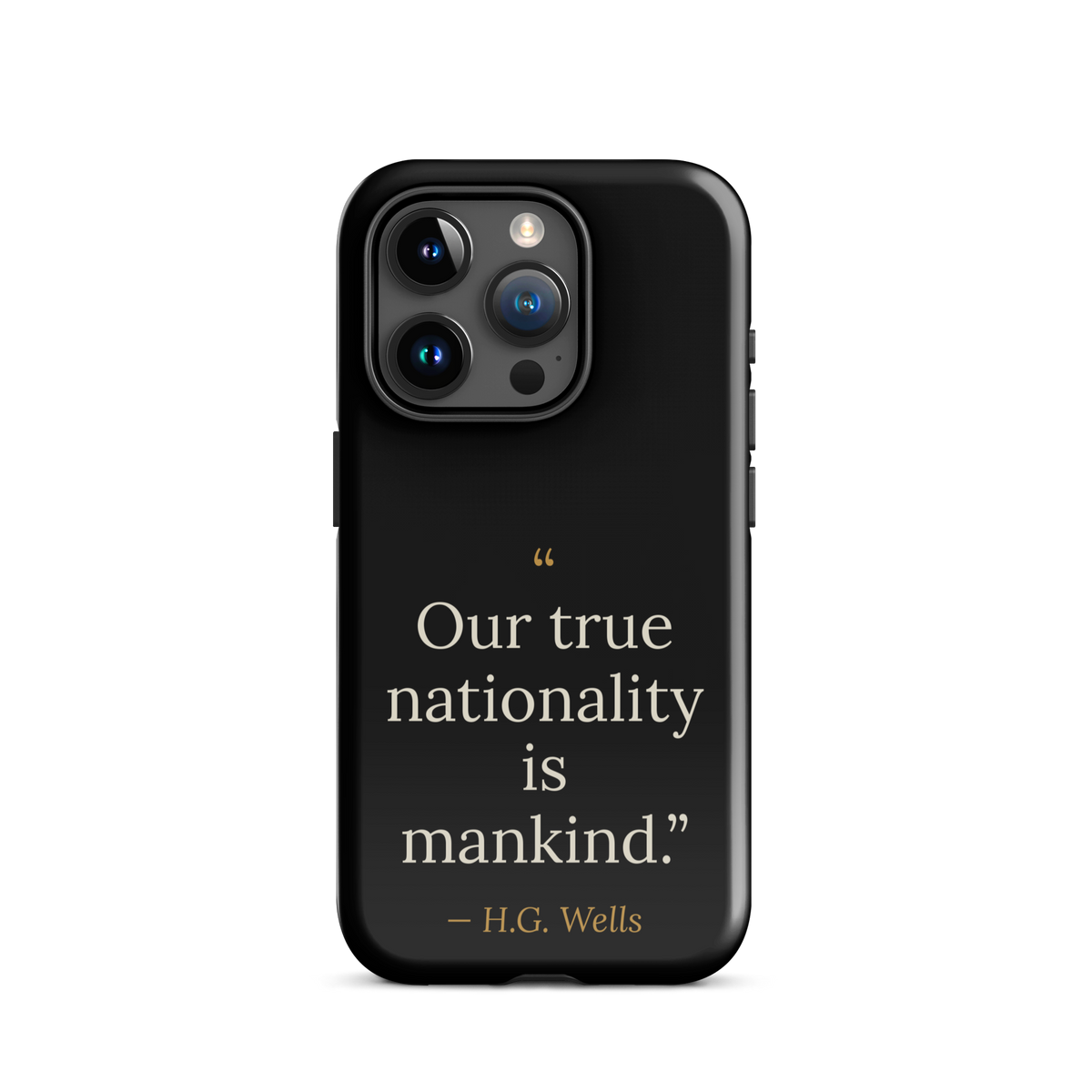
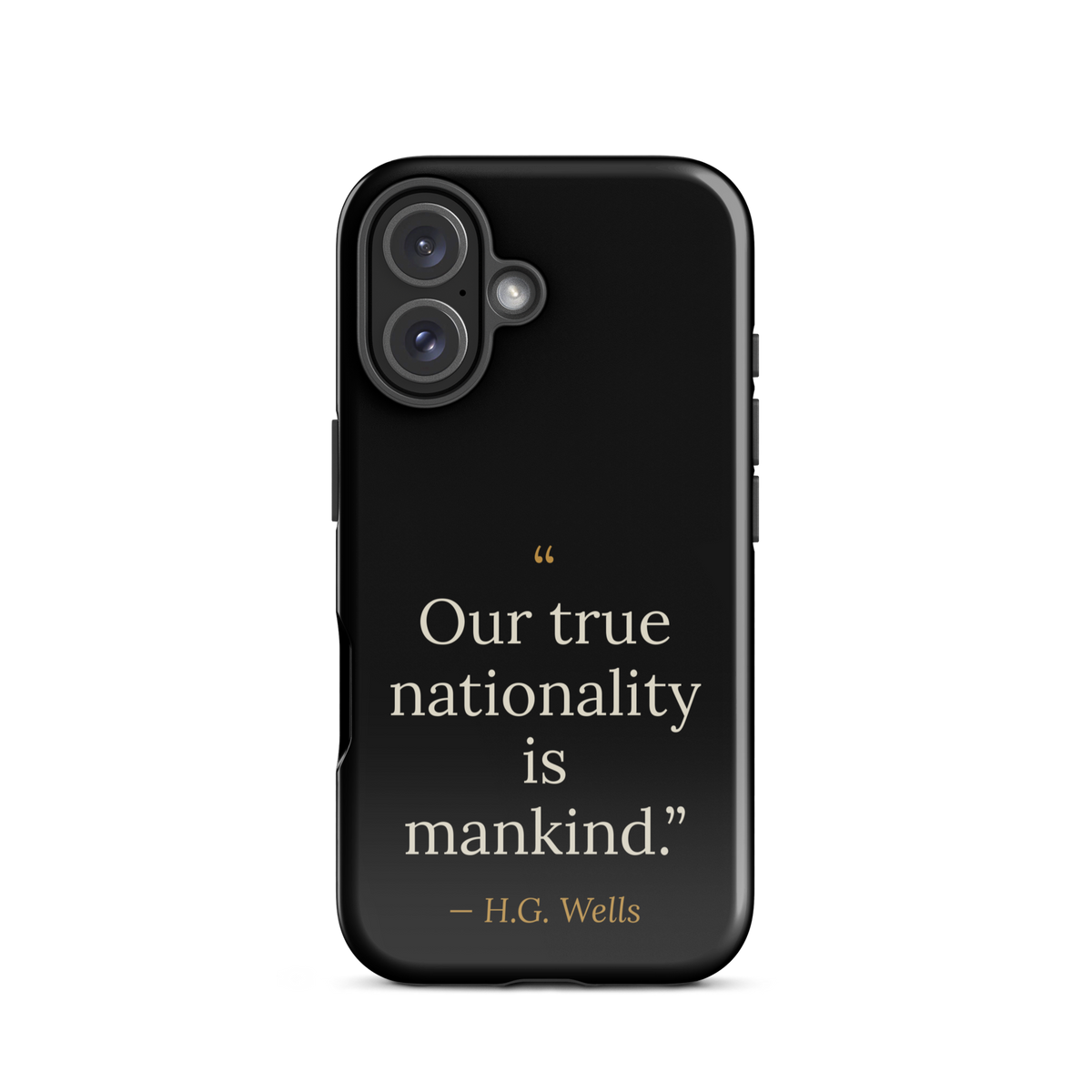
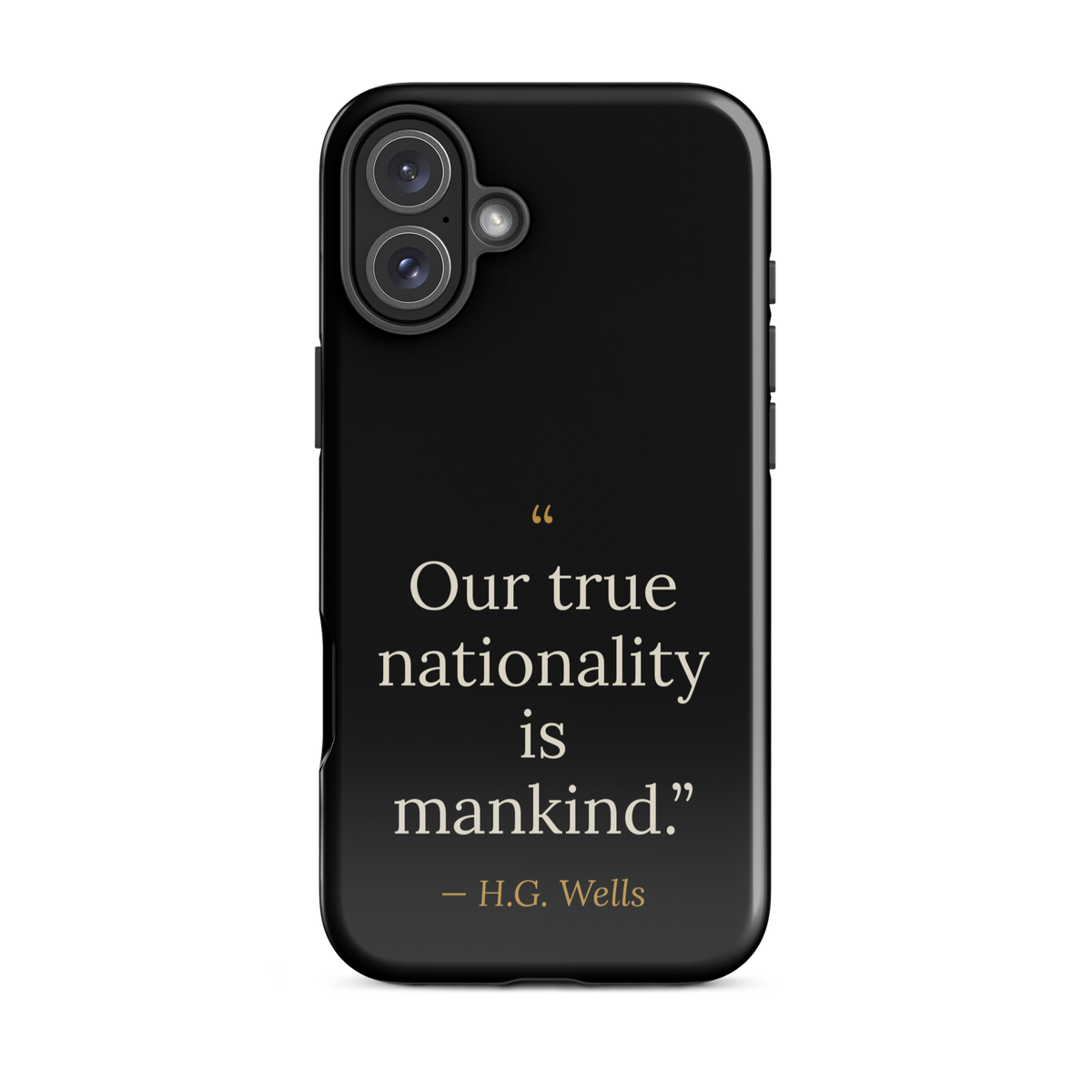
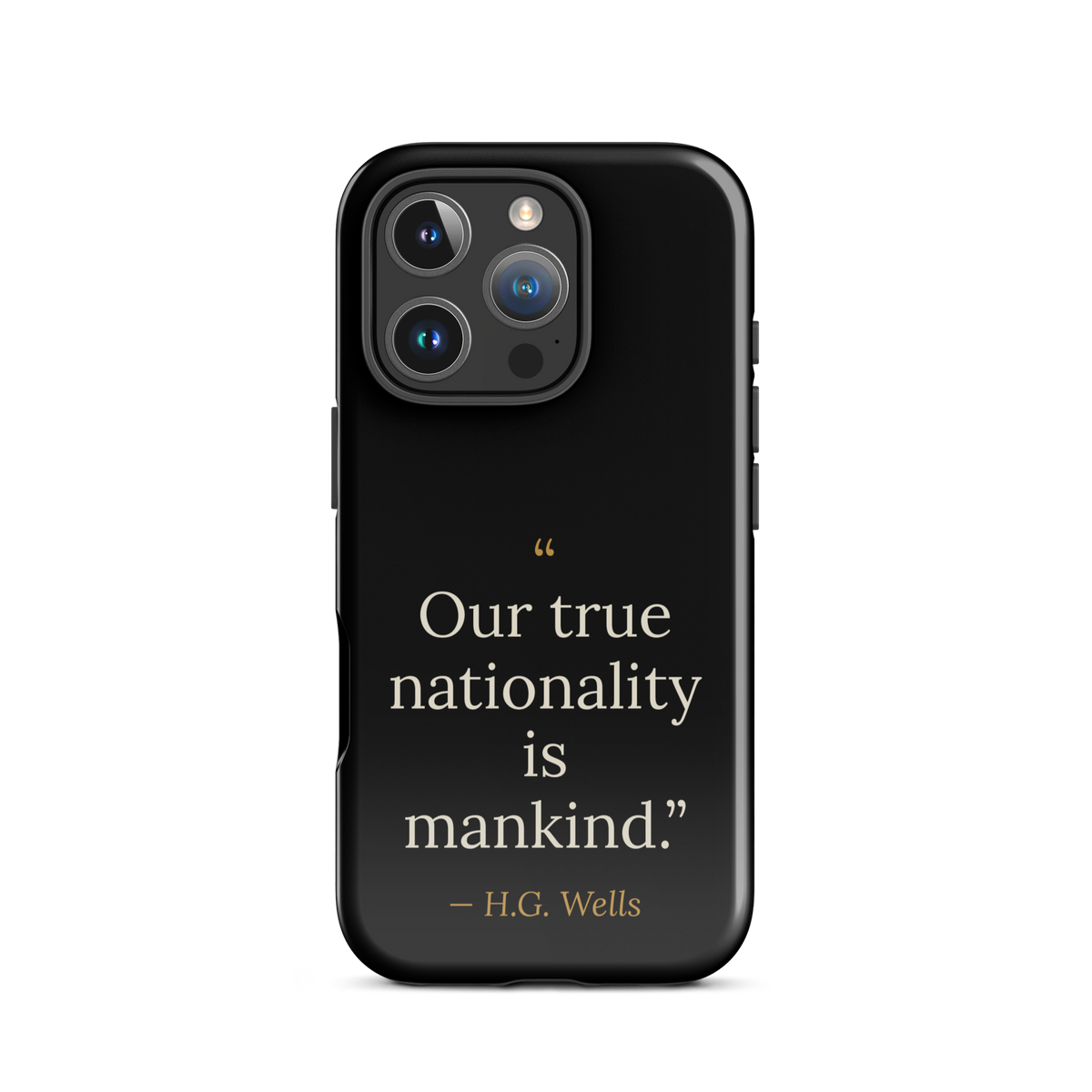
A literary quote phone case featuring H.G. Wells’s “Our true nationality is mankind.” from H.G. Wells, The Outline of History (1920). Literary objects by Quoteiac.
H.G. Wells, The Outline of History (1920)
"Our true nationality is mankind."
Wells wrote The Outline of History in 1920, in the wreckage of the First World War, after watching nationalism carry millions of people to their deaths in the name of lines on a map. Five words. The biggest possible frame for who we are. It sits on the back of a phone — something most people carry in one hand while arguing with strangers in another country — which feels about right.
This isn't a phone case. It's the largest identity that fits in your pocket.
The Design
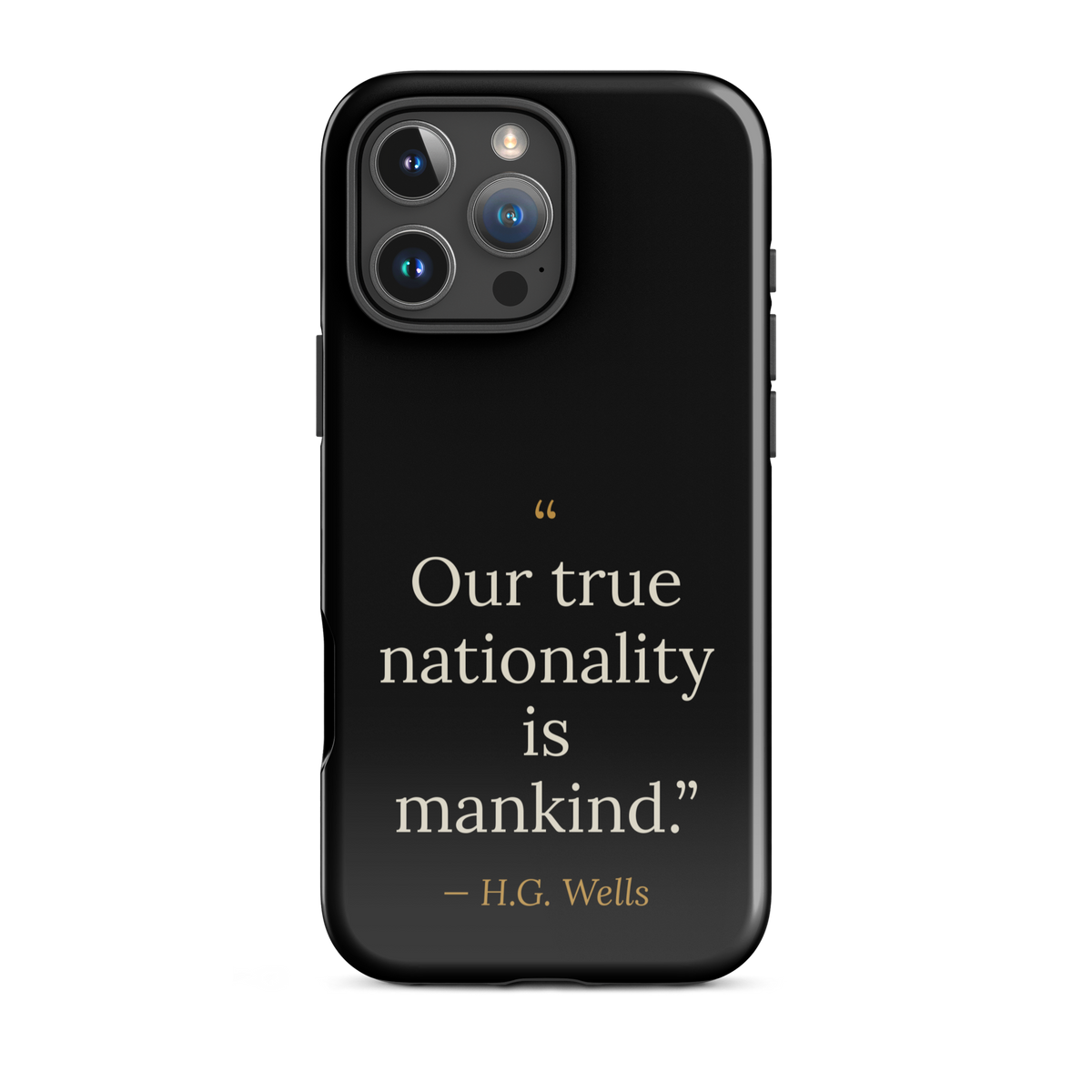
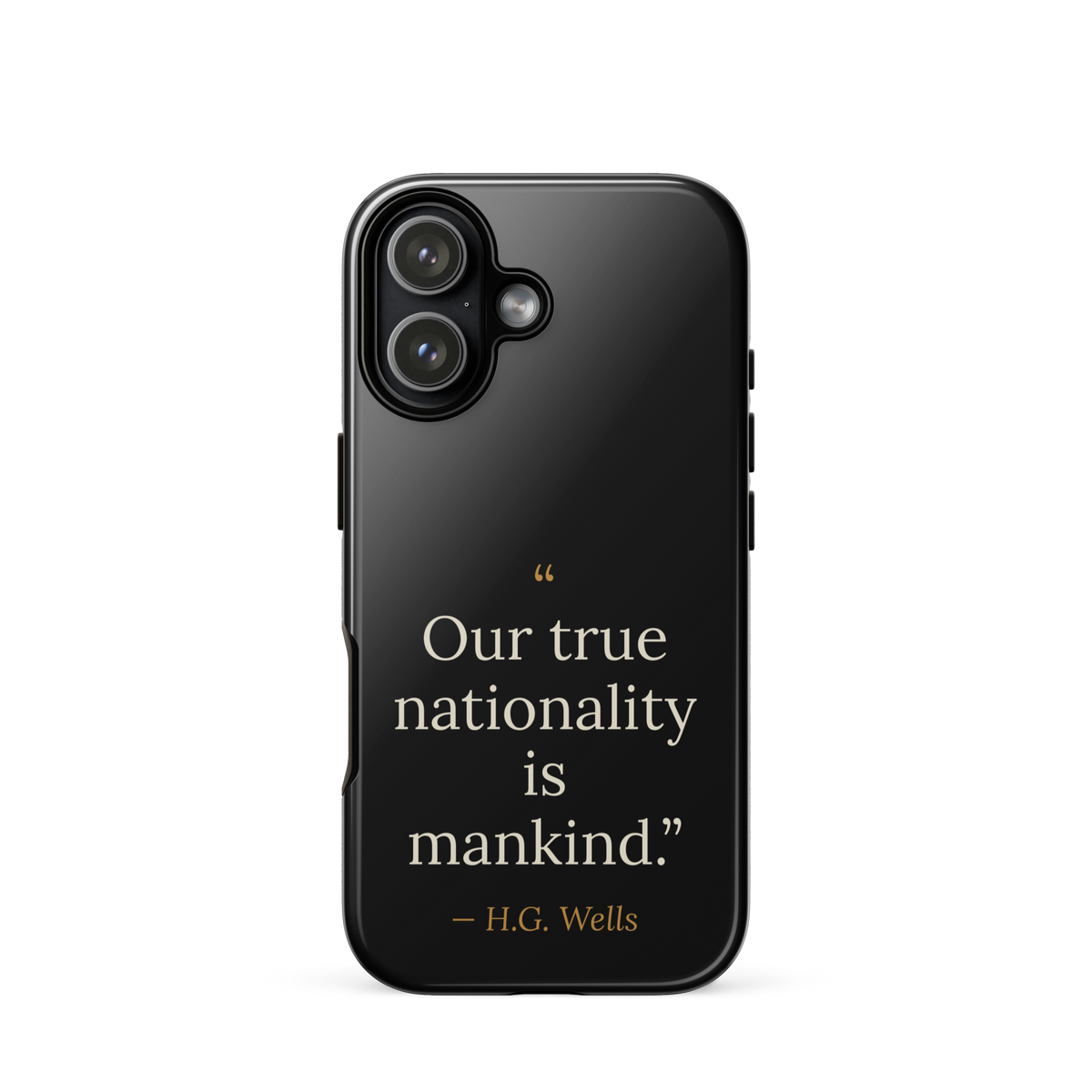
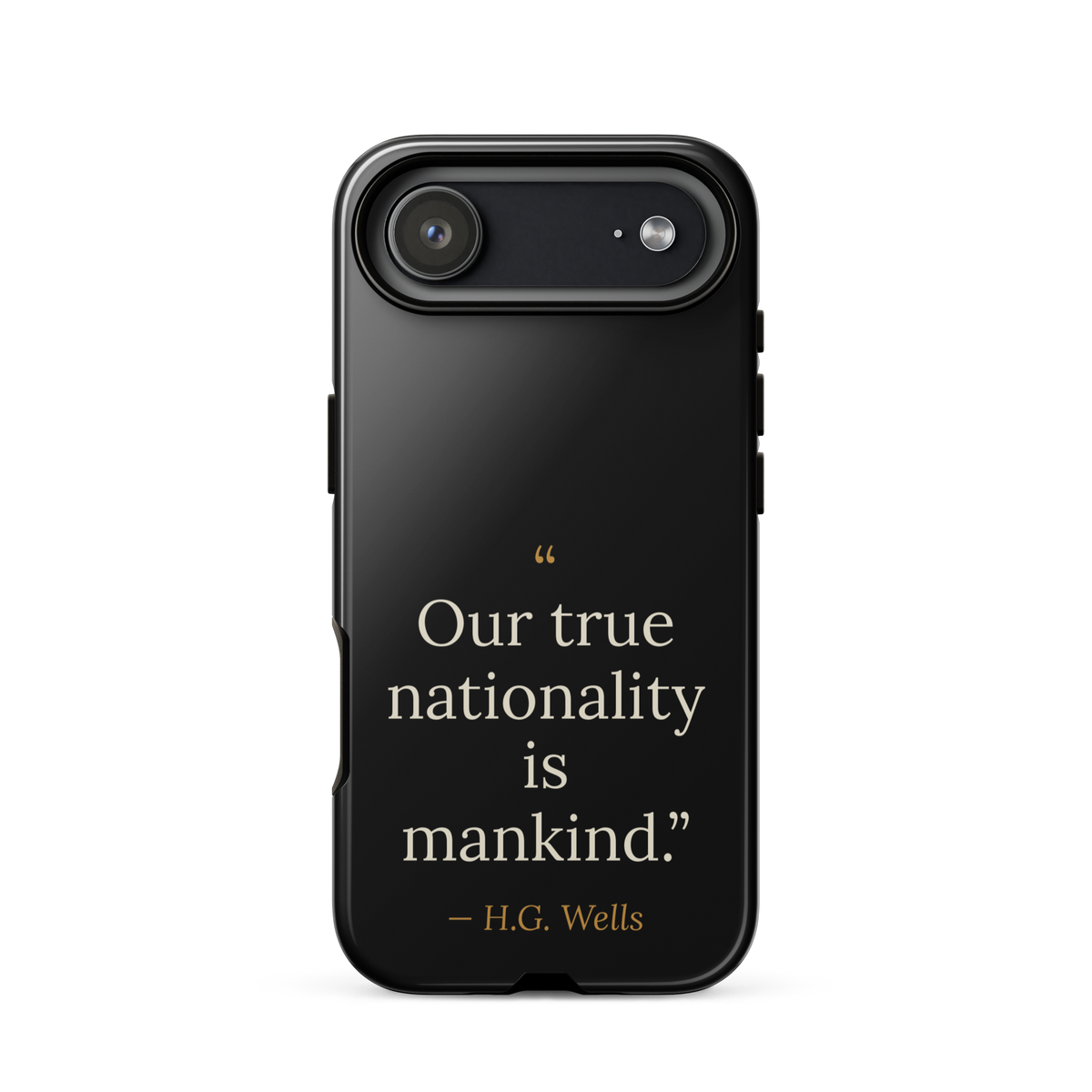
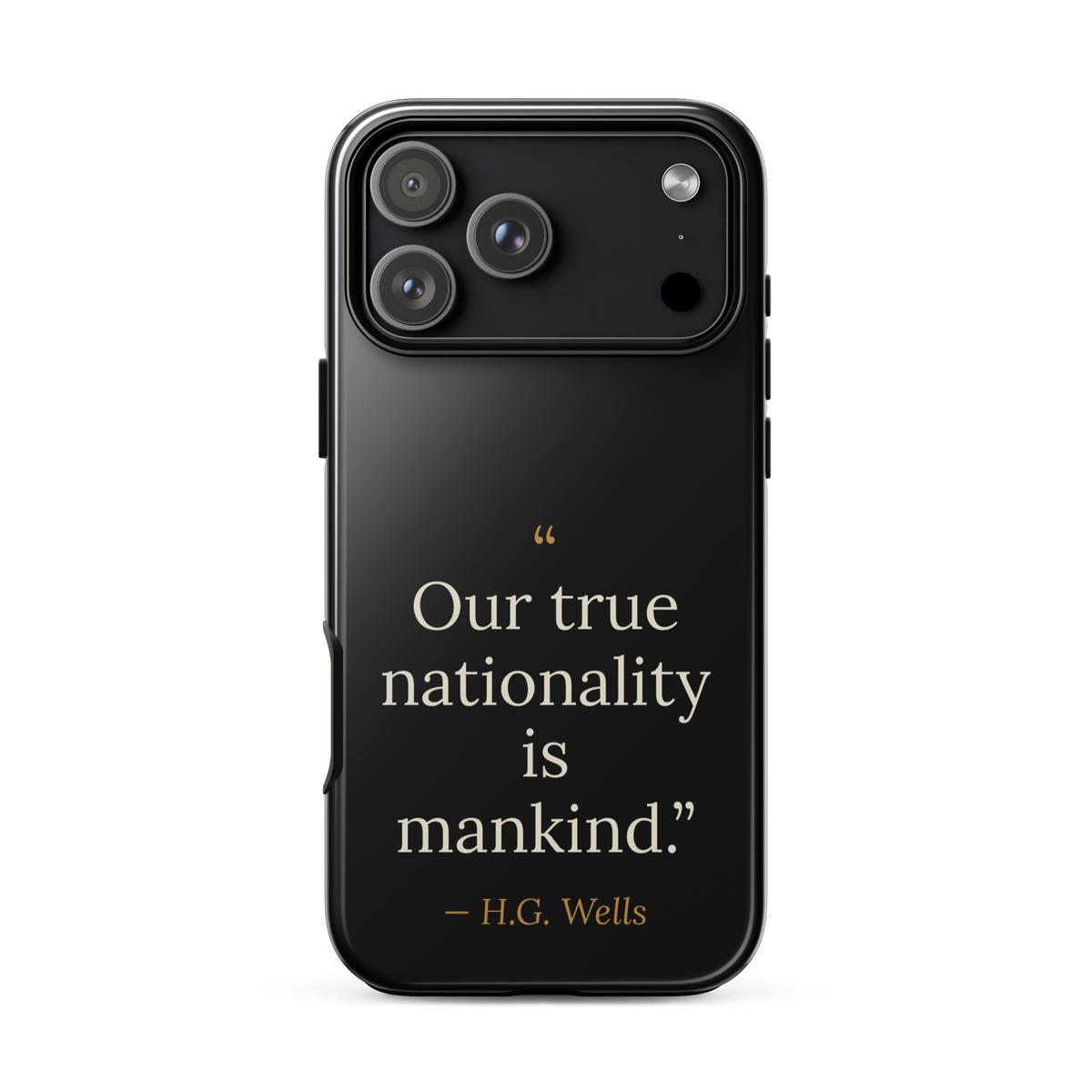
A large gold opening quotation mark anchors the top, and the quote drops underneath it in four lines — "Our true" / "nationality" / "is" / "mankind." — its own line, its own weight. The attribution runs below in gold. The design moves slowly: one word at a time, arriving at the only conclusion that fits everyone.
Also on the We Are Mankind Tee, We Are Mankind Mug, and We Are Mankind Long Sleeve Tee.
About This Case
- Tough dual-layer construction — flexible TPU inner layer, hard polycarbonate outer shell
- Full black back panel — sublimation edge to edge
- iPhone 11 through 17 — all models and sizes, select yours at checkout
- Raised edges protect the screen; precise cutouts for camera, buttons, and ports
- Clean with a damp cloth
- Induction charging compatible — works with most wireless devices
Care note: Keep away from liquids with high alcohol content and prolonged direct sunlight to preserve the design.
Who It's For
The internationalist. The traveler. The person who has looked at a border and found it smaller than advertised. Anyone who has ever felt the word "nationality" was too small a container for what they actually were.
The biggest identity fits in your pocket. Carry it.
H.G. Wells, in Plain English
- Lived: 1866–1946, England
- Wrote The Time Machine, The War of the Worlds, and The Invisible Man — then spent the rest of his career writing nonfiction trying to prevent the futures he'd imagined
- The Outline of History (1920) sold over two million copies — humanity's story as one continuous narrative
- Predicted aerial warfare, atomic weapons, and global information networks decades before any of them existed
- Spent his career warning about what tribalism and short-term thinking could do — and being largely correct
Choose options


