
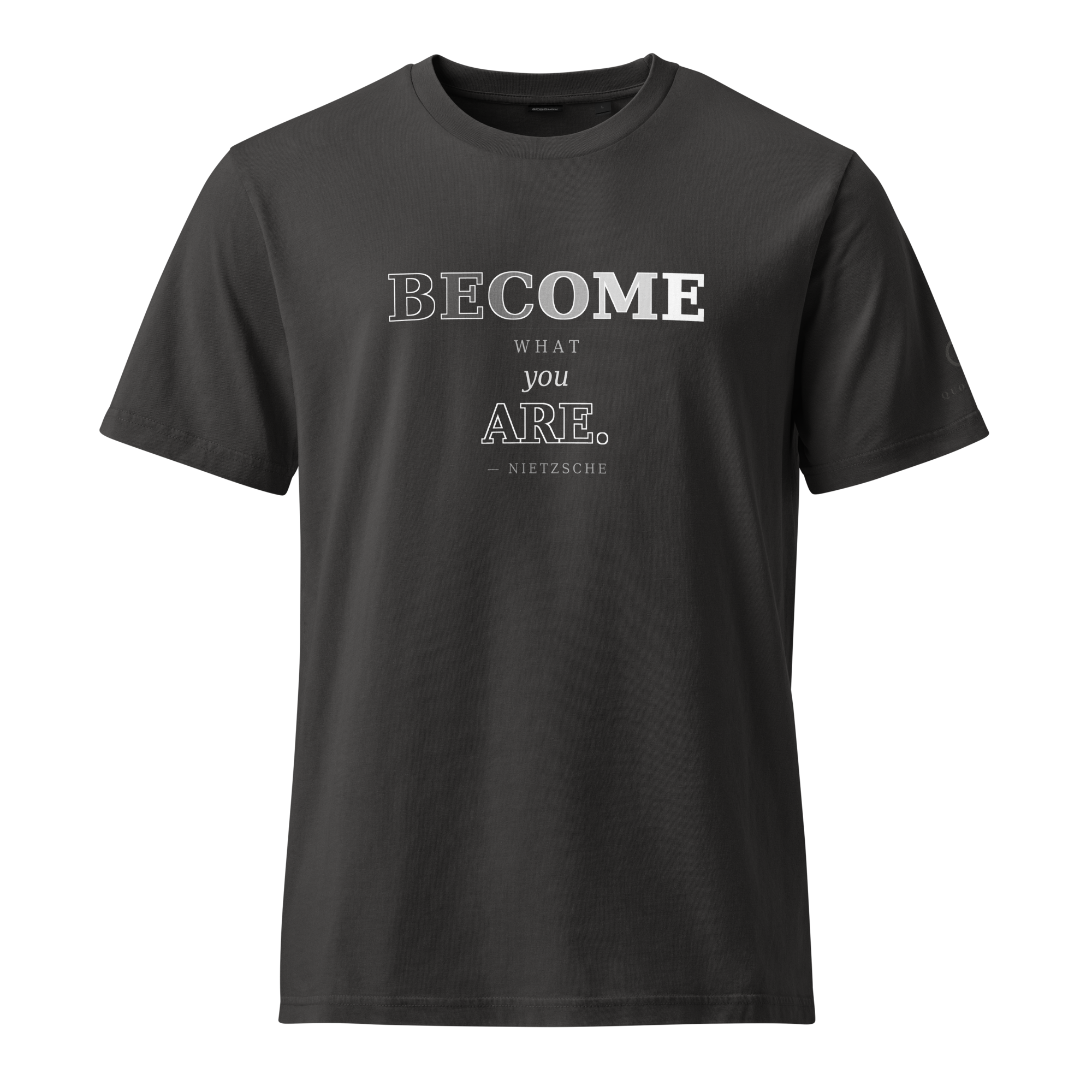
The Uncovering — Nietzsche Zarathustra T-Shirt
Pindar wrote it as praise for a victorious athlete; Nietzsche turned it into a command. “Become what you are” — four words he returned to across his work, from The Gay Science to the subtitle of Ecce Homo.
Friedrich Nietzsche
“BECOME what you ARE.”
Context
Not construction. Not reinvention. Nietzsche isn’t asking you to build something new — he’s pointing at what’s already there, buried under expectation, compromise, and the version of yourself you assembled for other people’s comfort. The work isn’t addition. It’s removal.
Who It’s For
- People who’ve outgrown the version of themselves they used to perform
- Anyone who feels the distance between who they are and who they were told to be
- The one who doesn’t need a new self — just access to the one already there
Wear the instruction.
The Design
BECOME arrives at the top like a word still making up its mind. The first letters are outline only — structure without weight, the shape of the thing before it commits. Moving right, they fill in, letter by letter, until the last one lands solid and complete. WHAT. you. ARE. follow below, each word on its own line, each given its own scale. The stacking isn’t decoration; it’s the argument itself, laid out in sequence. The word that changes is already in the process of changing.
Also: the Uncovering Mug and Journal.
About This Tee
- 100% organic ring-spun cotton (GOTS certified)
- Fabric weight: 5.6 oz/yd² (190 g/m²)
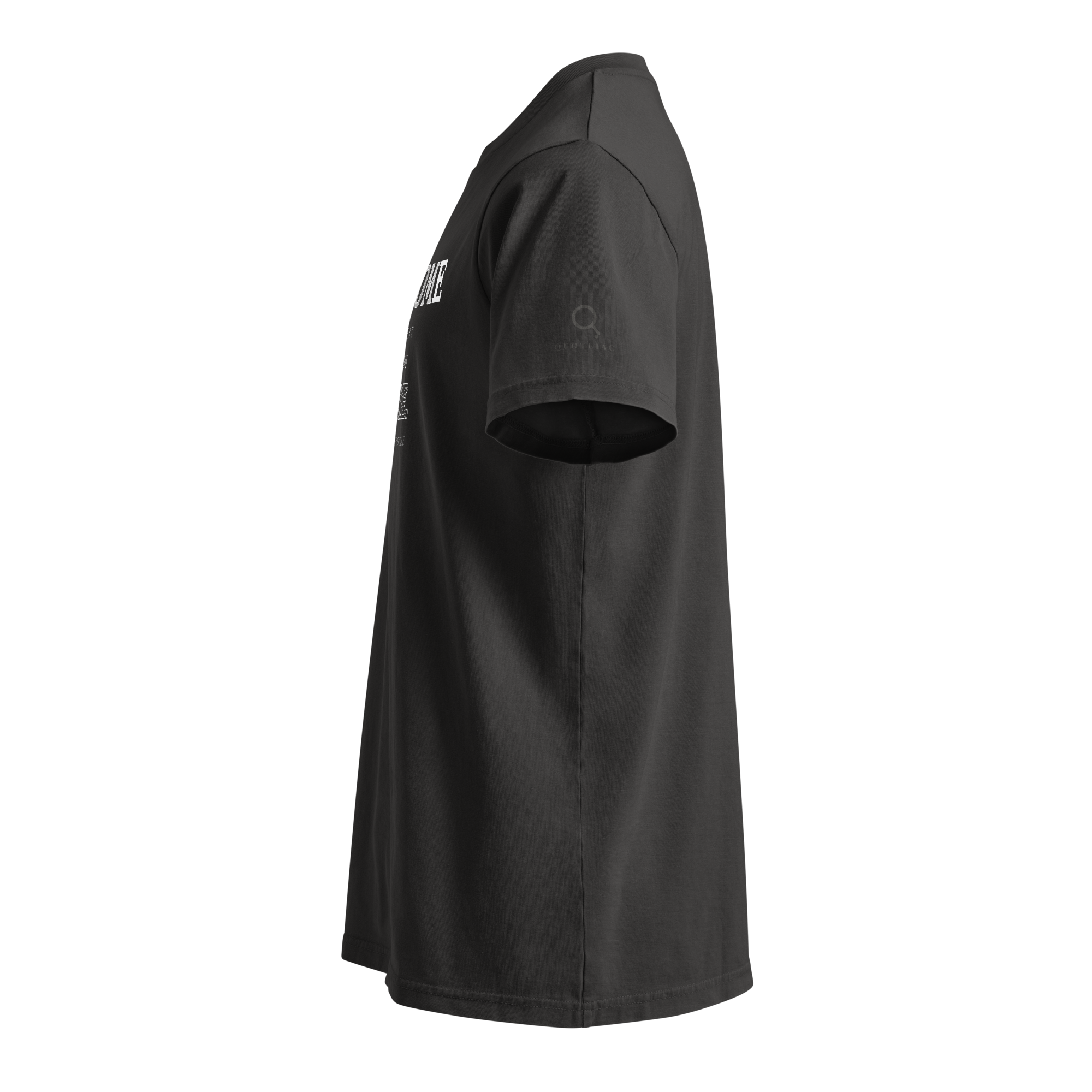
- Relaxed unisex fit with set-in sleeves
- Side-seamed construction to keep its shape
- Ribbed collar built for everyday wear
- Pre-shrunk and machine washable
- Quoteiac logo on the left sleeve
Friedrich Nietzsche, in Plain English
- Lived: 1844–1900, Prussia (now Germany) — philosopher and philologist, one of the most influential and most misread thinkers of the 19th century
- “Become what you are” appears in The Gay Science (1882) and Thus Spoke Zarathustra (1883–85), and again in Ecce Homo (1888) — his autobiography, written in the last weeks before his collapse
- He borrowed the phrase from Pindar’s second Pythian Ode (around 474 BCE), transforming it from an athletic ideal into a philosophical instruction
- Spent his last eleven years in mental incapacitation, cared for by his mother and sister — never able to see the influence his work would have
- His sister Elisabeth later edited and distorted his unpublished notes, associating his work with ideologies he explicitly rejected
Size Chart (Stanley/Stella)
| Size | Width (in) | Length (in) | Sleeve (in) |
|---|---|---|---|
| S | 19.5 | 28.25 | 9.25 |
| M | 21 | 29.25 | 9.5 |
| L | 22.75 | 30 | 9.75 |
| XL | 24.5 | 31 | 9.75 |
| 2XL | 26.5 | 32 | 10 |
| 3XL | 28.5 | 33 | 10.25 |

Choose options