


The Uncovering — Nietzsche Zarathustra Mug
Nietzsche took four words from Pindar and made them an instruction: “Become what you are.” Not advice, not aspiration — a command with nowhere to deflect, because it isn’t asking you to become something new. It’s asking you to stop becoming something else.
Friedrich Nietzsche
“BECOME what you ARE.”
Context
Before the noise starts — the inbox, the calendar, the thousand small concessions — there’s a moment where you can choose what you’re orienting toward. This mug is for that moment: not a motivational poster, a philosophical provocation you hold in both hands while the coffee cools. The question it leaves with you: are you moving toward what’s already true about you, or away from it?
Who It’s For
- The person who uses their coffee ritual as an actual ritual
- Anyone who wants their desk to say something worth saying
- The philosopher, the morning thinker, the person who already has too many mugs but would make room for this one
The day starts here. Make it count.
The Design
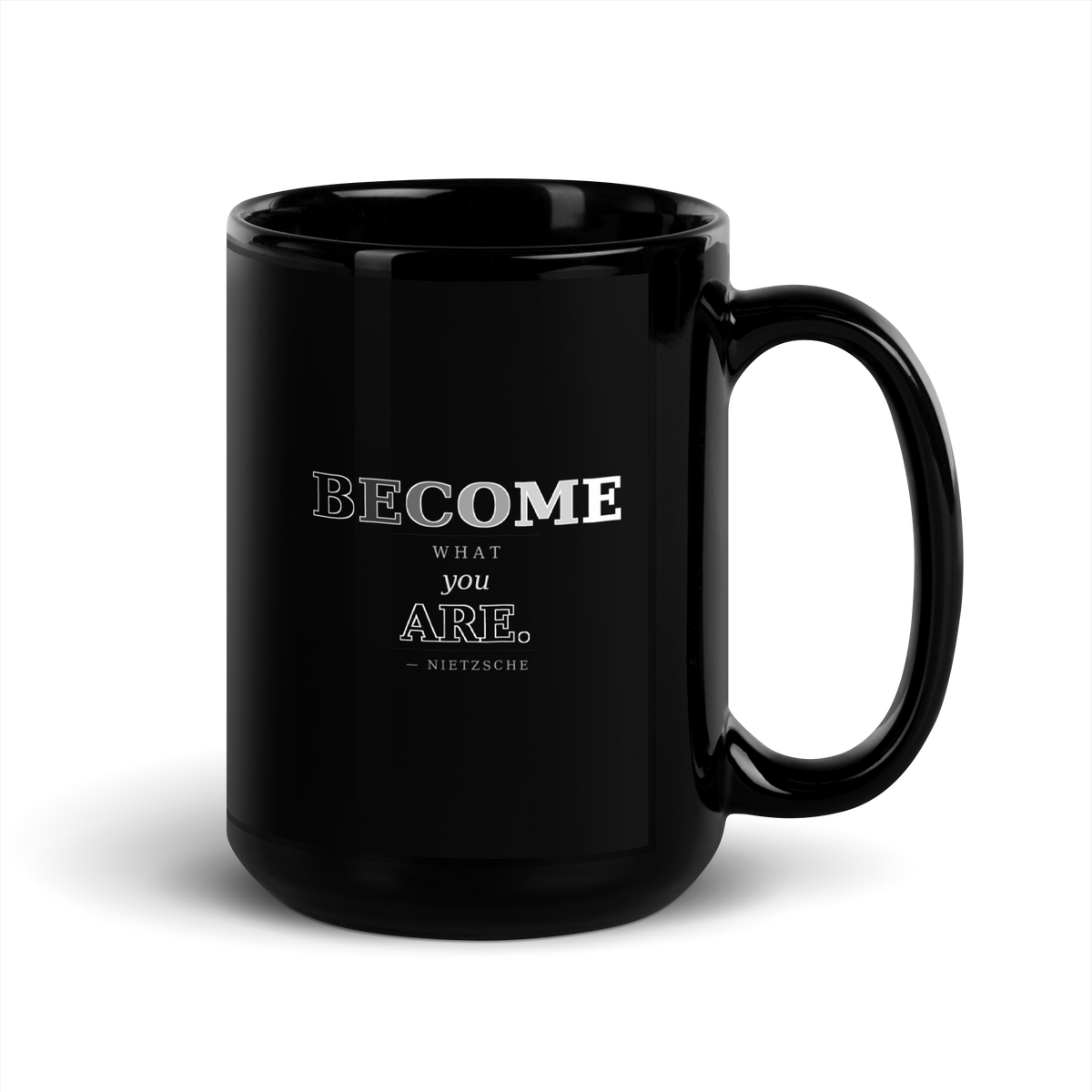
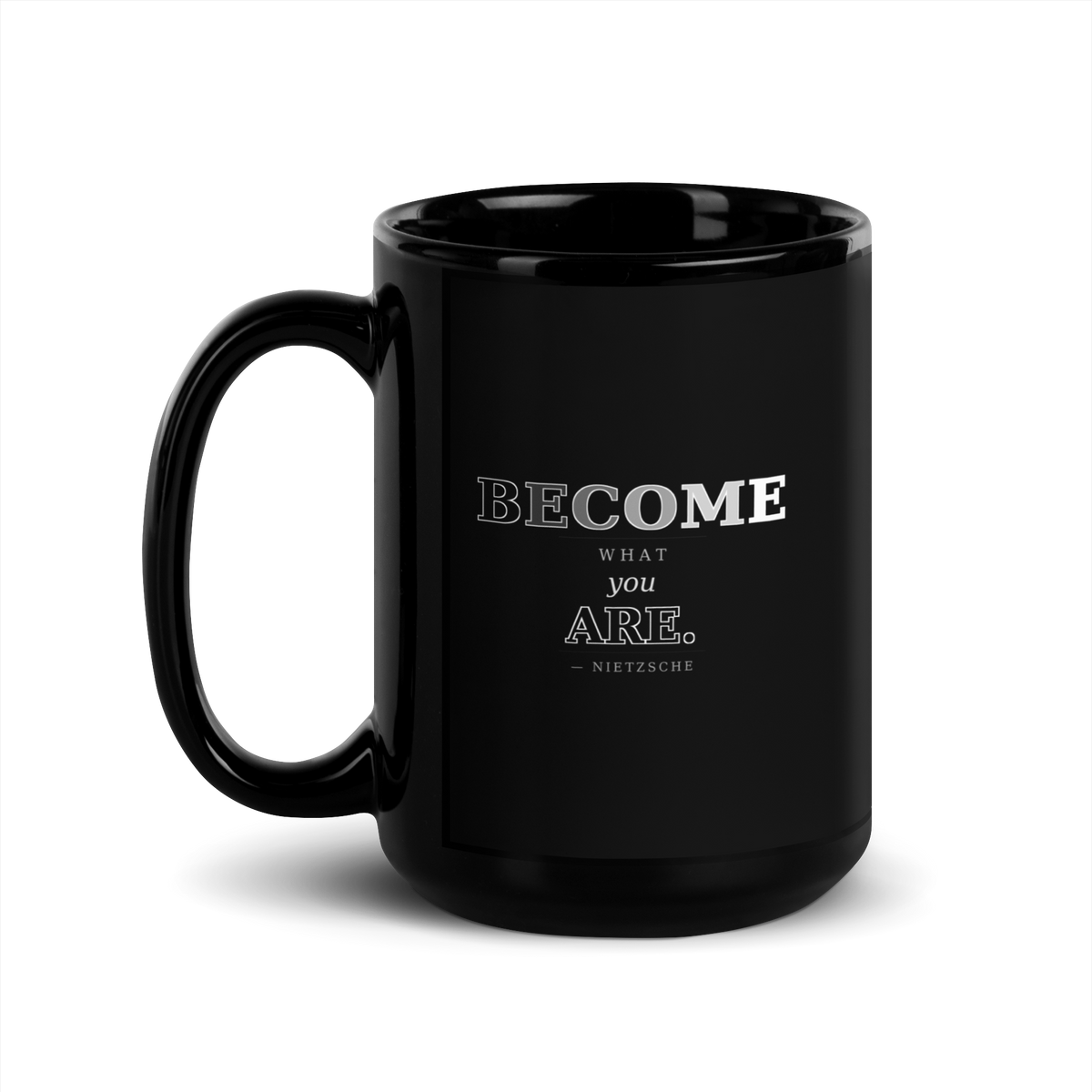
Lift it and you’re already inside the sentence. The two outer words are there as you raise the mug — firm, upright, demanding. You, in italic lowercase, sits in the center of the face, directly in your line of sight as you drink. The instruction lands every morning the same way it always has: not announced, just present. Both sides carry it, because the instruction doesn’t wait for a good morning.
The same line lives on the Uncovering Tee and Journal.
About This Mug
- 15 oz — substantial, not a collection piece
- Glossy black ceramic
- Two-sided print — the same design on both sides, so it reads whether you’re left- or right-handed
- Dishwasher safe
- Microwave safe
Friedrich Nietzsche, in Plain English
- German philosopher (1844–1900)
- Wrote Thus Spoke Zarathustra, Beyond Good and Evil, Ecce Homo, and The Birth of Tragedy
- “Become what you are” traces back to Pindar — Nietzsche first crystallized it in The Gay Science (§270, 1882) and made it the organizing idea of Ecce Homo (1888)
- Spent his career asking harder questions than most people were willing to sit with
- Among the most misquoted thinkers in history — usually cited by people who haven’t read him
Choose options


