
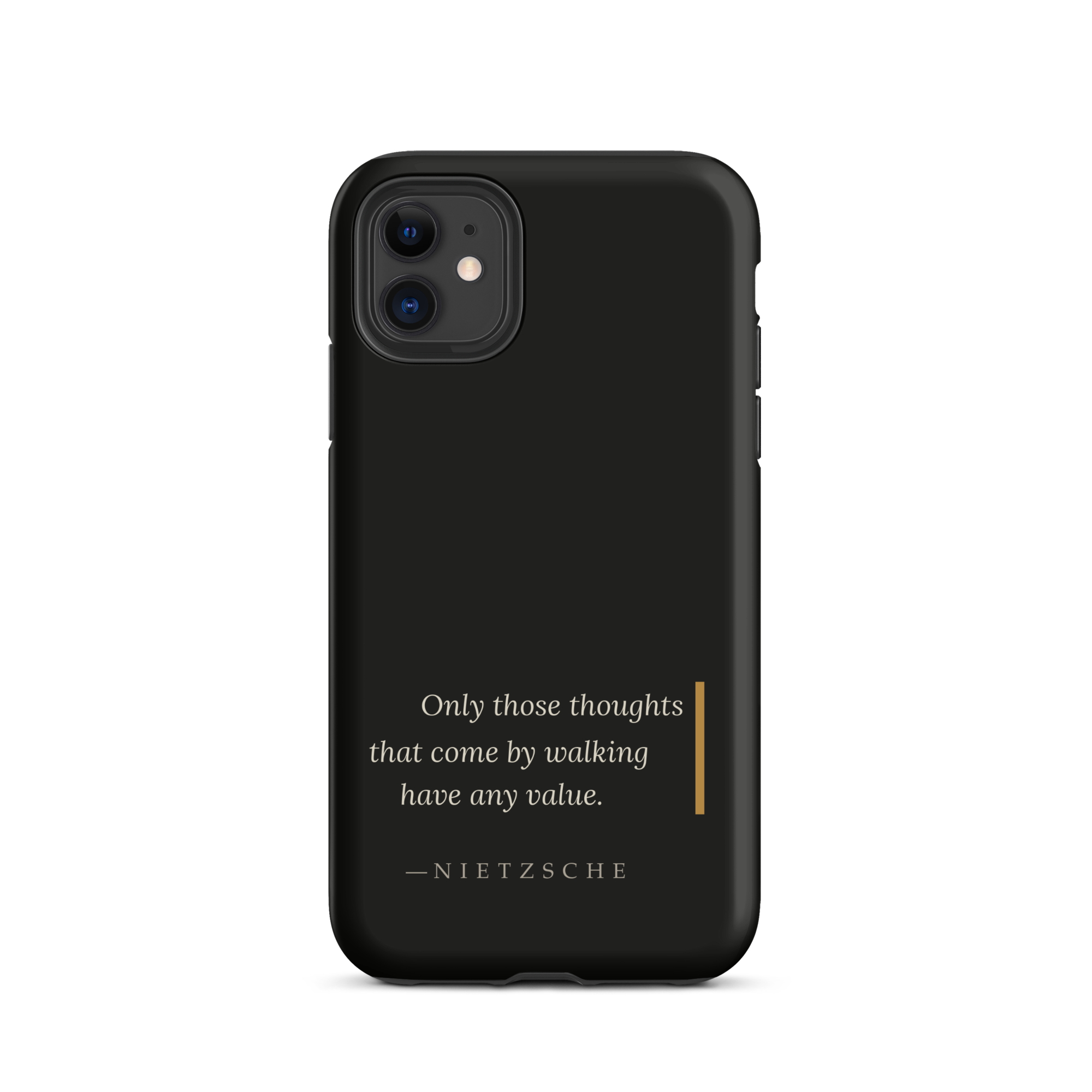
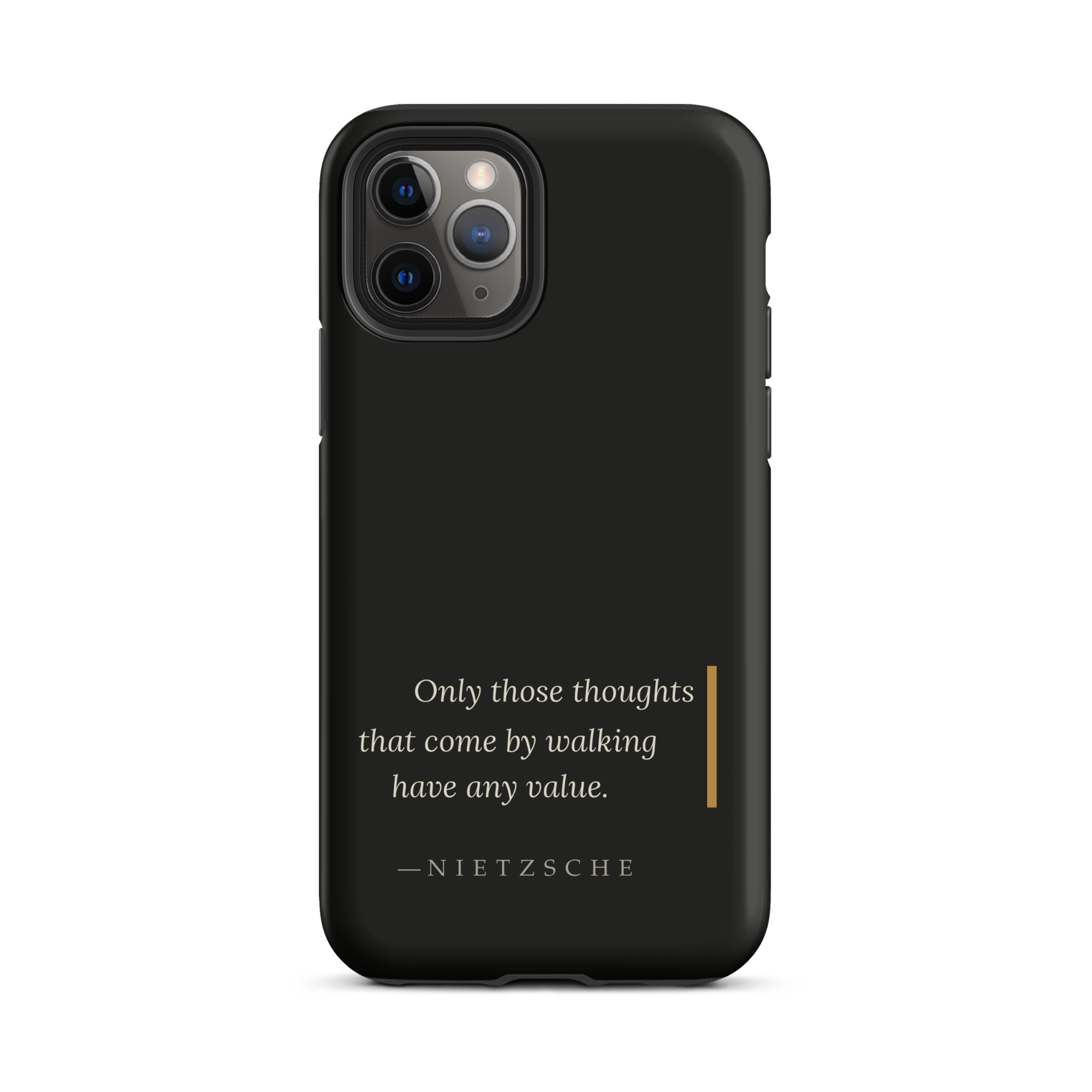
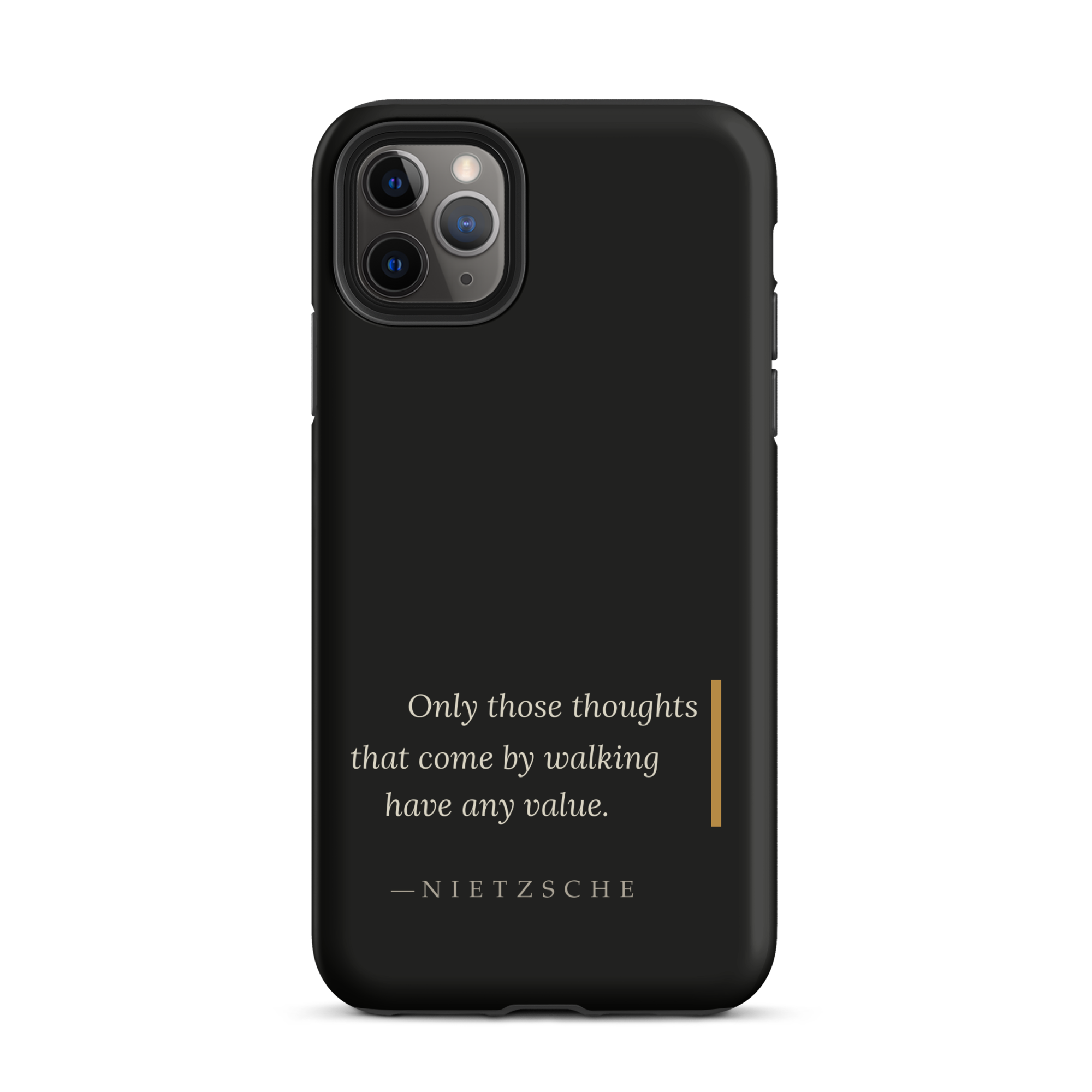

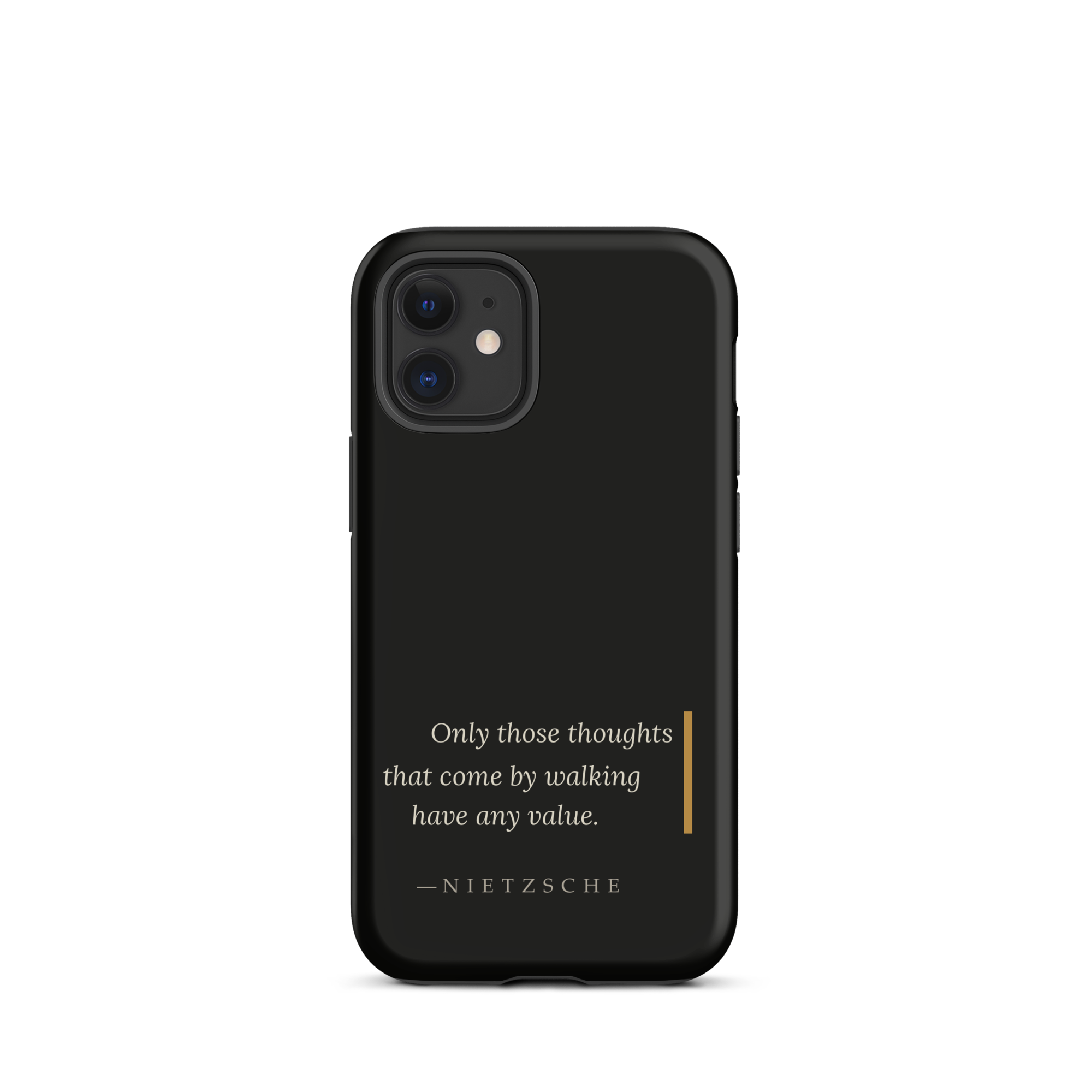
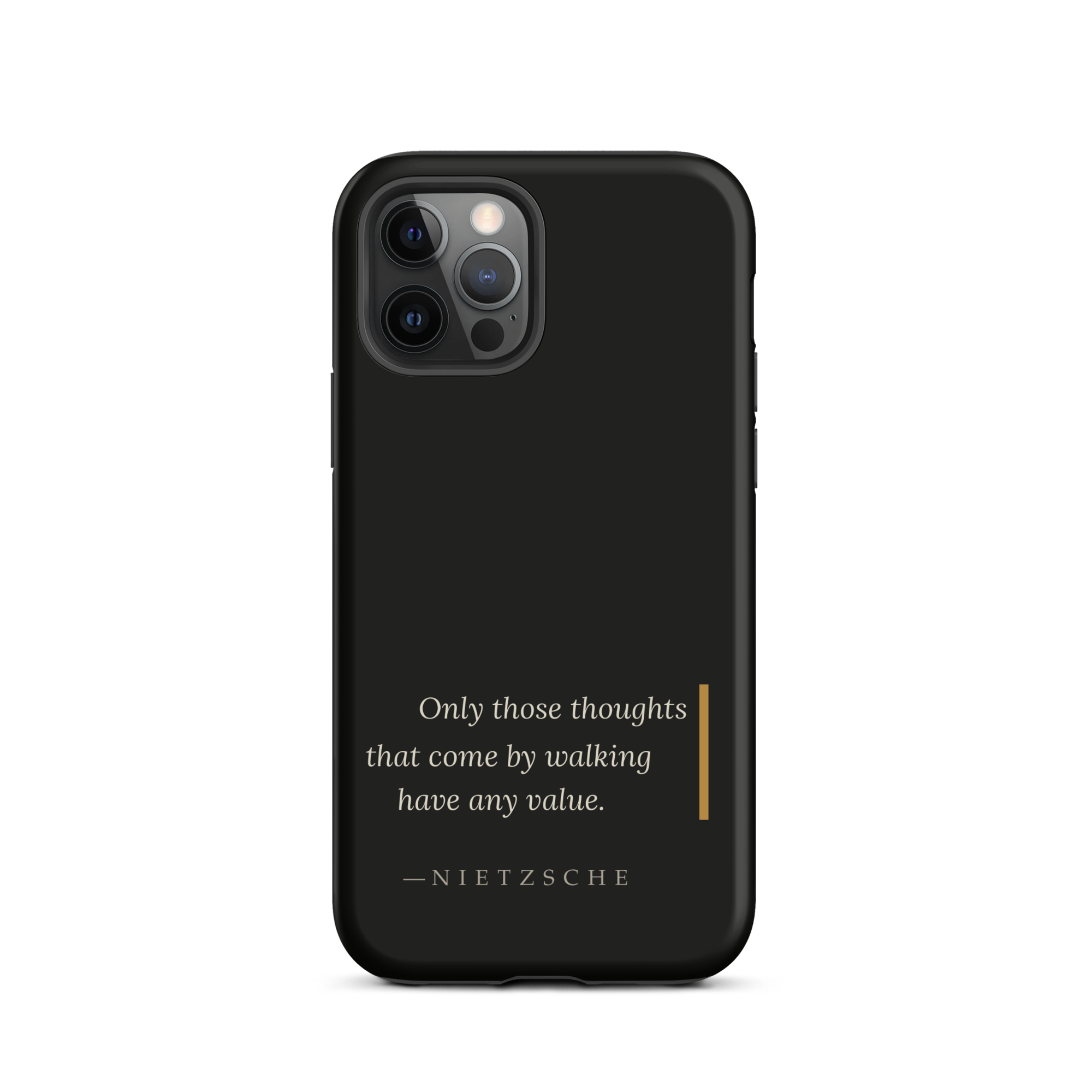
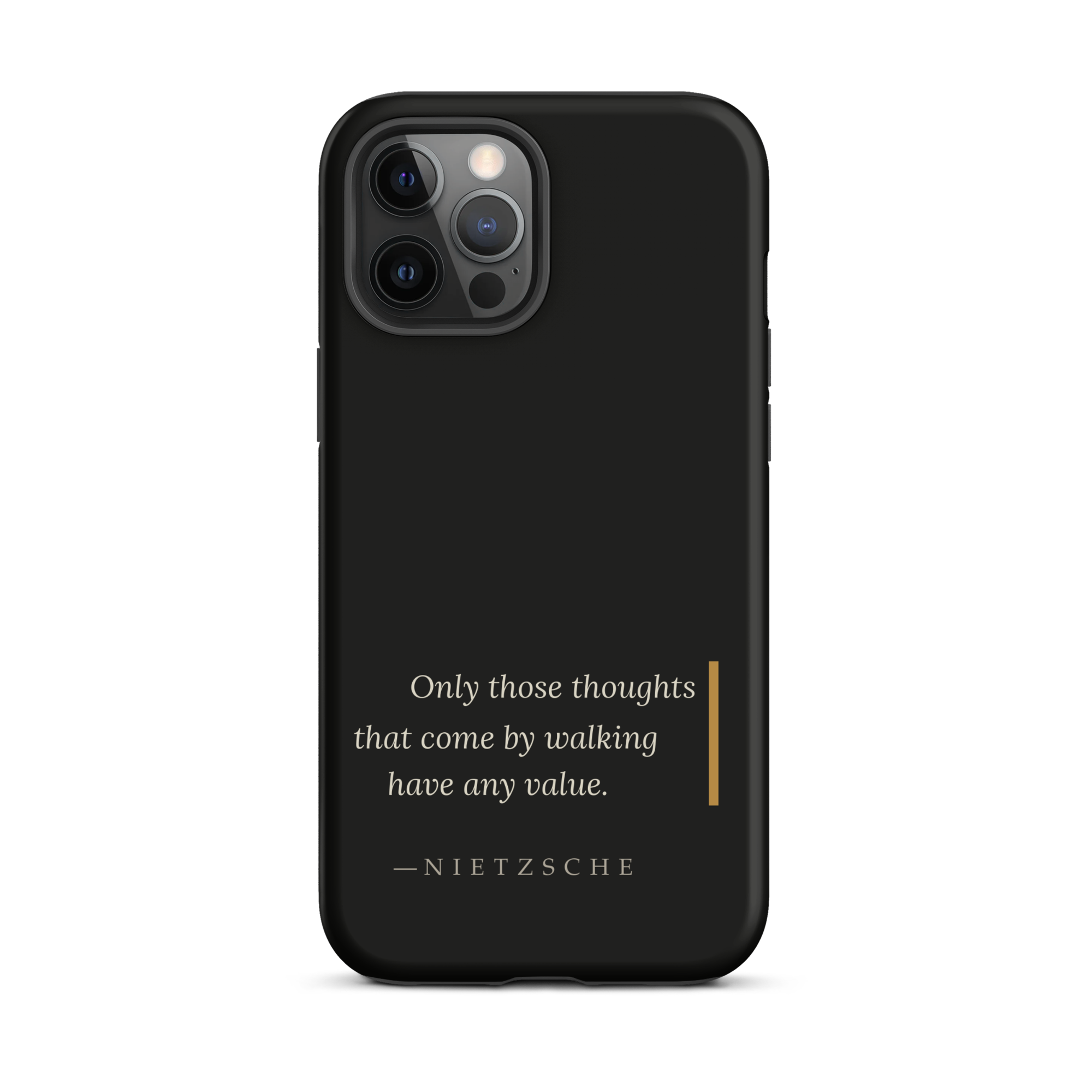
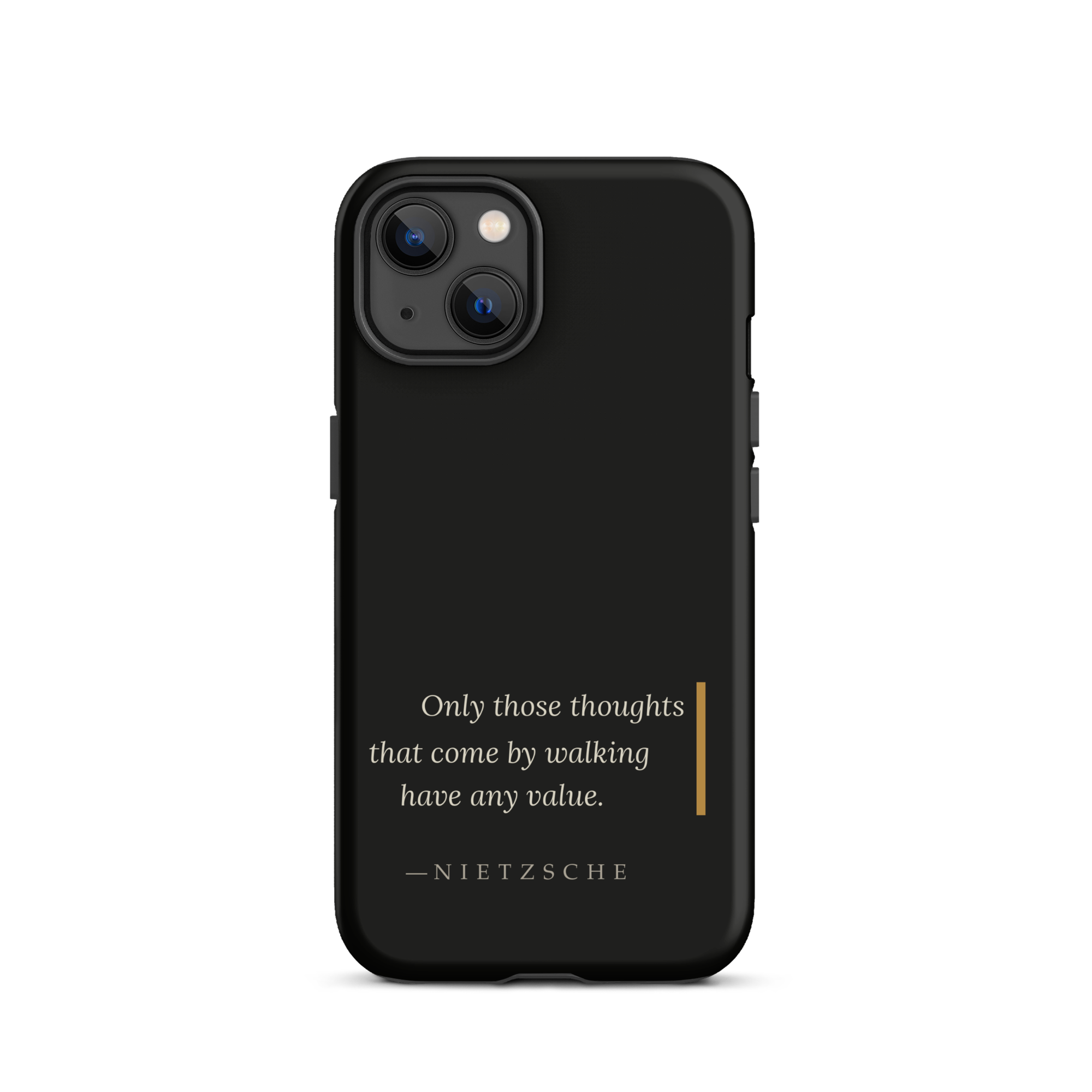
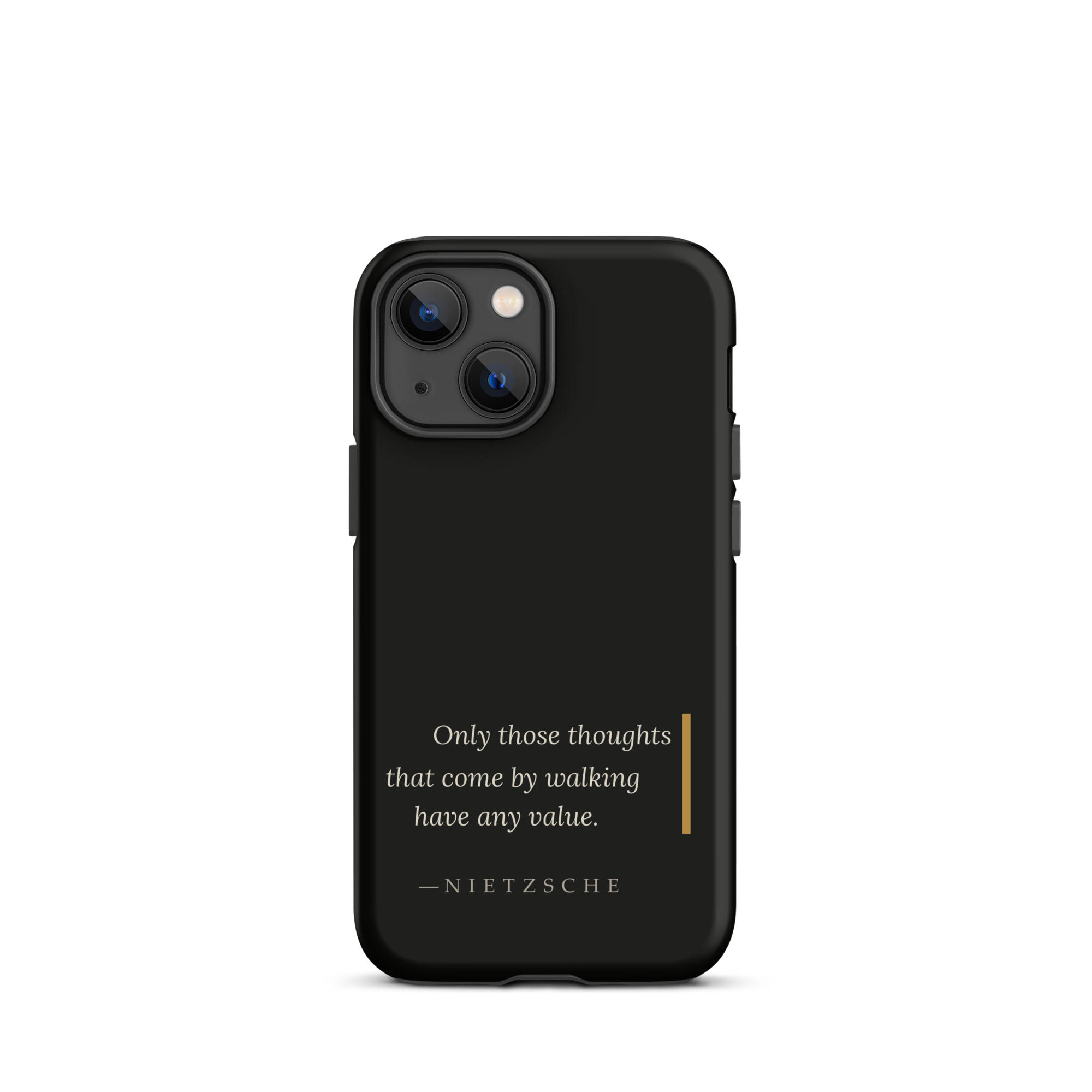


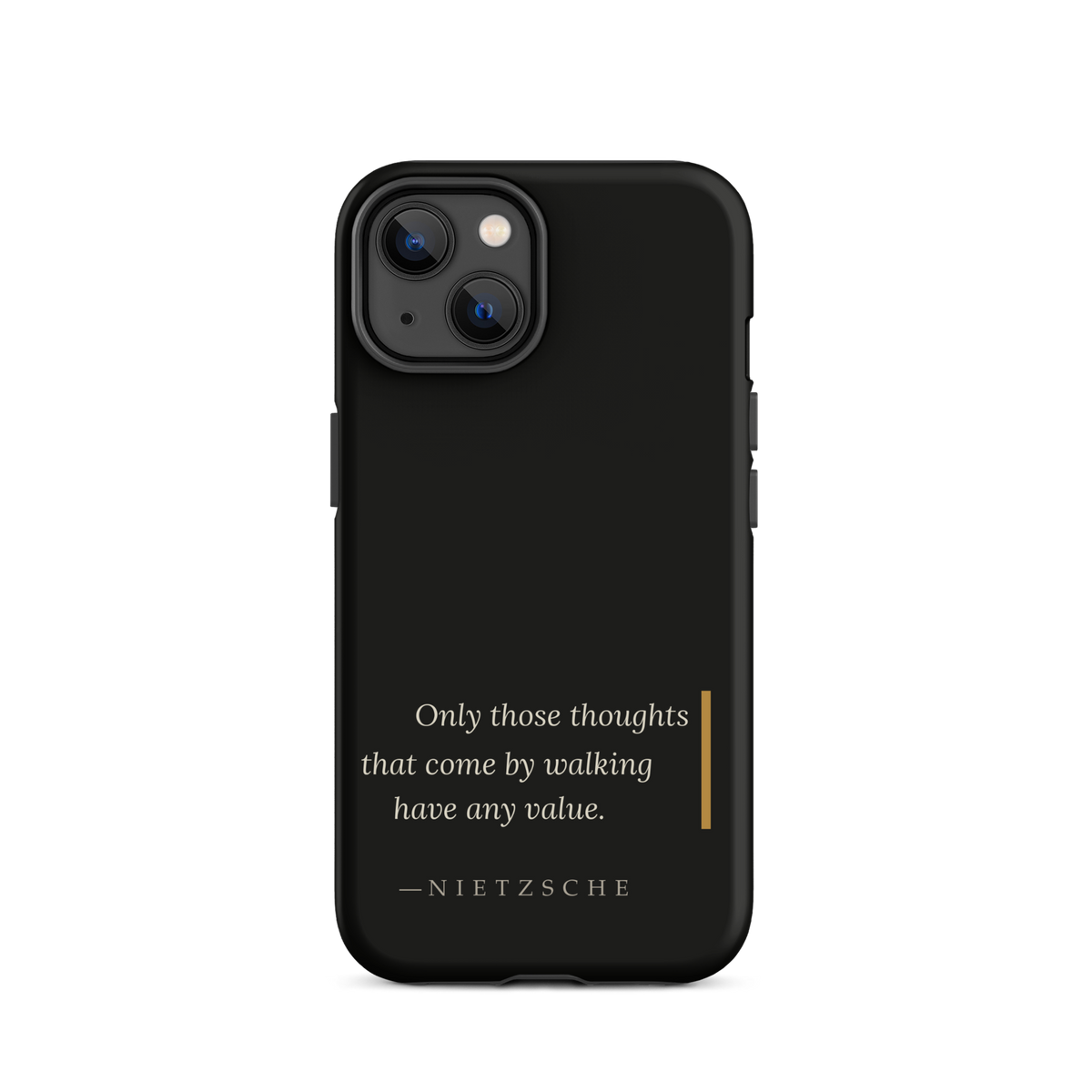
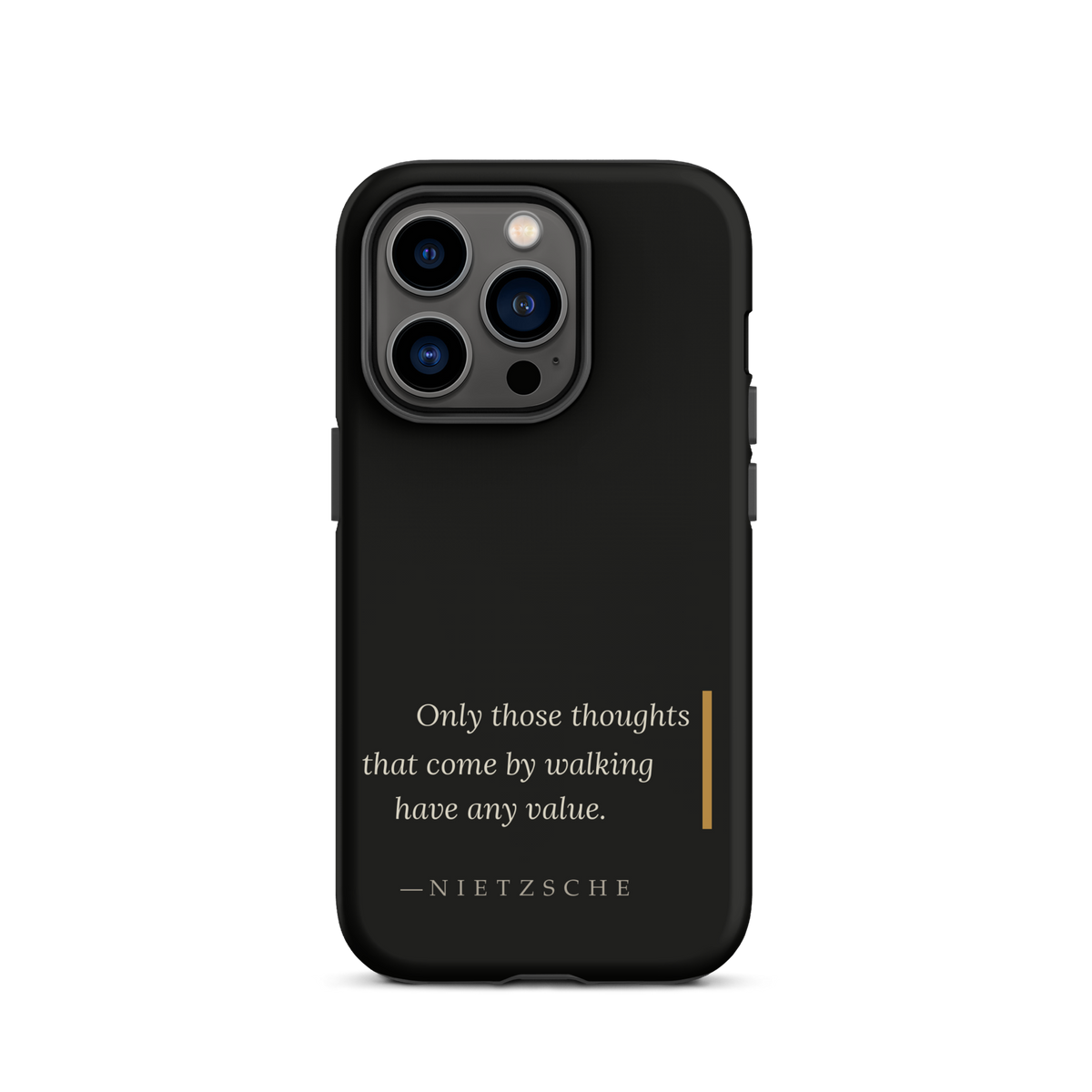
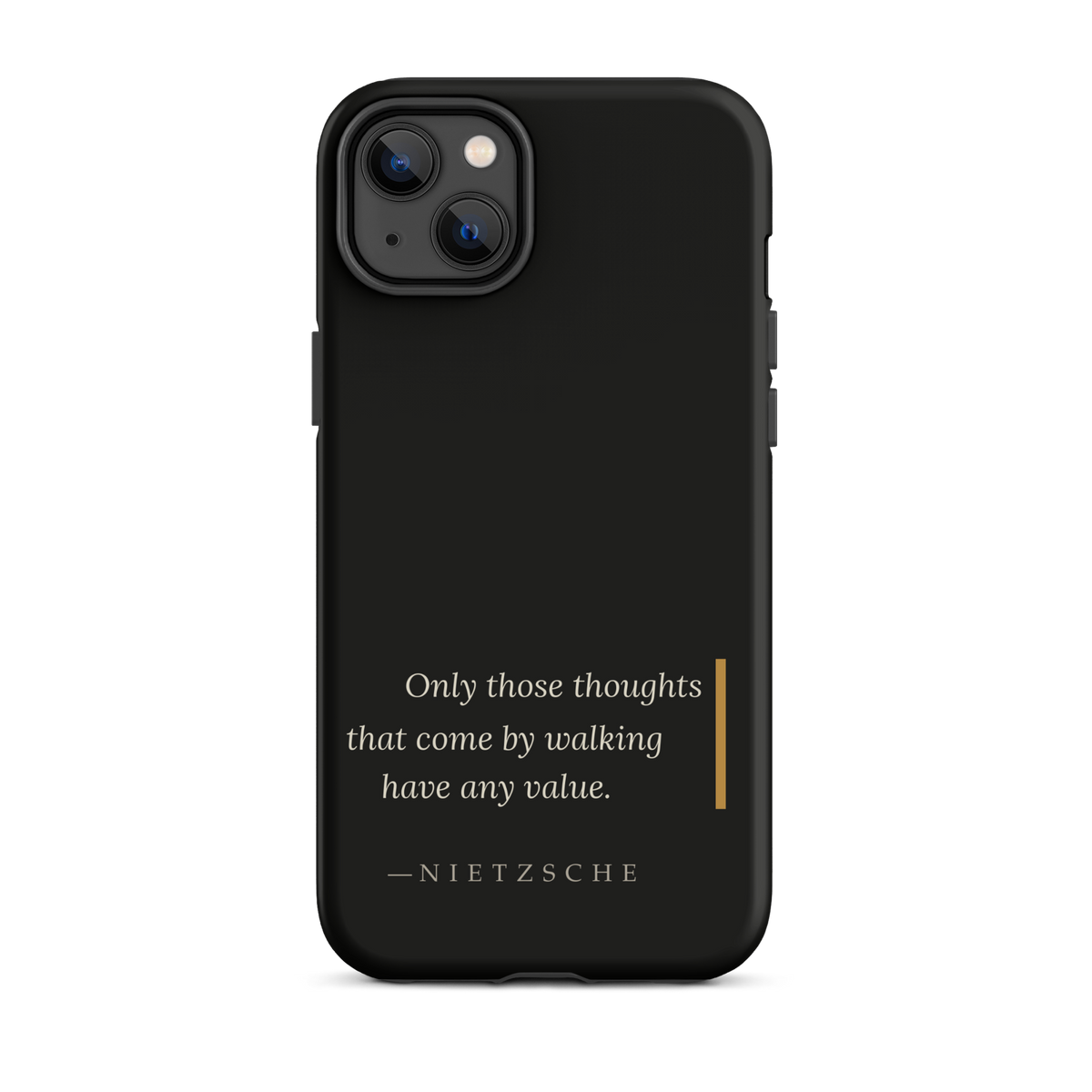
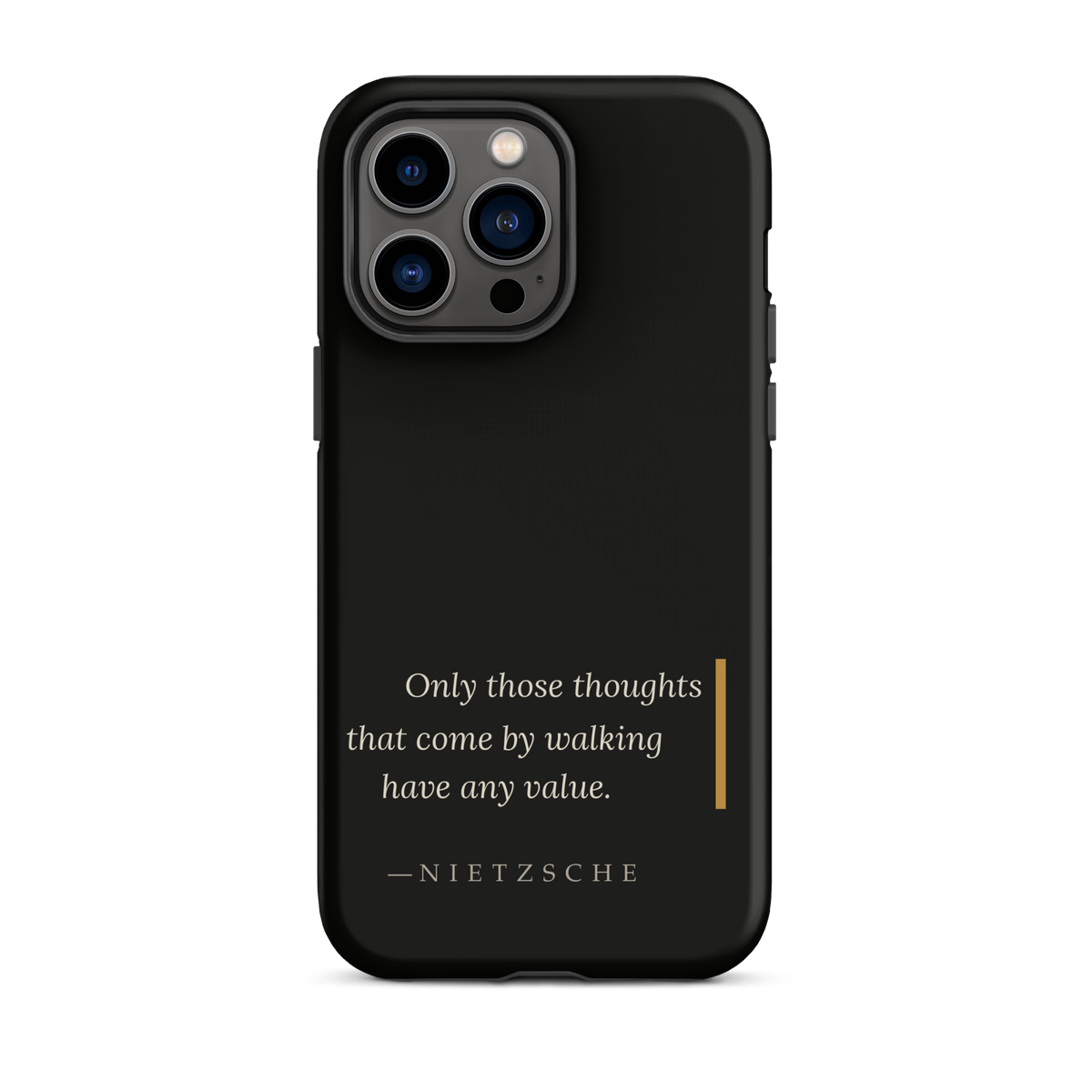
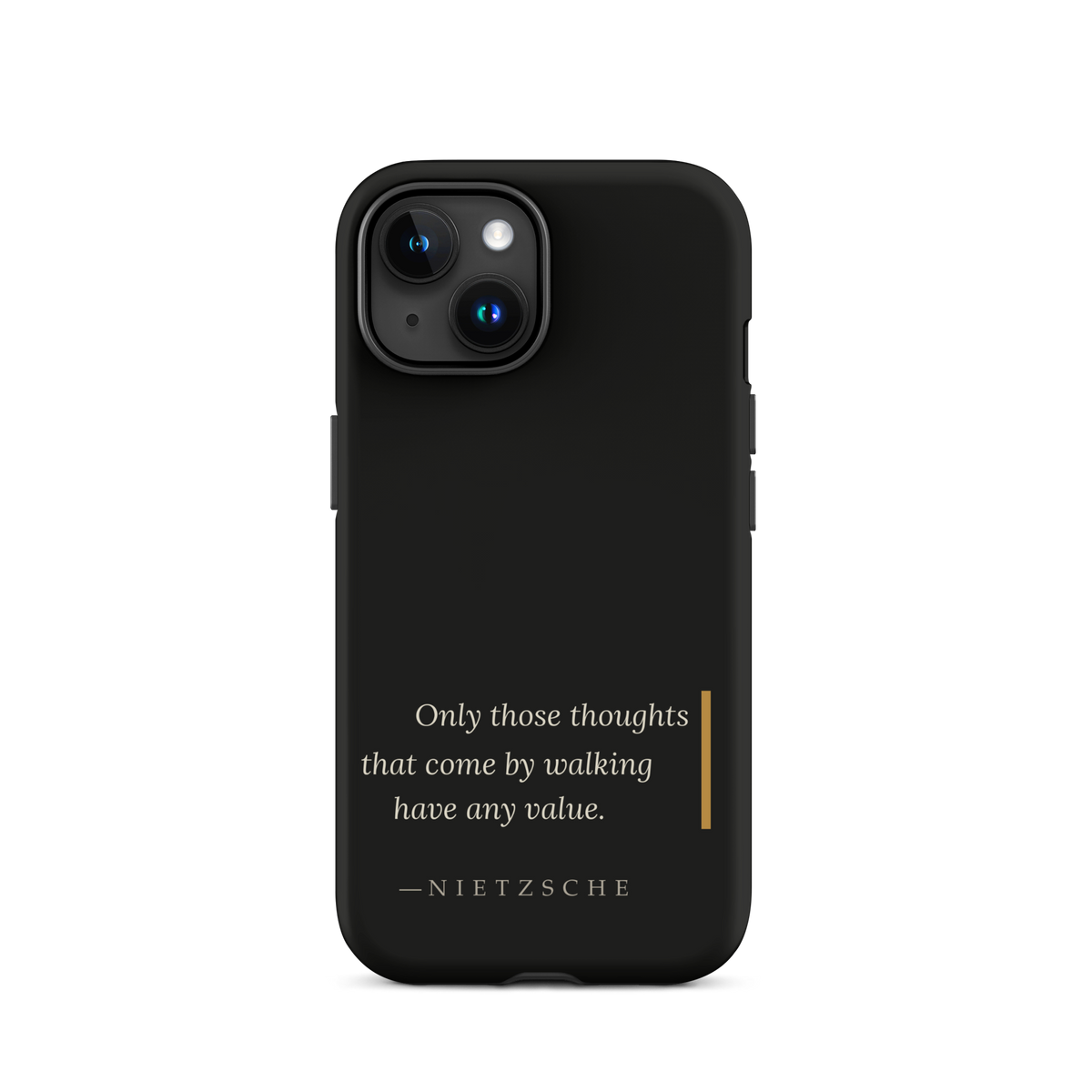
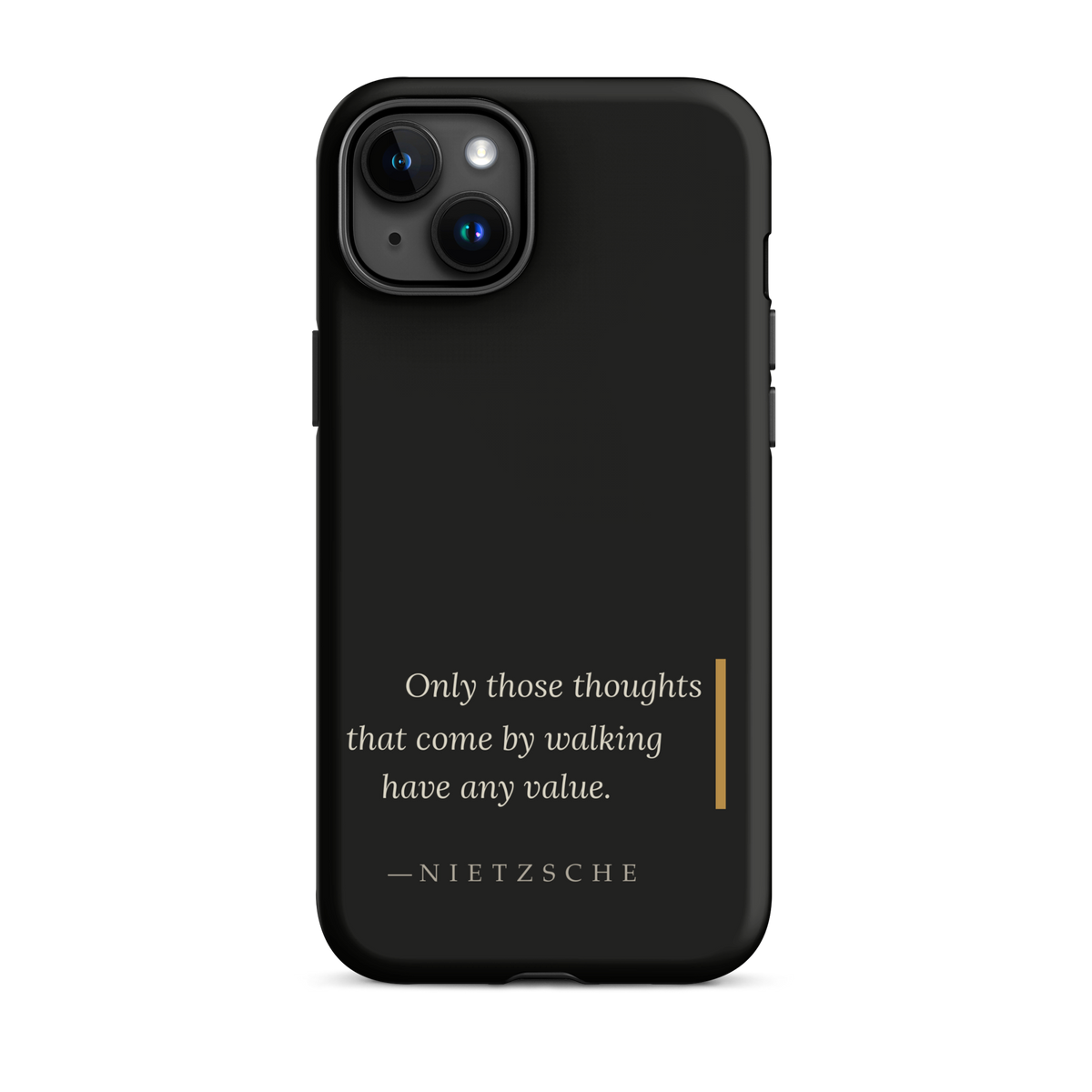
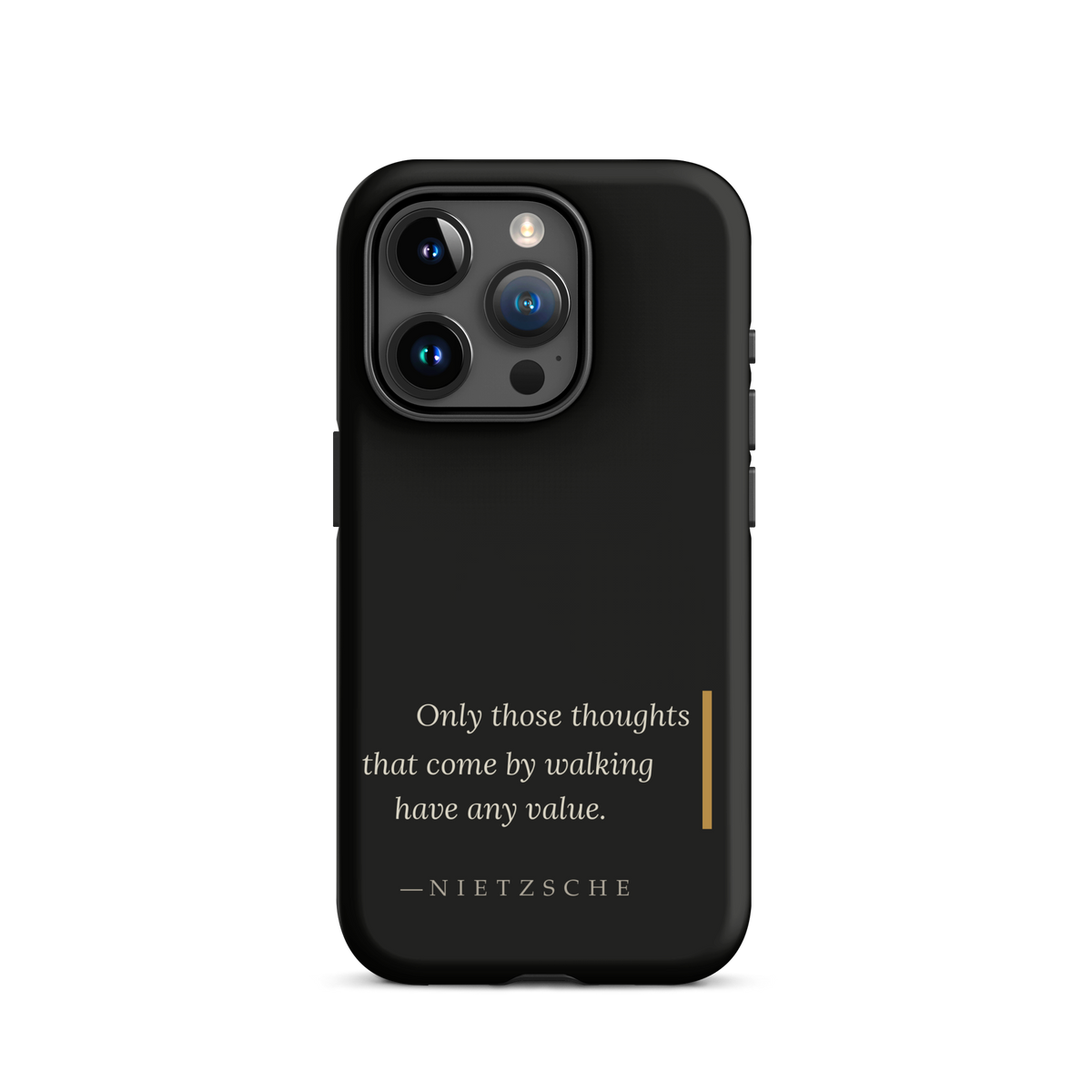
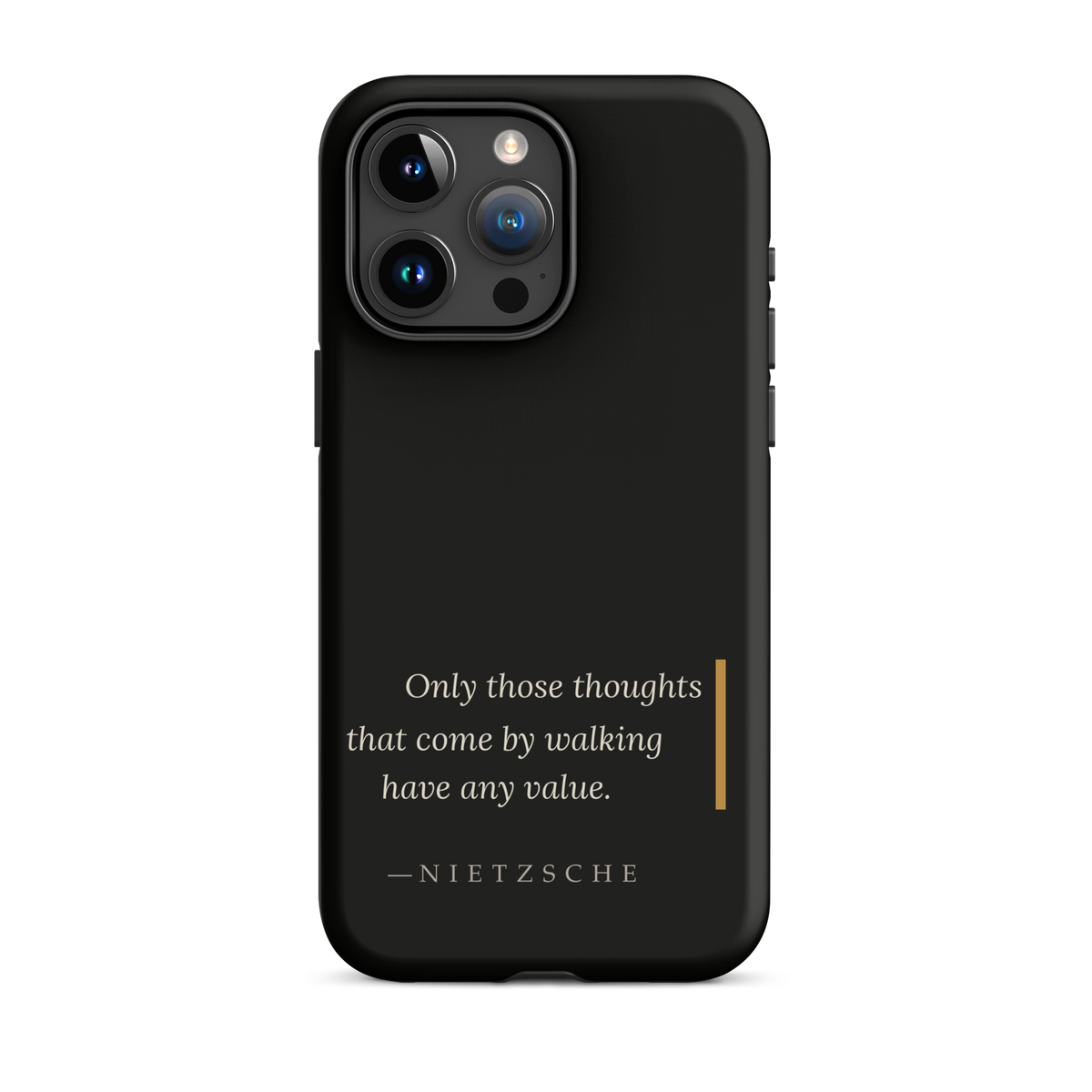

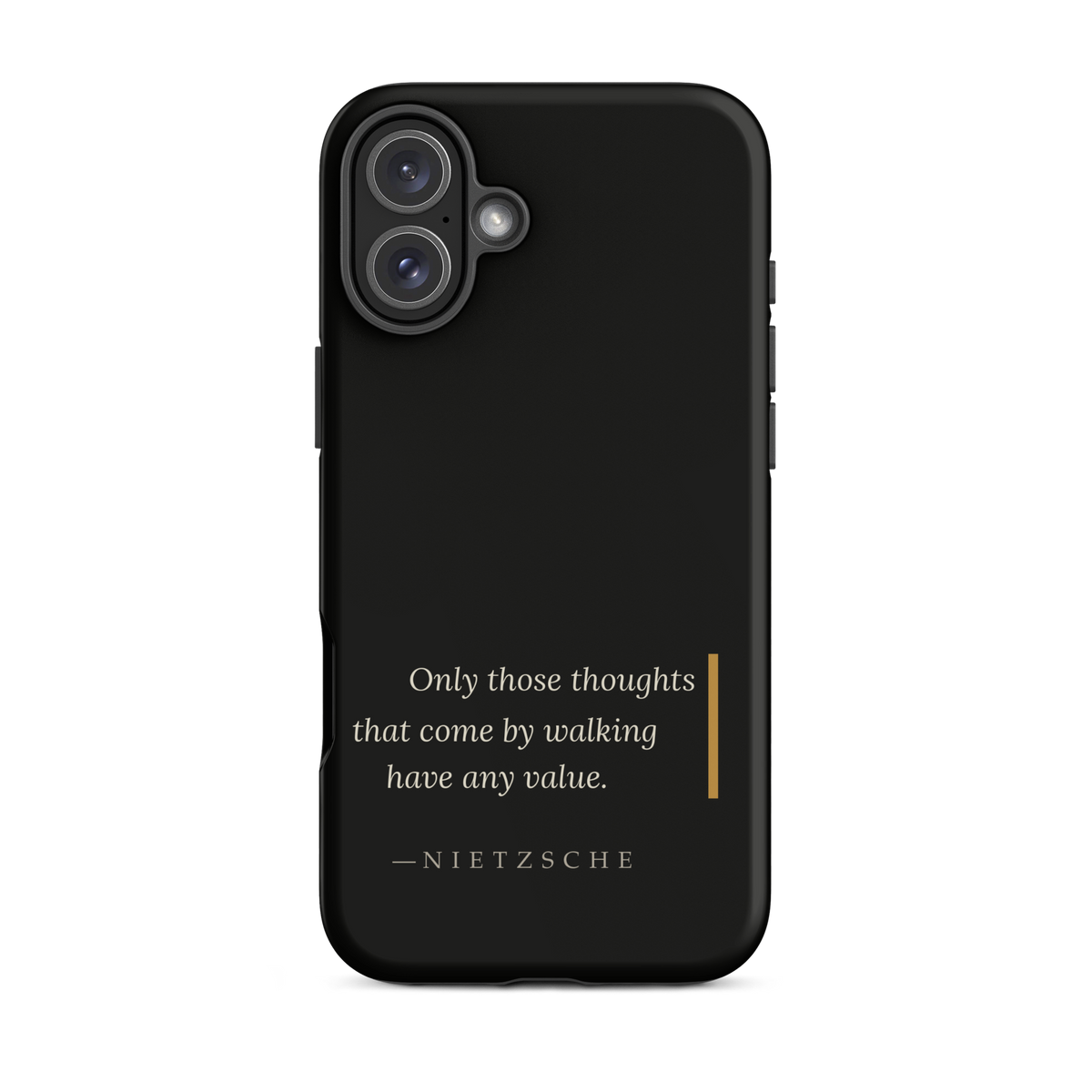

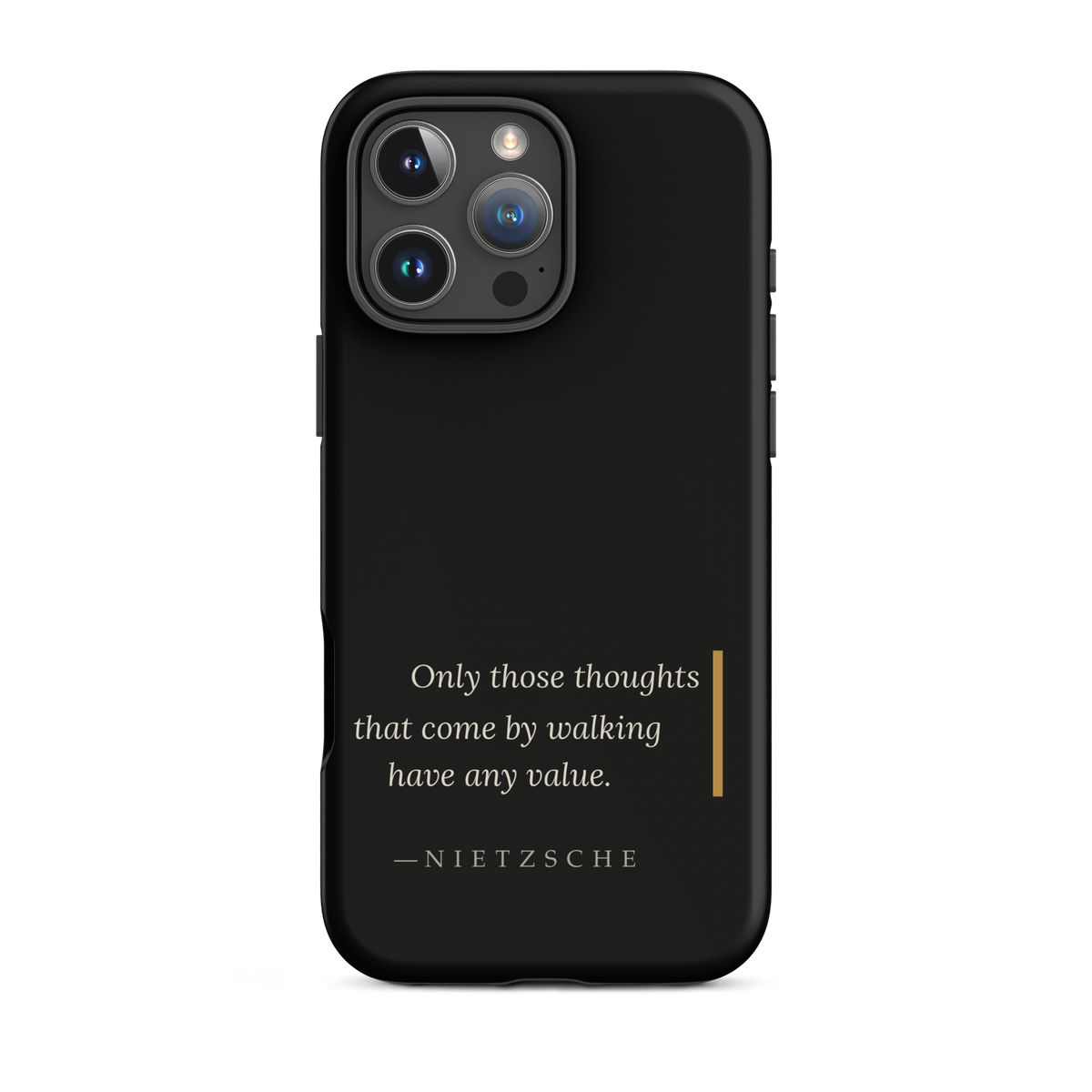


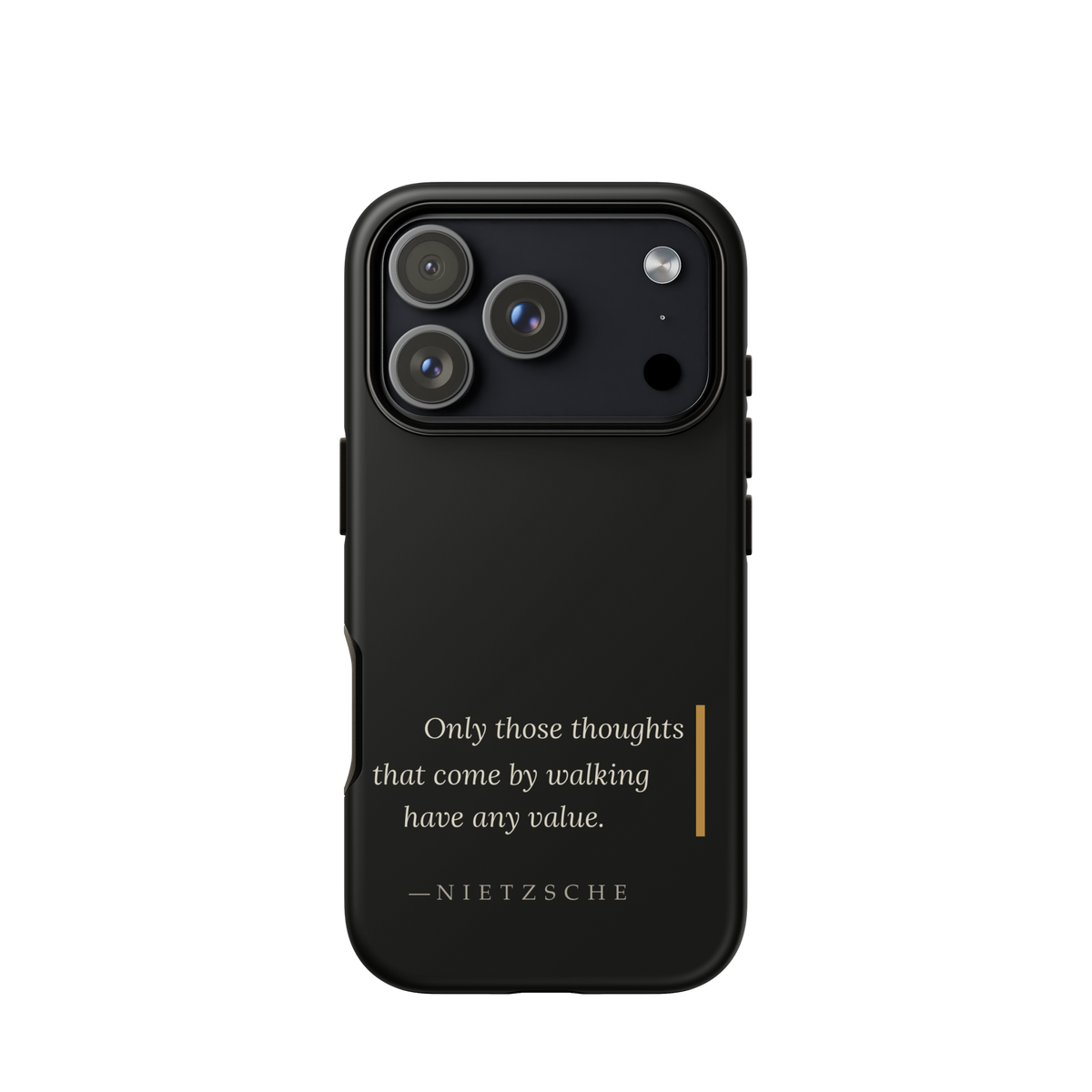

By Walking — Nietzsche Twilight Phone Case
Nietzsche wrote his most combative book on foot, in a few weeks in Turin in 1888 — and one line in it argues its own method: “Only those thoughts that come by walking have any value.”
Friedrich Nietzsche, Twilight of the Idols (written 1888), tr. Anthony Ludovici, 1911
“Only those thoughts that come by walking have any value.”
Context
The line appears in Twilight of the Idols, written in Turin in the autumn of 1888 — one of the last things Nietzsche completed before his collapse. He wasn’t writing about exercise; he was writing about the relationship between a body in motion and a mind that’s actually working. The book’s title mocks Wagner’s Twilight of the Gods, turning epic grandeur into a provocation. Ludovici’s 1911 English edition is confirmed public domain via Project Gutenberg.
The same instinct shows up a century later in Steve Jobs, who reserved his most serious conversations for long walks — a habit Walter Isaacson documents throughout his 2011 biography. Nietzsche just got there first.
Who It’s For
- The person who walks to think — who steps outside not for air but for answers
- The one who’s slightly suspicious of thinking that only happens while seated
- The reader who knows Nietzsche actually said this, and exactly where
Carry the directive.
The Design
The quote doesn’t sit centered — it sits left of center, and that’s not an accident. A warm burnished vertical rule runs to its right, not correcting the position but holding it in tension: fukinsei, the Japanese principle that treats asymmetry as a live force rather than something to fix. In your hand the imbalance is physical — the quote pulls left, the rule pulls right, and somewhere between them is the act of walking.
Also on the By Walking Tee.
About This Case
- Tough dual-layer construction — flexible TPU inner layer, hard polycarbonate outer shell
- Raised edges protect the screen and camera
- Induction charging compatible — works with most wireless devices
- Care note: keep away from liquids with high alcohol content and prolonged direct sunlight to preserve the design.
Friedrich Nietzsche, in Plain English
- Lived: 1844–1900, Germany — philosopher and classicist, among the most misattributed thinkers of the last 150 years
- Twilight of the Idols, where this line appears, was written in about two weeks in 1888 — the last productive year of his life, dense with aphorisms and aggressively short on patience
- Spent years walking the Alps and the Italian coast as a deliberate practice; the walking wasn’t separate from the philosophy — it was the method
- In his work, certainty reads as a vice and difficulty as evidence of something worth pursuing
Choose options