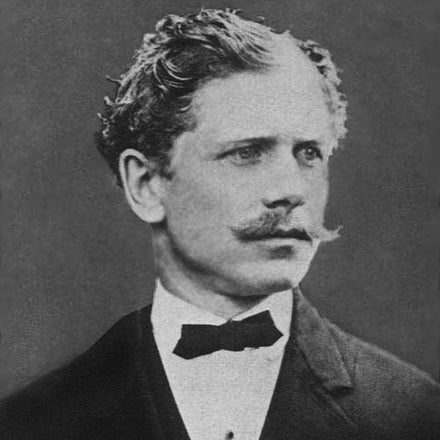
Ambrose Bierce. Photograph, c. 1892.Public domain.
Ambrose Bierce
He spent four years in the bloodiest war in American history, came home with a bullet scar on his skull, and spent the next four decades writing about what none of it meant. The Devil's Dictionary is what you get when a man who has seen everything decides to tell the truth.
Words We Carry
Every quote here is traced to a documented source. How we verify →
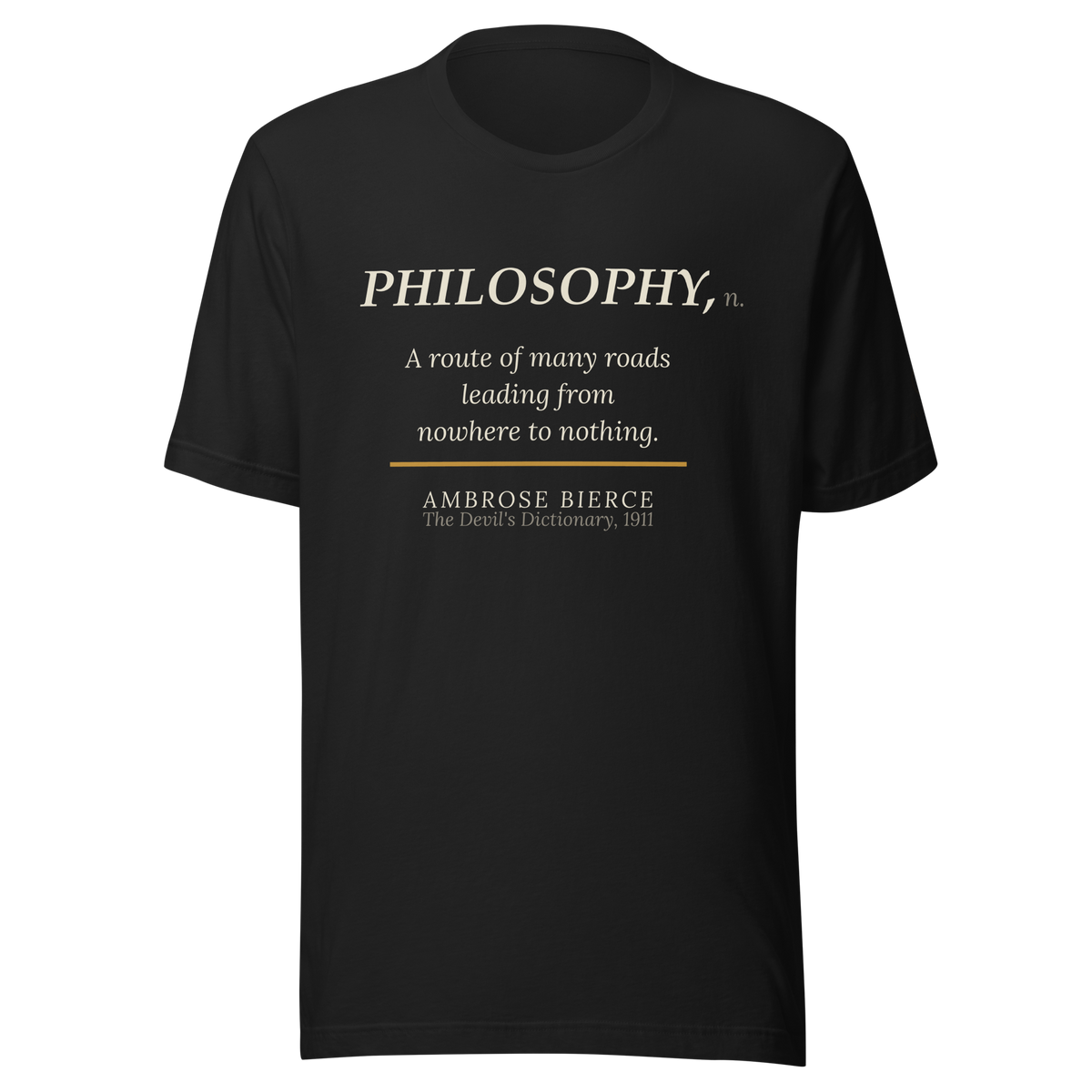
“PHILOSOPHY, n. A route of many roads leading from nowhere to nothing.”
The Devil's Dictionary (1911)
“ADMIRATION, n. Our polite recognition of another’s resemblance to ourselves.”
The Devil's Dictionary (1911)
“POSITIVE, adj. Mistaken at the top of one’s voice.”
The Devil's Dictionary (1911)
“BORE, n. A person who talks when you wish him to listen.”
The Devil's Dictionary (1911)
About Ambrose Bierce
Ambrose Bierce enlisted in the 9th Indiana Infantry in April 1861. He was eighteen years old. Over the next four years he fought at Shiloh — two of the bloodiest days in American military history to that point — at Chickamauga, at Chattanooga, at Kennesaw Mountain. At Kennesaw a Confederate sniper's bullet struck him in the head. He returned to combat anyway. By the end of the war he held a brevet promotion to major and had served as a topographical engineer on General Hazen’s staff — a man who mapped the ground while other men died on it. He came west to San Francisco after the war, took a job at the U.S. Mint, and in 1887 joined William Randolph Hearst’s San Francisco Examiner as a columnist. His “Prattle” column ran for two decades and made him the most feared writer on the West Coast — not because he was vicious, but because he was accurate. He earned the name “Bitter Bierce.” He wore it.
The Devil’s Dictionary did not arrive as a book. It arrived as a weekly column — first in The Wasp, beginning in 1881, then in other San Francisco papers across twenty-five years of intermittent publication. Bierce accumulated entries the way a man who had been to Shiloh and Chickamauga accumulates opinions: slowly, without sentiment, with a very clear idea of what words are used to hide. In 1906, Doubleday finally collected the A–L entries under the title The Cynic’s Word Book — a name, Bierce wrote, that he “had not the power to reject nor the happiness to approve.” The complete text appeared in 1911 under his own title. It is not a joke book. It is a record of a man who watched language do the work of cowardice, politics, and self-flattery for half a century and decided to say so plainly, in the one format everyone trusts to be neutral.
In October 1913, Bierce was seventy-one years old. He had outlived his wife, both sons, and most of his reputation. He set out on a tour of his Civil War battlefields — Shiloh, Chickamauga, Kennesaw Mountain — then crossed into Mexico, where a revolution was in progress. He traveled with Pancho Villa’s army as an observer toward Chihuahua. His last known letter, dated December 26, 1913, said he expected to leave the next morning. He was never heard from again. No body. No witnesses. Nothing but the letter. Before he left the United States he had written to his niece that being shot against a Mexican wall would be “a pretty good way to depart this life.” He was a man who had spent half a century defining what people mean when they say things they don’t mean. Going into a war at seventy-one, on purpose, with a letter that sounds almost like an exit — that reads differently when you know the Dictionary. A man who spent his life removing the sentiment from language chose, at the end, not to explain himself at all.
The Work
From the Journal
The Man Who Defined the Devil Out of Language
Bierce didn't invent cynicism. He refined it into the most precise definitions in English. The man behind The Devil's Dictionary.
ReadWhy Dark Romanticism Is Having a Moment Right Now
The tradition Bierce belonged to — and why its clarity still cuts.
ReadThe Philosophy of Doing Hard Things — From People Who Actually Did Them
On writing from the inside of experience, not the outside of it.
ReadIn Their Orbit