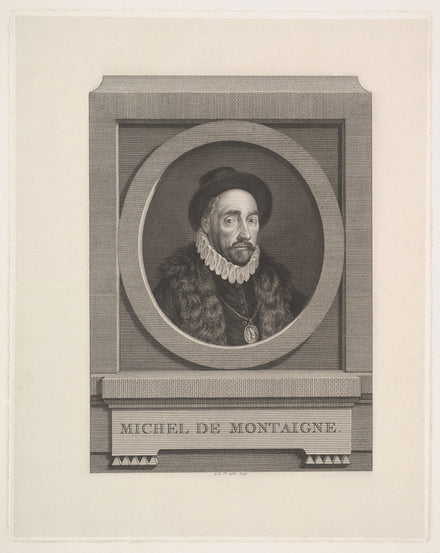
Michel de Montaigne. Engraving by Augustin de Saint-Aubin, 1774. Metropolitan Museum of Art (CC0).
Michel de Montaigne
His father raised him to speak Latin before French. At thirty-seven he sold his seat in the Bordeaux parlement (a court of law, not a legislature), and climbed the tower at the corner of his estate. There he started writing about the one subject he claimed to know least well — himself. He called the pieces attempts.
Words We Carry
Every quote here is traced to a documented source. How we verify →
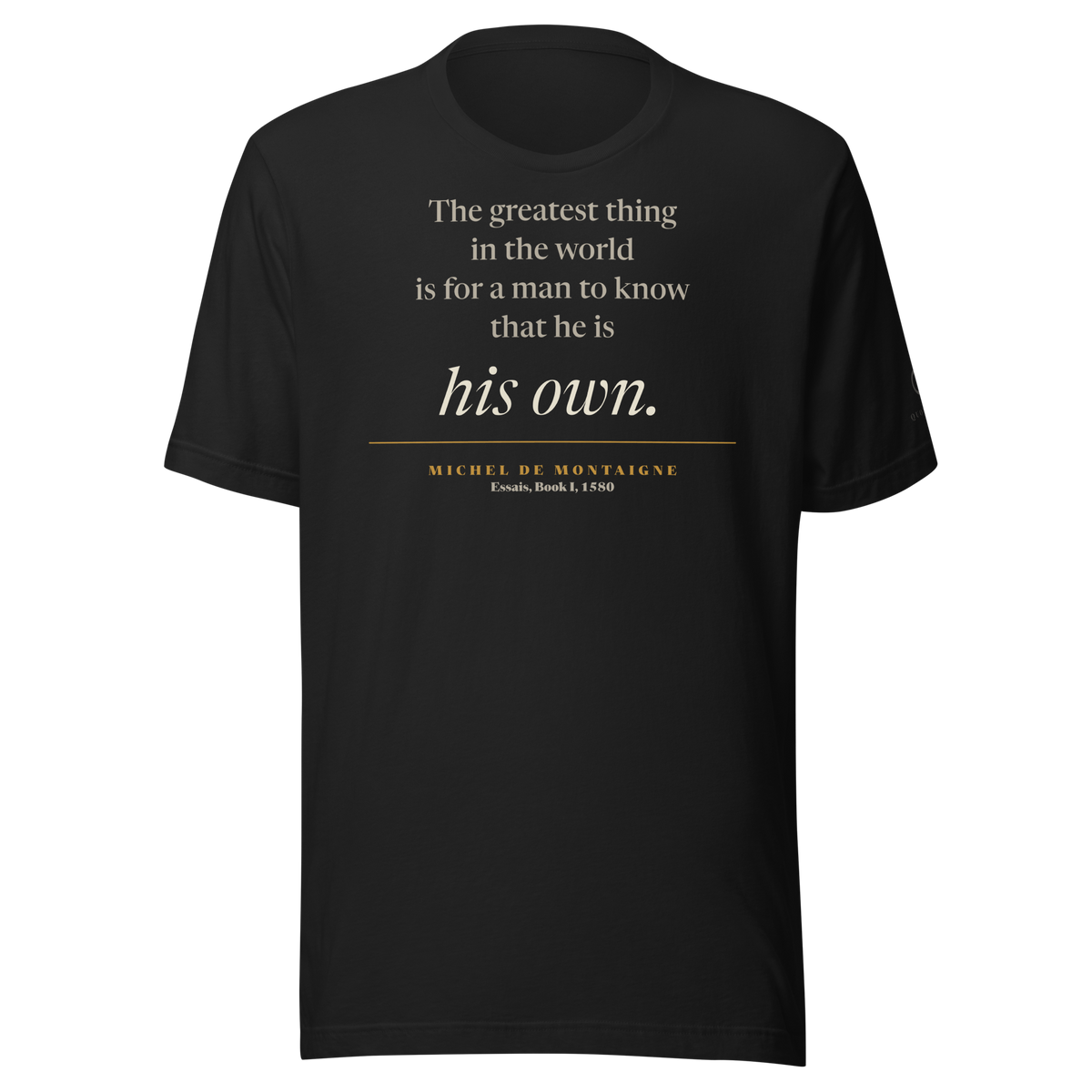
“The greatest thing in the world is for a man to know that he is his own.”
Essais, Book I, Chapter XXXVIII — “Of Solitude” (1580) — tr. Charles Cotton, 1685–86
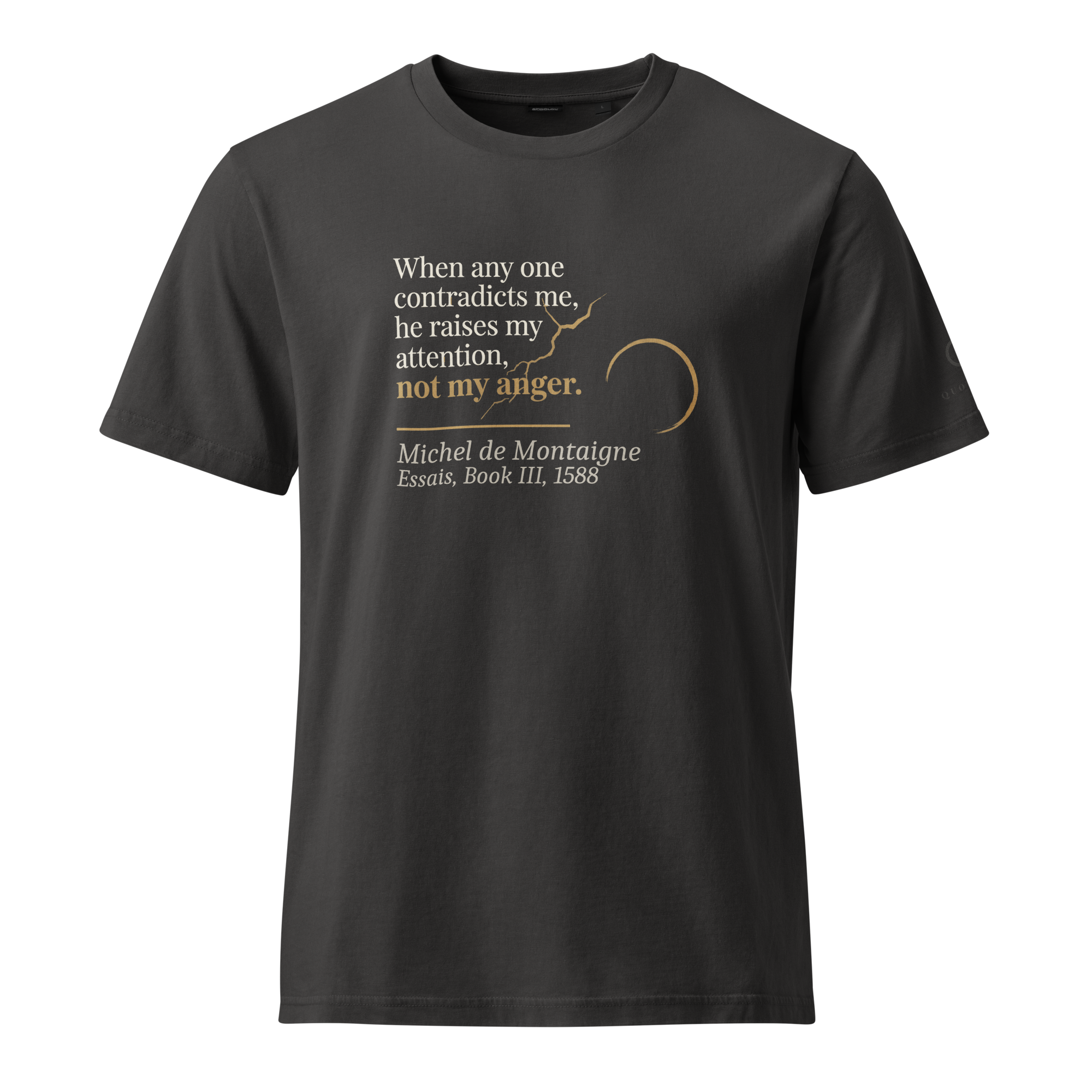
“When any one contradicts me, he raises my attention, not my anger.”
Essais, Book III, Chapter VIII — "Of the Art of Conference" (1588) — tr. Charles Cotton, 1685–86
“He who fears he shall suffer, already suffers what he fears.”
Essais, Book III, Chapter XIII — “Of Experience” (1588) — tr. Charles Cotton, 1685–86
About Michel de Montaigne
Michel Eyquem de Montaigne was born on 28 February 1533 at the Château de Montaigne in Périgord, into a family whose nobility his father had bought a generation earlier. That father ran an experiment on him: a German tutor who spoke no French, a household ordered to address the boy only in Latin, so that Latin would arrive before his mother tongue. He was six before he was sent to board at the Collège de Guyenne in Bordeaux.
He became a magistrate — first at Périgueux, then in the Bordeaux parlement, a court whose judges heard cases and registered the king's edicts. There he met Étienne de La Boétie. The friendship lasted six years and ended with La Boétie's death in 1563. Montaigne spent much of the rest of his life circling it.
In 1570 he sold his office. In 1571, at thirty-eight, he built a study into the tower at the corner of his estate, lined it with books, and had sentences from his reading painted across the beams. He began writing the following year. What he produced had no precedent and no name, so he took one from the verb essayer — to attempt, to test, to try something and see. He was not reporting conclusions. He was watching himself think.
The first two books appeared in 1580. That same year he left for Italy, ostensibly to treat kidney stones at the thermal baths, and while at Pisa learned he had been elected mayor of Bordeaux. He served two terms from 1581, through the worst of the Wars of Religion, as a Catholic trusted enough by both sides to carry messages between them — while members of his own family converted to Protestantism.
He kept revising until he died. The 1588 edition added a third book; his personal copy of it, annotated in his own hand until his death on 13 September 1592, still survives in Bordeaux. The finished work runs to 107 chapters. He had invented the essay, and he never stopped calling it an attempt.
The Work
From the Journal
Michel de Montaigne and the Lost Art of Being Contradicted
On the essay that turned disagreement into a method — and why Montaigne thought his contemporaries had argument exactly backwards.
ReadIn Their Orbit