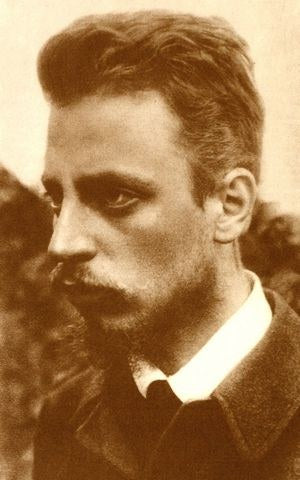
Rainer Maria Rilke. Photograph, c. 1900.Public domain.
Rainer Maria Rilke
He wrote The Book of Hours after two trips to Russia and the conversation with a woman who changed the entire direction of his life. The poems came fast, like dictation — and they have never stopped circling.
Words We Carry
Every quote here is traced to a documented source. How we verify →
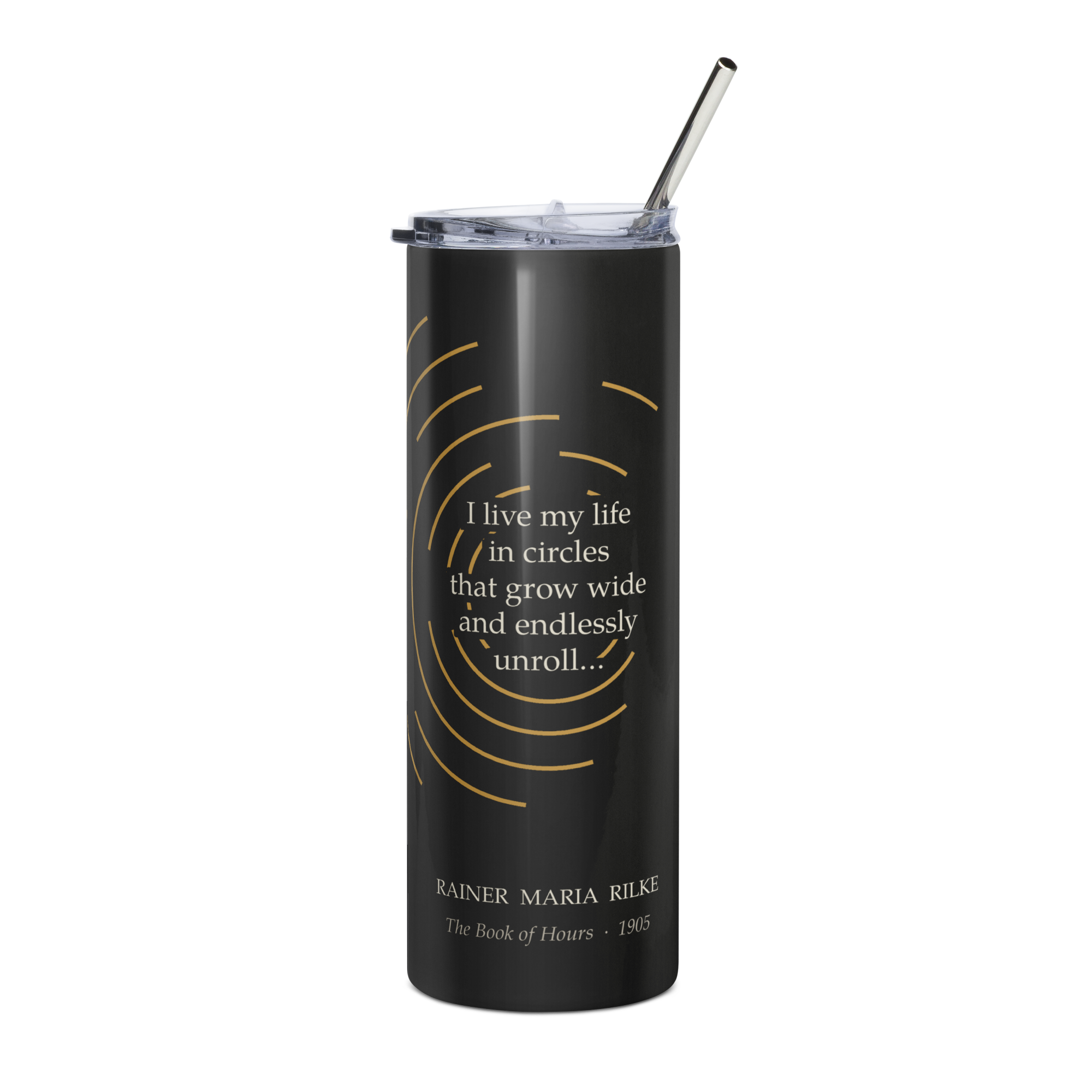
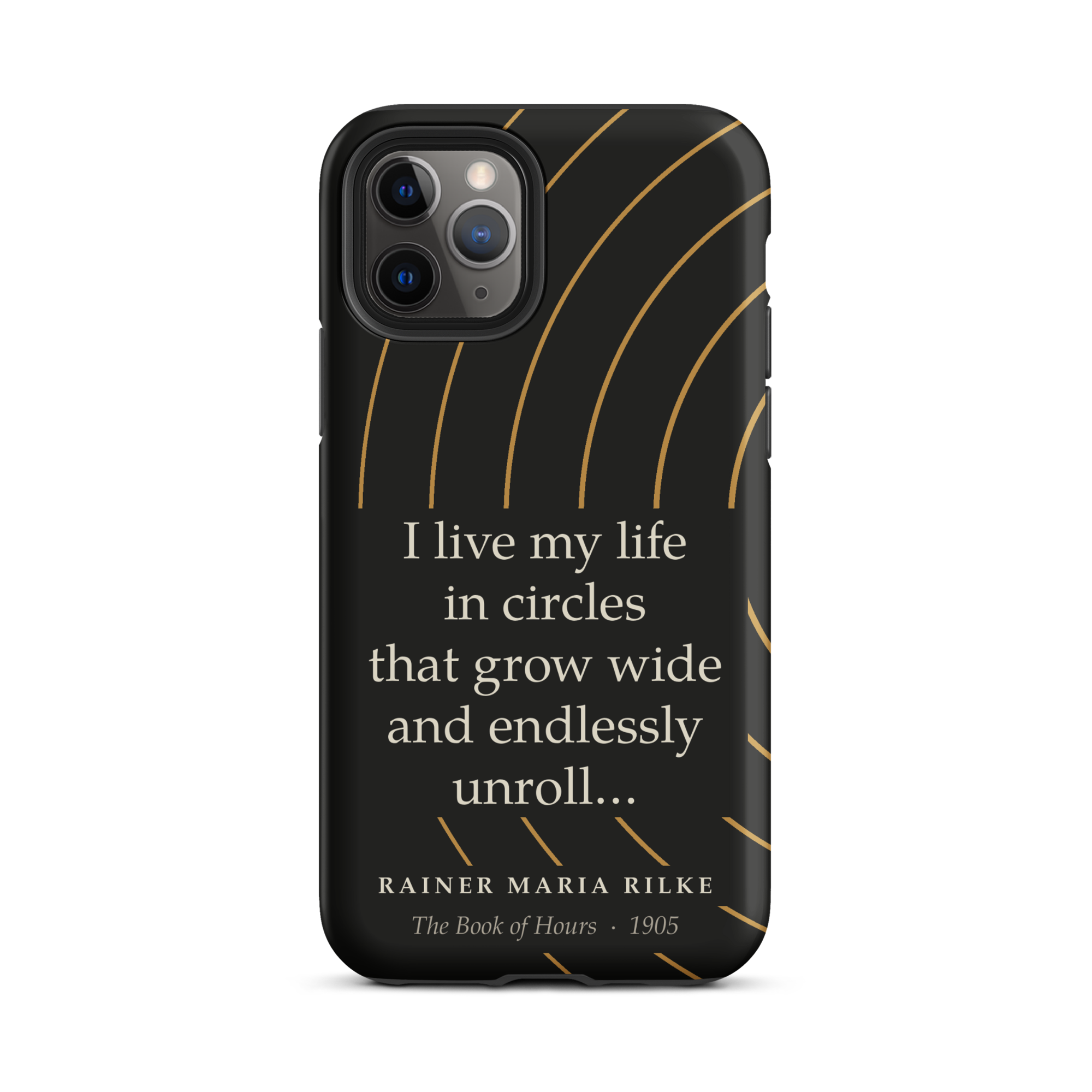
“I live my life in circles that grow wide and endlessly unroll.”
Rainer Maria Rilke, The Book of Hours (Das Stunden-Buch) (1905) — tr. Jessie Lemont, 1918 (public domain)
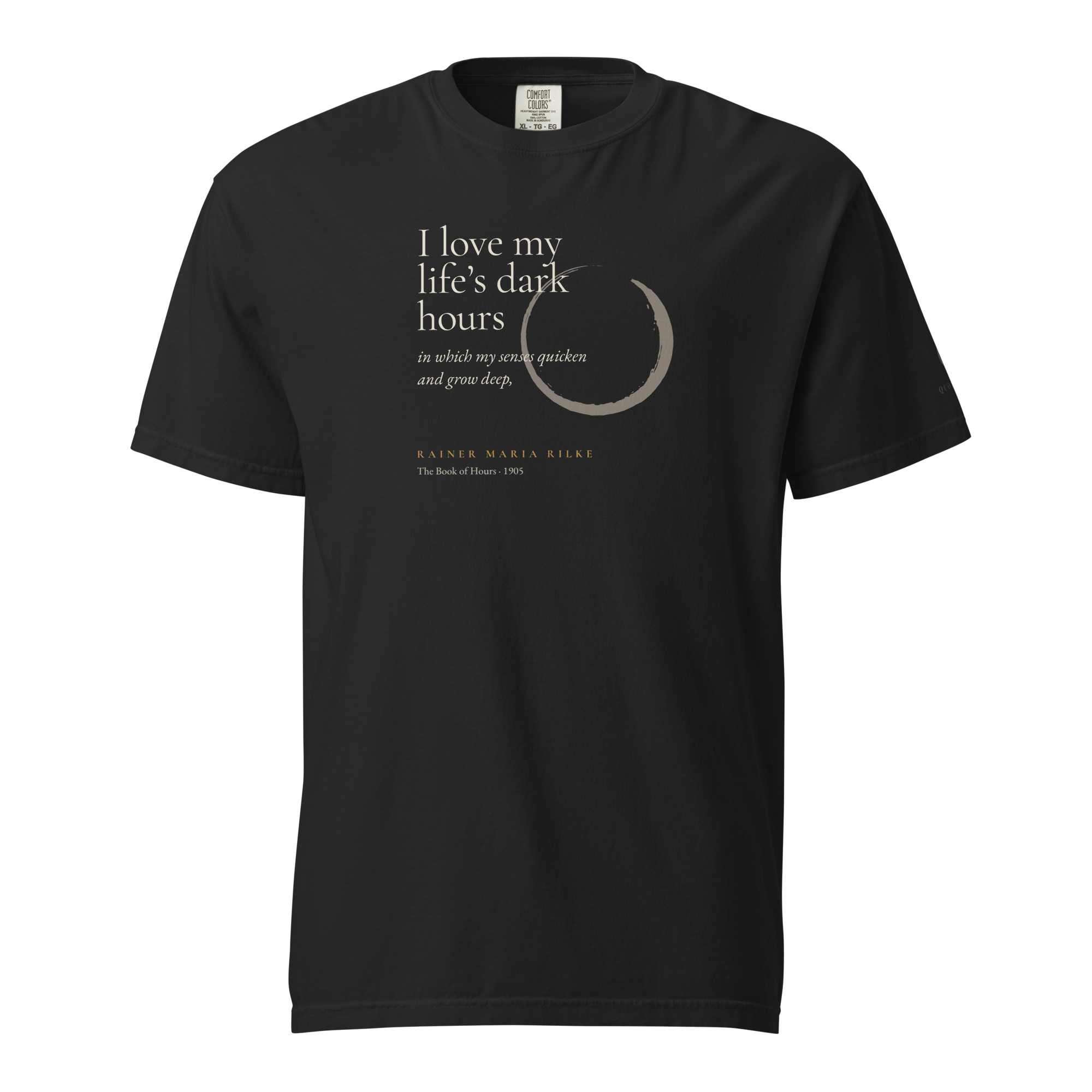
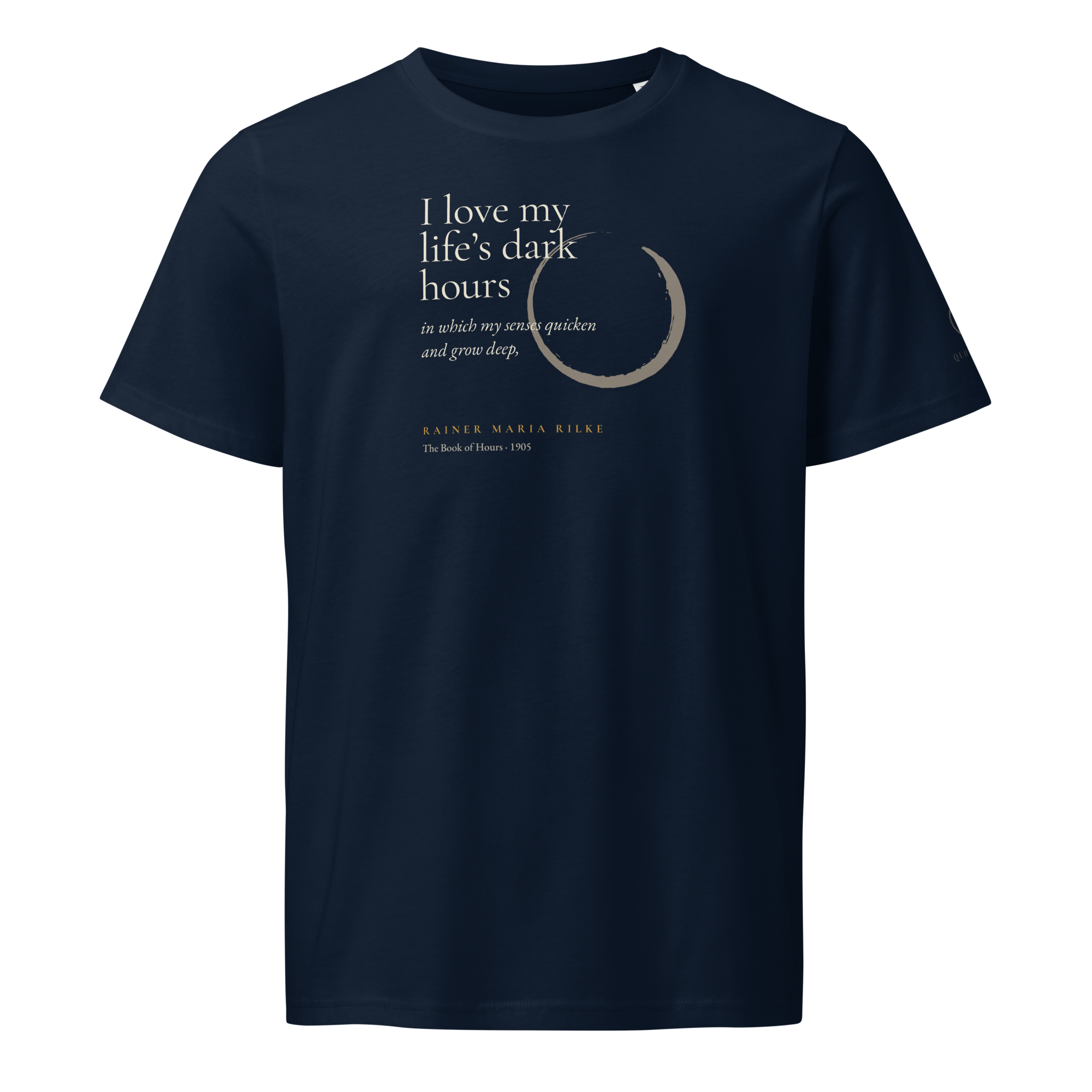
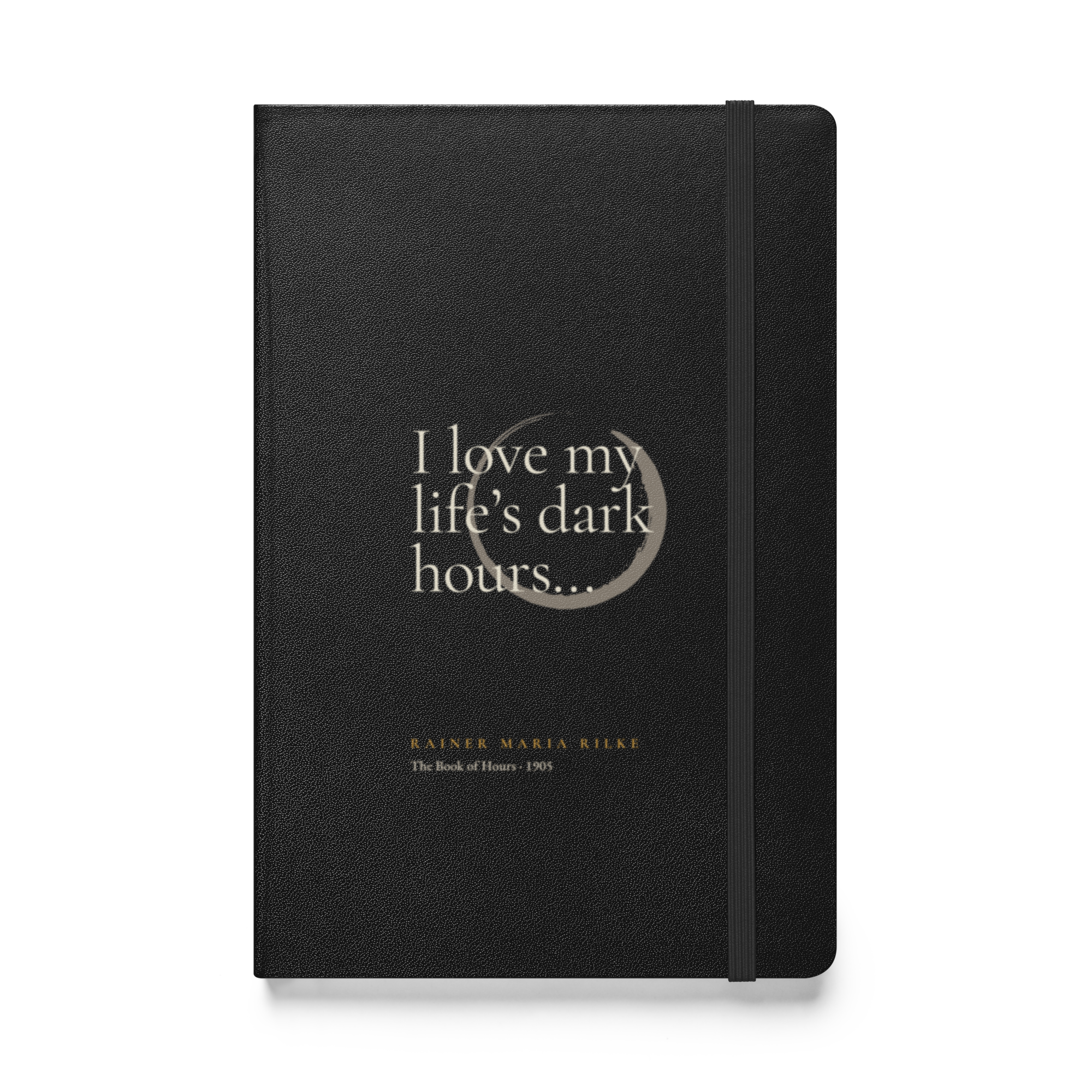
“I love my life’s dark hours in which my senses quicken and grow deep,”
Rainer Maria Rilke, Das Stunden-Buch (The Book of Hours), Book I, poem 6. Written 1899; published Leipzig, Insel Verlag, April 1905. Jessie Lemont translation, 1918.
About Rainer Maria Rilke
René Karl Wilhelm Johann Josef Maria Rilke was born on December 4, 1875, in Prague — then part of the Austro-Hungarian Empire, a city of German speakers in a Slavic land. His childhood was shaped by a mother who dressed him in girl’s clothes to grieve the daughter she had lost, and a father who enrolled him at eleven in the military academy at Sankt Pölten to make a man of him by other means. Rilke hated all of it. The discipline, the uniforms, the institutional boredom — he wanted no part of any of it. He left in 1891 without graduating, aided by an uncle who recognized what the school had missed. He began writing young, publishing early verse that was sincere and largely unremarkable, the work of someone learning the instrument. Then in 1897 he met Lou Andreas-Salomé — philosopher, writer, a woman Nietzsche had proposed marriage to twice and never forgotten, fourteen years his senior. She told him to change his name: René became Rainer. She gave him Russia. He made two journeys with her, in 1899 and again in 1900, and met Tolstoy, who unnerved him, and encountered the Orthodox world, which opened something vast. Those trips are the ground under everything that followed.
The Book of Hours was written in three parts between 1899 and 1903, poured out fast, like something that had been waiting. Published in 1905, it is a cycle of prayer-poems searching a God who is still being made — not devotional in any conventional sense, but restless and alive. From 1905 to 1906 Rilke worked as Rodin’s secretary in Paris, and the discipline he saw in that studio — complete attention to the physical world, nothing wasted on sentiment — changed his writing permanently. New Poems appeared in two volumes in 1907 and 1908: harder-edged, more precise, turned toward objects and bodies with the concentration of a sculptor. Then in 1912, staying at Duino Castle above the Adriatic, he heard the first lines of what would become his masterwork and could not finish them. The war interrupted everything. Ten years later, in a tower in Switzerland, the Duino Elegies finally broke open and completed themselves in a matter of days — along with the Sonnets to Orpheus, which arrived at the same time, uninvited, as a gift he hadn’t asked for.
Rilke died on December 29, 1926, in a sanatorium in Valmont, Switzerland. The cause was leukemia, though he resisted diagnosis and insisted on no treatment beyond what his body chose — a position consistent with everything he had ever written about the necessity of living at full exposure. He was fifty-one. He had spent the last years moving between Switzerland and Paris, unable to write anything he considered finished, and then, in February 1922, the Elegies arrived — all ten of them, along with the fifty-five Sonnets to Orpheus, in a single month’s burst after a decade of silence. He described it as dictation. He never fully explained it. Letters to a Young Poet, published posthumously in 1929, became the most-read thing he ever wrote — nine letters to a young soldier, written between 1902 and 1908, on the subject of living with questions you cannot yet answer.
The Work
From the Journal
A Poem About Circles That Grow Wide, and the Cup That Kept Turning Them Into a Bullseye
Putting the Rilke circles poem on a product took eighteen versions. The story of what the object kept doing to the words.
ReadRainer Maria Rilke and the Life That Moves in Circles
The Book of Hours — Rilke's devotional poems written in three sessions, transformed by Russia and Tolstoy. The line behind the Life in Circles collection.
ReadTed Lasso Got the Rilke Quote Wrong (And So Did Everyone Else)
The line Rebecca reads in Ted Lasso is a paraphrase from a 1992 book. The real Rilke passage says something stranger and harder.
ReadIn Their Orbit