Did Oscar Wilde Say "Be Yourself; Everyone Else Is Already Taken"? No — Here's the Real Story
Verdict: Misattributed. “Be yourself; everyone else is already taken” has no record in Wilde’s plays, essays, letters, or trial transcripts. Quote Investigator traced it to an anonymous post on a Dutch Usenet newsgroup in December 1999 — nearly a century after Wilde died in Paris in 1900. It sounds like him. It isn’t his. Here’s what Wilde actually wrote that comes closest.
| Quote in circulation | “Be yourself; everyone else is already taken” |
| Attributed to | Oscar Wilde |
| Verified source | None — not in plays, essays, letters, or transcripts |
| Earliest traceable appearance | Anonymous post, Dutch Usenet newsgroup, December 1999 |
| Verification status | ❌ Misattributed — Wilde did not write this |
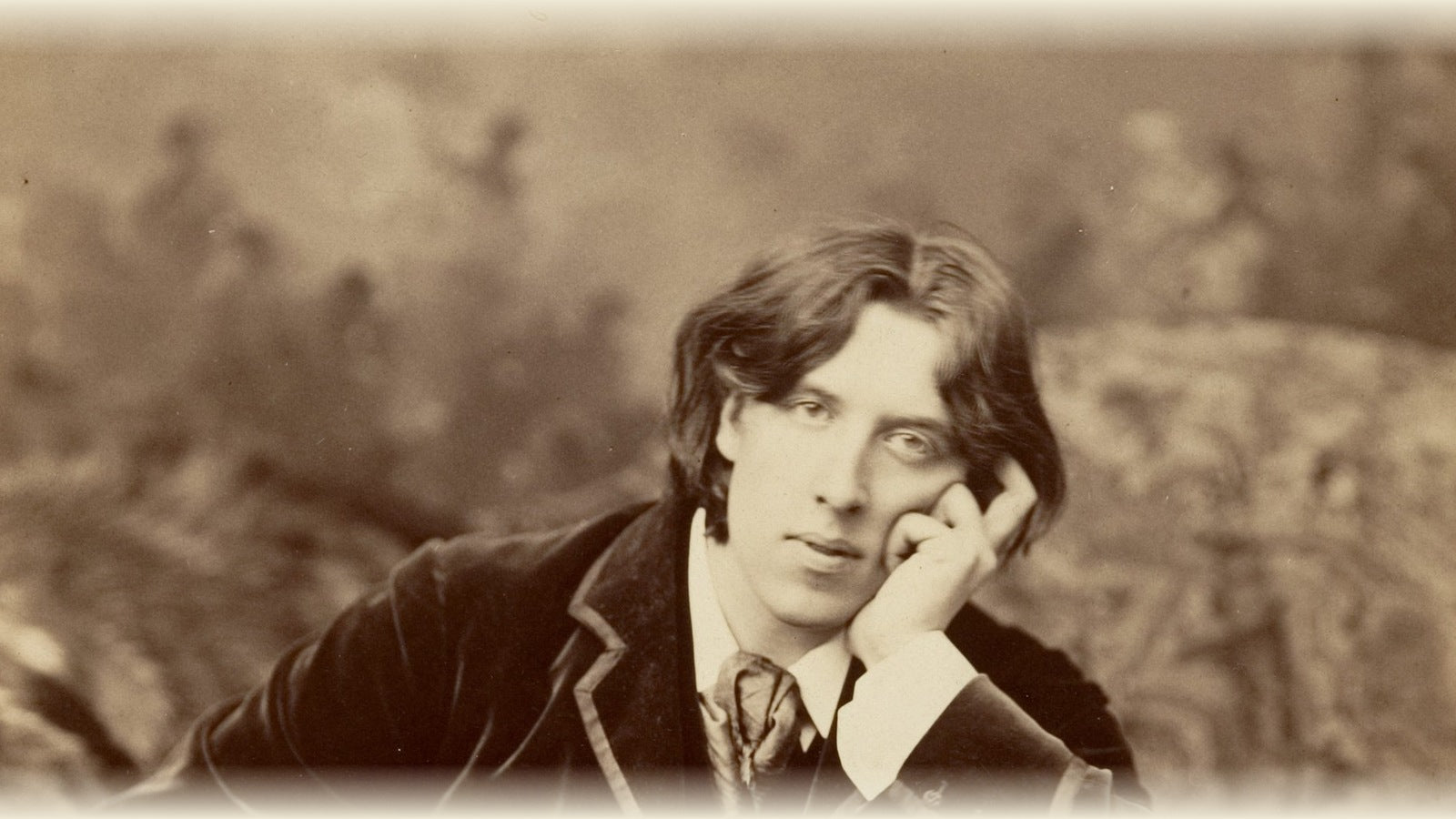
Oscar Wilde, photographed by Napoleon Sarony in New York, 1882 — taken during Wilde’s American lecture tour, which made him a celebrity on two continents. The image that launched a thousand misattributions. Public domain.
“Be yourself; everyone else is already taken.”
There is no record of Oscar Wilde writing or saying this. Not in his plays. Not in his essays. Not in his letters. Not in his trial transcripts.
Quote Investigator traced it to an anonymous post on a Dutch Usenet newsgroup in December 1999. That was nearly a century after Wilde died in Paris in 1900.
It got attached to him because it sounds like him. Once that story starts, it is hard to stop.

Model photo created with AI. The printed line is real.
A line Wilde did write: “The public is wonderfully tolerant. It forgives everything except genius.” Shop the tee →
The shape of a real Wilde line
Wilde mastered the compressed inversion. His lines appear to say one thing while doing another. His plays were staged in London. His essays appeared in magazines. His letters survive.
When Wilde said something in print, it left a clear trail: a scene, a speaker, a date, a first edition. The record is solid.
“Be yourself; everyone else is already taken” has none of that. No character speaks it. No essay contains it.
The closest real lines
In The Picture of Dorian Gray, Lord Henry says: “Being natural is simply a pose, and the most irritating pose I know.”
In De Profundis, the long letter from prison, Wilde wrote:
“It is tragic how few people ever ‘possess their souls’ before they die. ‘Nothing is more rare in any man,’ says Emerson, ‘than an act of his own.’ It is quite true. Most people are other people. Their thoughts are some one else’s opinions, their lives a mimicry, their passions a quotation.”
That is Wilde on authenticity. It lands harder than any motivational poster.
Why the fake stuck
The line has a mild Wildean inversion. It turns self-acceptance into scarcity logic. People wanted Wilde to have said it.
He was prosecuted for who he was. The establishment found him intolerable because he refused to pretend. The quote feels like something he should have said.
But sentiment is not evidence. A life that makes you want a quote to be true does not make it true.
What Wilde actually believed
He was suspicious of sincerity as its own performance. In “The True Function and Value of Criticism,” he wrote: “Man is least himself when he talks in his own person. Give him a mask, and he will tell you the truth.”
The self that emerges through artifice is often more honest. He wore paradox and wit like a costume. The performance and the person were not so different.

Model photo created with AI. The printed line is real.
“The truth is rarely pure and never simple.” Shop the tee →

Model photo created with AI. The printed line is real.
The same Wilde line, on the back of a full-zip hoodie, in black or navy. Shop the hoodie →
The Quoteiac standard
We carry only verified Wilde quotes. Each one traces to a specific published source.

Model photo created with AI. The printed line is real.
“Consistency is the last refuge of the unimaginative.” Shop the tee →
These meet our standard. “Be yourself; everyone else is already taken” does not. No publication. No date. No Wilde.
We don’t print it.
The verified Wilde is stranger, darker, and funnier than the convenient version. That is usually how it goes.
If you’re shopping for a Wilde fan, we gathered Oscar Wilde gifts for the people who quote him, each one printed with a line he actually wrote.
For the quotes Wilde did write — each traced to a specific published source — see The Best Oscar Wilde Quotes: Verified, Sourced, and Worth the Weight. For the life that made those lines possible — and the wit that made them dangerous — The Wildest Oscar Wilde Quotes and Why He Got Away With It.
Browse the full Oscar Wilde collection or explore the Heretics collection.