What William James Actually Meant by the Art of Being Wise
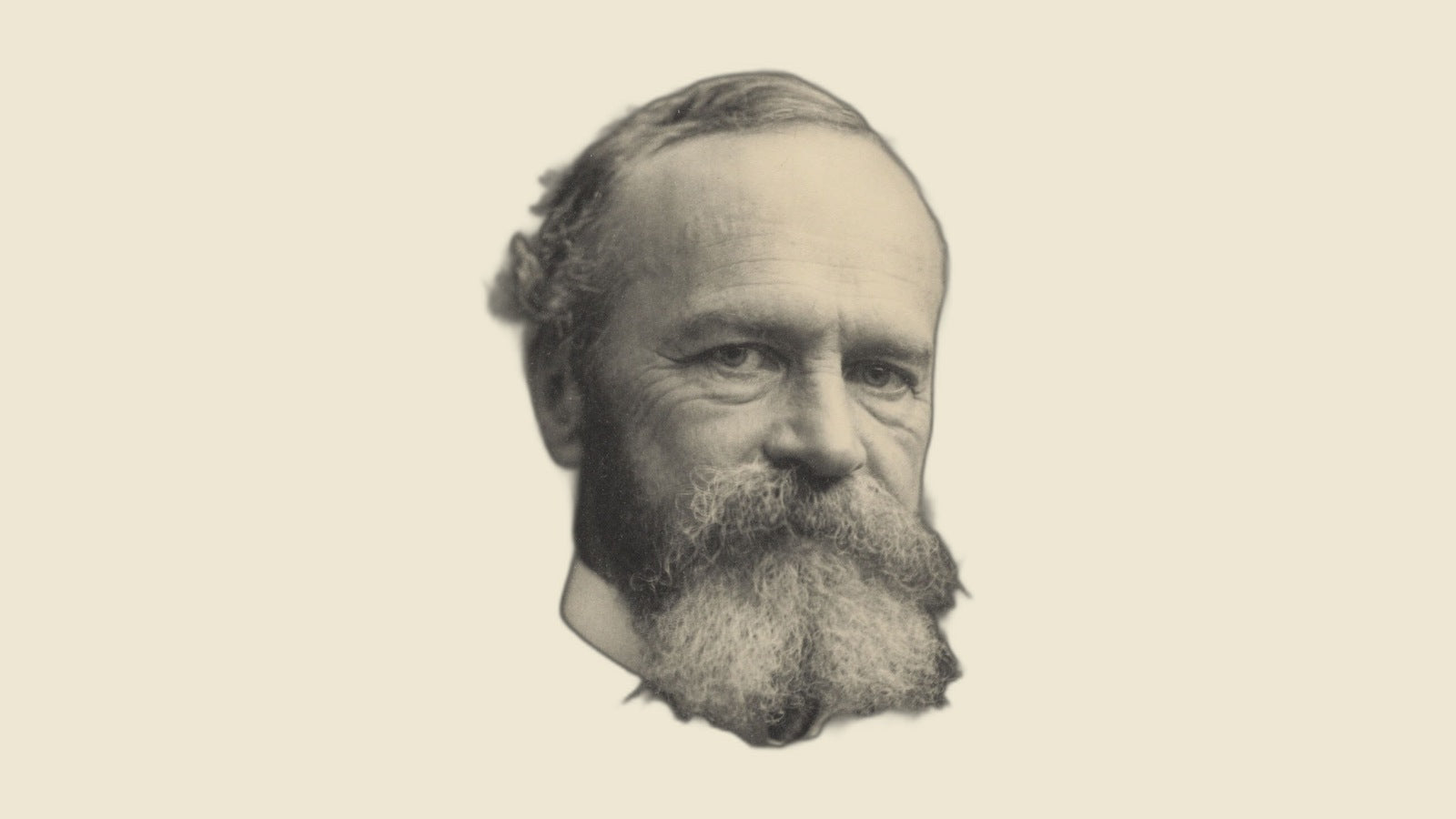
William James published The Principles of Psychology in 1890 — two volumes, 1,400 pages, twelve years in the writing. It established psychology as a discipline in the United States, introduced the concept of the “stream of consciousness,” and shaped every major thinker who came after it. It also contained, buried in a chapter on attention, one sentence that has outlasted most of the rest: “… so the art of being wise is the art of knowing what to overlook.”
That sentence is not a maxim. It is a conclusion. To understand what James meant, you need to know what he was arguing in the pages before it.
The Problem James Was Solving
The chapter is called “Attention.” James’s question was: how does the mind decide what to notice? The world presents an overwhelming volume of information at every moment — sensory data, competing thoughts, memories, physical sensation. The conscious mind cannot process all of it. So it selects.
The selection is not passive. James argued that attention is an active, trained capacity — that what we attend to shapes what we think, what we feel, what we become. His famous line from elsewhere in the book makes the point directly: “The faculty of voluntarily bringing back a wandering attention, over and over again, is the very root of judgment, character, and will.”
Wisdom, in this framework, is not about knowing more. It is about knowing what to let go of. The wise person does not process everything with equal weight. They have learned, through experience and reflection, which signals matter and which are noise — and they have the discipline to act on that distinction.
What Overlooking Actually Means
It is easy to misread “knowing what to overlook” as a licence for selective ignorance — as if wisdom were just a sophisticated form of not paying attention. James meant the opposite. Overlooking, in his sense, requires prior understanding. You cannot know what to set aside until you have understood why it does not matter. The expert overlooks things the novice cannot afford to — not because the expert is less attentive, but because they have built the map that makes certain details legible as irrelevant.
A doctor reading an X-ray overlooks most of what is in the image. A chess player overlooking a line of play does so because they have already calculated it and found it wanting. What looks like inattention from the outside is, in both cases, compressed expertise.
James was describing the endpoint of a long process of learning to notice, not a shortcut that bypasses it.
James and the Pragmatist Tradition
William James was the central figure in American pragmatism — the philosophical school that judged ideas by their practical consequences rather than their logical elegance. Truth, for James, was not an abstract property of propositions. It was what worked, what made a difference in experience, what you could act on.
The “art of being wise” sentence is pragmatist to its core. Wisdom is not contemplative. It is operational. It is what allows you to make decisions under conditions of incomplete information, which is to say, all decisions. The person who cannot overlook — who treats every detail as equally significant, who cannot close off inquiry — is not thorough. They are paralysed.
James was writing from experience. He spent much of his thirties in a severe depression, unable to act, tormented by philosophical doubt about free will and the nature of the self. The pragmatist philosophy he developed was, in part, a way out of that paralysis. The art of being wise was, for James, a survival skill as much as an intellectual achievement.
On the Products
Both Quoteiac James designs carry the line from The Principles of Psychology, 1890 — attributed to James, sourced to the text. The Art of Being Wise Kintsugi Tee places the quote against a kintsugi seam — the Japanese practice of repairing broken pottery with gold, treating the fracture as part of the object’s history. The Art of Being Wise Enso Tee pairs it with the open Zen circle — the brushstroke left unclosed. Both designs are about what you choose to carry forward and what you let go.
Both are in the William James collection.
William James, In Plain English
- Lived: 1842–1910, New York. Brother of the novelist Henry James, which created a family dynamic that could sustain its own biography.
- Trained as a physician, never practiced. Taught anatomy at Harvard, then philosophy, then psychology — in an era when the three were not yet fully separated.
- His Varieties of Religious Experience (1902) remains the most serious philosophical examination of what religious experience actually is, regardless of whether God exists.
- Believed genuinely that the question of free will was the most important philosophical question a person could face — and that the answer mattered practically, not just theoretically.
- Died of heart failure at 68. His last years were spent finishing a philosophy he knew he would not live to complete. He sent his colleague a note that read: “Dear Royce — Goodbye.”