
Art of Being Wise — James Psychology Enso Tee
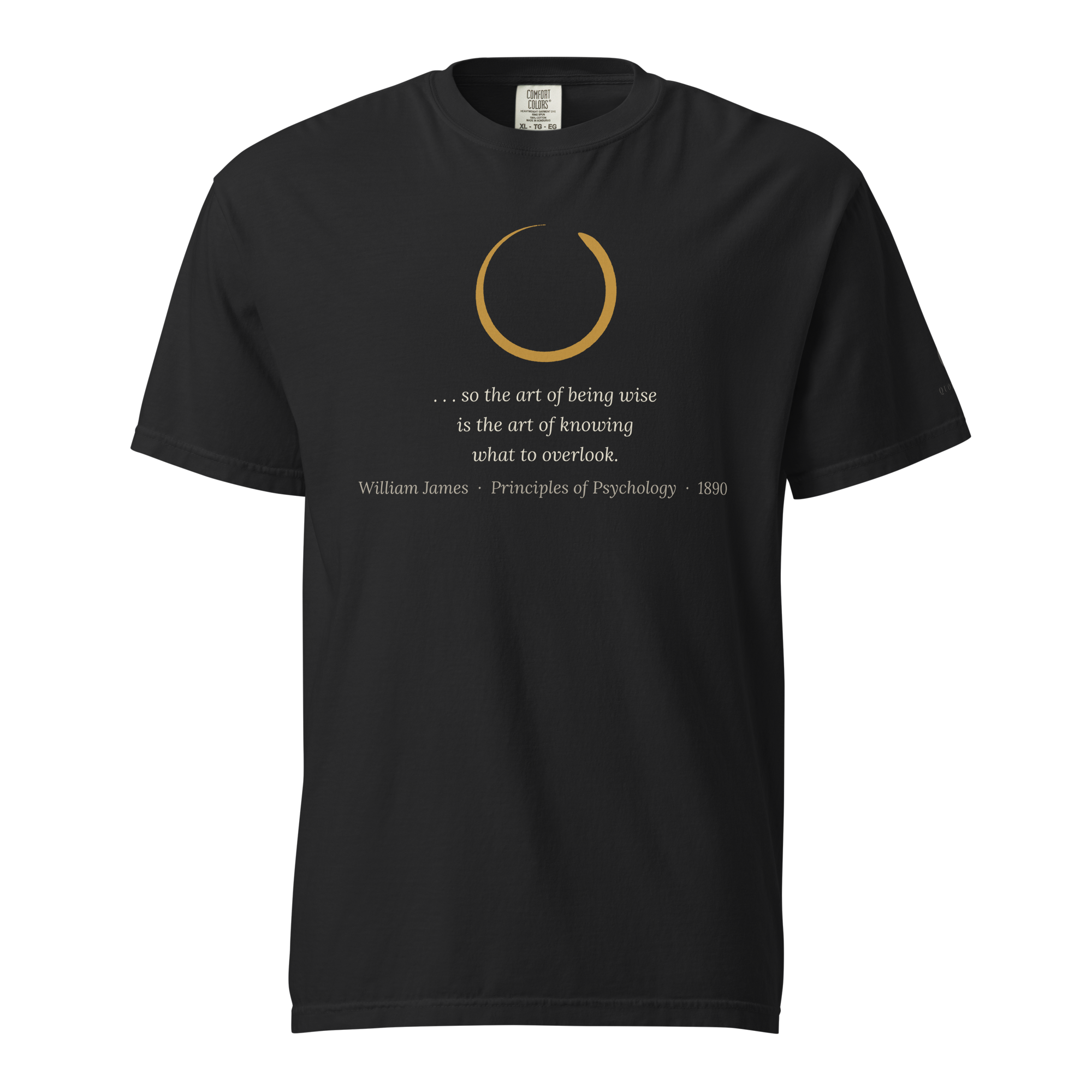
James published “The Principles of Psychology” in 1890 — a twelve-year project that turned attention itself into a subject of study. The enso is the visual argument: wisdom is knowing the circle doesn’t need to close.
William James
“…so the art of being wise is the art of knowing what to overlook.”
James arrived at this after twelve years of writing about the mind — watching what good thinkers did differently from poor ones. It wasn’t raw intelligence. It was selection. The practiced art of knowing which signals to follow and which to let dissolve.
An open circle above the quote sets the frame. The enso and the quote make the same argument in different vocabularies.
If you’ve ever:
- Turned off the notifications and felt your thinking clarify within the hour
- Left a conversation early because everything useful had already been said
- Realized the second draft was better precisely because it was shorter
This is for you.
The Design
The enso is a circle drawn in a single brushstroke, practiced in Zen calligraphy for centuries. The brushstroke is completed in one breath — no corrections, no second pass. What matters is what the circle does at the end: it stays open.
In Zen practice, the open enso isn't unfinished. It's the point. A closed circle contains. An open one is still in motion — still becoming. The gap is where the meaning lives.
James's line and the enso ask the same question in different vocabularies: what do you let through, and what do you let go?
About This Tee
- 100% combed and ring-spun cotton
- Fabric weight: 4.2 oz/yd² (142 g/m²)
- Retail fit, true to size
- Side-seamed construction
- Machine washable, cold water
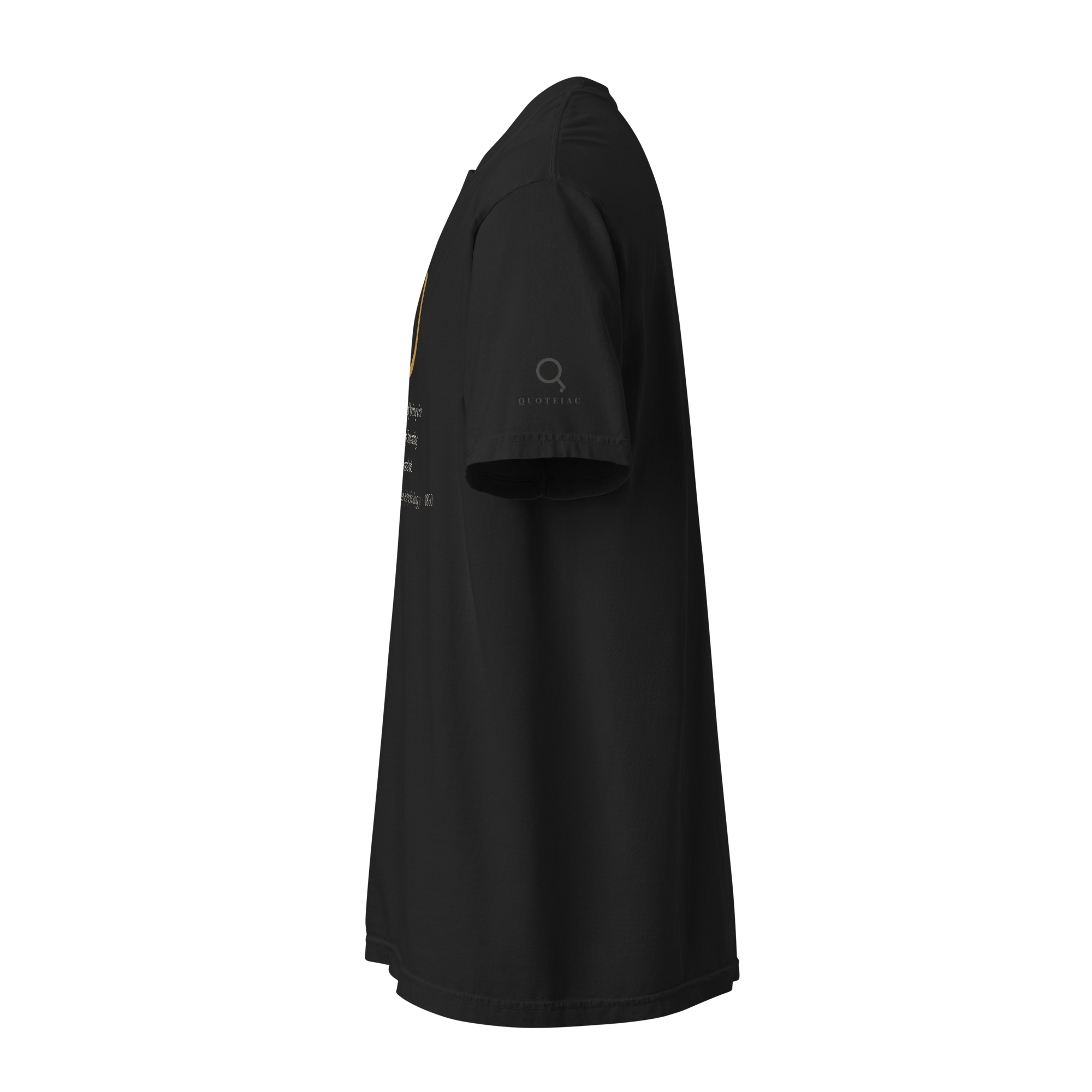
- Quoteiac logo on the left sleeve
Who It’s For
The curator. The person who has stopped treating every incoming thought as an obligation. The one who has learned — through James, through experience, through the quiet after too much noise — that the open circle is not emptiness. It is readiness.
Wear the open circle.
William James, in Plain English
- Lived: 1842–1910, New York — philosopher, psychologist, and the founder of American pragmatism
- Spent years unable to work, plagued by depression and physical illness, before deciding that the act of choosing to believe was itself a philosophical position — and spending the rest of his career defending it
- Coined “stream of consciousness” not as a literary device but as a precise description of how thought actually moves — his brother Henry used it in fiction; William used it in science
- Wrote Varieties of Religious Experience (1902) with the same empirical rigor he brought to attention and habit — it remains the most cited text in the psychology of religion
Size Chart (Comfort Colors)
| Size | Width (in) | Length (in) |
|---|---|---|
| S | 19 | 28 |
| M | 20.5 | 29 |
| L | 22.5 | 30 |
| XL | 24.5 | 31 |
| 2XL | 26.5 | 32 |
| 3XL | 28.5 | 33 |

Choose options