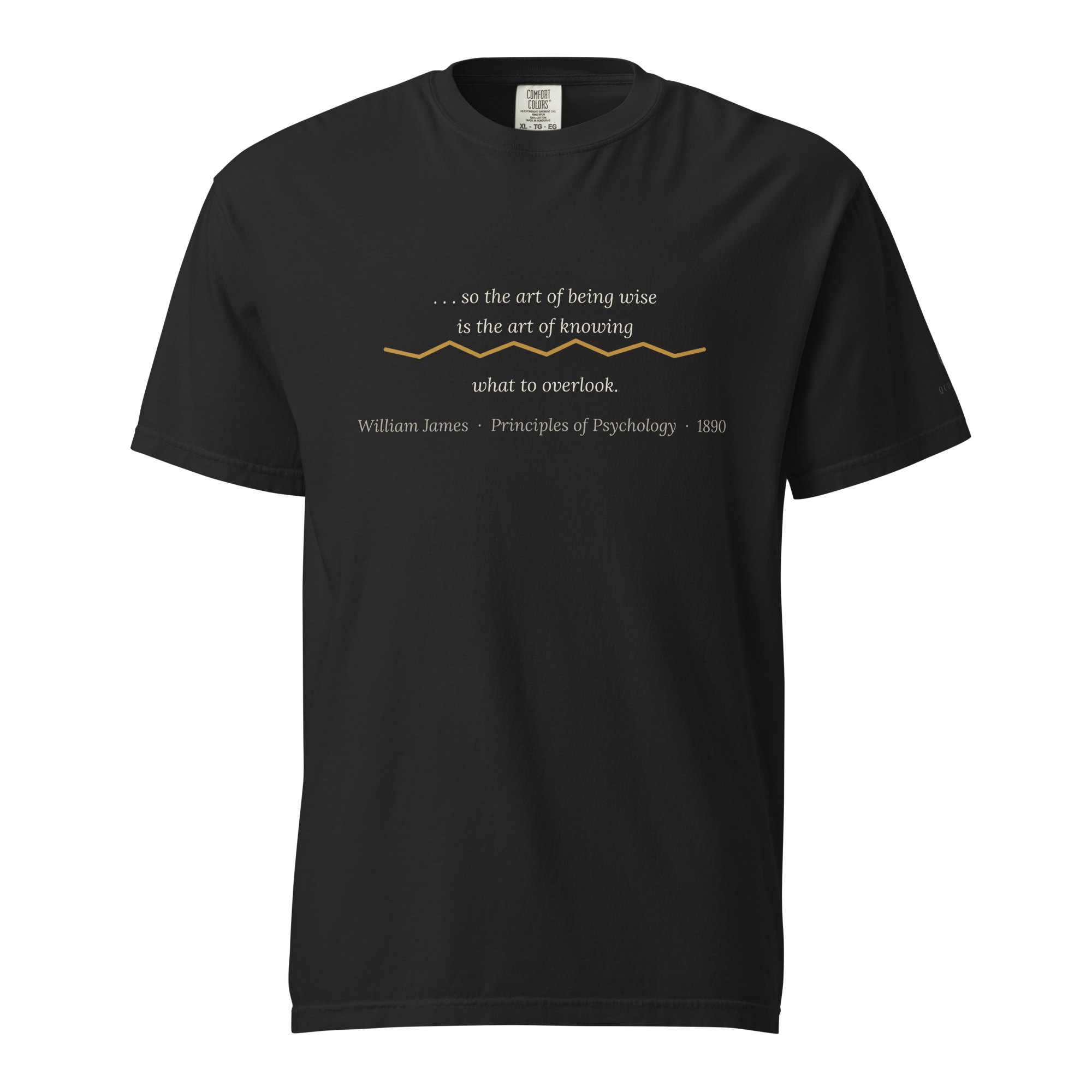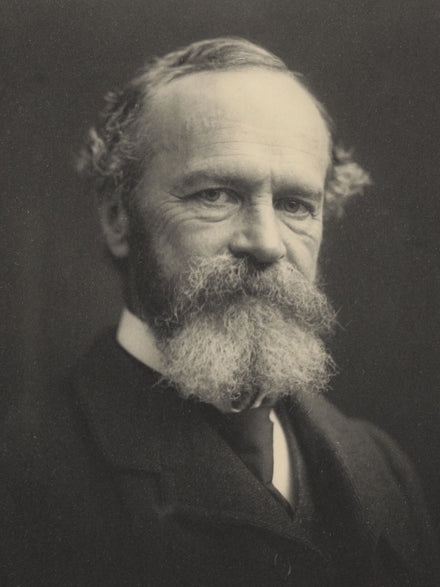
William James. Photograph, c. 1903.Public domain.
William James
William James spent twelve years writing a book that changed what Americans thought the mind could do. He was a philosopher, a psychologist, and a working scientist — but his deepest subject was always the same: how a person chooses to live when nothing is certain.
Words We Carry
Every quote here is traced to a documented source. How we verify →
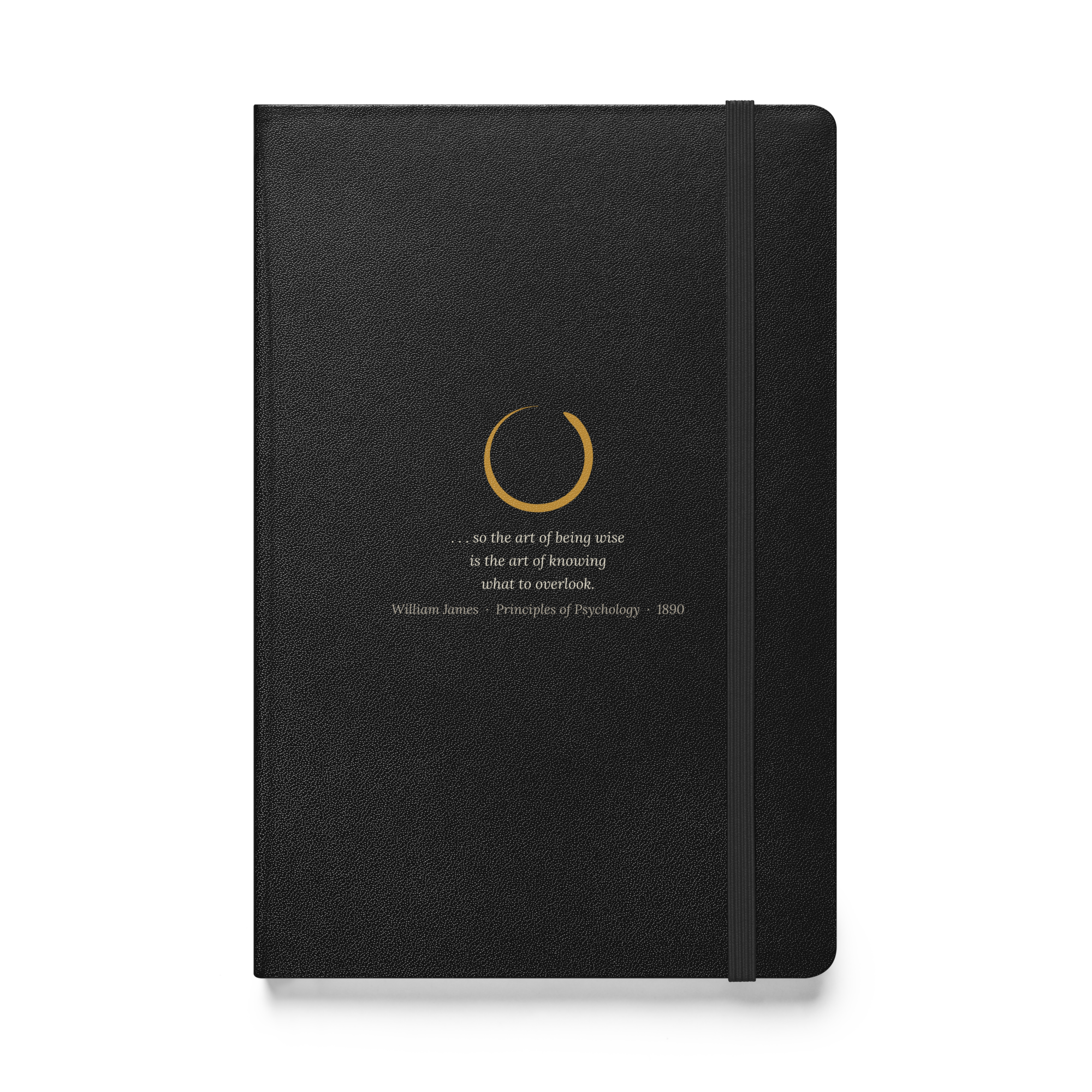
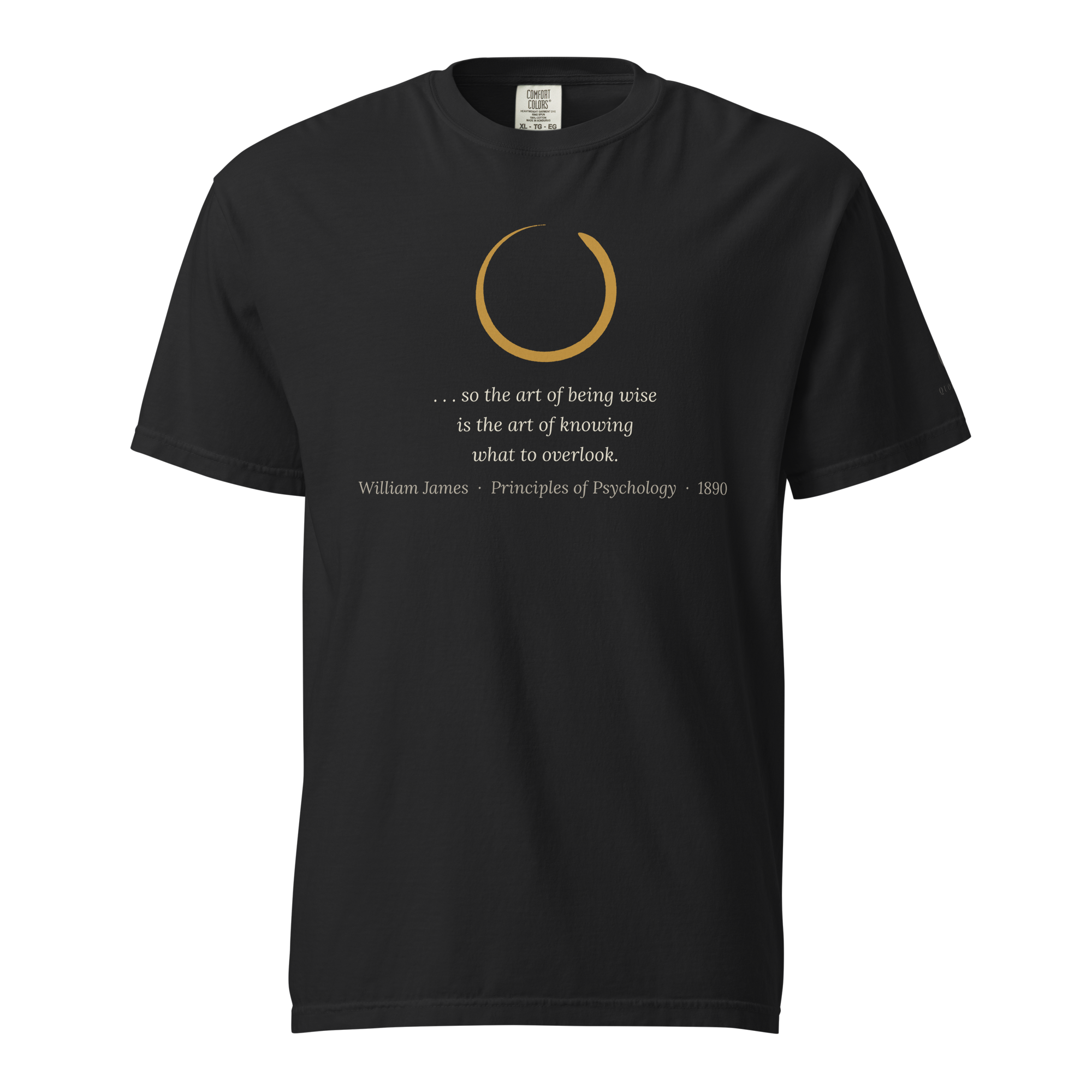
“… so the art of being wise is the art of knowing what to overlook.”
The Principles of Psychology, Vol. II, Chapter XXII (“Reasoning”), p. 369 (1890)
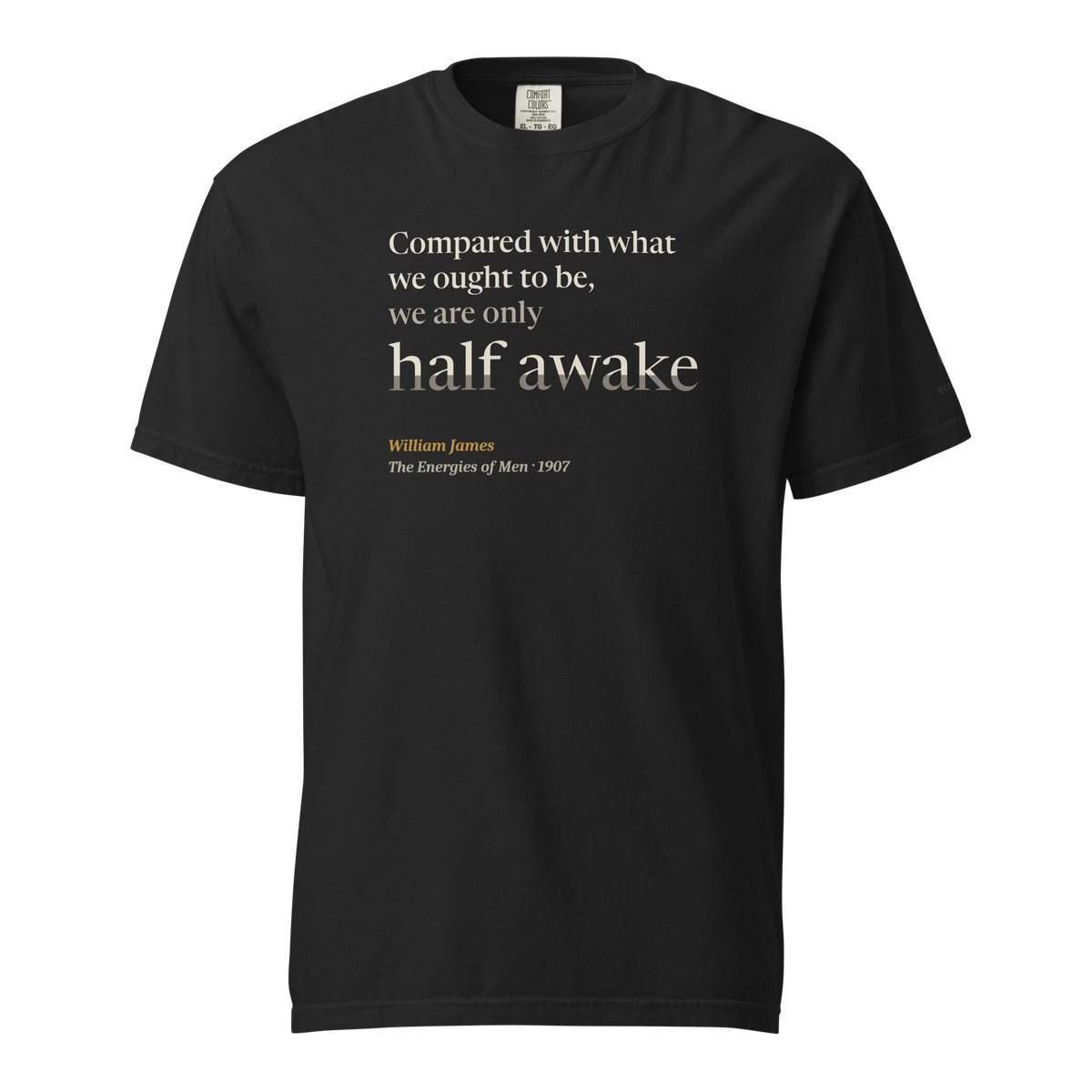
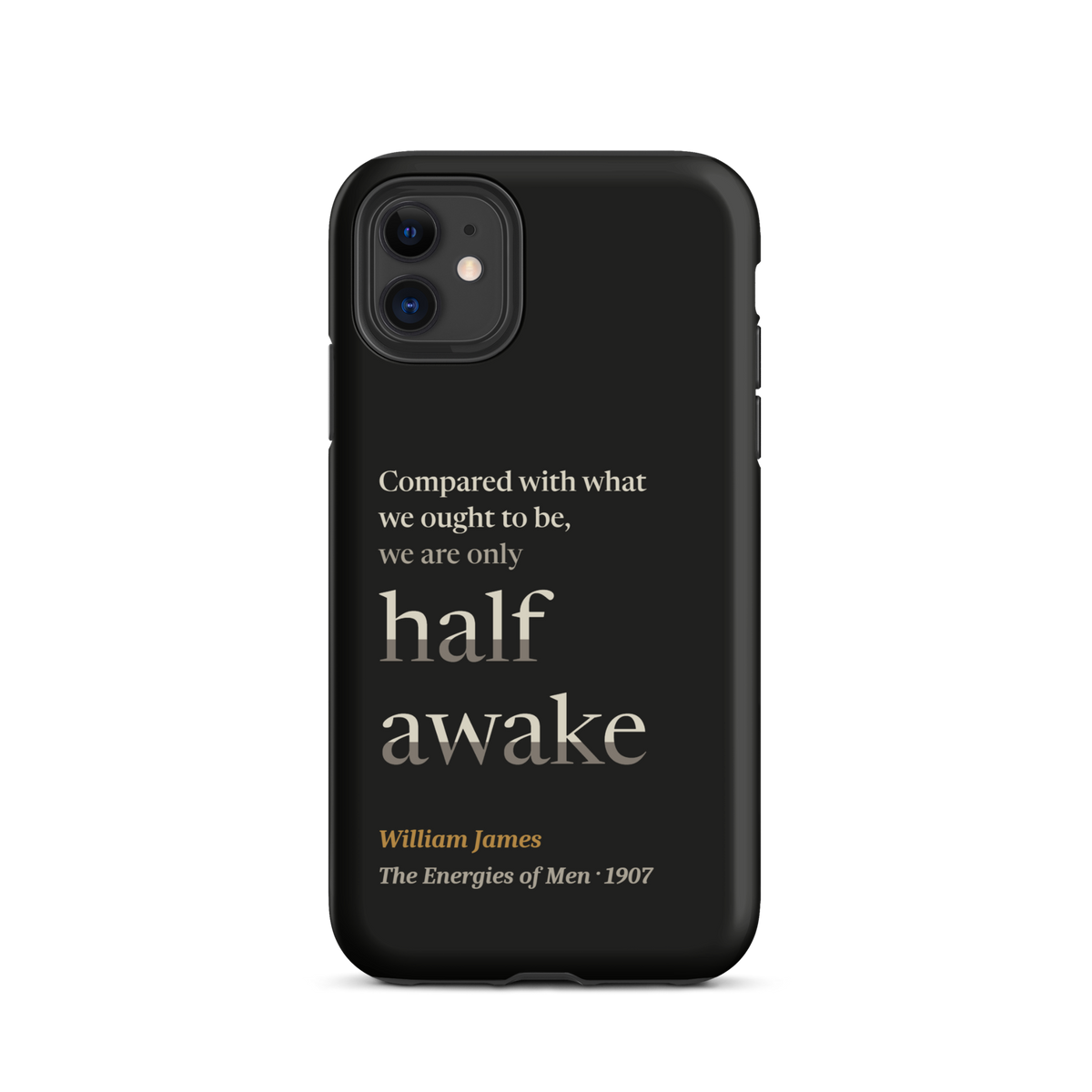
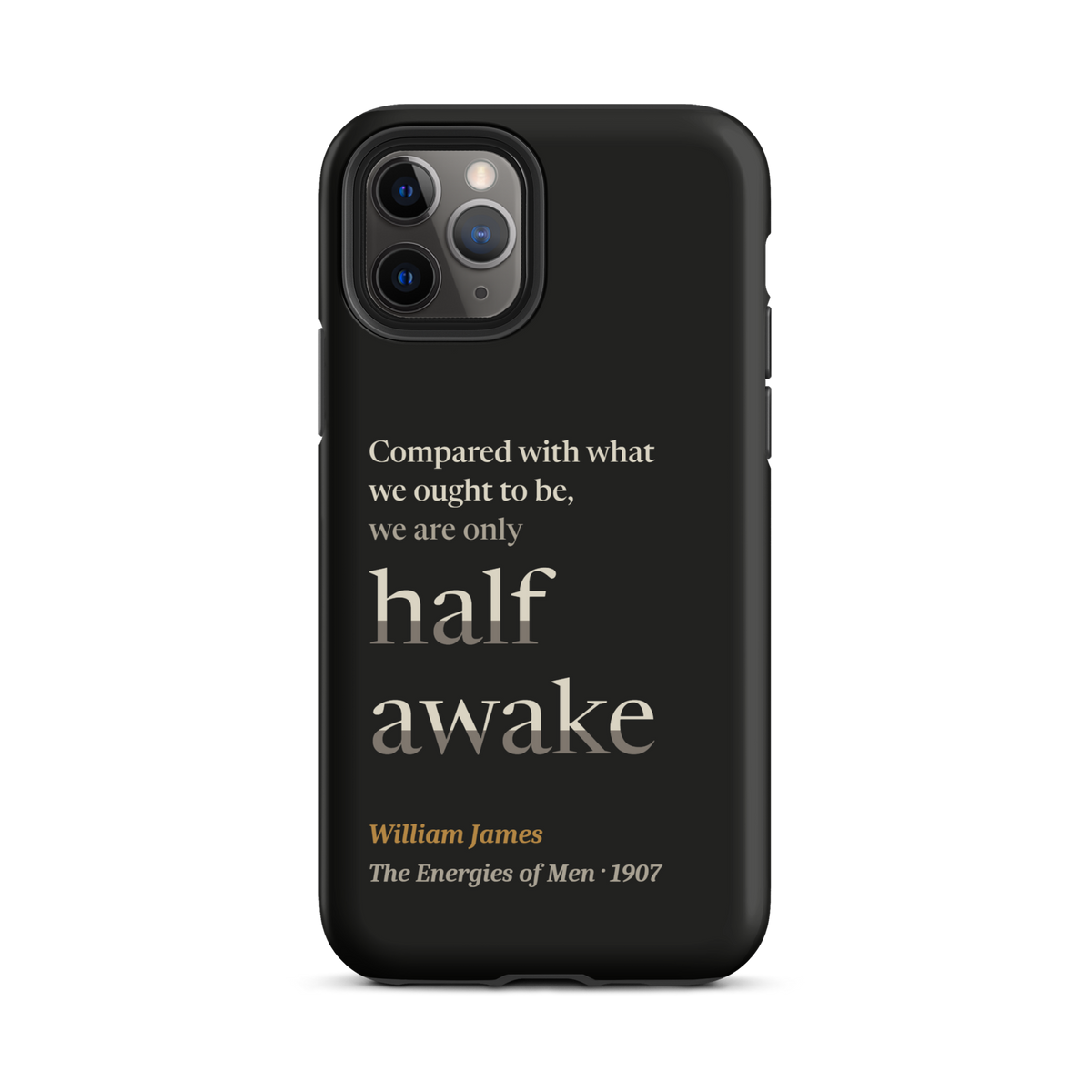
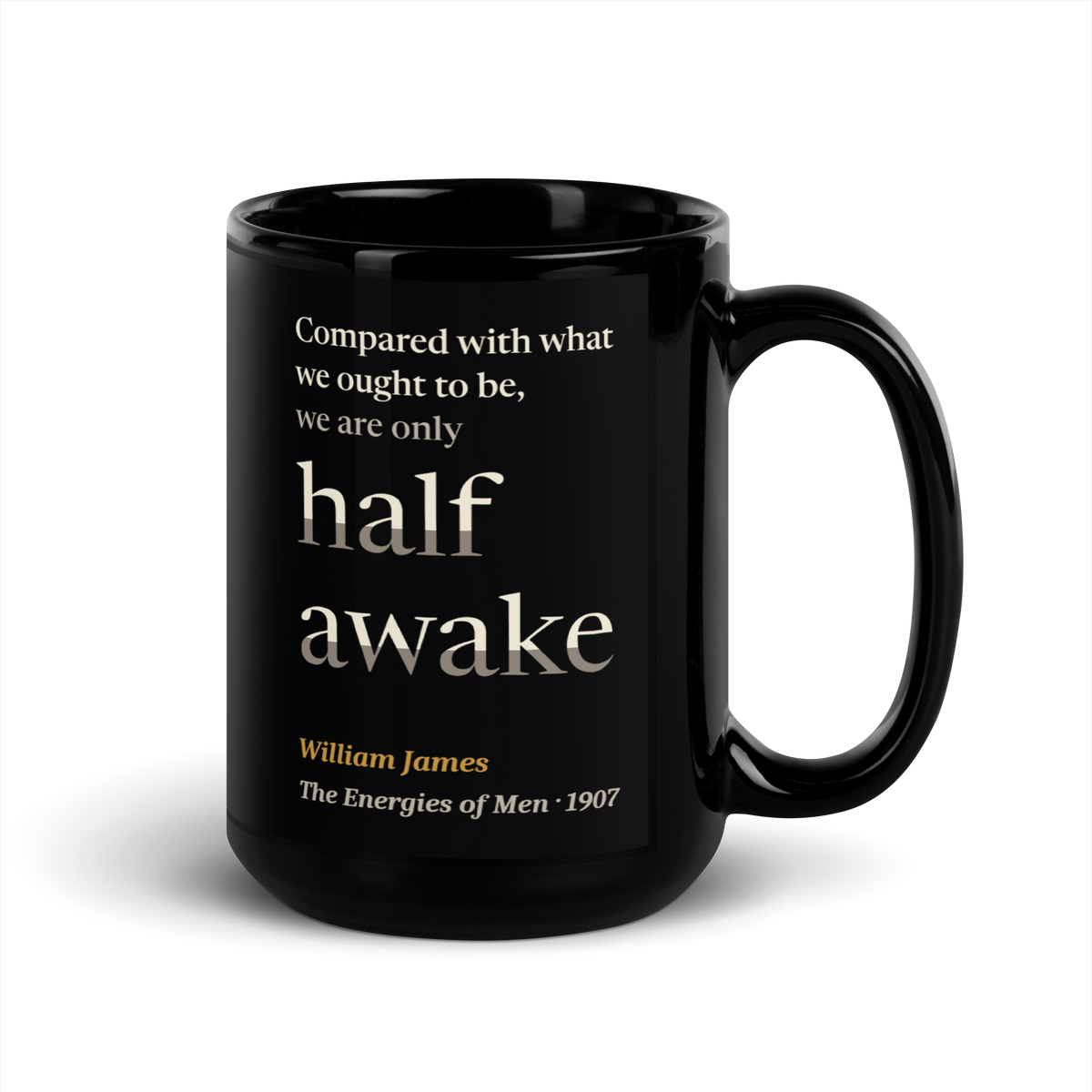
“Compared with what we ought to be, we are only half awake.”
Science, Vol. 25, No. 635 — “The Energies of Men” (March 1, 1907)
About William James
James came to psychology by a long detour. He studied painting as a young man, then medicine, earning his Harvard MD in 1869. He never practiced. What the years in medical training gave him was a rigorous habit: look at what is actually happening, not what theory says should be happening. He arrived at Harvard as an instructor in 1875 and set up the first psychology teaching laboratory in America — a demonstration space that opened the discipline to his students before research labs existed. He was building something that didn’t exist yet — a science of the mind that could hold consciousness, emotion, habit, and religious experience without reducing any of them to something smaller than they were.
The Principles of Psychology appeared in 1890 after twelve years of labor. At 1,400 pages it was imposing, but it moved — James wrote with the forward momentum of a man who had thought the problems through and wanted to take the reader with him. He coined “stream of consciousness,” gave sustained attention to habit as a shaping force in character, and developed an account of emotion that reversed common sense: we don’t tremble because we are afraid, he argued; we are afraid because we tremble. His later work pushed further. Pragmatism, published in 1907, proposed that truth is not a fixed property of ideas but something ideas earn by working in practice. It was a philosophy built for a country that had always trusted experience over doctrine.
James was born January 11, 1842, in New York City, the eldest son of Henry James Sr., a theologian of independent means, and the older brother of the novelist Henry James. His education was irregular and cosmopolitan — the family moved between America and Europe, and James absorbed several languages and a distrust of fixed systems early. In his late twenties he endured a severe depression that brought him close to breakdown. His recovery turned on a philosophical wager: he read the French philosopher Charles Renouvier’s defense of free will and decided to believe it — his first act of free will, he wrote, would be to choose to believe in free will. That private wager became the seed of everything that followed. He taught at Harvard for thirty-five years, died at his summer home in Chocorua, New Hampshire, on August 26, 1910, and left behind a body of work that is still actively read by psychologists, philosophers, and anyone trying to think seriously about how the mind works.
The Work
From the Journal
What William James Actually Meant by the Art of Being Wise
The line on the shirt is the headline. Here’s the full argument behind it.
ReadThe Philosophy of Doing Hard Things — From People Who Actually Did Them
What the people who finished things actually believed about the work.
ReadIn Their Orbit