Skip to content

Cart

Your cart is empty

Art of Knowing Journal

Price$30.00

William James spent years watching people think, and what he noticed was less interesting than what they chose not to. The mind doesn't build ideas from everything in front of it — it works by selection. By knowing what to let through and what to refuse. The ones who reason well aren't the ones who take in more. They're the ones who know what to leave out.

William James, Principles of Psychology, 1890

". . . so the art of being wise is the art of knowing what to overlook."

He wrote that in 1890 — a sentence buried inside a 1,400-page masterwork on attention, habit, and the structure of thought. It was a clinical observation about how the mind operates under pressure. It has also been true of every good decision anyone has ever made.

Wisdom, James argued, isn't about seeing everything. It's about knowing which things don't deserve your attention — and holding that line when everything around you insists otherwise. That discipline is hard. It requires a practiced refusal. And it starts, usually, with the act of writing: deciding what goes on the page and what doesn't.

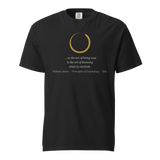
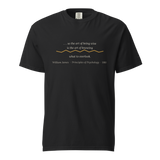
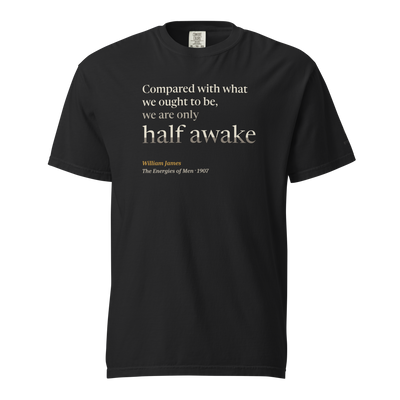
Also on the Art of Being Wise — Enso Tee and the Art of Being Wise — Kintsugi Tee. Browse the full William James collection.

The Design

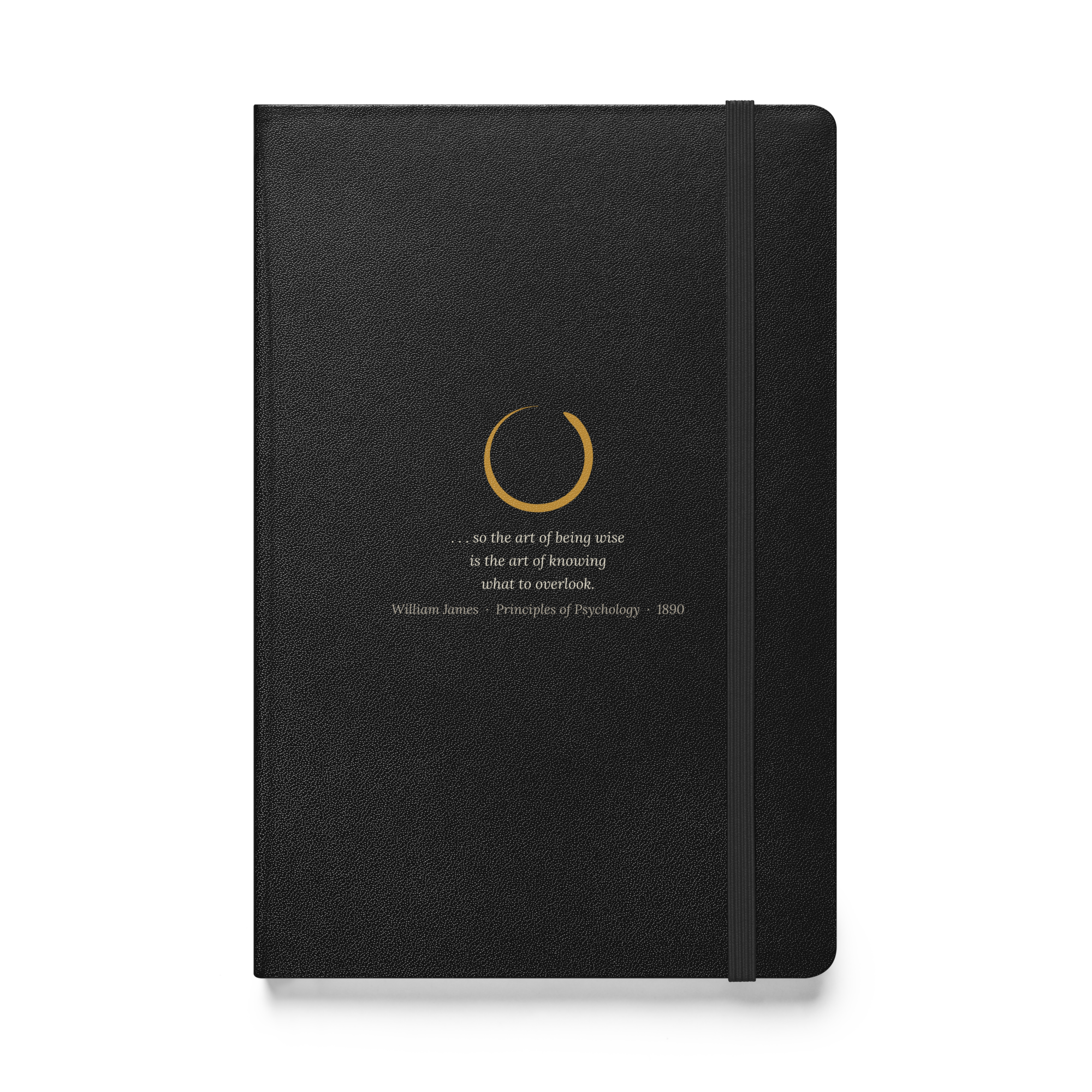
A single gold circle — open at the upper right, brushstroke-heavy, incomplete — sits centered on the black cover. Below it, the quote runs in three short lines: the lead ellipsis signals mid-thought, not beginning; the period after overlook signals finality. Attribution sits beneath in small type: James, the book, the year. The circle holds no text. It doesn't need any.

The enso is the Buddhist symbol for presence through practice — you draw it in one stroke, and what you don't correct is what you chose to leave. James would have approved of the metaphor.

About This Journal

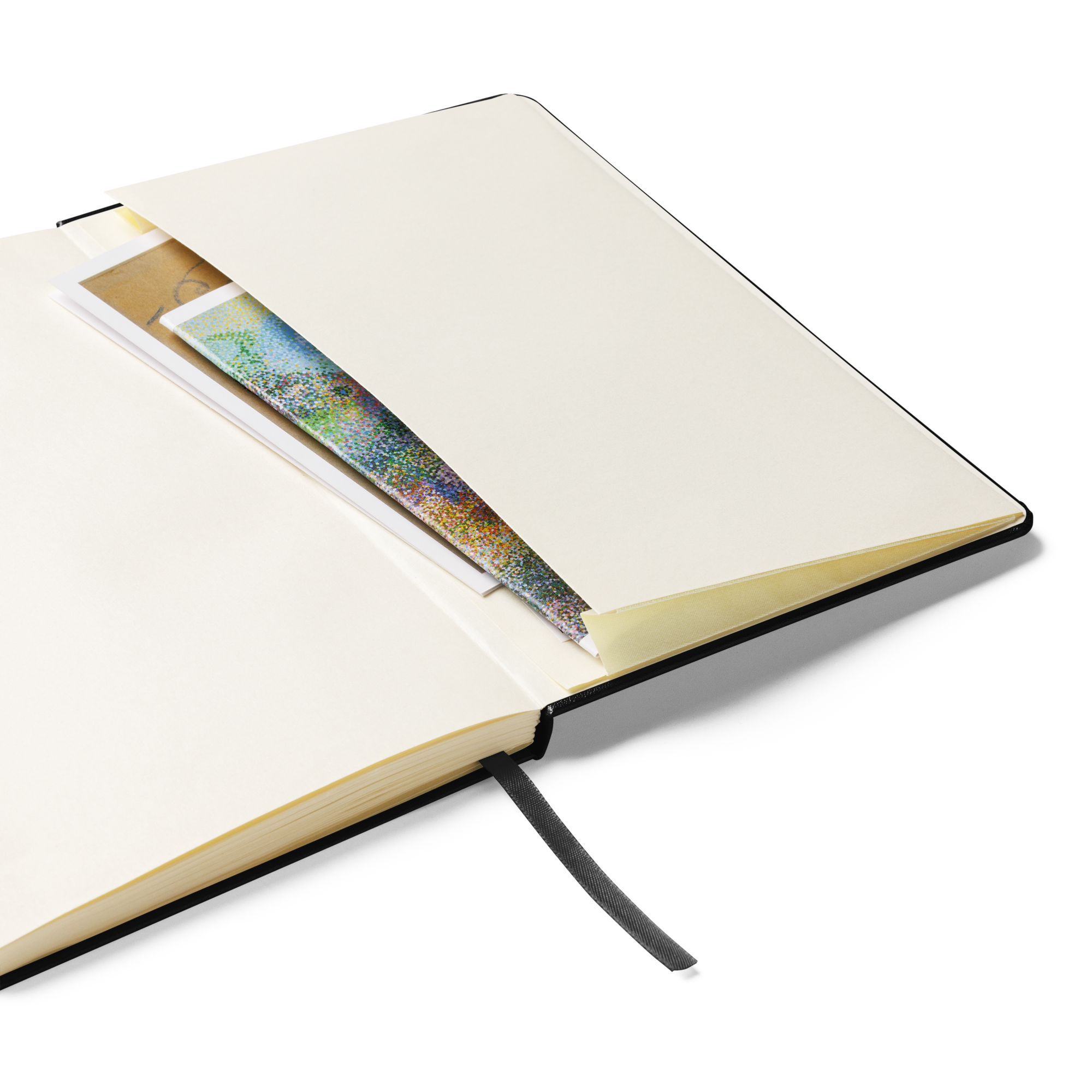
  • 80 lined, cream-colored pages
  • Black hard cover, 5.5 x 8.5"
  • Elastic closure
  • Ribbon page marker
  • Expandable back inner pocket

Who It's For

The person who journals with intention — who decides, at the top of the page, what this entry is actually for. The one who has learned that the discipline of writing is also the discipline of leaving things out: the noise, the spiral, the thought that doesn't belong here. Anyone who has read James and recognized the mirror.

Write what matters. Overlook the rest.

William James, in Plain English

  • Lived: 1842–1910, New York — physician, philosopher, and the founder of American pragmatism
  • Taught the first psychology course offered at an American university, at Harvard in 1875, and spent the next three decades building the field from scratch
  • Principles of Psychology (1890), his 1,400-page landmark, coined "stream of consciousness," argued that attention is a form of will, and established that habit is the flywheel of society
  • Pulled himself out of a years-long depression in his twenties by deciding, as an act of will, to believe in free will — and wrote about it in his diary
  • His brother was Henry James, the novelist; the two corresponded for decades and wrote in styles that are almost impossible to keep from influencing each other
Product mockup
Art of Knowing Journal Price$30.00