Thoreau Did Not Validate “Quiet Quitting”—He Warned Against It
When the term "quiet quitting" dominated workplace culture, a single 170-year-old sentence was repeatedly cited across social media as literary justification: "The mass of men lead lives of quiet desperation." Posted as validation for mentally checking out on the clock, the quote was framed as permission to coast.
There is only one problem: Henry David Thoreau was not validating quiet desperation. He was diagnosing it as a spiritual catastrophe.
Primary Source Verification
- Author: Henry David Thoreau (1817–1862)
- Work: Walden; or, Life in the Woods, Chapter 1: "Economy"
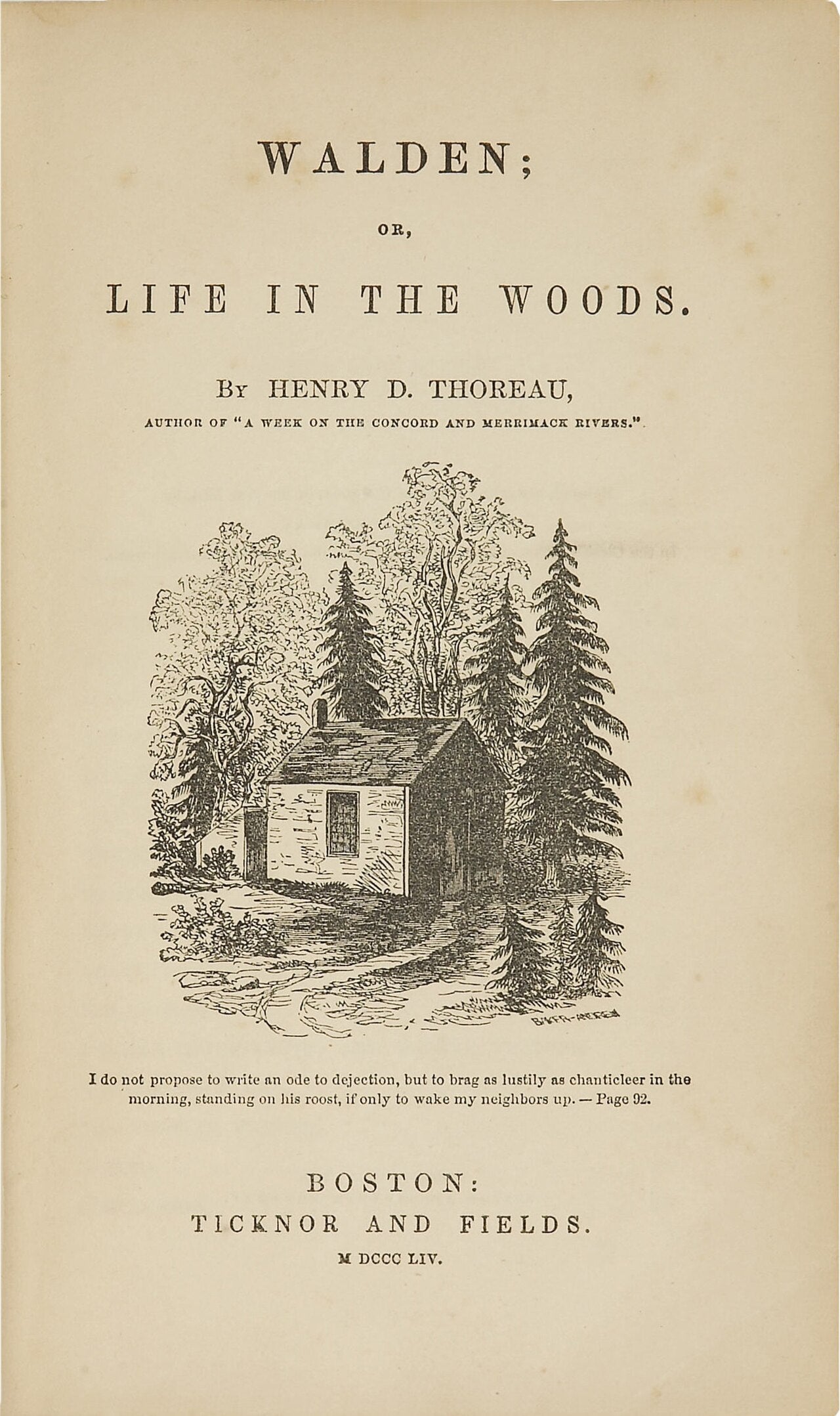
- Publication Date: August 9, 1854 (Ticknor and Fields)
- Core Thesis: Unexamined labor, inherited economic debt, and passive resignation vs. deliberate living
What the Line Actually Says (And the Sentence Everyone Leaves Out)
In the opening chapter of Walden ("Economy"), Thoreau delivers the full passage:
"The mass of men lead lives of quiet desperation. What is called resignation is confirmed desperation. From the desperate city you go into the desperate country, and have to console yourself with the bravery of minks and muskrats."
— Henry David Thoreau, Walden (1854)
That second sentence—"What is called resignation is confirmed desperation"—is the linchpin of his entire argument. Thoreau is arguing that what society praises as practical resignation (settling into an unfulfilling job, accepting inherited mortgages, enduring an unexamined routine) is merely despair dressed up with polite manners. It is not an enlightened compromise; it is an active surrender.
On July 4, 1845, Thoreau moved to a hand-built cabin ten feet wide by fifteen feet long at Walden Pond. The date was deliberate: it was his personal declaration of independence from inherited economic expectations. He did not retreat to the woods to isolate himself from reality. He went to strip away artificial social friction and find out what life actually required when reduced to its essentials.

Model photo created with AI. The quote is real.
Another line from Walden: “Not till we are lost . . . do we begin to find ourselves . . .” Shop the tee →
Why "Quiet Quitting" Misses Thoreau's Point
Modern "quiet quitting"—doing the bare minimum, emotionally detaching from your work, and running out the clock—is a strategy for desperation management. It is a coping mechanism designed to survive inside an unexamined structure rather than confronting whether that structure is worthy of your finite life.
Thoreau would have recognized modern disengagement immediately. He would not have celebrated it; he would have called it confirmed desperation under a new corporate buzzword.
Thoreau's prescription was never to stay in place and passively disengage. His demand was radical intentionality: examine your life, measure what your labor is actually costing you in time and freedom, and refuse to spend your days paying for things you never wanted in the first place.
The quote is frequently pulled because it sounds like comfortable solidarity. But read in context, the full argument is a direct interrogation: Why are you giving your life to a system you don't believe in?
Carrying the Uncompromising Thoreau
The Thoreau designs on the site—including the Find Ourselves and Gold Seam tees—carry verified lines from the exact same text. The Thoreau who wrote about the clarity of being lost and mining the rich vein of existence is the same thinker who refused the quiet surrender of conventional 19th-century life.
He was not soft, and he was not offering easy platitudes. He spent two years conducting a live philosophical experiment to prove that living deliberately is possible. That is not quiet quitting—that is the loudest possible refusal of a life that isn't working.
Explore the Thoreau Collection →
The image above is the title page of the first edition of Walden; or, Life in the Woods (1854), published by Ticknor and Fields in Boston. The wood engraving of the cabin was drawn by Thoreau's sister Sophia, who also transcribed much of his manuscript. Thoreau built the cabin himself for twenty-eight dollars and twelve and a half cents — he recorded the exact cost in the book. The title page is held in multiple research libraries and is available in the public domain.