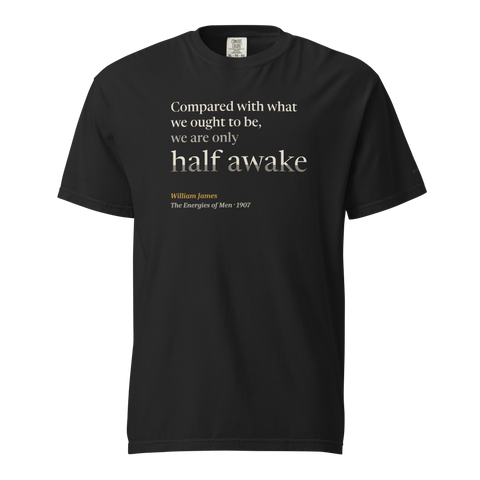
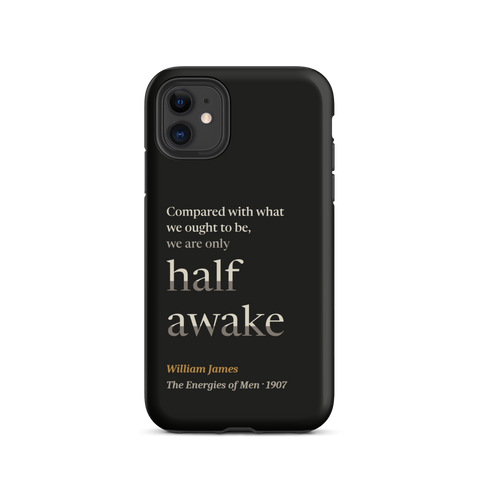
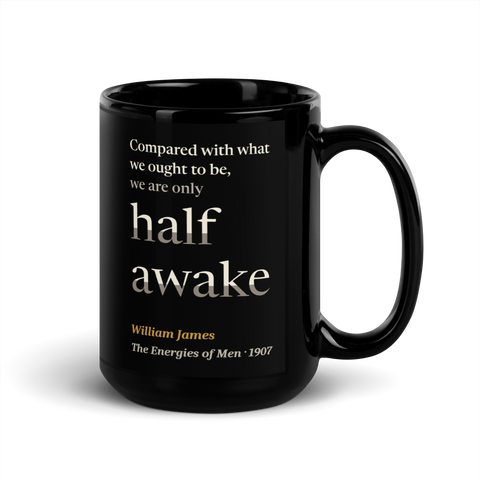
“Compared with what we ought to be, we are only half awake.”
Documented source
Every quote here is traced to a documented source. How we verify →
About this line
James delivered this as his presidential address to the American Philosophical Association at Columbia University on December 28, 1906. It was first printed in The Philosophical Review in January 1907. Science printed it on March 1, 1907, and that is the text quoted here.
His argument was practical, not philosophical in the abstract sense. Most people, he observed, stop at the first threshold of effort — what he called the first layer of energy. The second wind, and the layers beyond it, go untouched. The obstruction is not capacity. It is habit. In his words: "Most of us feel as if we lived habitually with a sort of cloud weighing on us, below our highest notch of clearness in discernment, sureness in reasoning, or firmness in deciding."
The stove metaphor follows two sentences later: "Our fires are damped, our drafts are checked." The fuel is already laid in. What is missing is the air.
Why we carry this line
Because it is the most honest thing anyone has said about human potential — and it is not a motivational poster. James is not telling you that you can do anything. He is telling you that the supply is already in there, and something upstream is closed.
That is a different kind of claim. Less inspiring. More true.
The design
The line dims as it goes. Then “half awake” arrives in large letters, each one lit at the top and dimmer below. Half of every letter is awake.
The tee, the mug and the phone case carry the same design. On the mug and the case, “half” and “awake” sit on separate lines.