The Real Mary Shelley: She Wasn't Just Frankenstein
Mary Wollstonecraft Shelley (1797–1851) was a British novelist who wrote Frankenstein; or, The Modern Prometheus in 1816 at the age of eighteen, publishing it anonymously in 1818 — a novel now credited with founding the science fiction genre. She was the daughter of philosopher William Godwin and feminist Mary Wollstonecraft, and the wife of poet Percy Bysshe Shelley. The world has spent two centuries remembering the monster. It has mostly forgotten the woman who made him.
Mary Wollstonecraft Godwin — she took the Shelley name when she married Percy — was born into extraordinary circumstances and lived through worse ones. Her mother, Mary Wollstonecraft, wrote A Vindication of the Rights of Woman and died eleven days after giving birth to her. Her father, William Godwin, was a radical philosopher who believed in reason, liberty, and the education of women — and who spent most of Mary's childhood in financial crisis.
She was largely self-educated, learned to read from the gravestone over her mother's grave, and by sixteen had fallen in love with Percy Bysshe Shelley — a married man, a poet, and a committed revolutionary. This was, by any measure, a complicated start.
The Summer That Changed Everything
In the summer of 1816, Mary and Percy were in Geneva with Lord Byron and his physician John Polidori. It was the "Year Without a Summer" — volcanic ash from Mount Tambora had blocked the sun, turning the sky grey across Europe. Trapped indoors, the group entertained themselves by reading German ghost stories aloud and eventually challenged each other to write their own.
Byron produced a fragment. Polidori eventually wrote The Vampyre, the prototype for the vampire story as we know it. Mary, eighteen years old, wrote Frankenstein.
It was published two years later, in 1818, with a preface by Percy — which led many contemporary readers to assume he had written it. He hadn't. He edited it, as he did for much of her work, but the ideas, the structure, the central question — all Mary.
That central question: what do we owe to the things we create?
What Frankenstein Is Actually About
The monster — he has no name in the novel, which is itself significant — is not the villain. He is abandoned, horrified by his own existence, desperate for connection, and driven to cruelty by the cruelty shown to him. Victor Frankenstein creates life and then runs away from it. The novel's moral horror isn't the creation. It's the abandonment.
Mary knew something about abandoned children. She had already lost one — a daughter born prematurely who died twelve days later. She would lose more. By the time she was twenty-five, she had outlived three of her four children and her husband, who drowned in a storm in the Gulf of Spezia in 1822.
She kept writing. Novels, travel writing, short stories, biography, literary criticism. She edited and published Percy's complete works after his death, an act of preservation that cost her years. She was a serious professional writer who happened to have written one of the most important novels in the English language before she was old enough to vote — in a time when women couldn't vote anyway.
The Question She Left Open
"Nothing is so painful to the human mind as a great and sudden change." She wrote that. She knew it from experience that most people never accumulate in a lifetime.
The world she was asking about — what happens when science outpaces ethics, when creation precedes responsibility, when we build things we don't understand and then look away — is the world we're living in now. She asked it first, better, and two hundred years earlier than anyone else. See also: why the Dark Romanticism tradition is having a moment right now. Also: how that question plays out in 2026.
The monster is still walking. The question is still open.
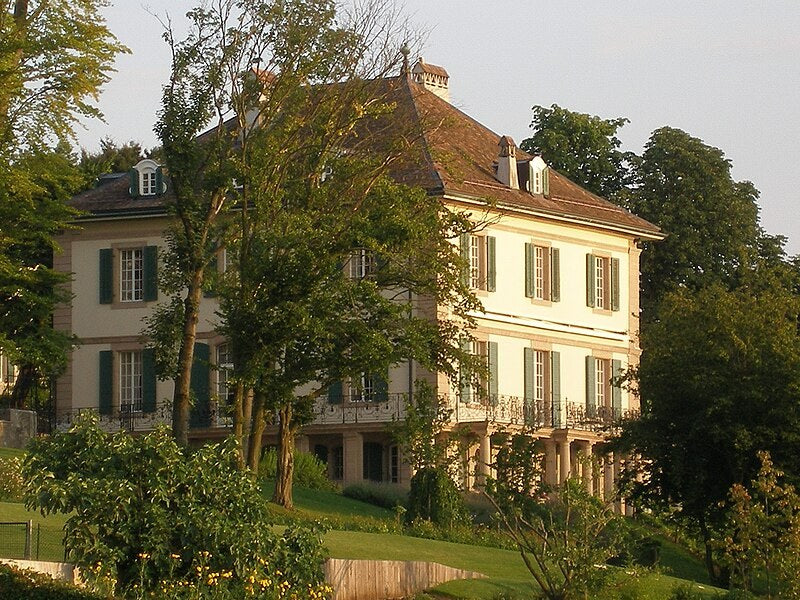
The photograph above is Villa Diodati, on the shores of Lake Geneva in Switzerland — the house where Frankenstein was conceived. Mary Shelley was eighteen years old when she arrived there in the summer of 1816, during what became known as the 'Year Without a Summer': volcanic ash from Mount Tambora had blocked the sun across Europe, the skies were grey, and the group was stuck indoors. Byron proposed a ghost story competition. Mary's entry became the novel that invented science fiction. The villa still stands.
Explore the Mary Shelley collection or browse Dark Romanticism.