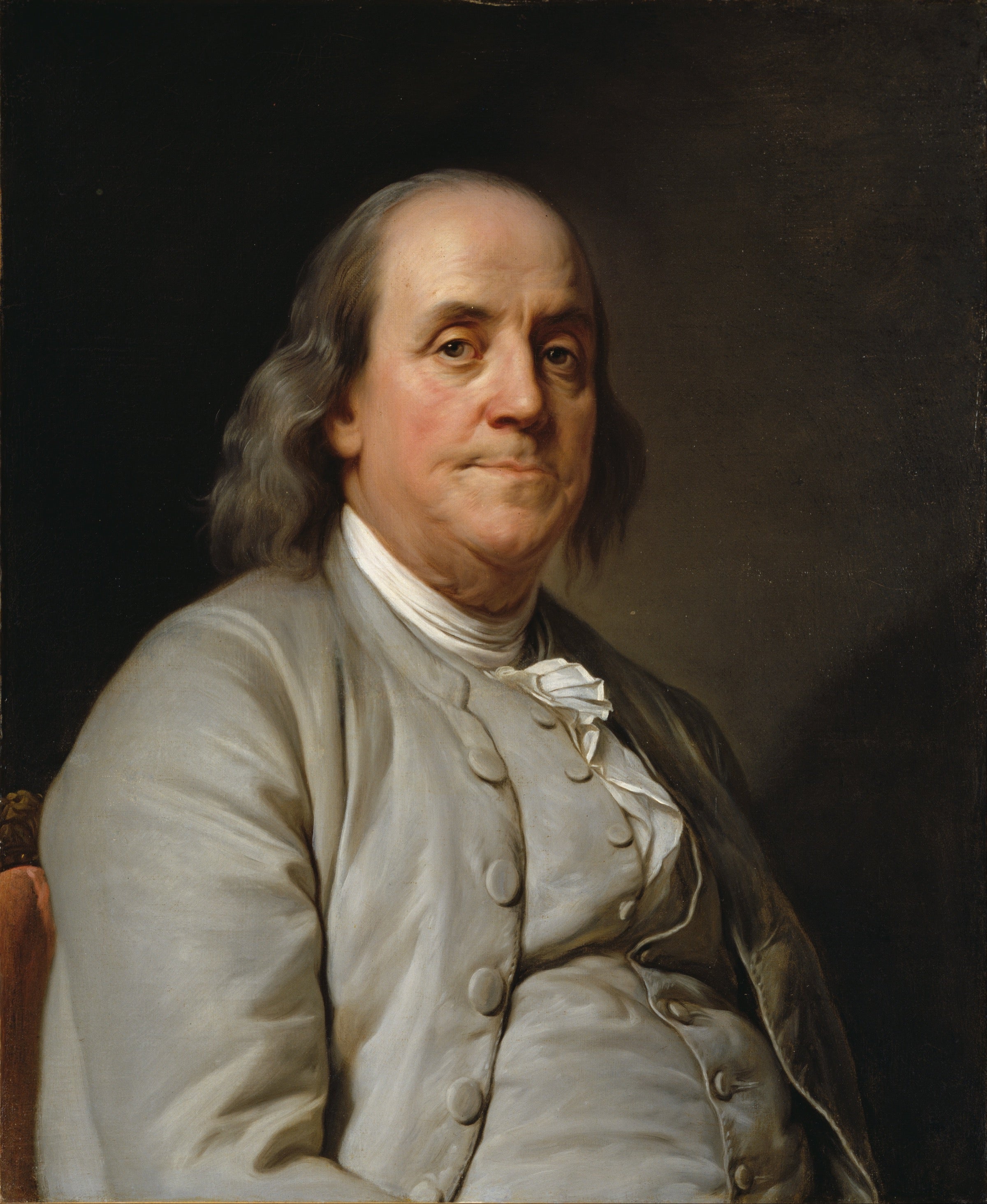
Benjamin Franklin's Most Underrated Superpower Wasn't Invention. It Was Self-Editing.
Benjamin Franklin taught himself to write by copying essays from The Spectator until he could reconstruct them from memory—then deliberately scrambling them so he’d have to find the right structure again. He was in his mid-teens, still bound to his brother's shop. He had no teacher. This is how he became the most effective communicator of the American founding.
Most people know him as the kite-and-lightning man. The self-editing is the more important story.
- How Franklin developed his writing process—and why it still works
- The specific techniques he documented in his Autobiography
- Why clarity, not brilliance, was his actual competitive advantage
Fewer people know how he got that way.
Franklin was born the fifteenth of seventeen children. He had two years of formal schooling — total, across his entire childhood. He was apprenticed to his older brother James as a printer at twelve. He was self-educated in every meaningful sense, which means he had to figure out, mostly on his own, how to become one of the most effective thinkers and communicators of his era.
He did it through a method so simple it sounds almost stupid. He copied things he admired. Then he put the original away and rewrote them from memory. Then he compared his version to the original. Then he figured out exactly where and why his version was worse.
He did this for weeks at a stretch, at night, after the shop closed.
Why This Matters More Than the Kite
The electrical experiments made him famous in his time and famous in ours. The lightning rod was genuinely important — it saved buildings and lives across two continents. But what made Franklin useful across every domain he touched — diplomacy, politics, publishing, invention, civic organization — was his command of language.
He could explain complex things simply. He could persuade people who disagreed with him. He could write a sentence that was clear on first reading and still rewarding on fifth. In the eighteenth century, before mass media, before radio, before any of the things we use now to reach people at scale, the written word was the only real instrument of influence — and Franklin played it like a virtuoso.
His autobiography — one of the first great American memoirs — reads today like he wrote it yesterday. Not because he was born with that clarity. Because he worked for it, methodically, over decades.
The Self-Improvement Before It Was a Genre
Franklin is also, arguably, the inventor of the modern self-improvement tradition. His thirteen virtues — temperance, silence, order, resolution, frugality, industry, sincerity, justice, moderation, cleanliness, tranquility, chastity, humility — were his personal project, tracked in a notebook, rotated weekly, reviewed regularly.
He never claimed to have mastered them. He wrote, with characteristic honesty, that he fell short of his standards constantly. But he also believed that the attempt — the daily, systematic, unglamorous attempt — was itself the point. That virtue was a practice, not a destination.
“Being ignorant is not so much a shame, as being unwilling to learn.” Franklin printed that in Poor Richard Improved for 1755, in the November column. He also lived it, more completely than most people manage.
What He Actually Got Right
The thing Franklin understood, and that most self-improvement thinking misses, is that skills compound. His writing got better because he practiced it. His thinking got clearer because he wrote it down. His influence grew because his communication was trustworthy. None of it was magic. All of it was accumulated effort, applied consistently over a very long time.
He started as a printer's apprentice with two years of school. He ended as one of the most respected minds in the Western world. The distance between those two points was covered entirely on foot.
Browse the Benjamin Franklin collection.