Thoreau Didn't Escape Society. He Was Testing a Theory.
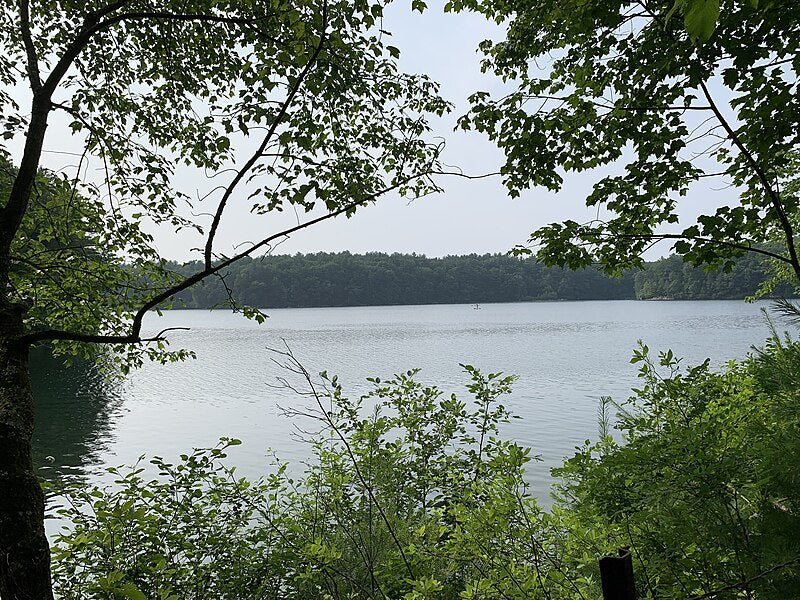
Henry David Thoreau moved to Walden Pond on July 4, 1845—the date was deliberate—not to escape society but to test a specific hypothesis: that a person could live with genuine freedom if they reduced their economic obligations to what was actually necessary. He stayed two years, two months, and two days. Then he left.
The retreat story is wrong. The experiment story is far more interesting.
- What Thoreau was actually testing at Walden—and what the data showed
- Why the “escape” reading misses the political argument of the book
- The lines from Walden that only make sense once you understand the experiment
That's not quite what happened.
Henry David Thoreau moved to Walden Pond on July 4, 1845 — the date was deliberate — and lived there for two years, two months, and two days. The cabin was on land owned by his friend Ralph Waldo Emerson, about a mile and a half from the center of Concord, Massachusetts. He walked into town regularly. He had dinner with his mother on Sundays. He was not, in any meaningful sense, isolated. Read the full biography of the man who designed that experiment.
What he was doing was running an experiment.
The Actual Question
Thoreau wanted to know what life looked like when you removed everything that wasn't essential. Not as a permanent state — he always intended to leave — but as a controlled condition. What does it cost to actually live? What do you discover when the noise goes away? What turns out to matter, and what turns out to have been distraction all along?
"I went to the woods because I wished to live deliberately, to front only the essential facts of life, and see if I could not learn what it had to teach, and not, when I came to die, discover that I had not lived."
That last clause is the one that cuts. Not when I came to die, discover that I had not lived. It's a fear so specific it feels personal — the fear not of death itself but of arriving at death without having been fully present for the life that preceded it.
He wasn't running away from something. He was running toward a question.
What the Experiment Showed
Walden the book — published in 1854, seven years after he left the pond — is not a simple nature memoir. It's a philosophical argument structured as a year of seasons. It argues, with considerable evidence, that most of what people work themselves to exhaustion for is not what they actually want. That the economy of simplicity produces more genuine richness than the economy of acquisition. That the examined life requires not just thinking but arranging your actual days so that examination is possible. Read Walden as the published record of that test.
He calculated his cost of living at Walden with scrupulous care — every cent for food, fuel, clothing. He made the case that most people work far more than they need to, to pay for things they don't need, to maintain an appearance that doesn't serve them. This was 1845. The argument has not aged poorly.
The Harder Part
Thoreau was also a committed political thinker. In July 1846, more than a year after he moved to Walden, he was arrested for refusing to pay a poll tax that funded a government conducting slavery and prosecuting a war with Mexico he considered unjust. He spent a night in jail. The resulting essay — Resistance to Civil Government, later called Civil Disobedience — became one of the most influential political documents in American history. Gandhi read it. King read it. Both cited it.
The man who wrote about beans and woodchucks and the quality of light on ice was also the man who developed the philosophical framework for nonviolent resistance. He wasn't retreating from the world. He was trying to figure out how to live in it honestly.
"Go confidently in the direction of your dreams. Live the life you have imagined."
He imagined it. Then he went and actually lived it, for a while, to see what it taught him. Then he left — and kept writing about what it had shown him for the rest of his life.
Explore the Henry David Thoreau collection or browse The Heretics.