The Standard Often Stops at the Register
Museum gift shops sell quote merchandise without verifying attribution — a standard their curatorial staff would never apply to the works on the walls.
I noticed it again recently, standing in the retail section of a museum I’d spent the better part of an afternoon inside. The galleries had been exceptional: provenance notes on every piece, careful wall text distinguishing what was documented from what was inferred, attributions qualified where the scholarship was still open. Then I walked into the gift shop — the Nullius in verba (“Take nobody’s word for it”) phone case on my own phone, as it happened.
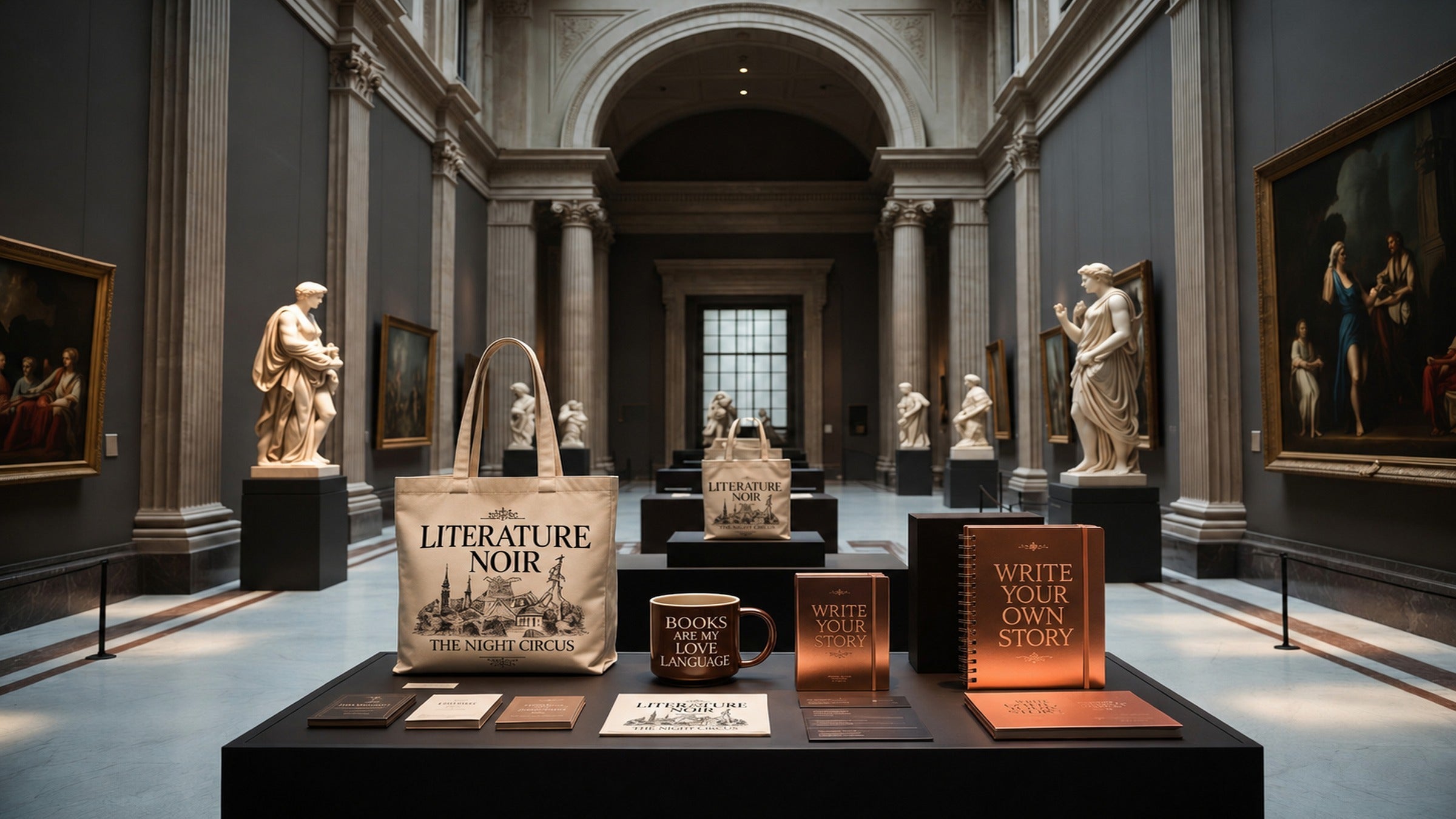
There were tote bags. Mugs. Notebooks printed with the words of dead writers and philosophers. And at least two items I recognized immediately as wrong — one a quote whose actual origin has been traced by researchers to a later 20th-century source rather than the historical figure whose name was printed on the item. Another belonged to that well-known category of Einstein attributions that the Hebrew University of Jerusalem now actively polices in commercial use.
I stood there holding the contradiction instead. For the standard we apply — and the two times even we got it wrong, see the verification desk.
The Standard Stops at the Register
No single institution is the point — this is a structural observation about how attribution works, and where it stops.
Museums employ people whose entire professional identity is built around not getting things wrong. Curators. Registrars. Conservators. The chain of custody for a single object can fill a folder: acquisition records, prior exhibition history, condition reports, loan agreements. When provenance is unclear, they say so. Publicly. On the wall label.
The gift shop operates under a different logic entirely. Merchandise is sourced from wholesalers, licensed from aggregators, or produced in-house by a marketing team working from a list of crowd-pleasing attributions. Nobody in that pipeline is checking the Loeb Classical Library. Nobody is cross-referencing Gutenberg. The quote on the mug arrived because it tests well, not because it is documented.
The result is a quiet institutional contradiction: the same building that won’t hang a painting without a chain of custody will sell you a tote bag with a quote its own scholars would flag as unsourced.
Why Attribution Errors Compound
Quote misattribution isn’t random noise — it follows patterns. Famous names attract quotes the way gravity attracts mass. A sentiment becomes more shareable, more purchasable, more giftable when it’s attached to a famous name. The name does work the words can’t do alone.
So the incorrect attribution spreads. It appears on merchandise. The merchandise appears in respectable places — museum lobbies, bookstore checkout counters, university gift shops. The respectable placement confers a kind of retroactive authority. Nobody checks because the setting implies someone already did.
This is how lines with later, documented origins find their way onto tote bags in buildings full of people who verify things for a living.
What Verification Actually Looks Like
At Quoteiac, we apply the same standard to the merchandise that a curator applies to the collection. Not approximately the same standard. The same one.
Every quote is traced to primary source before a print file is built. That means the original book, letter, manuscript, or period publication — not a secondary quotation database, not a widely circulated image, not the consensus of the internet. The text is confirmed word for word. The attribution is documented. If we can’t get there, we don’t print it.
That standard rules out a significant percentage of the most popular quote merchandise on the market. Some of our strongest products carry lines from authors who aren’t household names — because those are the lines we could actually verify. Seneca’s letters, traced to the Epistulae Morales. Poe’s early manuscripts, sourced against the Mabbott scholarly edition. Public domain confirmed. Text confirmed. Attribution confirmed. See also: why the phrase Nullius in verba is our operating principle.
The full methodology is documented on our standards page — not as a marketing statement, but as a working protocol. If a quote isn’t there, there’s a reason it isn’t there.
Why It Matters Where You Buy
Most people who buy quote merchandise aren’t thinking about provenance. They’re buying something that resonates — a line that articulates something they’ve felt but couldn’t say. That impulse is worth respecting.
Hanging someone else’s misattributed words on your wall, or wearing them on a shirt you love, is a small and ordinary thing to get wrong. But the people who made those objects knew — or could have known — that the attribution was unverified. They chose not to check. That choice compounded, quietly, every time the item sold.
The museum gift shop isn’t a corrupt institution. It’s an institution that simply never extended its own standards to the merchandise. The gap is the problem — and closing it requires only the decision to check, a disciplined methodology, and the willingness to say no when the trail goes cold.
That’s the whole practice. It turns out it matters where you buy.
About the Author
Vickie MacFadden is the founder of Quoteiac, where she guides the creation of literary apparel and objects with rigorously verified quotes from primary sources. A lifelong reader and collector of words with provenance, she believes in holding merchandise to the same standards of accuracy as museum collections.
Related reading: Why we check quote attribution.