
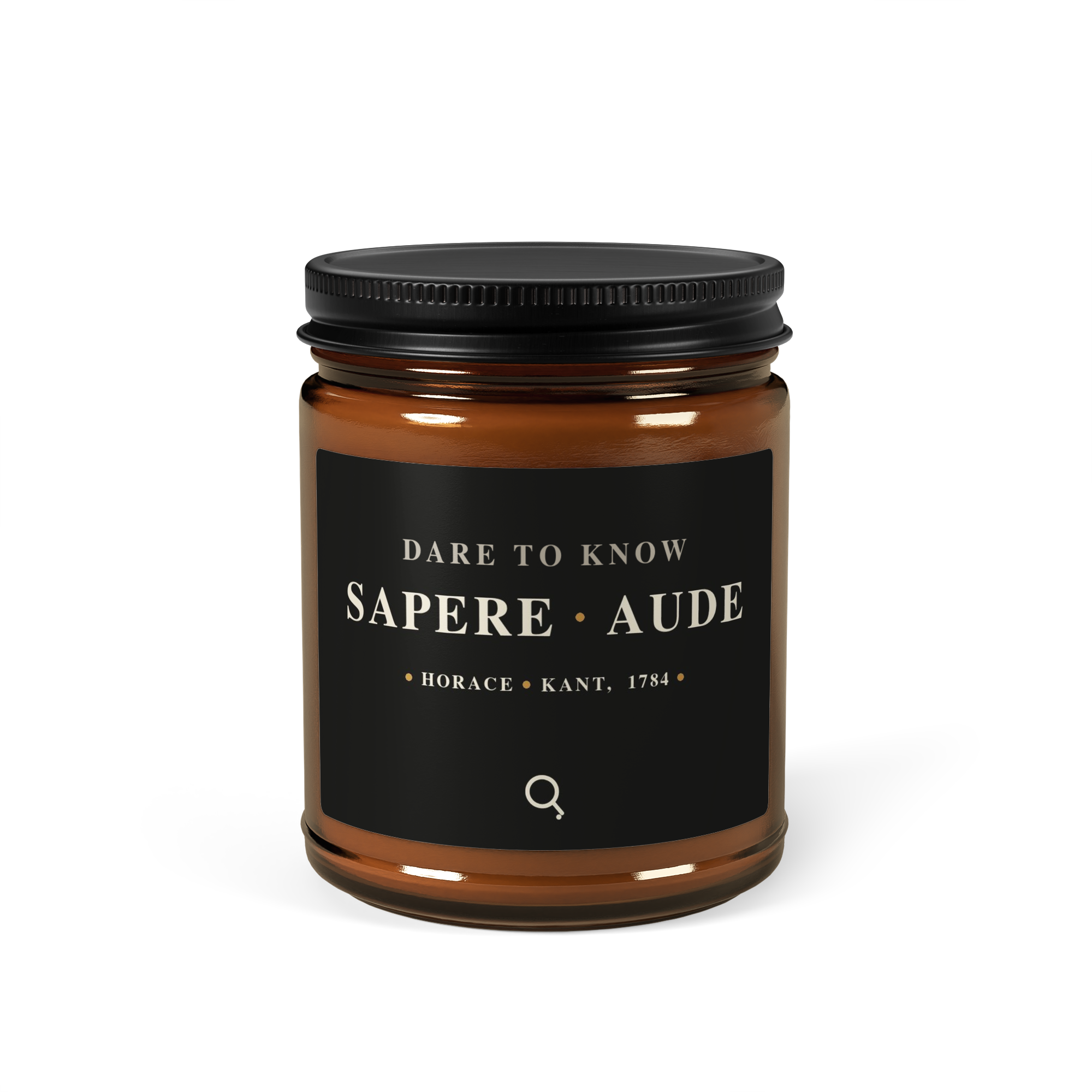

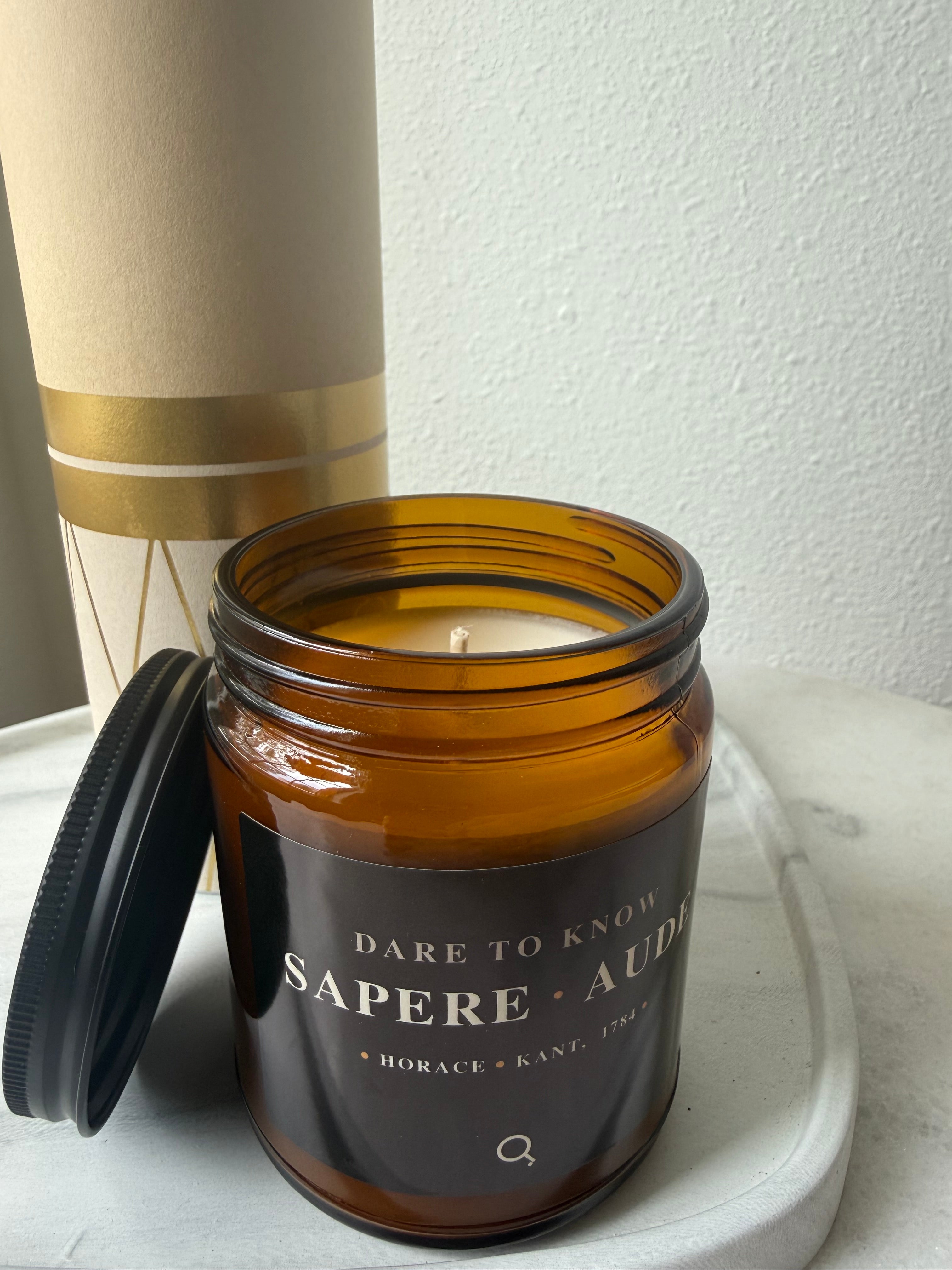
Sapere Aude Soy Candle — "Dare to Know"
"Sapere aude."
Horace, Epistles I.2 (c. 20 BCE) · popularized by Immanuel Kant, "What Is Enlightenment?" (1784)
Two words from a Roman poet, picked up seventeen centuries later by a Prussian philosopher and turned into a battle cry. Horace wrote sapere aude — dare to be wise — as a nudge: stop planning to live well and start. Kant borrowed the same two words in 1784 and hardened them: have the courage to use your own understanding, without waiting for anyone's permission. We print the line the way Kant read it: dare to know.
The Scent
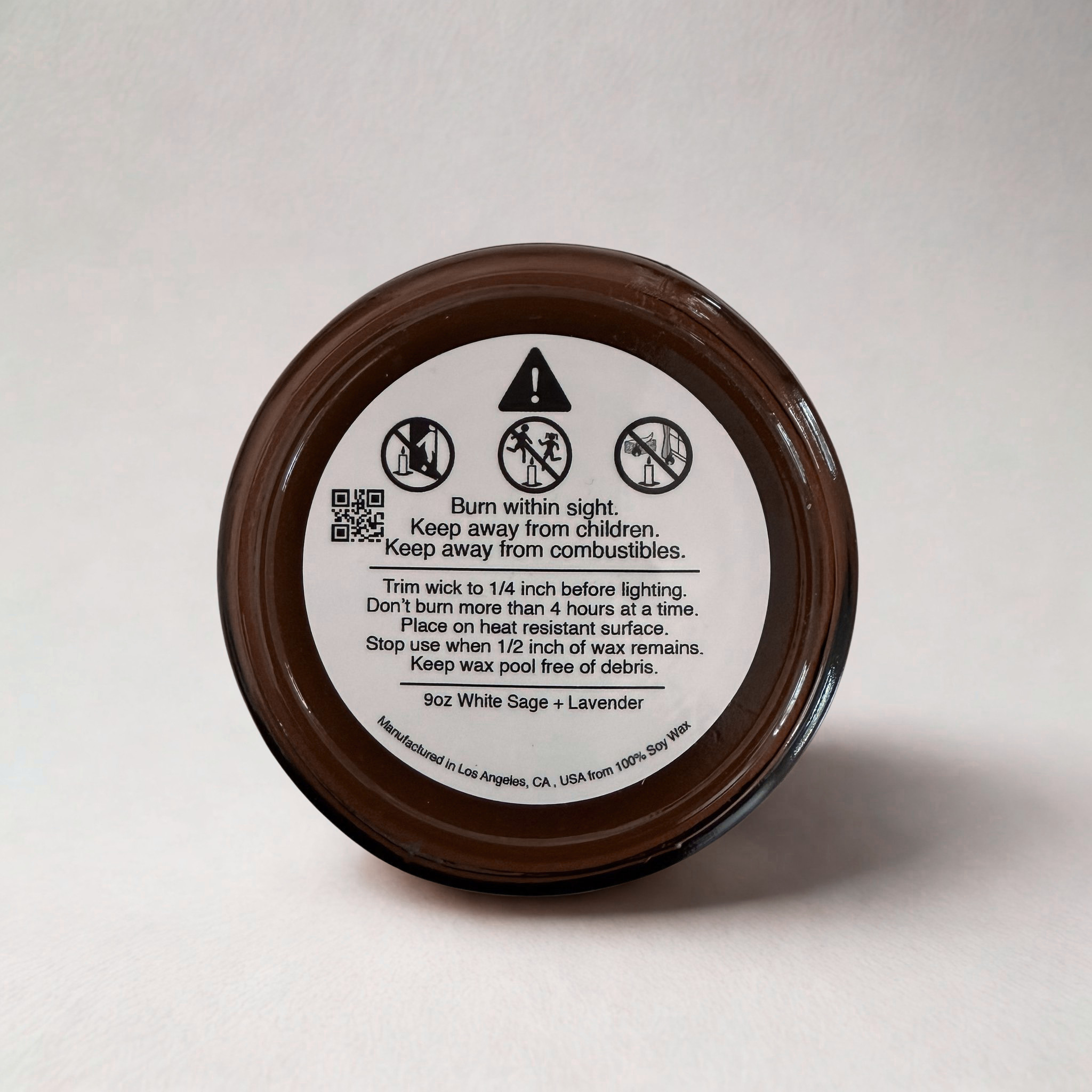
White sage and lavender — herbaceous and clean, with a resinous edge. Lavender as the top note, complemented with the white sage, chamomile, rosemary and camphor with base notes of cedarwood and sandalwood. Less dessert, more cleared head: the kind of scent you light to think, not to nod off.
The Design
Cream type burns out of a glossy black label the way an inscription reads on stone. Between SAPERE and AUDE sits a single copper interpunct — the word-stop Roman carvers used to separate words on monuments — so each word lands on its own beat instead of blurring into one. DARE TO KNOW sits above as the translation; the attribution below credits both the origin and the moment the line mattered most.
More on Horace and how we trace his words: Nullius in Verba: What Horace's Phrase Really Means — and Why We Built a Standard on It.
About This Candle
- Poured in California, from 100% natural soy wax
- No lead, plastics, parabens, synthetic dyes, or phthalates
- Cotton wick, phthalate-free fragrance oil — clean, non-toxic burn
- Amber glass jar with black screw-on lid — reusable as décor once it's done
- 9 oz (2.8″ × 3.5″)
- Burn time: approx. 50–60 hours
- Scent: White Sage & Lavender
Who It's For
For the desk, the late reading session, the moment you want to think clearly. A gift for the reader, the philosophy-curious, or anyone who'd rather be handed the real quote than a pretty fake one.
The Two Behind the Line
Horace (65–8 BCE) was the son of a freed slave who spent everything to educate him. He fought on the losing side at Philippi in 42 BCE, lost the family property in the aftermath, took a clerk's job, and started writing — later finding a patron in Maecenas. He's the reason both carpe diem and sapere aude are still in circulation.
Kant (1724–1804) spent his whole life in Königsberg and reshaped modern philosophy without leaving it. In 1784 he made Horace's two words the rallying cry of the Enlightenment — the demand that people think for themselves.
The candle itself is poured in the USA — the object carries its provenance the same way the words do.
Two words, traced to the source. Words with provenance.
Choose options