
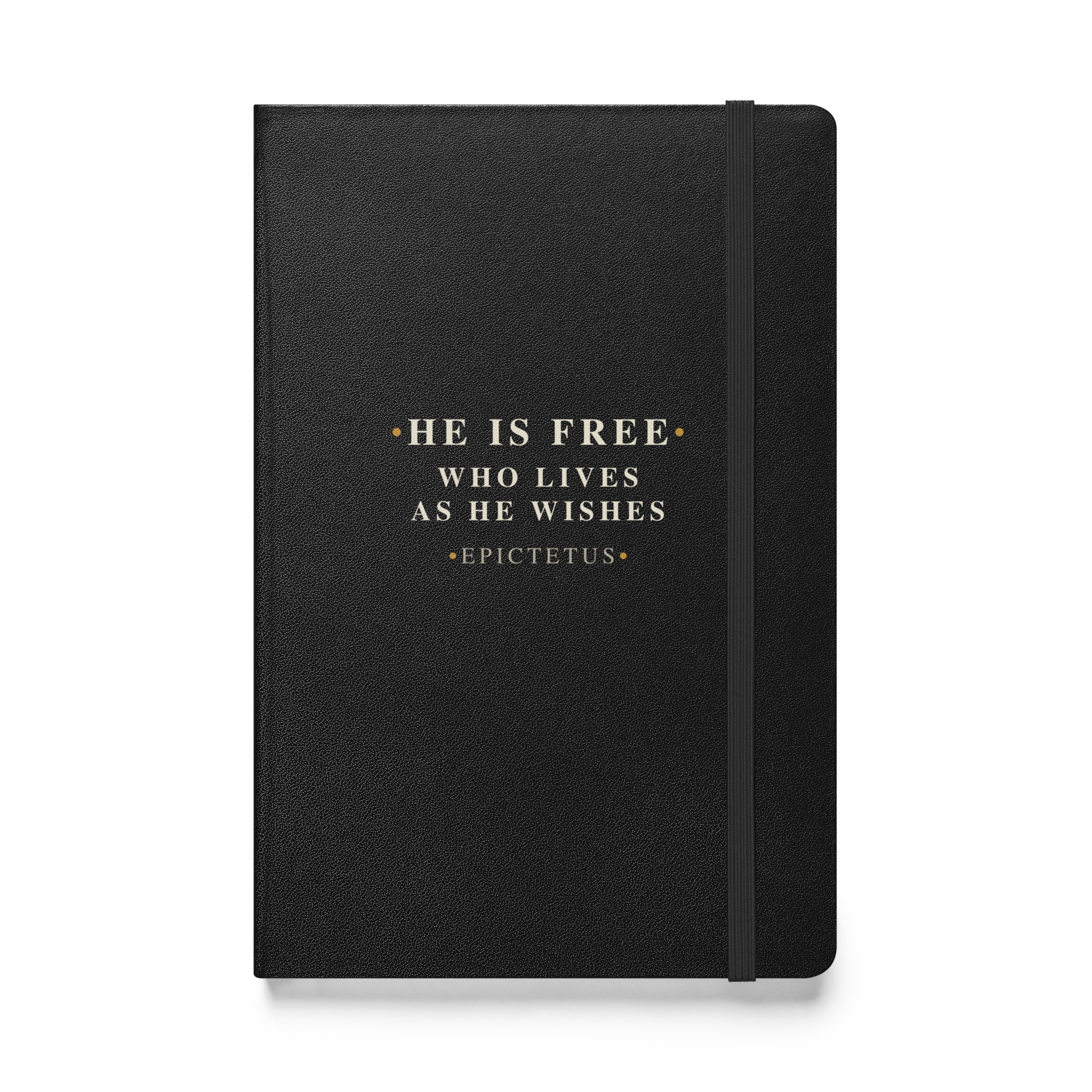


He Is Free — Epictetus Stoic Journal
The Discourses of Epictetus weren’t written by Epictetus — they were recorded by his student Arrian, who took notes in the classroom and later published them. Epictetus had been a slave. The philosophy he built is entirely about what can’t be taken from you.
Epictetus
“He is free who lives as he wishes.”
Discourses IV.1 (“On Freedom”) — tr. George Long, 1877 (public domain)
Epictetus wrote nothing. Every word that survives was taken down by Arrian, who sat in the lecture room in Nicopolis and copied what he heard. What you’re reading is notes from a man who spent decades thinking through what it means to live without being ruled by anything outside you. Book IV opens with the question — what is freedom? — and his answer isn’t a political theory. Freedom is a state of mind: it belongs to the person who has stopped letting desire and fear make the decisions, the one who lives as they wish because what they wish has been brought into alignment with what’s actually theirs to control.
The Design
The Roman inscription treatment — all capitals, interpuncts flanking the lead line and the attribution — puts the quote where it belongs: among the things people carved into stone because they expected them to last. The gold, cream, and gray on the black cover give it the look of something that has already outlived its century.
Also available: the He Is Free Tee — the same line, worn. Browse the full Epictetus collection.
About This Journal
Writing isn’t just recording — it’s the act of finding out what you actually think. This journal is built for that work.
- 5.5″ × 8.5″ — the right size to carry and use, not display
- 80 lined pages, cream-colored paper
- Hardcover, lay-flat binding
- Built-in elastic closure and ribbon page marker
- Expandable inner pocket
Who It’s For
The person who takes notes in the margins and calls it thinking. The person who has been testing Epictetus’s premise — not as a philosophy exercise but as a daily practice. The one who knows the difference between what they can change and what they can’t, and is still working out how to live from that knowledge.
Write your way to it.
Epictetus, in Plain English
- Lived: c. 50–135 CE, born in Hierapolis (modern Turkey)
- Spent the first part of his life as a slave in Rome; his owner was a secretary in Nero’s court
- Studied Stoic philosophy under Musonius Rufus while still enslaved
- After being freed, taught publicly in Rome until Emperor Domitian expelled all philosophers in 89 CE
- Moved to Nicopolis in northwestern Greece and taught there for the rest of his life — students came from across the Roman world
- Left nothing written. The Discourses and the Enchiridion exist because one student, Arrian, thought the lectures were worth preserving.
Choose options