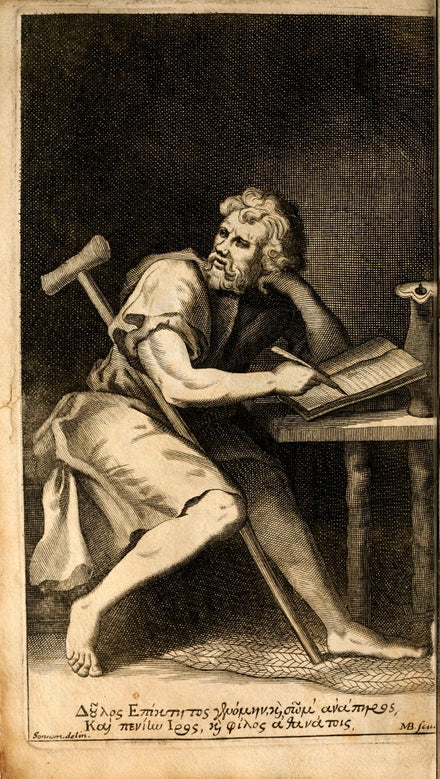
Epictetus. Engraving after a Roman bust.Public domain.
Epictetus
A man born into bondage in a provincial Roman city wrote the closest thing antiquity has to a philosophy of freedom. The distance between his origin and his argument is not coincidental — it is the argument.
Words We Carry
Every quote here is traced to a documented source. How we verify →
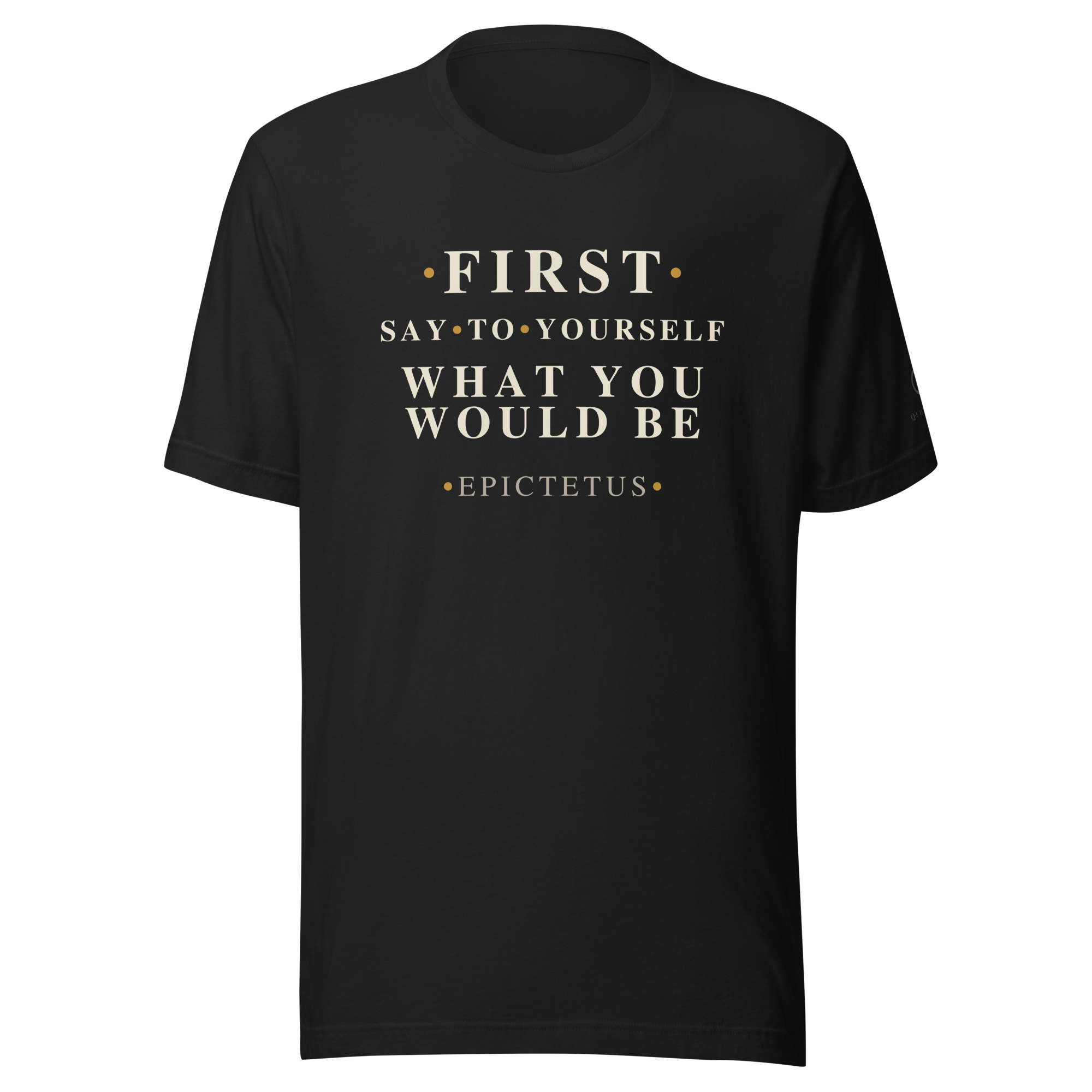
“First say to yourself what you would be.”
Epictetus, Discourses, III.23
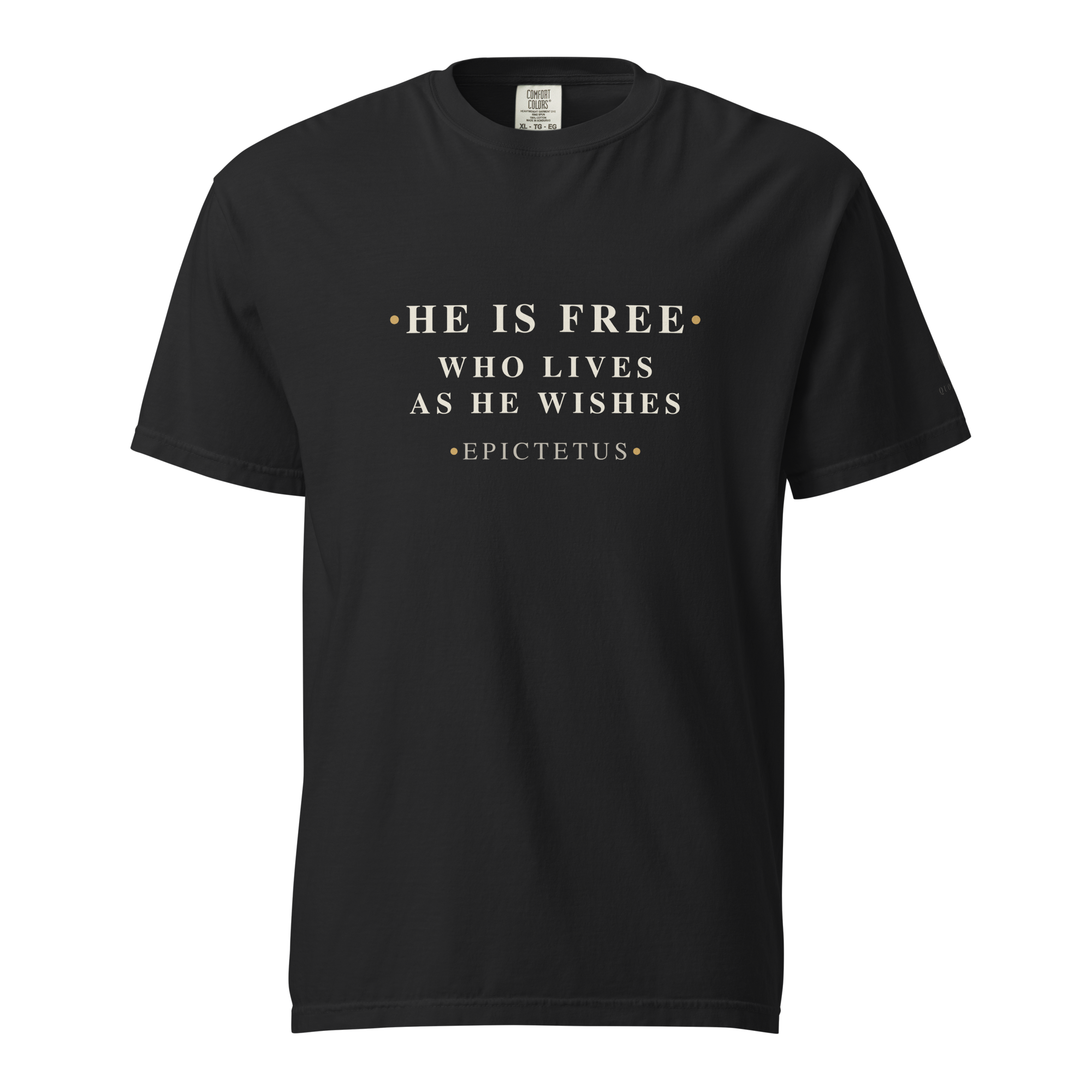
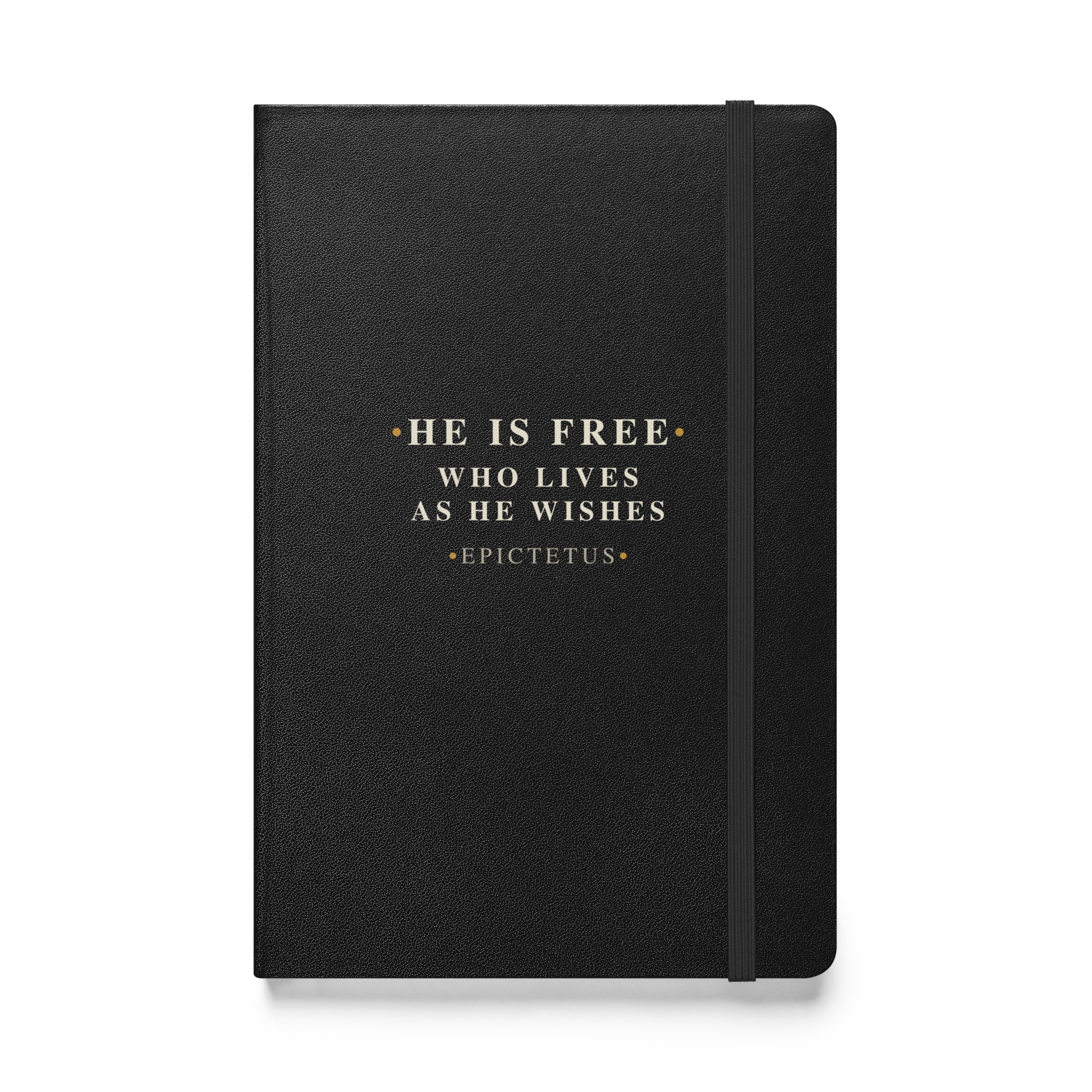
“He is free who lives as he wishes.”
Epictetus, Discourses, IV.1 — “On Freedom” — tr. George Long, 1877 (public domain)
About Epictetus
Stoicism in the first century AD was largely a philosophy for men who already had choices. Seneca advised emperors. Marcus Aurelius was an emperor. Epictetus entered the tradition from a different direction entirely. He was born around 50 AD in Hierapolis — a city in what is now Turkey — and arrived in Rome not as a student but as property. His owner was Epaphroditus, a wealthy freedman who had risen to serve as an administrative secretary under Nero. The position gave Epaphroditus influence and access, and it gave Epictetus something rarer: the opportunity, while still enslaved, to attend lectures by Musonius Rufus, the foremost Stoic teacher in Rome. That a man owned by a courtier could study under a philosopher is one of antiquity’s stranger facts. That the student would outlast every idea the courtier ever held is the part worth sitting with.
In 89 AD, Emperor Domitian expelled all philosophers from Rome. Epictetus left — freed by then, but living simply — and settled in Nicopolis, on the northwestern coast of Greece, where he taught for the rest of his life. He wrote nothing. Everything we have comes from a student named Arrian, who took notes and later organized them. The Discourses originally ran to eight books; four survive. The Enchiridion — Greek for handbook — is Arrian’s condensed version, compiled around 125 AD, and is the form in which most readers first find him. The philosophy inside is spare. At the center of it is a single distinction: some things are up to us, and some things are not. Opinion, desire, aversion, the choices we make — those are ours. Body, reputation, property, what other people think — those are not. The entire system flows from this. Call it the dichotomy of control, or just call it the hardest idea in the room.
What separates Epictetus from every other major Stoic is that he did not theorize his way to indifference to external conditions. He had lived inside them. Seneca wrote about the insignificance of wealth from one of the largest estates in Rome. Marcus Aurelius meditated on the smallness of power while wielding the most of it the world had ever seen. Epictetus had owned nothing, legally been nothing, and then built a philosophy that made both of those facts irrelevant to what a person could become. “First say to yourself what you would be” is not a motivational line. It is a man who was denied that question for years telling you that the question is yours to take. “He is free who lives as he wishes” is the claim of someone who had watched the opposite from the inside. Both of these quotes carry something the others can’t quite replicate — the weight of someone who tested the theory against the hardest possible evidence, and didn’t flinch.
The Work
From the Journal
Epictetus: The Stoic Who Had Nothing and Knew Everything
The man who built a philosophy of freedom from inside bondage.
ReadThe Misunderstood Geography of Control: Epictetus and Seneca on What You Actually Own
On the Stoic dichotomy of control and what the two great voices of the tradition actually said.
ReadIn Their Orbit