What Makes a Quote Worth Wearing
A great many quotes on commercial merchandise are misattributed, decontextualized, or simply invented. Garson O’Toole — the researcher behind the Quote Investigator project — traces case after case in ‘Hemingway Didn’t Say That: The Truth Behind Familiar Quotations’ (Little A, 2017), showing how familiar lines get reassigned to more famous names. It’s the same failure mode Quoteiac’s own attribution research keeps running into. A quote worth wearing has three verifiable properties: it traces to a primary source, it carries meaning outside the context it was pulled from, and it rewards re-reading. Most quotes on merchandise meet none of those criteria. The ones on Quoteiac shirts are required to meet all three.
Most of them don't belong there.
That's not a snob take. It's a practical one. A quote printed on a shirt or on the cover of a journal makes a claim — that these words are worth carrying around. Worth being seen in. Worth reaching for when you need to think something through. That's a higher bar than "sounds good in a font."
Here's what we actually ask before a quote earns its place at Quoteiac.
Does it say something that couldn't be said simpler?
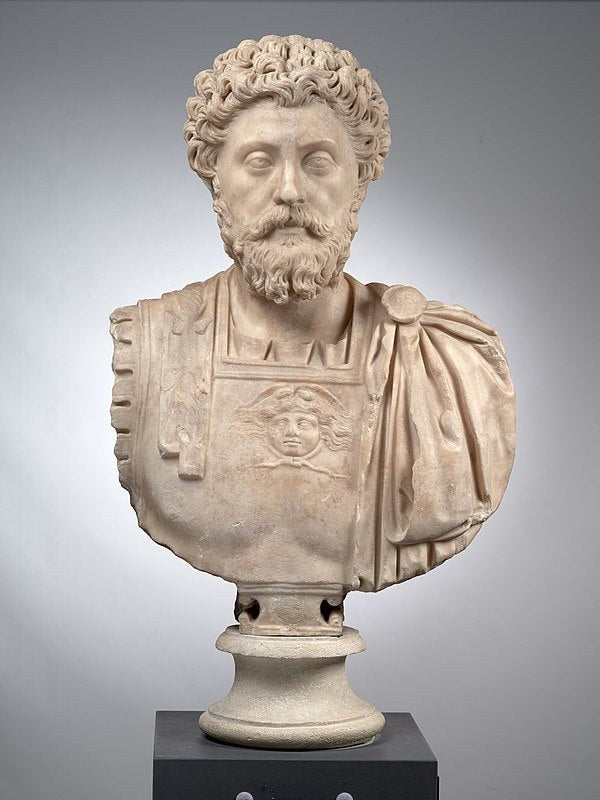
The best quotes are irreducible. You can't compress them further without losing something. Marcus Aurelius writing "You have power over your mind, not outside events. Realize this, and you will find strength" — a line widely circulated as his, though it doesn't appear verbatim in any verified translation; it's a modern paraphrase of his thinking rather than his words — isn't just an aphorism. Pull one word and the meaning shifts.
If we can summarize the quote in fewer words and lose nothing, it's probably not a quote. It's a sentiment dressed up in someone else's clothes.
Does it hold up when the context is known?
Context is where a lot of quotes fail. A line that reads as triumphant might have been written in defeat. A sentence that sounds like advice might have been sarcasm. We read the surrounding paragraphs. Sometimes the surrounding chapter.
That work changes what a quote means — and whether it means what you think it means when it's on a shirt someone wears to the grocery store.
Is it actually attributable?
This one is more complicated than it sounds. We've pulled quotes that were confidently attributed to the wrong person. We've turned down quotes we couldn't trace to a primary source. The Quoteiac collection only carries words we can stand behind — which sometimes means a quote we love doesn't make the cut.
There's a whole separate piece about how we do that verification. The short version: we go back to the original text. Always. See also: what wearing a verified quote actually does to your behavior, and why we verify attribution before anything goes on a shirt.
Is it worth living with?
This is the hardest one to quantify. A great quote is different at 7am than at midnight. It shifts meaning slightly when you're anxious versus when you're calm. The best ones — the ones worth wearing, worth writing next to — are the ones that have something new to say each time.
We test for this by reading the quote a week after we first encounter it. If it still does something, it stays in the conversation. If it's faded into wallpaper, it's out.
The our apparel collection is where a lot of this thinking lives in physical form — pieces built around words that pass all four of those tests. Not every quote makes it. That's the point.