We Check the Original
Every quote on a Quoteiac product was verified against a primary source — a first edition, a digitized archive, a published manuscript — before it was set in type. That is not a marketing claim. It is the minimum standard. If we cannot get to the original, the quote does not go on the product.
The internet is full of quotes. It is significantly less full of correct ones.
This is not a recent problem. Quote misattribution has been happening since the printing press — a memorable line gets separated from its source, passed from book to book, and eventually becomes "attributed to" someone famous enough to make it stick. What the internet changed is the speed and confidence of the error. A quote site cites another quote site. That site cites a Pinterest board. The Pinterest board cites nothing. All three show the same wrong name in bold.
We know this because we went looking for the originals — and kept finding the gap.
What a Primary Source Actually Is
A primary source is the original document: the book as first published, the letter as written, the speech as delivered and transcribed. For public domain literature — works whose authors died before 1928 — these documents are often digitized and publicly available. University archives, national libraries, and long-running digital preservation projects have spent decades putting them online. We use those.
A secondary source is someone writing about the primary source. A biography, a critical essay, an anthology introduction. These are valuable for context. They are not what a quote is verified against.
A quote aggregator site — the kind that shows 400 quotes by Marcus Aurelius in a clean two-column layout — is not a source at all. It is a collection of claims. Some of those claims are accurate. Many are not. There is no way to know which is which without checking the original, which defeats the purpose of using the aggregator.
We check the original.
What We've Found
The gap between "commonly attributed to" and "actually said by" is wider than most people realize.
The quote "Be the change you wish to see in the world" does not appear in Gandhi's writings or recorded speeches. It is a paraphrase — a reasonable distillation of ideas Gandhi expressed across several texts — but Gandhi himself never wrote or said that sentence. We carry it with that context stated plainly on the product, because the spirit is defensible even when the exact phrasing is not. We wrote about it in detail in the Journal.
"There is no exquisite beauty without some strangeness in the proportion" is widely attributed to Edgar Allan Poe. Poe did write it — but as a quotation of Francis Bacon's Essays (1625), inside his short story "Ligeia." The line is Bacon's. Poe was citing it. Two hundred years of misattribution later, it circulates as Poe's own thought.
These are not obscure edge cases. These are among the most-shared quotes on the internet.
Why It Matters on a Garment
A misattributed quote in an X post disappears in the feed. A misattributed quote on a shirt someone wears for ten years is a different thing. It is a small, repeated assertion — that this person said this — worn on a body, seen by strangers, given as a gift, kept.
We think that deserves a higher standard than a Google search and a quote site that ranks well.
The people who buy Quoteiac products are readers. They know Thoreau. They know Seneca. They have read the actual Meditations, not a summary of it. If the attribution is wrong, they will notice. We would rather they notice that we got it right.
The Standard in Practice
We do not have a checklist we publish. The specific methods and archives we use are part of how we work, not a manual we hand out. What we can say plainly:
Every quote is traced to the text it came from — the specific work, and where possible the specific edition. For non-English authors, that means identifying which translation we are using and verifying that the translation itself is in the public domain, because a modern translator's specific phrasing is separately copyrighted even when the original work is centuries old. The wording on the product must match a verified public domain source. If there is any ambiguity about whether the phrasing came from a protected translation, we use a different translation or we do not use the quote.
When a quote cannot be traced — when the trail goes cold at a quote site or a secondary attribution — we do not use it.
When the attribution is genuinely uncertain and the quote still deserves to exist in the world, we say so on the product. Not buried in fine print. In the description, where it can be read.
That is the standard. It is not complicated. It is just slower than copying from a list.
One More Thing
We have gotten it wrong. In April 2026 we archived three products after discovering that a quote we had attributed to Poe originated with Washington Irving. We did not quietly relabel them. We pulled them, wrote about what happened, and published the account. That article is in the Journal.
Getting it wrong and then correcting it publicly is part of the same standard as getting it right in the first place. The alternative — leaving a wrong attribution on a product because removing it is inconvenient — is not something we are willing to do.
The goal is a garment you can wear for years — or a phone case you pick up a hundred times a day, a mug you fill every morning, a journal you open when something needs thinking through — without having to look up whether the person on the tag actually said the thing.
We think that is worth the work.
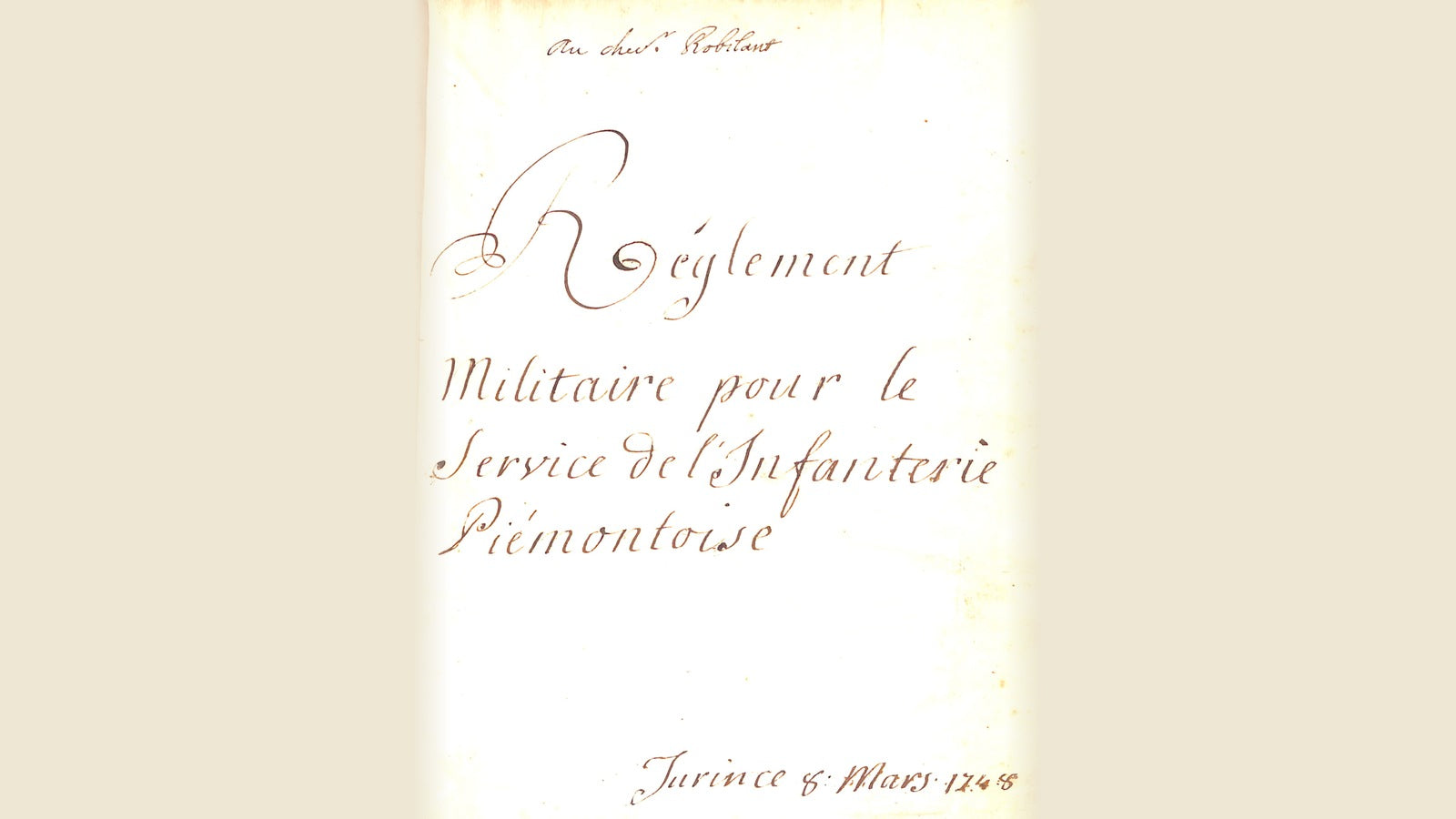
18th-century manuscript page, 1748 — an example of the kind of primary source documents we consult. Not every research trail leads somewhere this elegant, but the habit of going to the original is the same. Public domain.
Explore the Quoteiac catalog by author — every quote sourced, every attribution checked.