Tim Ferriss Found Seneca at Rock Bottom. Then 14 Million People Did Too.
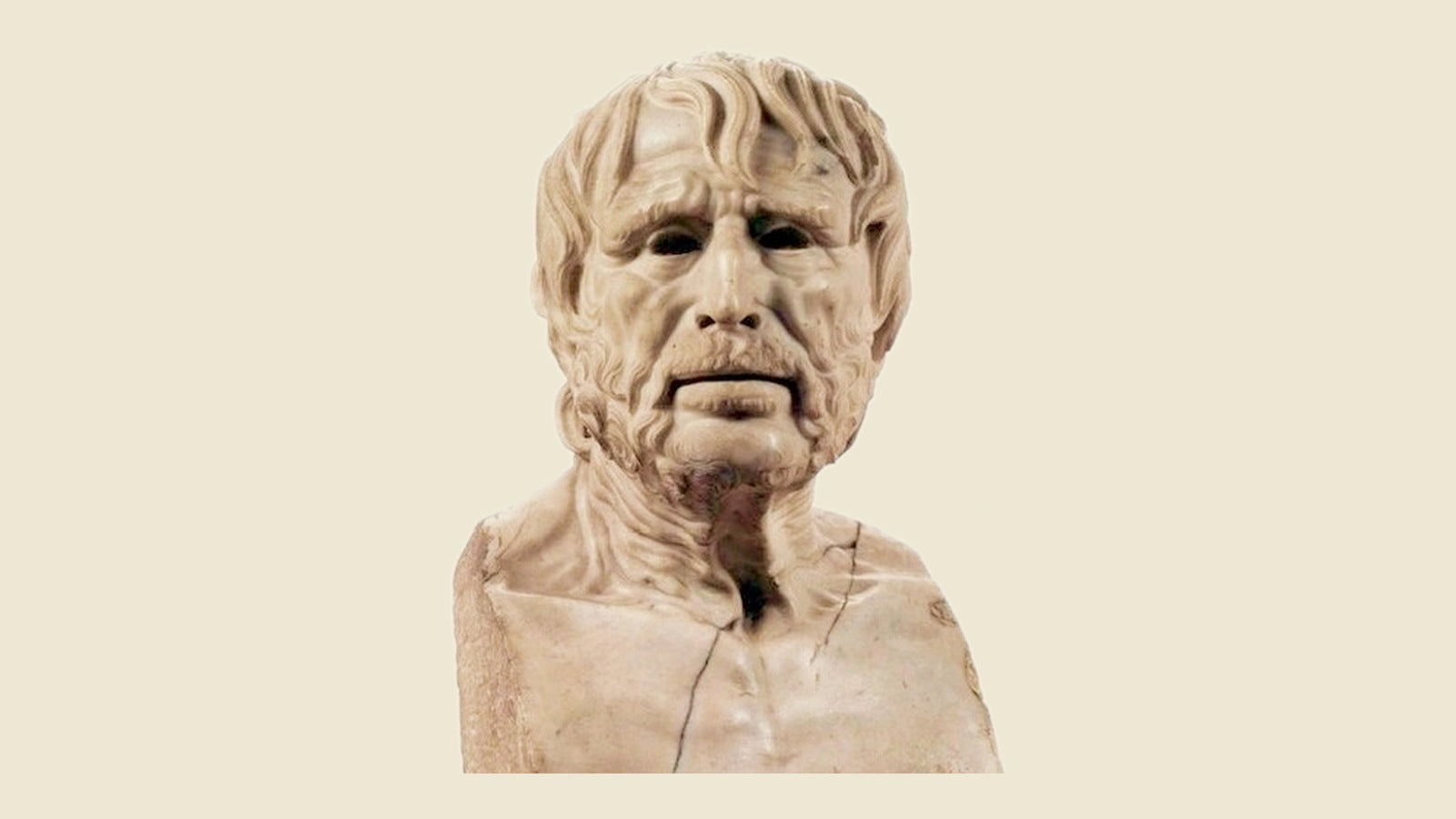
Tim Ferriss — author of The 4-Hour Workweek, host of The Tim Ferriss Show (one of the most-downloaded podcasts in history), and an early evangelist for Stoic philosophy in mainstream self-improvement culture — credits Letters from a Stoic by Seneca with giving him a practical framework at a point in his life when he was, by his own description, clinically depressed and convinced he was a fraud. The practice that came out of that encounter — Fear-Setting — has since been viewed, read, and listened to by tens of millions of people. See also: what the first letter says — and why it hits the way it does.
That book was Letters from a Stoic by Seneca. The person who picked it up was Tim Ferriss. And what came out of that encounter — a habit, an exercise, a practice he has described as “the most valuable thing I do every month” — has since been watched, read, and listened to by tens of millions of people.
Ferriss didn’t become a Stoic philosopher. He became something more useful to a lot of people: a stress-tester. Someone who took the ancient material, ran it against his actual life, and reported back on what held.
The Line That Started It
In April 2009, Ferriss published a blog post called “Stoicism 101: A Practical Guide for Entrepreneurs.” It ran originally on the American Express OPEN Forum. The opening was deliberately deflationary: “Stoicism. If you’re anything like me a few years ago, you probably associate that word with some real wet blanket—you know, one of those morose philosophy types, tweed jacket, dead eyes, as much fun as a sandpaper massage—mumbling about how happiness is fleeting.”
Then he made his pivot: “The Stoics don’t make things complicated. Frankly, a lot of the Stoic writing is like MBA advice.”
That framing — Stoicism as practical, not academic; operational, not contemplative — was the unlocking move. He introduced Seneca, Marcus Aurelius, and Epictetus not as ancient figures to be studied but as people dealing with recognizable problems: fear, status anxiety, distraction, the gap between intention and action. See also: the original Epictetus — before the productivity culture got to him.
He described Seneca’s practice of voluntary poverty — periodically eating bread and water, sleeping on a rough mat, asking himself: Is this the catastrophe I feared? Is this so bad? — and quoted the line that would become the spine of his own practice: “We suffer more in imagination than in reality.”
Fear-Setting: Where Seneca Becomes a Spreadsheet
The exercise Ferriss built from that line is called fear-setting, and it first appeared in The 4-Hour Workweek in 2007. The mechanics are simple: you take a piece of paper, divide it into three columns, and do what the Stoics called premeditatio malorum — the premeditation of evils.
Column one: what are you afraid might happen if you take this action? Write down ten to twenty worst cases. Column two: what could you do to prevent each of those things? Column three: if the worst happened anyway, what would you do to repair the damage, and who could you ask for help?
Then a second page: what might you gain, even from a partial attempt? And a third: what does your life look like in six months, one year, three years, if you do nothing at all?
Ferriss has described it simply: “This Stoic exercise is the most anti-fragile thing I do. It works because it takes fear from nebulous and threatening to something that is defined, specific, and therefore more manageable.”
The Stoics had a name for this: premeditatio malorum. The premeditation of evils. Seneca practiced it. Marcus Aurelius wrote it into the private journal he never meant to publish. Epictetus taught it as the foundation of the one thing a person actually controls — their own response to events.
Ferriss turned it into a worksheet. The worksheet has been done by millions of people.
The TED Talk: 14 Million People and a Seneca Quote
In 2017, Ferriss gave a TED Talk titled “Why You Should Define Your Fears Instead of Your Goals.” It has been watched more than 14 million times. In it, he told the story of being 34, depressed, stuck in a soul-crushing job, and finding Seneca’s Letters from a Stoic on a shelf.
He quoted Seneca directly — “We suffer more in imagination than in reality” — and then walked through fear-setting step by step, citing its Stoic origin the entire way. He said: “The Stoics were the masters of this. The Stoics faced fear, and they said: define it, constrain it, and let its power over you dissolve.”
For a lot of people, that TED Talk was the first time they heard the word Seneca.
The Podcast and Ryan Holiday
Episode four of The Tim Ferriss Show — one of the earliest episodes the podcast ever aired, in May 2014 — featured Ryan Holiday, whose book The Obstacle Is the Way had just been published. The conversation covered Marcus Aurelius, negative visualization, the dichotomy of control, and how Stoic practice applies to business and failure. It set a template that the show would return to repeatedly.
Holiday has appeared on the podcast at least five times. In episode 370 (January 2019), Ferriss told him: “Stoicism, as I understand it, has the highest return on investment of any philosophy or discipline I’ve found when it comes to making better decisions, being more resilient, being less reactive. I feel like it’s the closest thing to a life operating system that exists.”
Holiday’s response got to the heart of why Stoicism keeps working: “It’s not a belief system. It’s not something you have to take on faith. It’s a set of exercises. Marcus Aurelius journaled. Epictetus taught. Seneca wrote letters. The common thread was: how do I actually live this?”
In that same conversation, Ferriss added: “That’s the book that changed my life, in a sense. Seneca’s Letters from a Stoic. I came across it when I was very depressed — I was in a very bad place — and it gave me a framework.”
Tools of Titans: The Most Recommended Book
In 2016, Ferriss published Tools of Titans, a distillation of 200-plus interviews with world-class performers. One data point stands out: across generals, athletes, entrepreneurs, and artists, the single most commonly recommended book was Meditations by Marcus Aurelius.
Ferriss wrote: “More than any other book, Meditations has been recommended to me by top performers across every category. If you read only one book from this entire tome, make it that one.”
He said it again in Tribe of Mentors in 2017, where Meditations again ranked at or near the top of most-recommended books across more than a hundred interviewees. The pattern was consistent enough that it stopped being a coincidence: the people who consistently performed at the highest level had, in disproportionate numbers, read Marcus Aurelius.
What Ferriss Actually Credits
Ferriss has been careful about which Stoics do what work for him. Seneca is the one he goes back to personally — the one he found during depression, the one he credits for the insight at the center of fear-setting. He has said that Letters from a Stoic reads “almost like a blog by someone who lived 2,000 years ago” — accessible, specific, occasionally funny.
Marcus Aurelius is the book he recommends most often to others. Meditations was never meant to be published; it was a private journal written by a Roman emperor trying to hold himself to his own standards. That combination — enormous power, relentless self-examination — is what makes it useful to people in positions of responsibility. Ferriss has said he would give it to every person in their twenties if he could give only one book.
Epictetus is where the structural argument lives. The dichotomy of control — the idea that you can only control your own judgments and reactions, not external events — is the filter Ferriss applies to decisions in real time. Epictetus was a former slave. He had no power over his circumstances. What he had was a very clear understanding of what was in his power and what wasn’t. That understanding became a philosophy. The philosophy has survived two thousand years.
Why Any of This Matters Here
We carry Seneca, Marcus Aurelius, and Epictetus in the Stoic Wisdom collection. The quotes on those products are sourced from the same texts Ferriss has been citing for fifteen years — the Letters, the Meditations, the Discourses.
Ferriss didn’t make Stoicism fashionable. He made it legible to people who had never thought of themselves as philosophy readers. He showed that the work of three men — an emperor, a playwright, and a former slave — who wrote in the first and second centuries AD, still holds against the specific problems of a person sitting in a bad apartment in San Jose in the early 2000s, trying to figure out what they’re afraid of and why they can’t move.
That is a remarkable thing for a set of ideas to do. It is also exactly what the Stoics said their work was for.
Browse the Stoic Wisdom collection — Seneca, Marcus Aurelius, and Epictetus, sourced and verified.