Mary Shelley vs. AI Perfection: Why Monsters Beat Algorithms
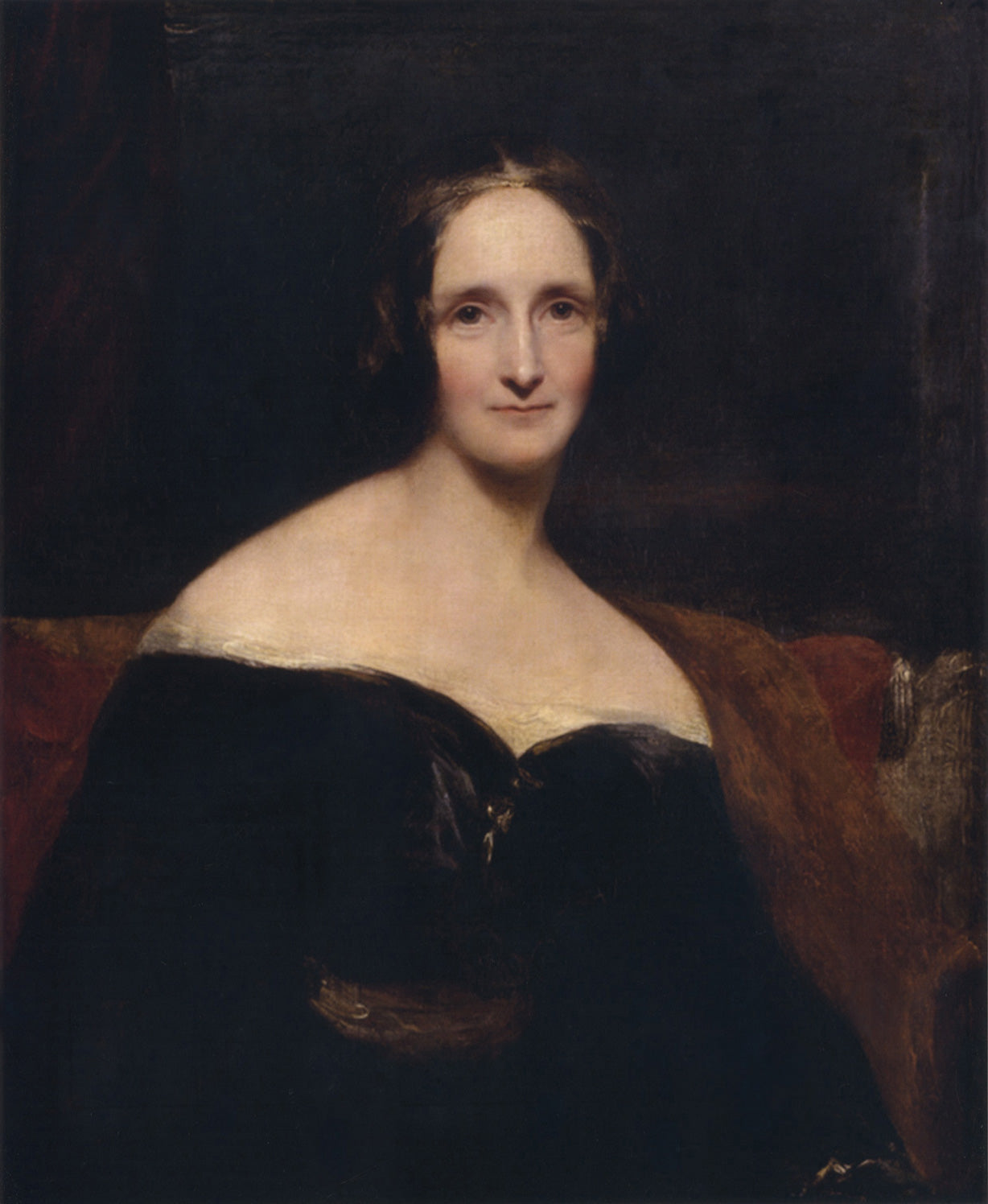
AI art is shiny. It's also suspiciously polite. Everything is symmetrical, color-graded, and utterly forgettable. Meanwhile Mary Shelley was 18, stuck in a rainstorm, inventing a monster that still makes Hollywood nervous. She didn't need a dataset—she needed a question: What happens when a creator abandons their creation?
If you want your work to feel alive in an AI-saturated feed, you need to get a little monstrous.
Perfect Outputs Are Boring
AI tools optimize for harmony. Faces centered. Lighting balanced. Skin flawless. That works for stock photos. It fails for stories.
Shelley made the Creature imperfect on purpose:
- Yellow eyes that don't align
- Black lips that barely cover teeth
- A voice that quotes Goethe and yet terrifies everyone who hears it
It's uncomfortable. That's why it sticks.
Ask yourself: what about your work would make someone slightly uneasy? If the answer is "nothing," you've probably ironed out the humanity.
Fearless Beats Frictionless
Our new Fearless tee lifts the line "Beware; for I am fearless, and therefore powerful." That's the Creature talking. Not Victor. Not the mob. The creation confronts the creator.
Most AI promises frictionless creation—no blank page, no failed drafts. Mary Shelley reminds us that friction is the whole point. You don't earn power without the fear first. You certainly don't become fearless by outsourcing the experiment.
How to Inject a Little Shelley Into Your Process
- Start with a question, not an output. Shelley asked what responsibility a maker has. Ask your own version before you open any tool.
- Keep the seams visible. Leave brushstrokes, glitch lines, embroidery knots. Evidence of the hand.
- Let the creation talk back. If you make something and it doesn't challenge you, push it until it does.
- Name the fear. Shelley literally titled her book after the scientist, not the monster. Own your role.
None of this is anti-AI. It's pro-accountability. Use the tools. Just don't let them declaw you.
Keep the Monster in the Room
Shelley didn't invent Frankenstein to score points. She wrote it to stare down the consequences of creating something you can't control. Keep that energy in your studio:
- Re-read the scene where the Creature demands accountability. It's the original "ship and own it" moment.
- Let a flaw stay visible. A crooked stitch, a scuffed edge, a glitch line—it makes the piece breathe.
- Talk about what scares you in the work. Not in a press release. In the room, with the people building it.
If your project feels too smooth, add teeth back in.
Wear the Reminder
Throw on the Fearless tee before your next brainstorming session. It's hard to play it safe when the Creature is literally across your chest, threatening anyone who underestimates it.
Wear your fearless. Let the monster sit in the meeting.
Need a physical reminder to stop sanding off your edges?
Shop the Mary Shelley capsule and keep your creative experiments alive long enough to scare you.