


Life Too Short — Brontë Dark Romanticism Journal
Charlotte Brontë gave this line to Helen Burns — the older girl at Lowood School who meets cruelty with a refusal to nurse it, and tries to pass that calm on to a furious young Jane. It isn't consolation. It's a decision about where a life gets spent.
Charlotte Brontë, Jane Eyre, ch. 6 — Helen Burns
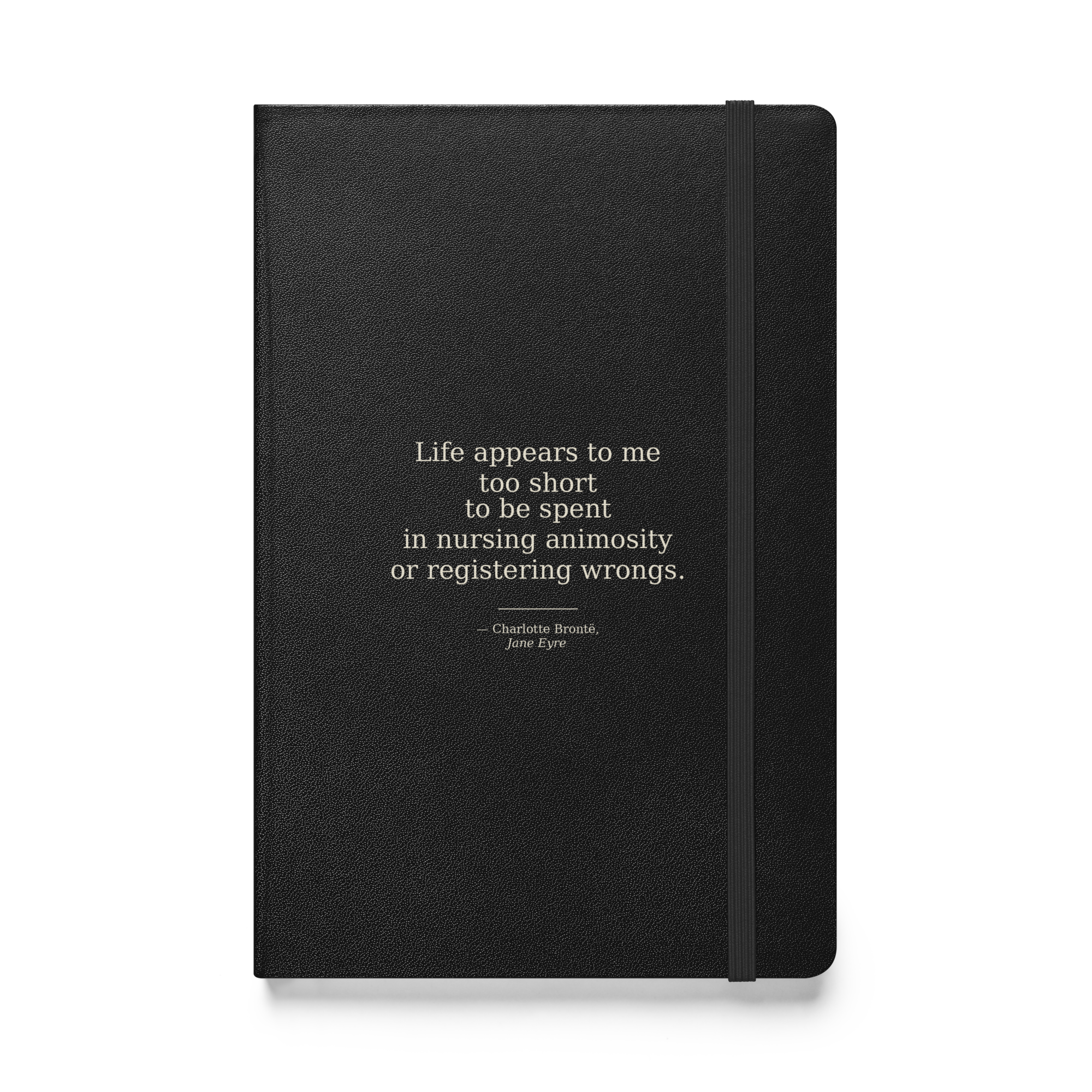
"Life appears to me too short to be spent in nursing animosity or registering wrongs."
Helen says it in the novel, but Charlotte Brontë lived it — years of writing in secret, on scraps of paper, in stolen hours, because she understood that the time you have is exactly what you decide to do with it. The line is about energy: where you actually put it. Writing has a way of sorting that out. You put it on the page, and sometimes that's enough — you don't have to carry it anymore.
The Design
The quote runs as a single block — five lines in equal-weight type, nothing emphasized over anything else. A warm burnished rule marks the line between quote and attribution: — Charlotte Brontë, Jane Eyre. The uniform weight is intentional: the decision wasn't about a single feeling — it was the whole sentence together that added up to a way of living.
Also available: the Life Too Short Mug and The Dignified Tee.
About This Journal
- Hardcover bound journal
- 80 lined, cream-colored pages
- Size: 5.5" × 8.5"
- Built-in elastic closure
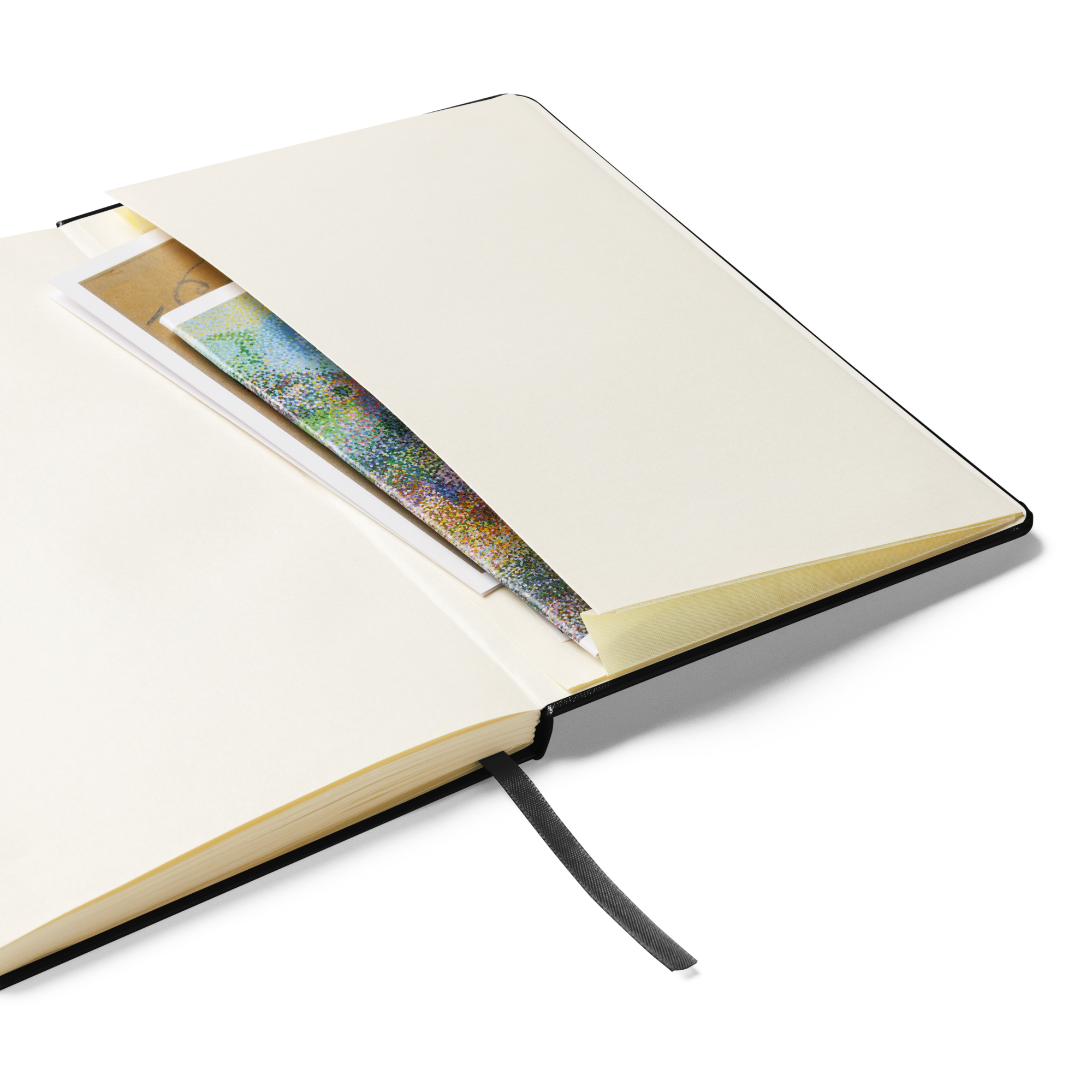
- Ribbon page marker
- Expandable inner pocket
Who It's For
The person who journals to process, not to perform. The one who writes to figure out what they actually think. Anyone who's used a notebook to set something down so they don't have to keep carrying it in their head.
Write it down. Leave it there.
Charlotte Brontë, in Plain English
- Lived: 1816–1855, Yorkshire, England
- Published Jane Eyre in 1847 under the male pen name Currer Bell — because the literary world wasn't ready to take a woman seriously
- The eldest of three literary sisters; Anne and Emily Brontë were also novelists
- Jane Eyre was considered radical for putting the inner life of a plain, poor woman at the center of a novel — and for letting her refuse to be diminished
Choose options