

Can't Live Without Books — Jefferson Curious Mind Journal
Jefferson wrote this to John Adams in 1815. He was seventy-two, had just sold his library to rebuild the Library of Congress, and was already starting a new collection.
Thomas Jefferson to John Adams, June 10, 1815
“I cannot live without books.”
He wasn’t being sentimental — he was describing how he worked. The Declaration of Independence, the Virginia Statute for Religious Freedom, the Notes on the State of Virginia: all of it was downstream of reading. Jefferson didn’t just collect books; he thought in them, argued through them, built things with them. When he says he can’t live without books, he means: I can’t think without them.
The Design
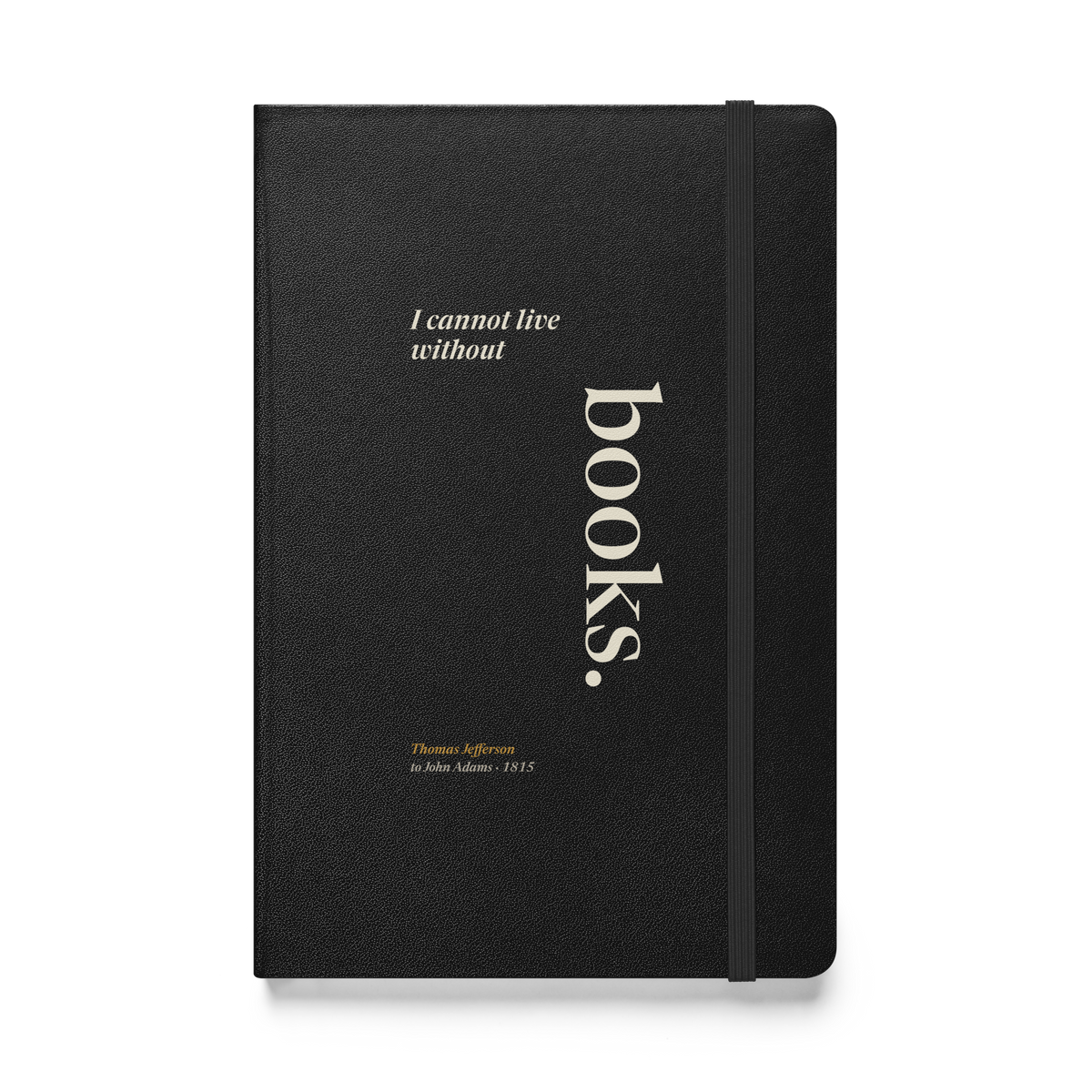
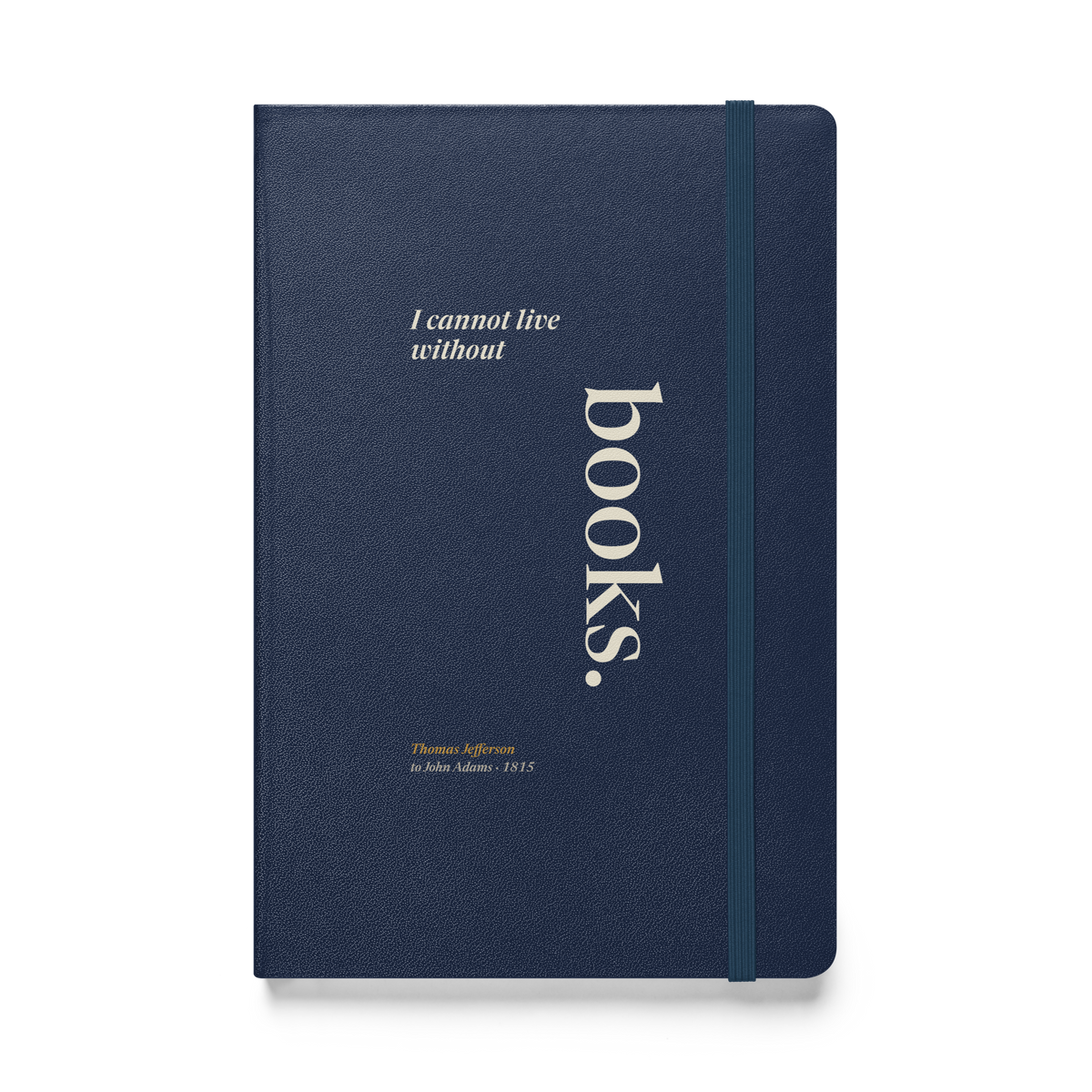
The cover holds the quote plainly — the word that ends it, books, carries all the weight Jefferson put there. Everything before it is setup; the period isn’t punctuation, it’s finality. A rule draws the line between what he said and who said it, because both matter.
Also on the Can’t Live Without Books Tee and Mug.
About This Journal
- Cover material: UltraHyde hardcover paper
- Size: 5.5” × 8.5” (13.97 cm × 21.59 cm)
- Weight: 10.9 oz (309 g)
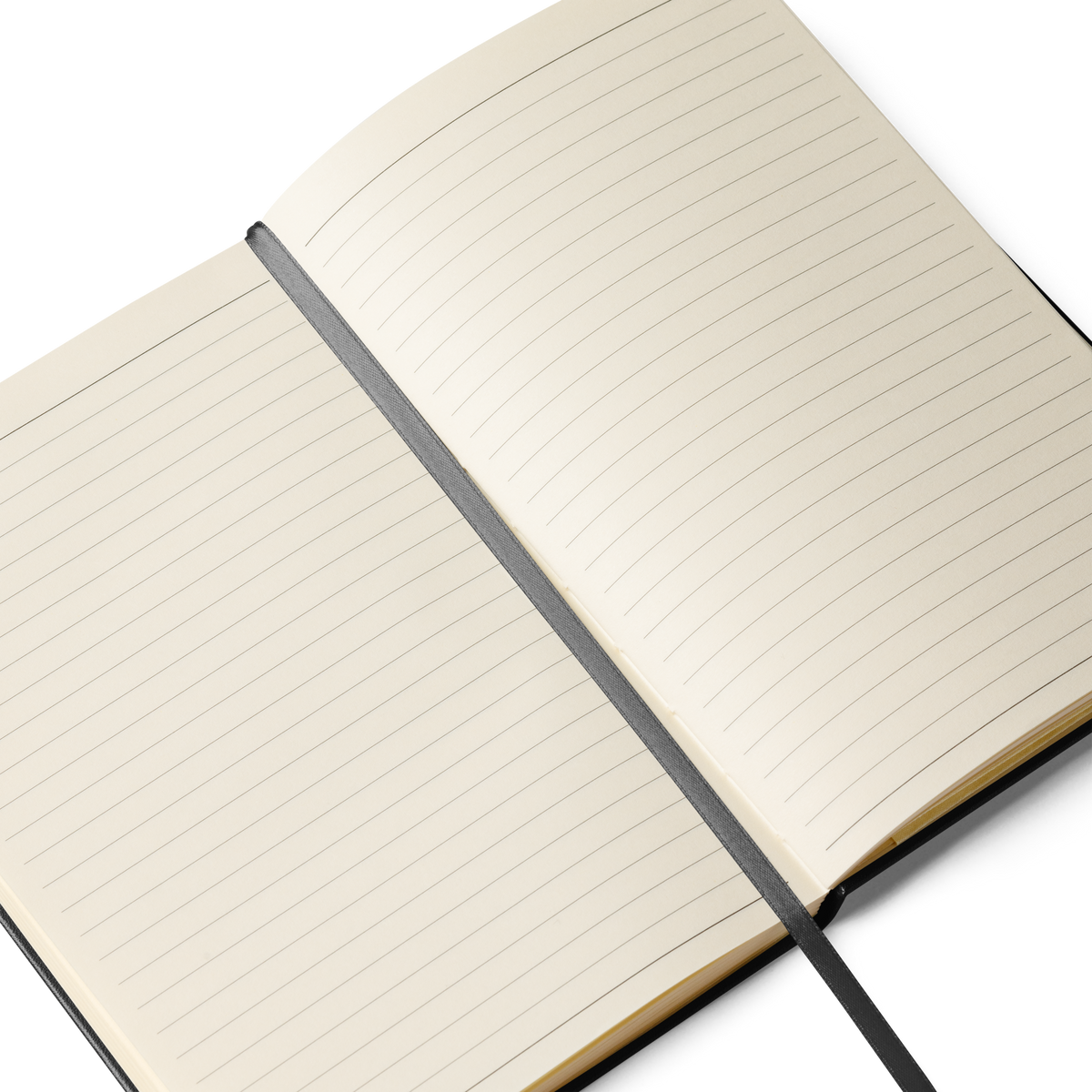
- 80 pages of lined, cream-colored paper
- Matching elastic closure and ribbon marker
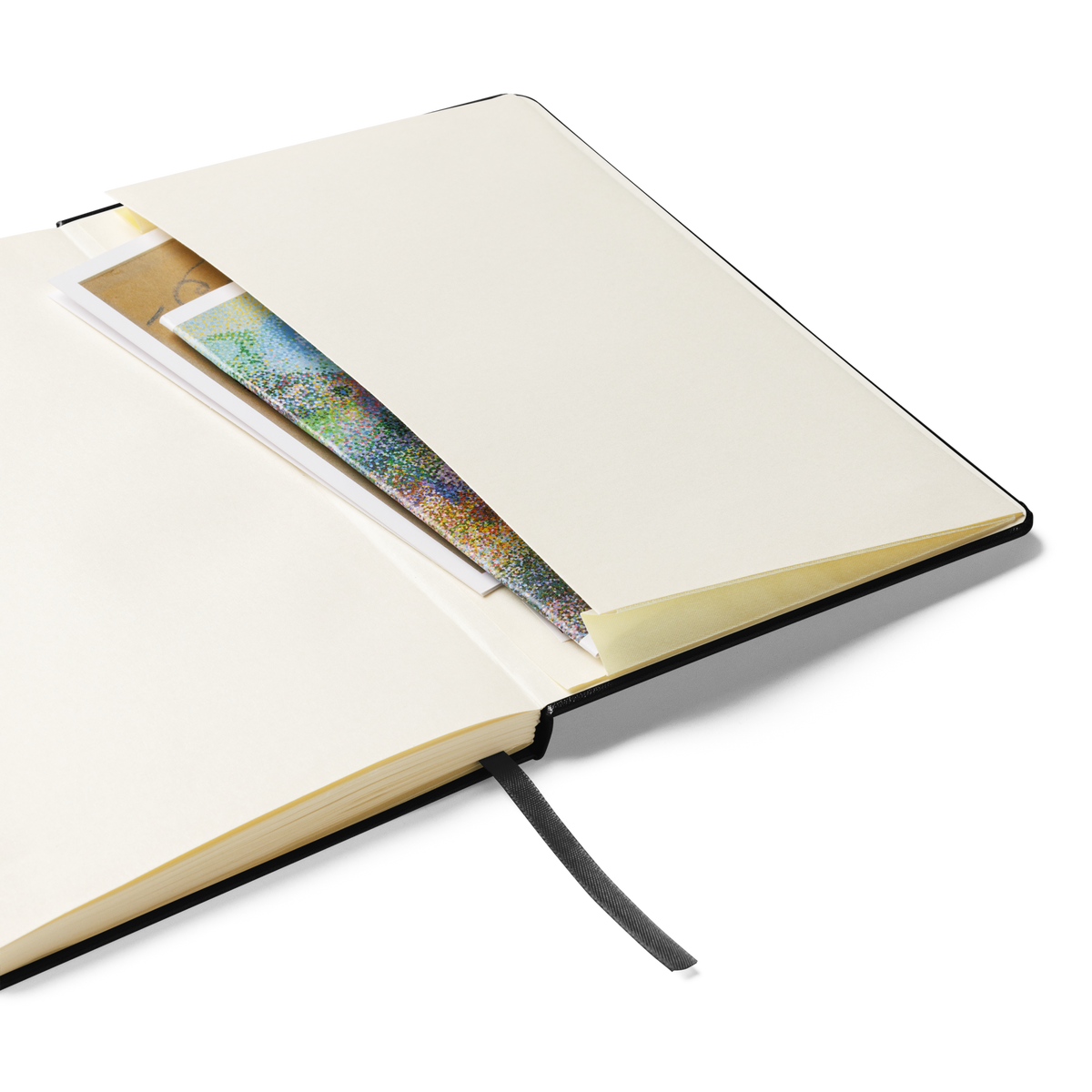
- Expandable inner pocket for loose notes
Who It’s For
- Anyone who’s started a new journal before finishing the last one because the idea demanded it
- The one who felt relief only once they’d finally written the thing down
- The reader who keeps notebooks from ten years ago because they might need them — who knows ideas don’t count until you write them down
Write your dependency.
Thomas Jefferson, in Plain English
- Lived: 1743–1826, Virginia — author of the Declaration of Independence, third US president, architect, founder of the University of Virginia
- When the British burned the Library of Congress in 1814, Jefferson sold his personal collection of 6,487 books to replace it — then immediately started buying more
- Read in six languages and owned books on virtually every subject; his Monticello library was organized by Francis Bacon’s taxonomy of knowledge — Memory, Reason, Imagination
- Wrote this line to John Adams in 1815, in one of the most substantive literary correspondences of the early republic
Choose options