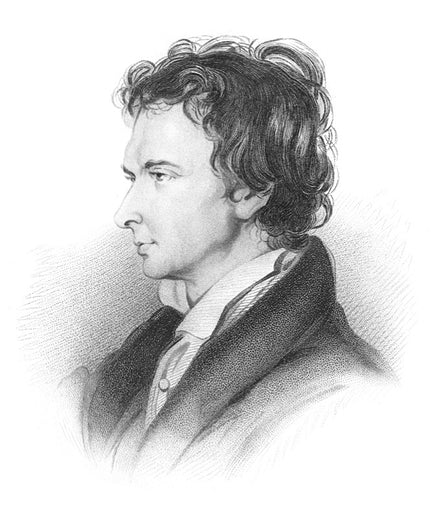
William Hazlitt. Engraving after William Bewick’s 1825 chalk drawing, frontispiece to Alexander Ireland’s William Hazlitt, Essayist and Critic (1889). Public domain.
William Hazlitt
William Hazlitt (1778–1830) was an English essayist and critic who started out as a portrait painter. He wrote for the London papers, lectured on the English poets, and published the essay collections Table-Talk and The Plain Speaker.
Words We Carry
Every quote here is traced to a documented source. How we verify →
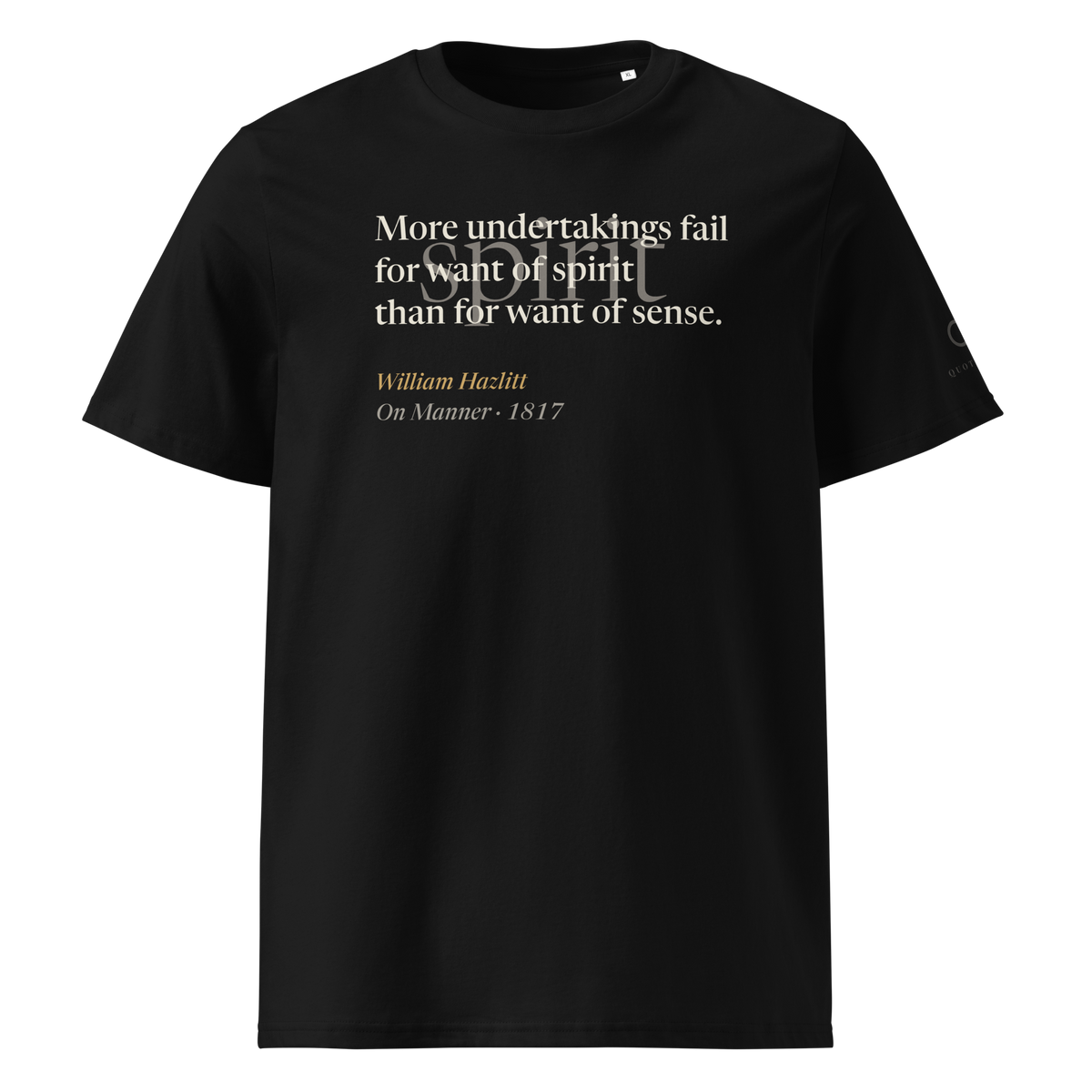
“More undertakings fail for want of spirit than for want of sense.”
The Round Table, No. XV — “On Manner” (1817)
About William Hazlitt
William Hazlitt was born on April 10, 1778, in Maidstone, Kent. He spent much of his childhood in Wem, Shropshire, after a short time in America.
From 1793 he studied at the New College at Hackney. Then he trained as a painter and tried to make his living painting portraits. His first book, An Essay on the Principles of Human Action, came out in 1805.
He found his real work in the papers, writing criticism and political sketches for The Examiner and others. In 1817 he published Characters of Shakespear’s Plays and The Round Table, a collection of essays he wrote with Leigh Hunt.
His lectures on the English poets and the English comic writers came out in 1818 and 1819. Table-Talk followed in 1821–22, The Spirit of the Age in 1825, and The Plain Speaker in 1826.
He died on September 18, 1830, in Frith Street, Soho, and is buried in St Anne’s Churchyard nearby.
The Work