The Misunderstood Geography of Control: Epictetus and Seneca on What You Actually Own
Stoicism is often reduced to a modern online platitude about emotionless endurance, but its foundational texts argue a much deeper psychological premise: the reclamation of your own mind. In his essential Epistulae Morales ad Lucilium (Letter I), written around 65 AD, the Roman philosopher Seneca delivered a commanding, absolute instruction to his friend: “Vindica te tibi”—“Claim yourself for yourself.”
Cross-referenced with the authoritative 1917 Loeb Classical Library translation, this text reveals that true autonomy is not achieved by escaping your external obligations, but by drawing a strict internal boundary against the noise, distractions, and expectations of the world around you.
The Modern Mistranslation of Stoic Endurance
The stock platitudes floating around social media present Stoicism as a tool for corporate optimization or emotional numbness. This version of the philosophy is a hollow shell. The ancient Stoics were not building armor to become unfeeling cogs; they were fighting to maintain absolute ownership of their internal choices under intense existential pressure.
There is a meaningful difference between endurance and ownership. The Stoics were not asking you to suppress what you feel. They were asking you to stop giving external events the authority to determine what you feel.
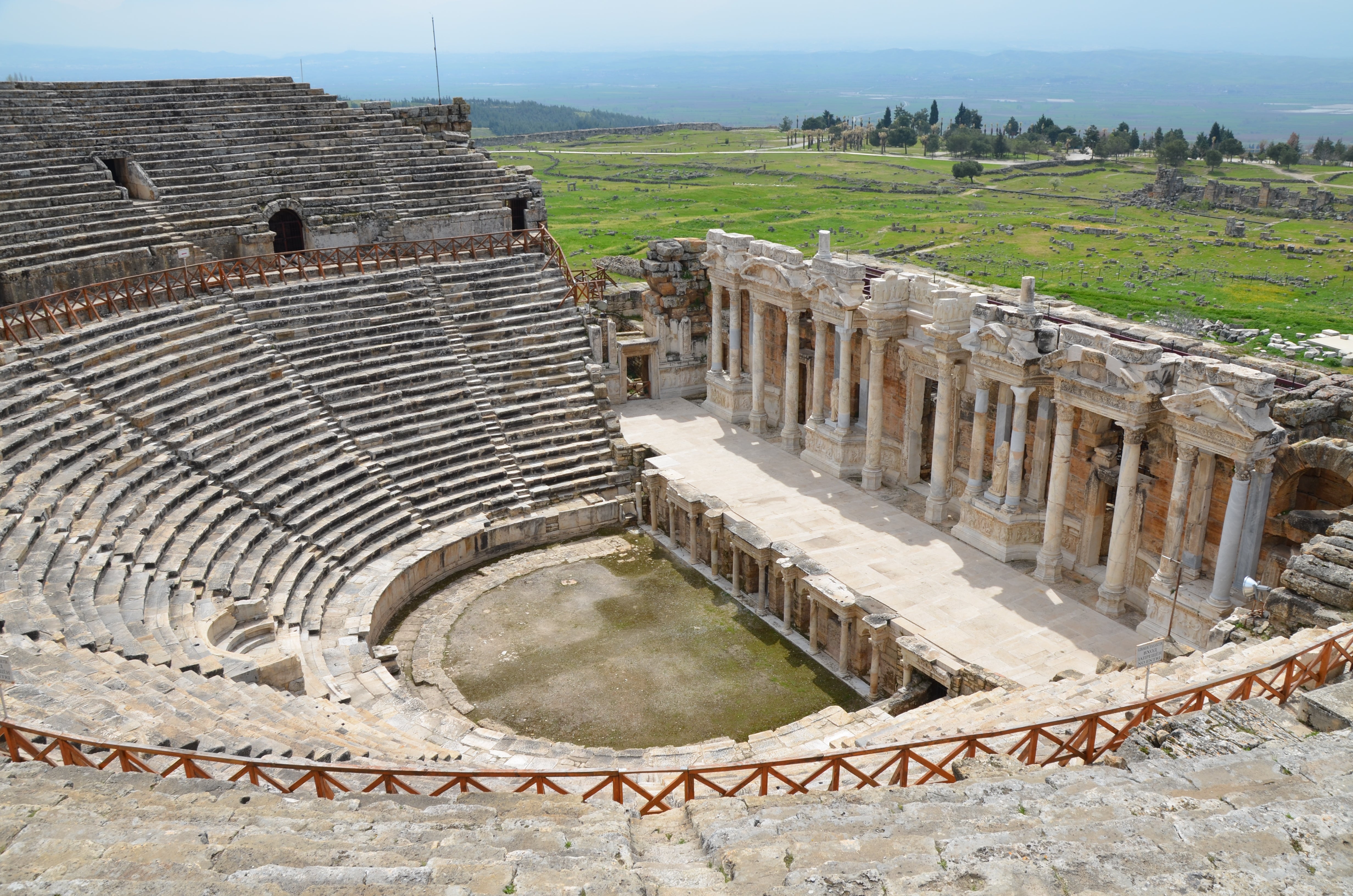
Consider the physical reality of the philosophers themselves. Epictetus was born into slavery in Hierapolis and spent his youth disabled and under the arbitrary absolute power of a Roman master. When he formulated his philosophy, it was not a life hack to maximize daily productivity. It was a matter of psychological survival.
Epictetus argued that your moral character (prohairesis) is the only thing the world cannot take from you. If you place your happiness in external things—your status, your property, or your comfort—you have handed the keys of your life to circumstances completely outside your control. The Stoic project is not the elimination of desire; it is the surgical relocation of where you place your confidence. See also: the full biography of Epictetus — the Stoic who built a philosophy from nothing.
The Pitfall of the Creative Escape
We often tell ourselves that if we can just change our external environment—retire from the job, move to a new city, or eliminate our immediate obligations—we will finally be at peace. Seneca explicitly exposed this illusion two thousand years ago.
The fantasy of the clean slate has been with us at least since the Roman Empire, which suggests it is not a symptom of modern stress but a structural feature of how human beings avoid the harder interior work.
His first letter was addressed to Lucilius, a man who had successfully climbed the Roman political ladder, secured wealth, and finally stepped back into private life. Yet Lucilius was still wasting his days, paralyzed by the residual anxieties of his old career and the petty distractions of Roman society.
Seneca didn’t offer him a gentle platitude. He told him that his time was still being filched away and stolen because he had not yet captured his own attention. The location had changed. The colonization had not. See also: the letter Seneca opened with — and the 124 that followed.
True freedom is not a geographic location or a career status. If you do not actively claim your mind, your environment will always find a way to colonize it. Seneca’s first letter is only a page long, but that single observation—that freedom requires an interior act, not an exterior one—contains the entire argument of the 123 letters that follow it.
Material Reminders for the Inner Life
Ancient thinkers understood that deep insight is incredibly fragile. It is easy to understand a philosophical truth while underlining a text in a quiet room; it is entirely different to remember it when the daily chaos begins. To combat this, early Stoics carried small handbooks (Enchiridions) or small physical tokens to pull themselves out of their heads and back to reality. The object was never the point.
The point was the interruption—the moment of friction that forced the mind back to a principle it already knew but had stopped seeing. Marcus Aurelius wrote his Meditations to himself, as a set of written reminders he returned to again and again. Epictetus’s students compiled the Enchiridion as a portable field guide to the philosophy. The Stoics were not above needing prompts.
That logic is what sits behind the Claim Yourself tee in the Seneca collection. The design takes the command from Epistulae Morales ad Lucilium, Letter I—“Claim yourself for yourself. Vindica te tibi.” (tr. Gummere, 1917)—and sets the Latin in three monumental lines: VINDICA / TE / TIBI. The text is broken the way Latin actually works, each word carrying its own weight, the whole thing cut into stone before you’ve parsed the meaning.
You feel the gravity of it before your brain has caught up with the grammar. That is not an accident. It is exactly what Seneca intended: to hit you before your defenses are up. A physical object that delivers the interruption is not a luxury. For the Stoics, it was part of the practice.
Seneca, In Plain English
Lived: c. 4 BC – 65 AD. A prominent Roman Stoic philosopher, tragic playwright, and leading statesman who served as a high-level advisor to Emperor Nero.
The Text: Epistulae Morales ad Lucilium (Moral Letters to Lucilius). A collection of 124 letters covering time, fear, mortality, and how to spend a life intentionally.
The Source Material: Cross-referenced directly with the public-domain 1917 Richard M. Gummere translation for the Loeb Classical Library to ensure absolute historical fidelity.