Marie Curie: Two Nobel Prizes, One Relentless Mind
Editor’s note: The Quoteiac products referenced in this article have been removed from the site. We could not verify the quote’s attribution to a primary source. Read the full explanation here.
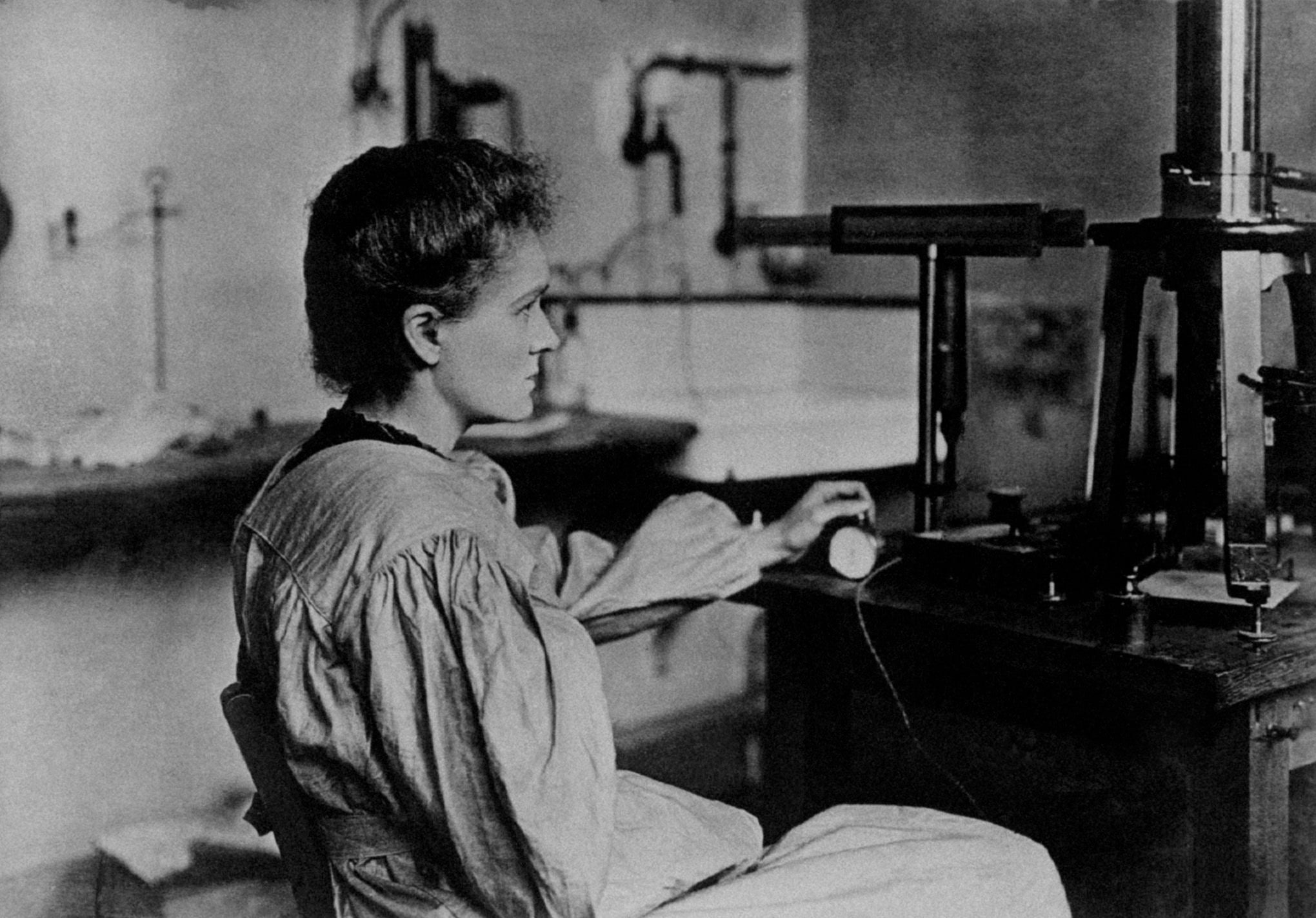
Marie Curie (1867–1934) is the only person in history to have won Nobel Prizes in two different scientific disciplines — Physics in 1903, shared with Pierre Curie and Henri Becquerel for research on radioactivity, and Chemistry in 1911, alone, for the discovery of polonium and radium. She was the first woman to win a Nobel Prize at all. The shed in Paris where she processed tons of pitchblende by hand in the winter of 1898, looking for something no one had named yet, is now a UNESCO World Heritage Site.
Curie is one of six women on the Quoteiac author roster — alongside Charlotte Brontë, Christina Rossetti, Emily Dickinson, Mary Shelley, and Muriel Strode. That company is worth noting: these are writers, scientists, and poets who did their work in eras and fields that were almost entirely closed to them. Curie did not argue with that. She worked through it.
Two Sciences. Two Prizes. One Person.
In 1903, Curie shared the Nobel Prize in Physics with her husband Pierre and Henri Becquerel for their research on radioactivity. In 1911, she won the Nobel Prize in Chemistry — alone — for the discovery of polonium and radium. No one before her had won a Nobel Prize in two different scientific disciplines. No one has since.
She was the first woman to win a Nobel Prize at all. She was the first person to win two. These are not the same achievement, and the distinction matters: winning twice in physics would be remarkable. Winning in physics and then chemistry means she didn’t just master one field — she changed two.
The Swedish Academy initially planned to exclude her from the 1903 prize entirely. Pierre refused to accept it without her name attached. The Academy relented. History noted it, briefly, and moved on.
What She Actually Said
The attribution problem with Curie is real and worth being precise about. The most circulated “Curie quote” on the internet — “Be less curious about people and more curious about ideas” — does not appear in her published autobiography, her letters, or her scientific papers. The sourcing is genuinely uncertain. But it circulated widely in her lifetime, it has the cadence of her documented thinking, and we carry it — on the Ideas Tee, the Ideas Mug, and the Ideas Journal — with that transparency intact. Every product page says what we know and what we can’t confirm.
Here is what she said that is sourced to documented primary material:
- “Nothing in life is to be feared, it is only to be understood. Now is the time to understand more, so that we may fear less.” — attributed to her late-life writings, published in a 1937 compilation.
- “I was taught that the way of progress was neither swift nor easy.” — from Pierre Curie, her 1923 autobiography.
The first quote reads as a scientific philosophy — fear as a failure of understanding, knowledge as the corrective. The second reads like someone who learned that lesson by actually living it.
The Radioactive Notebooks
Curie’s personal notebooks — the ones she used during her isolation of radioactive elements in the 1890s and early 1900s — are stored in lead-lined boxes at the Bibliothèque nationale de France in Paris. They remain so radioactive that researchers must sign a liability waiver before handling them. The half-life of radium-226 is approximately 1,600 years. Her notebooks will still be dangerous long after every building currently standing in Paris has been rebuilt.
She did not know this. The science of radiation protection was not yet science — she discovered the phenomenon that would eventually require the protection. She carried test tubes of radioactive isotopes in her coat pockets. She kept radium samples on her bedside table because she found the faint glow beautiful. The aplastic anemia that killed her in 1934 was a direct consequence of four decades of unprotected radiation exposure.
The notebooks are the most literal version of a life’s work persisting beyond the person. They are still doing something.
She Didn’t Wait for Permission
Curie was born Maria Skłodowska in Warsaw in 1867, under Russian occupation, in a country where women were barred from higher education. She and her sister made a pact: they would take turns funding each other’s studies abroad. She worked as a governess for years to fund her sister’s medical degree. Then she went to Paris — alone — and enrolled at the Sorbonne at 24.
She graduated first in her physics degree. She completed a second degree in mathematics. She married Pierre not as a retreat into domesticity but as a scientific partnership — they worked side by side in the same lab, co-authored papers, and shared the Nobel. When he died in a street accident in 1906, she took over his professorship at the Sorbonne, becoming its first female professor. She kept working.
There is a version of the Curie story that turns her into an icon of female perseverance — the woman who overcame. That framing, however well-meaning, tends to soften what was actually happening. She wasn’t overcoming circumstances. She was ignoring the premise that those circumstances should apply to her at all.
Ideas Worth Wearing
The Curie quotes we carry at Quoteiac are ones we can trace. The Ideas Tee, the Ideas Mug, and the Ideas Journal each carry verified language — sourced, documented, accurate. That standard isn’t incidental. It’s the whole point.
Browse the full Marie Curie collection. Everything in it can be sourced.