H.G. Wells Predicted This. We're Living It.
H.G. Wells (1866–1946) was a novelist, journalist, and prophet in the structural sense — someone who understood how systems behave under pressure and followed those systems to their logical ends. He predicted aerial warfare in 1908, nuclear weapons in 1914, and something resembling the World Wide Web in 1936, all decades before any of them existed. He is best remembered for the science fiction of the 1890s, but the more interesting record is his nonfiction, where he kept getting the future right not by guessing but by reasoning.
What separates Wells from ordinary futurists is that his predictions weren't speculation — they were extrapolation applied with unusual discipline. The ideas below show exactly how far that discipline reached.
He Wasn't Writing Entertainment. He Was Writing Arguments.
This is the part that gets lost in the retelling. Wells used fiction the way a philosopher uses a thought experiment: to make an argument that a direct essay couldn't carry as far.
The War of the Worlds (1898) has Martians invading England. That's the surface. The actual argument is about what it feels like to be on the receiving end of a technologically superior civilization — the Martians doing to England precisely what England had been doing to the rest of the world. The book was a mirror held up to empire. It remains one.
The Island of Doctor Moreau (1896) has a scientist transforming animals into human-like beings who cannot stop reverting to their original nature. The questions Wells was actually asking: What happens when science treats living creatures as raw material? What constitutes a person, and who has the authority to decide? He wrote this while genetics was still a fringe idea. Those questions are now before bioethics committees and national legislatures. The novel got there first.
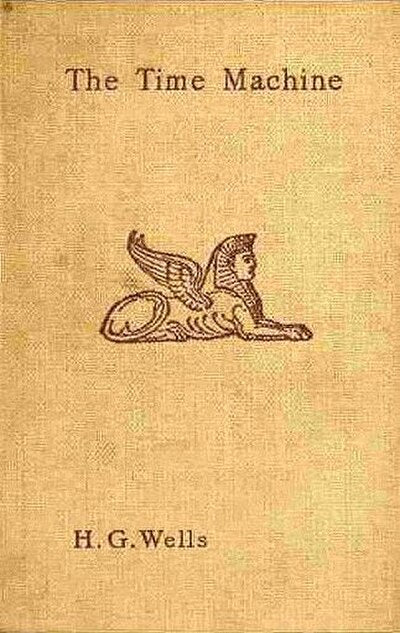
The Time Machine (1895) takes the reader to the year 802,701, where humanity has split into two species: the Eloi, idle and above-ground, and the Morlocks, underground, maintaining the machinery — and periodically feeding on the Eloi. The argument is blunt: this is what happens to a class-divided society given sufficient time. Not metaphor. Projection.
If you're drawn to writers who refuse easy answers about what it means to think clearly under pressure, the conversation continues in The Philosophy of Doing Hard Things.
What He Got Wrong
Wells's utopias aged poorly. He believed, with genuine conviction, in a technocratic world government run by scientific rationalists — people who would make correct decisions because they understood correct principles. What he didn't account for was the gap between intelligence and wisdom, or the tendency of systems optimized for one thing to produce catastrophe along every other dimension.
He died in 1946. His final book was Mind at the End of Its Tether. He had watched two world wars, the rise of fascism, and the use of atomic weapons — a technology he had predicted thirty years earlier. He concluded that humanity had failed the test. The book reads less like surrender than like a man who ran the extrapolation to its end and didn't like the answer.
For a different angle on writers who stared into the void and kept writing anyway, see From Camus to Kafka: Quotes for the Modern Absurdist.
What He Got Right
In 1920, Wells wrote: "Human history becomes more and more a race between education and catastrophe."
He would recognize the current edition of that race immediately. The specific technologies have changed; the structure of the problem has not. That's what good extrapolation produces — not a photograph of the future, but an accurate map of its terrain.
Wells spent his career arguing that the examined future is less dangerous than the unexamined one. That argument has not expired. The Future — Wells Heretics T-Shirt carries one of his sharpest lines on what forward thinking actually demands. The We Are Mankind — Wells T-Shirt is drawn from the same body of work: the nonfiction Wells, the one who thought the species still had a chance if it chose to use its mind.