Boris Becker Read Marcus Aurelius in Prison. Then He Started Teaching It.
Boris Becker — six-time Grand Slam champion, the youngest Wimbledon men's singles winner in history at seventeen, and a player who held the world number one ranking for twelve weeks in 1991 — served eight months at HMP Huntercombe in 2022 for concealing assets during bankruptcy proceedings. During that time, he read Meditations by Marcus Aurelius. What he said afterward wasn't a redemption narrative. It was a Stoic argument.
Boris Becker spent eight months in British prison in 2022. He has said publicly, in multiple interviews since his release, that he read Meditations by Marcus Aurelius during that time — and that it changed how he understood what had happened to him, and what he was responsible for.
He didn’t come out selling a redemption arc. He came out saying the Stoics were right.
From Wimbledon to Southwark Crown Court
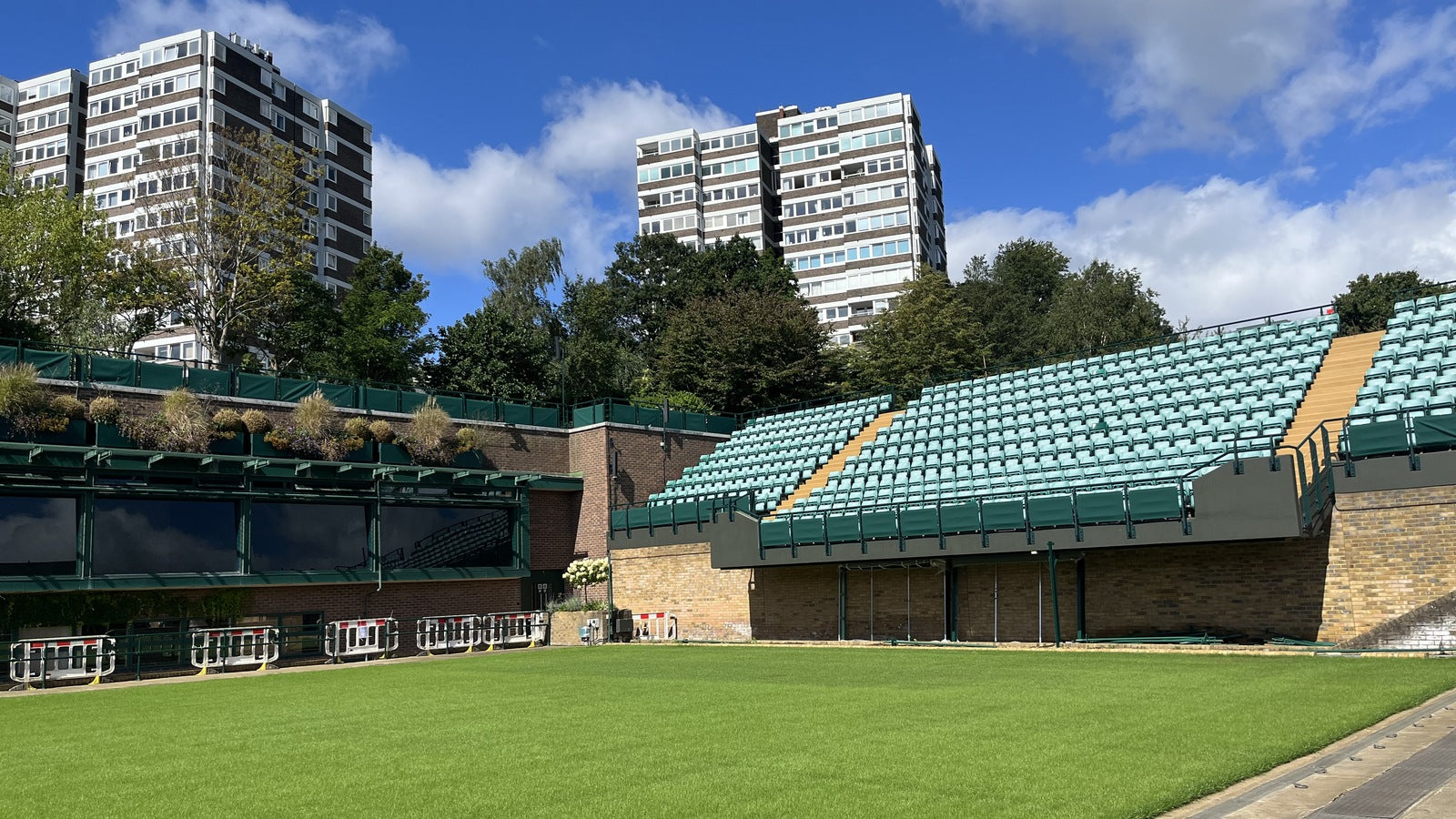
The biography is worth knowing. In July 1985, Becker was 17 years old and unseeded at Wimbledon. He won it. Not because he was expected to. Not because the draw was kind. Because he was better than everyone else in the tournament that fortnight, including the players who were supposed to be better than him. He remains the youngest men’s singles champion in Wimbledon history.
He won five more Grand Slams after that. He reached the world number one ranking. He was, for a decade, one of the most recognizable athletes on the planet.
Then the money went. Then the marriage went. Then the assets were concealed during bankruptcy proceedings. On 8 April 2022, a jury at Southwark Crown Court found him guilty on four counts under the Insolvency Act. Three weeks later, Judge Deborah Taylor sentenced him to two years and six months. He was transferred first to HMP Wandsworth, then to HMP Huntercombe — a Category C prison in Oxfordshire that houses foreign-national offenders eligible for deportation. He was released on 15 December 2022, having served eight months, and was deported to Germany.
He has described what happened with unusual directness. “I am not a victim. I made mistakes and I paid for them.” That’s not the standard post-prison interview. That’s something specific: a person refusing the frame that things happened to them.
What He Found in a Prison Cell
Becker has said in interviews and on the High Performance Podcast — hosted by Jake Humphrey and Damian Hughes — that he read Marcus Aurelius’ Meditations while at Huntercombe.
This is worth pausing on. Meditations is a private journal. Marcus Aurelius wrote it for himself — not for publication, not for posterity, not to instruct anyone. He was the most powerful man in the Roman Empire, and he used the journal to hold himself to account: to remind himself of what mattered, to call out his own rationalizations, to practice what the Stoics called prosoche — attention to oneself. It was never meant to be read by anyone else. It has been in print for over four hundred years. Read the full account of what Meditations actually is — and why it was never meant for anyone else.
What Becker found in it, he has described in terms of control. The Stoic argument — stated plainly by Aurelius, by Epictetus, by Seneca — is that the only thing a person truly controls is their own response to events. Not the verdict. Not the sentence. Not the cell. Only the reaction. Only the judgment. Only the choice about how to understand what is happening and what it means.
In a prison cell, that argument stops being abstract.
The Drug Dealer
On the High Performance Podcast, Becker described talking to fellow inmates about the ideas he was reading. One of them had been caught dealing drugs for the third time.
Becker said to him: “Either you are very bad at what you do, or you like it here.”
It’s a Stoic move. Not sympathy, not judgment, not a lecture. Just the thing the other person already knows, stated in a way they can’t dismiss. Epictetus, who had been a slave before he became a philosopher, built his entire teaching around this: you cannot change your circumstances by refusing to acknowledge them. The starting point is honesty about where you are and how you got there. Without that, there’s nothing to work with.
The Stoics called it katalepsis — clear perception. See the thing as it is. Not as you wish it were. Not as it feels. As it is.
Complacency and Who You Actually Are
Becker has been specific about his own failure in a way that connects directly to Stoic thinking. He has said he became complacent after fame — that he stopped being the person who had gone to Wimbledon at 17 and outplayed everyone, and became instead someone who assumed the good would keep arriving. He described prison as the thing that forced him back to himself.
Marcus Aurelius wrote about this exact phenomenon. The Meditations are full of warnings against the corruption that comes with ease — the way success makes you soft, the way comfort makes you assume, the way identity that depends on external things (titles, wealth, reputation) becomes a liability the moment those things move. His instruction to himself was relentless: do the work regardless. Judge yourself by your own standards. The rest is not yours to control.
The man who won Wimbledon unseeded at 17 understood something that the man who lost everything in bankruptcy had forgotten: that the person you are when everything is against you is the only version of yourself that matters.
Why This Connects
The Stoics Becker turned to in prison are the same ones Quoteiac carries. The Meditations Becker read in an Oxfordshire prison cell contain no comfort. Only instruction.
The Stoic Wisdom collection has always been built on this: that these ideas aren’t decorative. They have a job to do. They have been doing it, in circumstances far harder than most people will ever face, for two thousand years.
Browse the Stoic Wisdom collection — Marcus Aurelius, Seneca, and Epictetus. Sourced, verified, and meant to be used.