
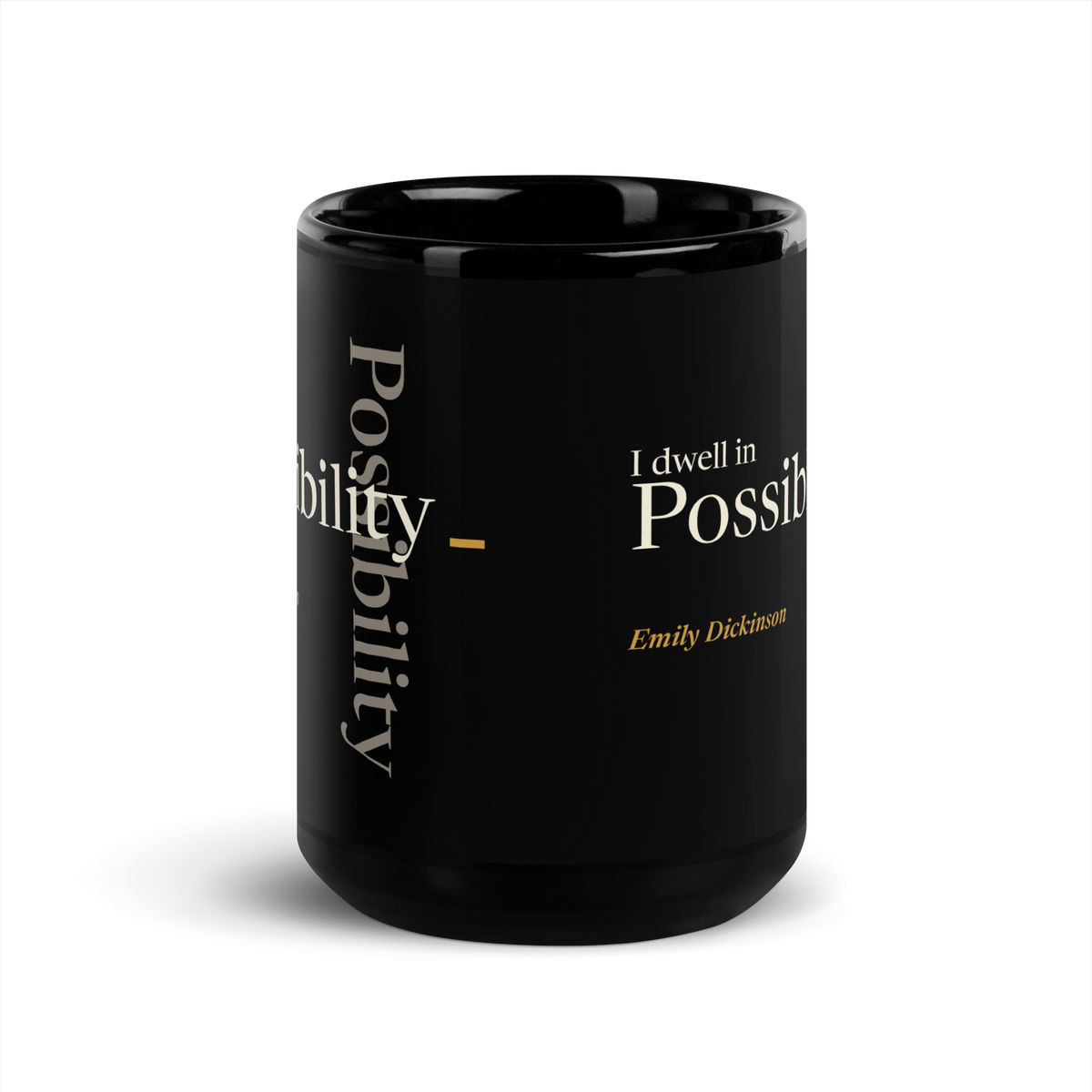
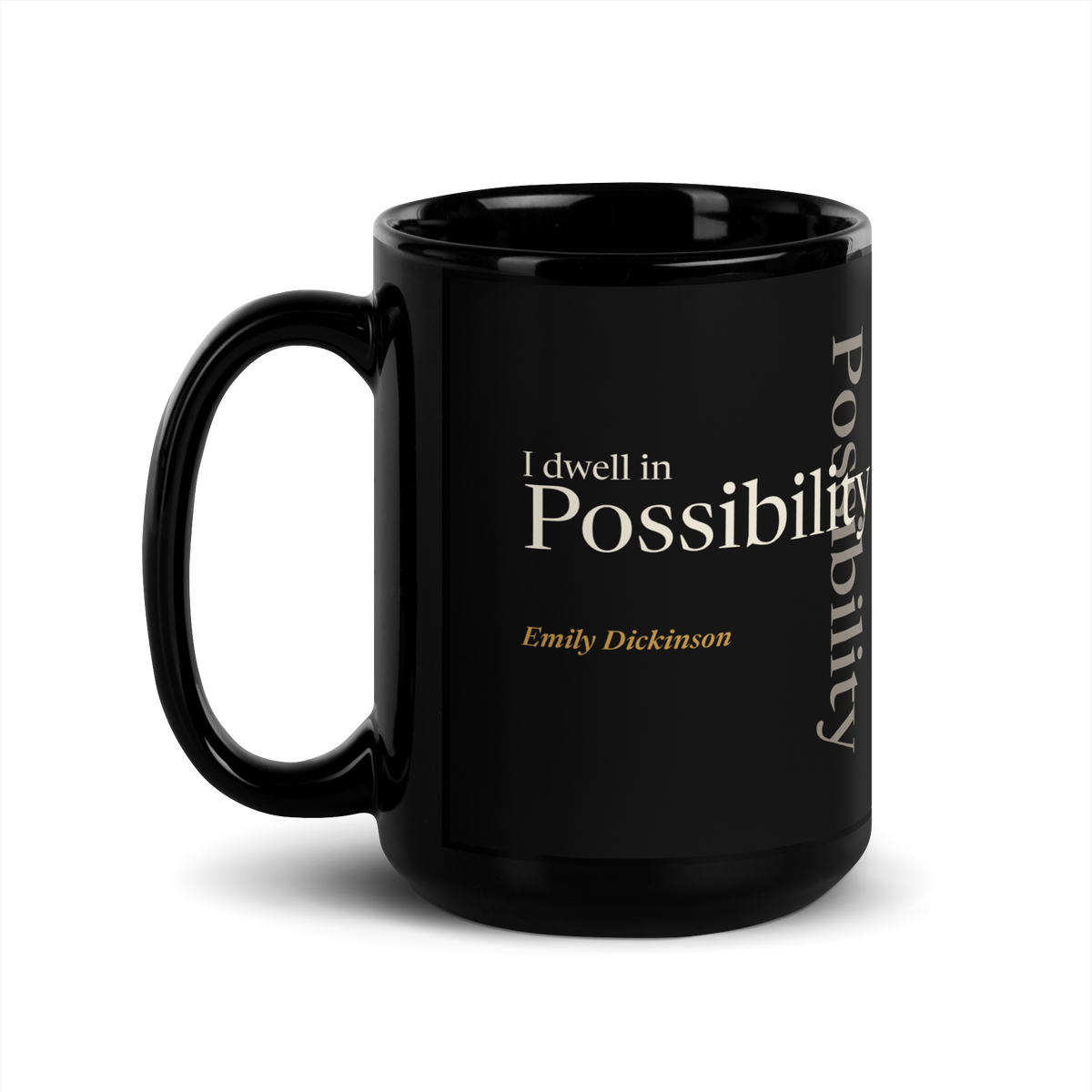


Possibility — Dickinson Curious Mind Mug
Dickinson bound her poems herself, in hand-stitched fascicles she kept in a box. She was describing her actual address.
Emily Dickinson, c. 1862
"I dwell in Possibility —"
The opening line of an untitled poem — she never named it; the first word was title enough. She wrote it from near-total seclusion in Amherst, barely leaving the house, rarely publishing — and still chose Possibility as her address, setting it against Prose: the ordinary, the expected, the room you're already standing in. Poetry had the wider windows.
The Design
The italic opener — "I dwell in —" — sits above a copper rule. Then the sentence resolves: POSSIBILITY, large and certain. A second copper rule closes beneath it, with a small cream diamond and the attribution below. The design treats the line as a journey: the opener floats in italics, the em dash holds the breath, and POSSIBILITY arrives — not as a hope, but as where she already lives.
Read the full story: Why Emily Dickinson Valued Private Journals Over Public Fame. Also: the Possibility Tee, and the Every Door Tee.
About This Mug
- 15 oz glossy black ceramic
- Printed on both sides (same design each side — not a wraparound)
- Dishwasher safe
- Microwave safe
Who It's For
The person who begins the day open rather than braced. The creative, the dreamer, the one who still believes this particular day might be the one where something shifts. A good gift for someone starting something new — a project, a chapter, a year they want to mean something.
Wide windows. Wider thinking. Start here.
Emily Dickinson, in Plain English
- Lived: 1830–1886, Amherst, Massachusetts
- Wrote nearly 1,800 poems — fewer than a dozen published in her lifetime
- Her signature: em dashes where other punctuation would do, capitalization for emphasis, white space that worked as hard as the words
- Published posthumously, her work reshaped American poetry
- Rarely left her family home, yet wrote poems that stretched wider than any house could hold
Choose options


