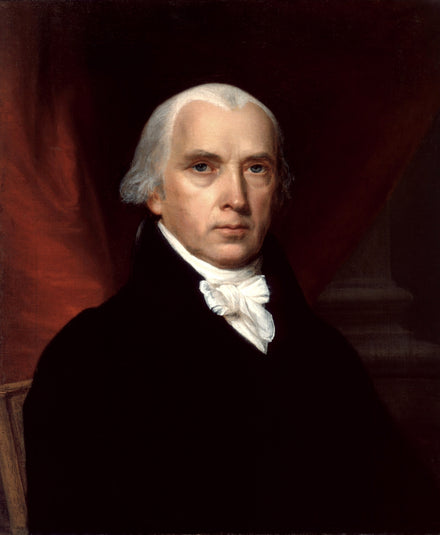
James Madison. Portrait, c. 1821.Public domain.
James Madison
Small, quiet, and systematically brilliant — Madison arrived at the Constitutional Convention in 1787 having read more political theory than anyone else in the room, and left having shaped more of what was written down. He spent his life building systems designed to outlast the people running them.
Words We Carry
Every quote here is traced to a documented source. How we verify →
“Knowledge will forever govern ignorance…”
Letter to William T. Barry, August 4, 1822. Printed as: “Knowledge will forever govern ignorance…” — as in The Writings of James Madison, ed. Gaillard Hunt, vol. 9 (1910). Madison’s own spelling: “Knowlege will for ever govern ignorance: and a people who mean to be their own Governours, must arm themselves with the power which knowledge gives.” — Founders Online, National Archives.
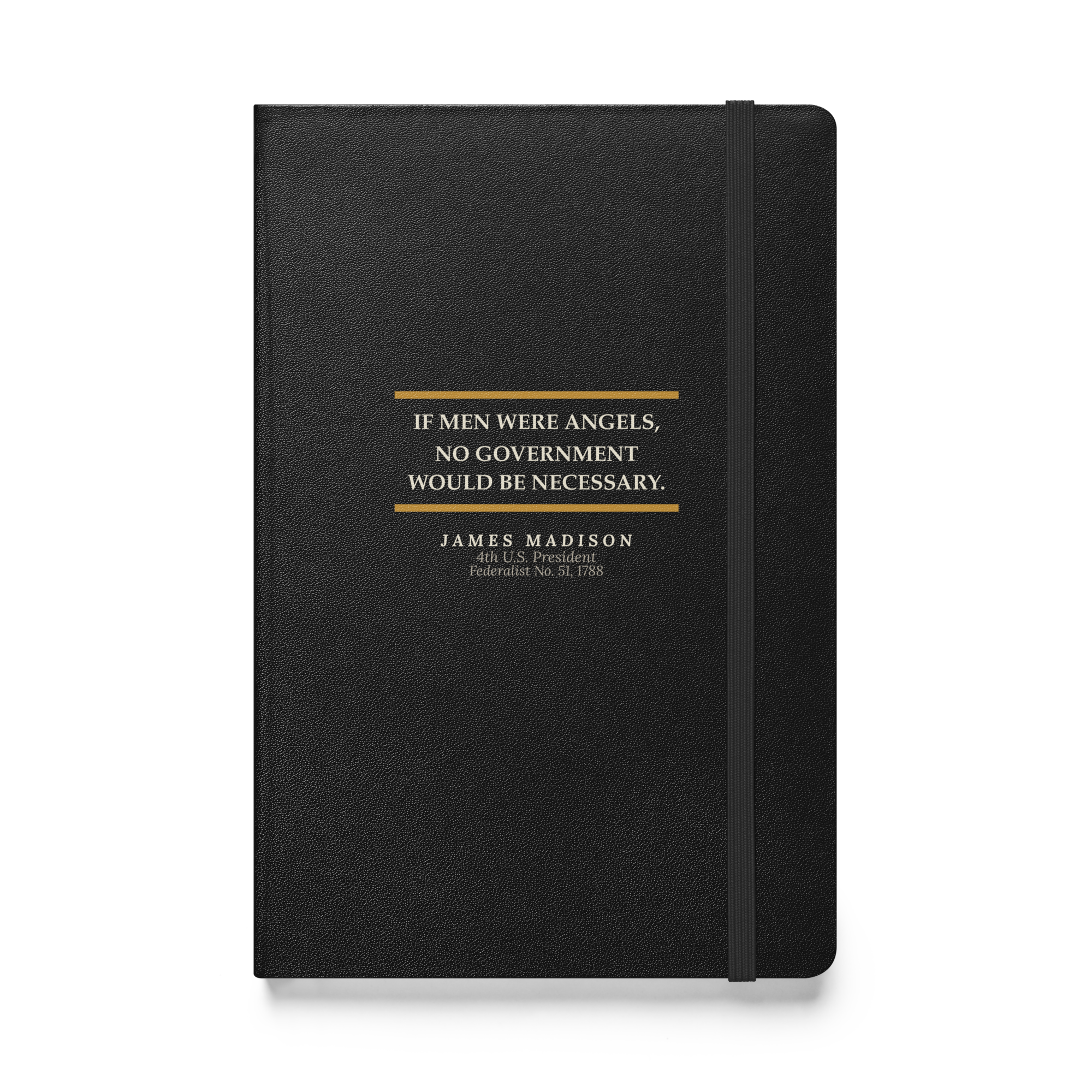
“If men were angels, no government would be necessary.”
Federalist No. 51 (1788), published under the pseudonym “Publius.”
About James Madison
Madison came to the Constitutional Convention in 1787 having done his homework in a way that set him apart from every other delegate. He had spent months at Montpelier reading through the boxes of books Jefferson sent him from Paris — histories of ancient confederacies, analyses of failed republics, theoretical accounts of what made governments hold and what made them crack. He arrived not with opinions but with a studied diagnosis. The Virginia Plan, which became the framework for the entire Convention, was his draft. He took notes on every session — the only delegate who did — and those notes remain the primary record of how the Constitution was made.
His intellectual signature was distrust of easy virtue. He did not believe that good government depended on good men — he believed it depended on good structure. Federalist No. 51, published in 1788, is the clearest expression of that: a republic must be built to hold against its own leaders, because the leaders will be human. He wrote that essay alongside Hamilton and Jay under the pen name Publius, and his contributions — including No. 10, on factions, and No. 51, on checks and balances — remain the most cited of the eighty-five. He was thirty-six years old.
James Madison was born March 16, 1751, at Belle Grove plantation in Virginia, the eldest of twelve children. He studied at the College of New Jersey — now Princeton — and returned home without a profession, absorbed instead by the political crisis building around him. He never practiced law; he went directly into public life. He served in the Virginia legislature, the Continental Congress, the Constitutional Convention, the first four Congresses of the United States, as Secretary of State under Jefferson, and as the fourth President of the United States from 1809 to 1817. His presidency was defined by the War of 1812, which ended without the territorial gains he’d hoped for but left the young republic intact. He retired to Montpelier and spent his final years managing his papers and his troubled finances. He died June 28, 1836, at 85 — the last surviving delegate of the Constitutional Convention.
The Work
From the Journal
What the Founders Actually Said (And Why It Matters in 2026)
Five sentences from four American presidents — Adams, Jefferson, Madison, Roosevelt — verified from primary sources. What they actually said, where they said it, and why it reads like this week’s news.
ReadIn Their Orbit