The T-Shirt Used to Be Indecent. Here’s How It Became Everything.
In 1913, the U.S. Navy issued a white cotton crewneck undershirt as standard issue. It was never meant to be seen.
The point was purely functional: cotton soaks up sweat, protects the heavier clothes above it, washes easily. Laborers wore it under coveralls. Businessmen wore it under dress shirts. It was an intimate layer designed to stay hidden.
If you’d worn it in public, people would have looked at you the way they’d look at someone who’d forgotten to get dressed.
The Line Between Dressed and Undressed
That sounds extreme now. It wasn’t, then.
The line between dressed and undressed used to sit in a completely different place. In the 1930s, men could still be fined or arrested for going shirtless at the beach. In Atlantic City, 42 men were rounded up in a single day and fined $2 each for swimming topless.
The bare chest was indecent. The undershirt, by extension, was barely a step above it.

F. Scott Fitzgerald put the word “T shirt” into print for the first time in 1920 — buried in a boarding school packing list in This Side of Paradise, slotted between winter underwear and a jersey. A garment with no prestige, no associations. Just something you packed because you needed it.
The War Changed Everything
During World War II, millions of American soldiers wore cotton t-shirts in barracks, on bases, while working and waiting.
By July 1942, an Air Corps Gunnery School softball shirt appeared on the cover of Life magazine — a printed novelty tee on the front of the most-read publication in America. The undershirt had started leaking into public view before the war was even over.
What the war did, quietly, was democratize it. A garment worn by millions of men across every background, rank, and region stopped being an intimate layer and started being just… a shirt.
Underwear, Made Dangerous
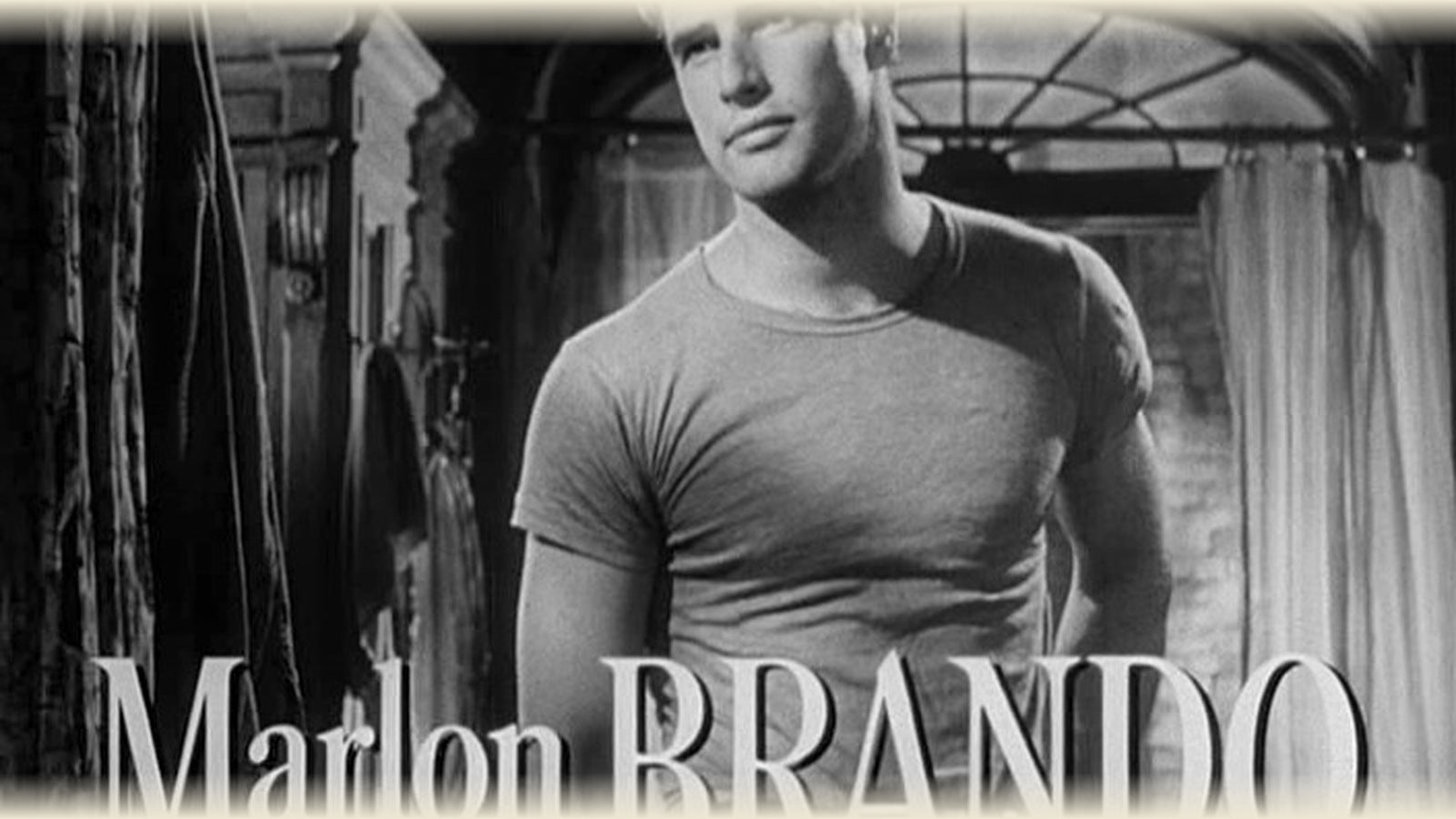
Then Marlon Brando wore one in A Streetcar Named Desire in 1951.
Costume designer Lucinda Ballard cut it deliberately skintight. No collar. No tailoring. Cotton stretched over the body. Everything the garment had previously hidden was now, very obviously, the point.
T-shirt sales spiked overnight.
What had been indecent became, almost immediately, magnetic.
Four years later, James Dean wore a white tee with blue jeans and a red jacket in Rebel Without a Cause, and the meaning shifted again. Now it wasn’t just physical — it was young, restless, anti-authority. The t-shirt had an attitude.

A Canvas for a Sentence
The 1960s did the rest.
Screen printing technology made it cheap to put anything on a shirt. Band tees. Protest tees. University tees. “Make Love Not War” across the chest.
Even politicians noticed early — the Dewey presidential campaign’s “Dew-it with Dewey” tee is now in the Smithsonian. The counterculture turned a political trick into a full vocabulary.
A suit tells people you’re employed. A uniform says what institution you belong to. A t-shirt can say almost anything.
It can be cheap or expensive, blank or printed, disposable or the one shirt you keep for fifteen years because it reminds you of something you don’t want to lose.
The t-shirt’s origin isn’t really about a shirt. It’s about how underwear transformed into identity — through war, through cinema, through the cheap miracle of ink on cotton.
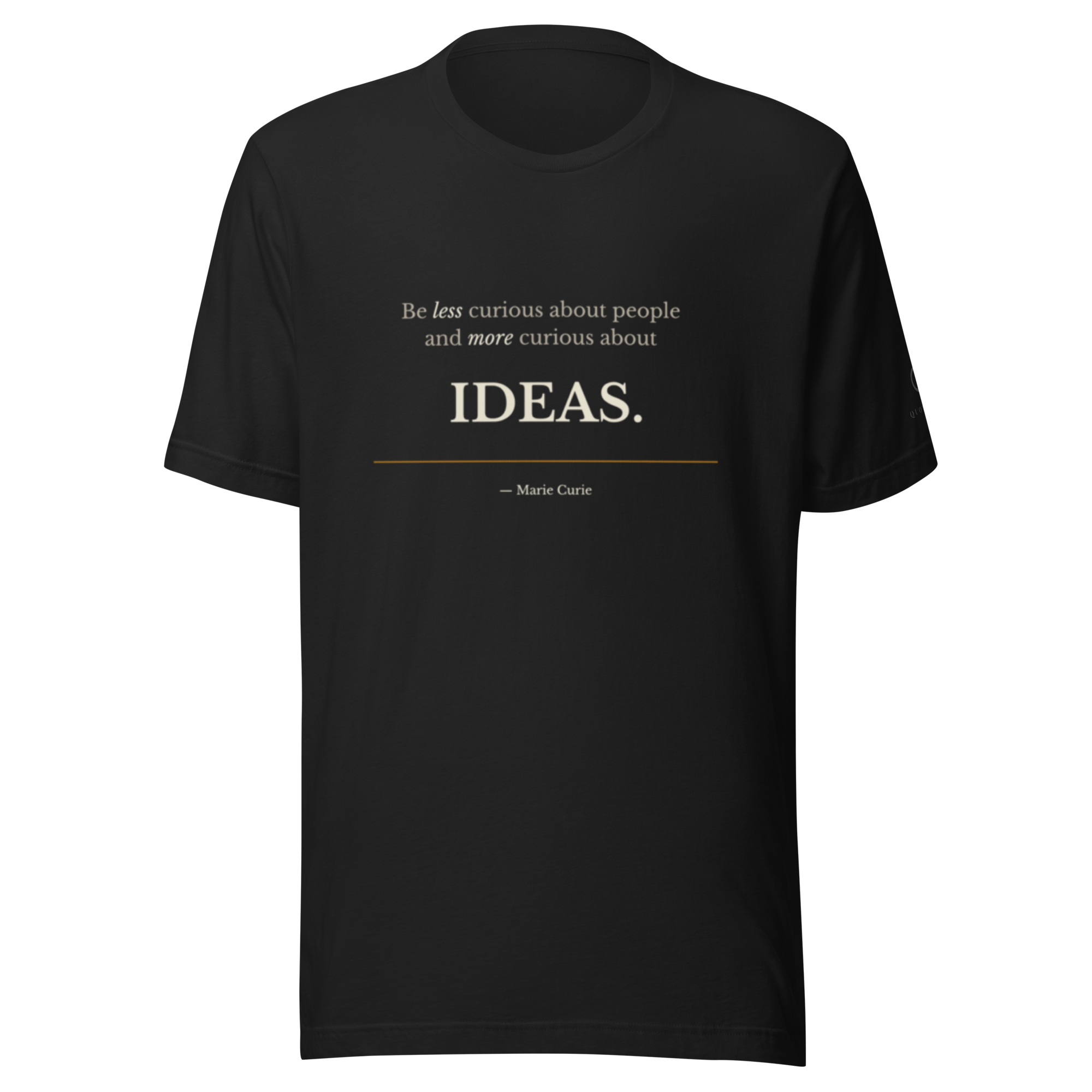
It’s the most democratic surface ever produced for delivering a sentence. The Quoteiac apparel collection exists because of that premise. The surface is the shirt. The sentence is the point. And the sentence should be real — every line in The Heretics collection traces back to a primary source, because a t-shirt that lies about who said something is just noise with a collar.
About the Author
Vickie MacFadden is the founder of Quoteiac. She selects quotes that speak with provenance — verified, resonant, never misattributed. You’ll find her closet full of these shirts, and she’s happy to hand you a card (or a QR code) if you spot her wearing one.
Related reading: Why the shirt itself matters.