Did Winston Churchill Say That? How to Spot a Fake Churchill Quote — and What He Actually Wrote
Verdict: Misattributed — repeatedly. Winston Churchill did not say “If you’re going through hell, keep going.” He did not say “Success is not final, failure is not fatal.” Quote Investigator has traced these and dozens more to other sources, misattribution, or nothing at all. Churchill is one of the most quoted and most misquoted people in the English language. Here’s how to tell the real lines from the false ones — and where to check.
| Subject | Winston Churchill quote attribution |
| Pattern | Dozens of widely circulated quotes traced to other sources or unverifiable |
| Verified resources | International Churchill Society; Richard Langworth bibliography; Quote Investigator |
| Verification status | ⚠️ High misattribution rate — verify before repeating |
Winston Churchill did not say “If you’re going through hell, keep going.” He did not say “Success is not final, failure is not fatal.” He almost certainly did not say “You have enemies? Good. That means you’ve stood up for something.” Quote Investigator has traced each of these — and dozens more widely circulated as Churchill’s — to other sources, to misattribution, or to thin air. Churchill is one of the most quoted people in the English language and one of the most misquoted. The two facts are directly related.
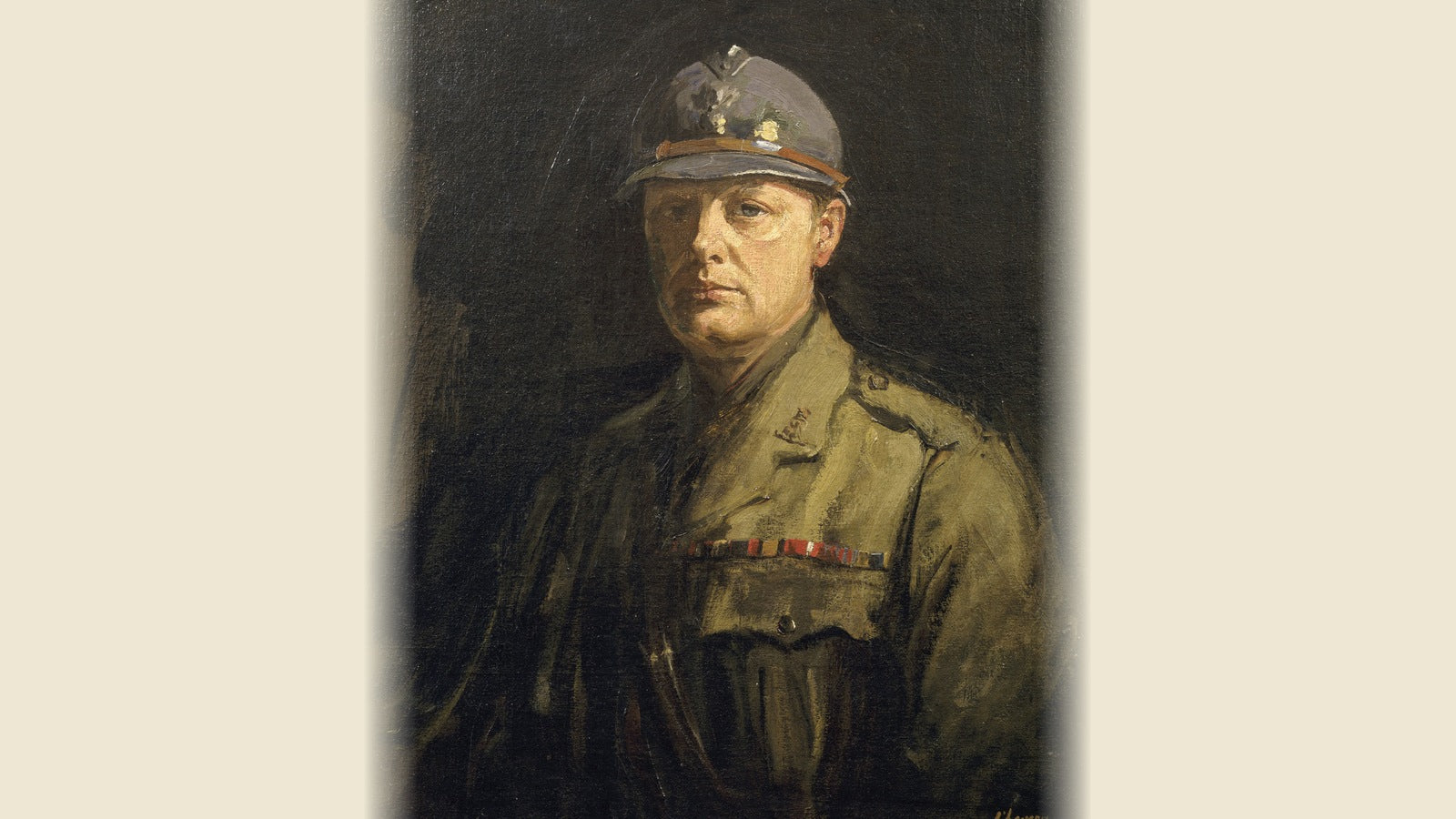
(Pictured: Winston Churchill in 1916, during his service as Lieutenant Colonel of the 6th Royal Scots Fusiliers. Portrait by John Lavery.)
In this piece:
- Why Churchill became a misattribution magnet — the specific dynamics that make it happen
- How to tell a real Churchill line from a false one
- What Churchill actually wrote about adversity, enemies, and persistence
- The database that tracks it all
The International Churchill Society maintains an active list of misattributed quotes. The Richard Langworth collection — Langworth has spent decades as the leading Churchill bibliographer — flags dozens more. Quote Investigator has published detailed traces for the most widely circulated false attributions. The pattern is consistent: a real or plausible Churchill sentiment circulates without a source, gets repeated in a speech or motivational context, and within a decade appears in print attributed to Churchill. The attribution then becomes the citation.
How Misattribution Works at Scale
Churchill became a misattribution target for specific, identifiable reasons. He was prolific — his published output runs to millions of words across speeches, journalism, memoirs, and correspondence. He was witty, and his wit was documented and famous in his own lifetime. He was on the right side of history in a way that retrospectively lent authority to anything he might have said. And he is dead, which means he cannot correct the record.
The mechanism Quote Investigator describes repeatedly is “gravitational misquotation”: witty or resonant lines with no clear source get attributed to figures known for wit and resonance — Churchill, Mark Twain, Oscar Wilde, Abraham Lincoln. These four names appear on the misattribution lists of virtually every quote research organization. They are the black holes of the quote internet: anything that sounds like something they could have said eventually gets pulled into their orbit. For the same misattribution machine at work — this time on Nietzsche, see the parallel investigation.
The “If you’re going through hell” line is a clean example. Quote Investigator’s trace — published and updated — finds no Churchill source. The earliest located instances, from the 1980s and 1990s, appear without attribution or with uncertain sourcing. It first appears reliably attributed to Churchill around 2000. No speech, no letter, no contemporaneous record supports it. The ICS does not include it in Churchill’s verified works. Langworth does not include it. It is almost certainly not Churchill’s.
The “Success Is Not Final” Case
“Success is not final, failure is not fatal: it is the courage to continue that counts” is one of the most widely circulated Churchill attributions — and the ICS explicitly flags it as unverified. Quote Investigator’s trace finds the earliest known version in a 1938 Budweiser advertisement. Churchill’s verified wartime speeches contain related sentiments — his actual words about persistence in adversity are documented — but this particular formulation does not appear in his corpus. The advertising origin is more interesting than the misattribution, though neither fact is widely known.
What Churchill actually said about persistence is worth quoting. From his address at Harrow School, October 29, 1941 — one of his most famous speeches, often misquoted as “Never, never, never give up”:
“Do not let us speak of darker days: let us speak rather of sterner days. These are not dark days; these are great days — the greatest days our country has ever lived; and we must all thank God that we have been allowed, each of us according to our stations, to play a part in making these days memorable in the history of our nation.”
The actual speech is about collective endurance and historical meaning — more complex, more interesting, and considerably less suitable for a motivational poster than the version in circulation. The version in circulation is not Churchill’s.
How to Verify a Churchill Quote
There is a working method. The International Churchill Society at winstonchurchill.org maintains a “Never Said” section updated by Langworth. Quote Investigator publishes primary-source traces for individual attributions. The Churchill papers at the Churchill Archives Centre in Cambridge are the primary documentary record — searchable, and used by serious researchers. Langworth’s Churchill by Himself: The Definitive Collection of Quotations (2008, revised 2011) is the bibliographic standard; if a quote is not in it, that is evidence.
The test is straightforward: can you name the speech, the date, the letter, the book? If the answer is “I’ve seen it everywhere,” that is not a source. Everywhere is where misattributions live.
What Churchill Actually Wrote
Churchill’s verified output is extensive and quotable without any fabrication. His 1940 “We shall fight on the beaches” speech — delivered to the House of Commons on June 4, 1940, and broadcast on BBC radio — is fully documented. His 1941 “Few” speech (“Never in the field of human conflict was so much owed by so many to so few”), delivered August 20, 1940, is in Hansard. His Nobel Prize in Literature was awarded in 1953, for “his mastery of historical and biographical description as well as for brilliant oratory in defending exalted human values.” The Swedish Academy was not awarding a prize to a misattributed corpus. Churchill was a genuine literary figure — prolific, documented, and capable of producing lines that hold up without assistance.
That is the Quoteiac position on every name in the catalog: the real record is interesting enough. The Heretics collection carries writers and thinkers who said things worth printing. Every line is traced. The Adams “Facts Are Stubborn Things” tee carries a line from his 1770 defense of the British soldiers after the Boston Massacre — primary source, documented, the opposite of comfortable. The Stoic Wisdom collection carries Marcus Aurelius from the Meditations, Seneca from the Letters — manuscript traditions that have been checked. The standard is not the famous name. The standard is the source.
Related reading: Why we check quote attribution.