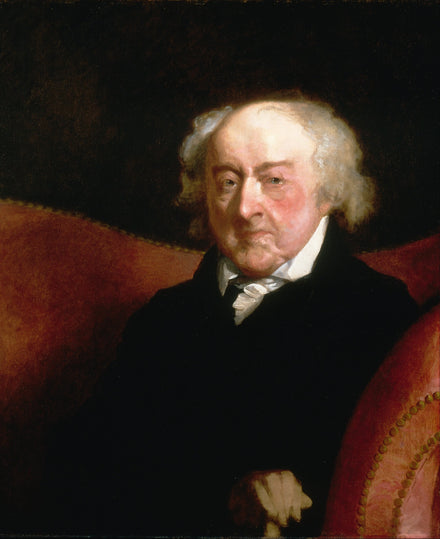
John Adams, 2nd President of the United States.
John Adams
John Adams was the lawyer who defended British soldiers after the Boston Massacre, the diplomat who helped end the Revolution, and the second President who governed without a party willing to follow him. He was also the man who wrote some of the most precise sentences of the founding era — and believed, uncomfortably, in the evidence.
Words We Carry
Every quote here is traced to a documented source. How we verify →
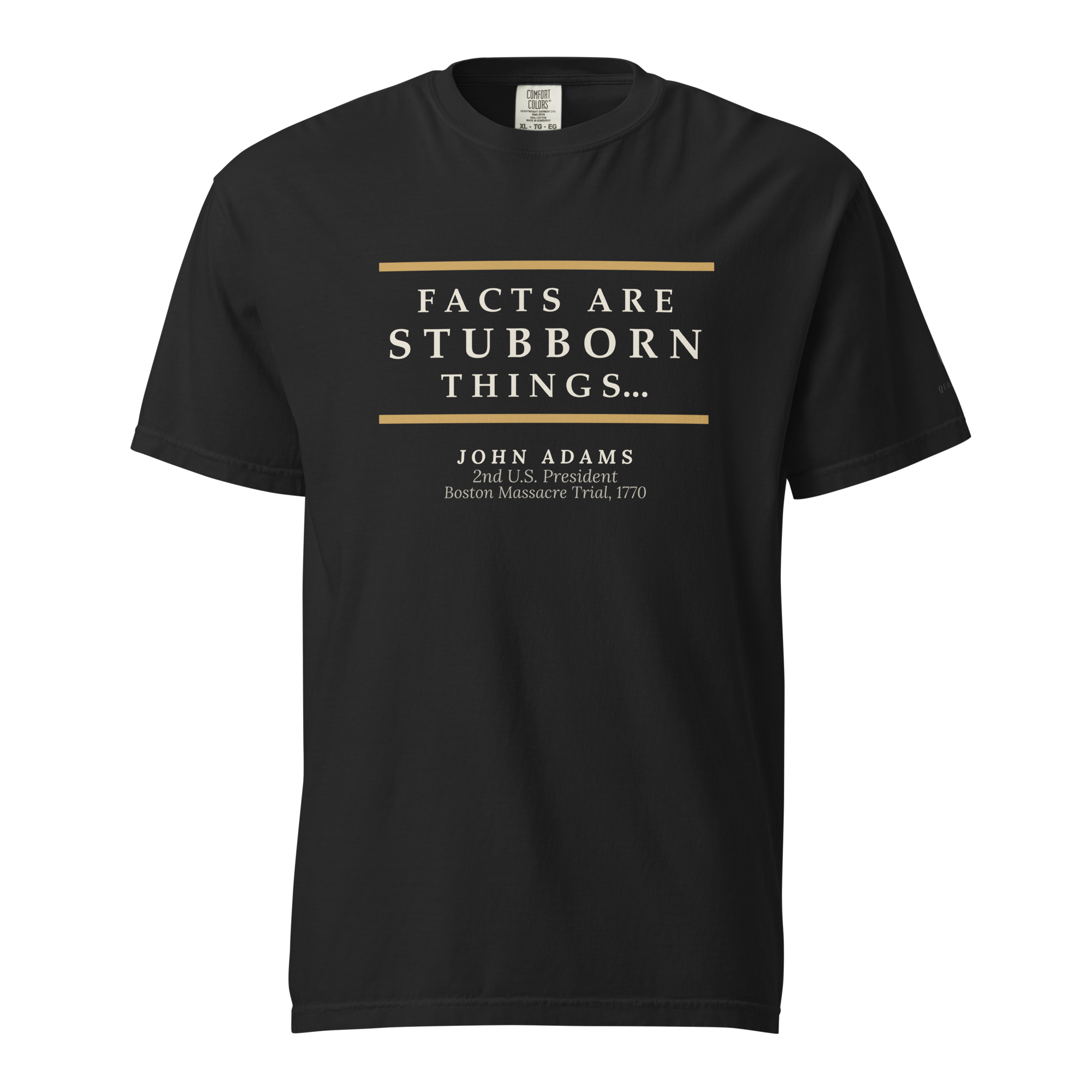
“Facts are stubborn things…”
Closing argument for the defense, Rex v. Wemms (Boston Massacre trials), December 1770
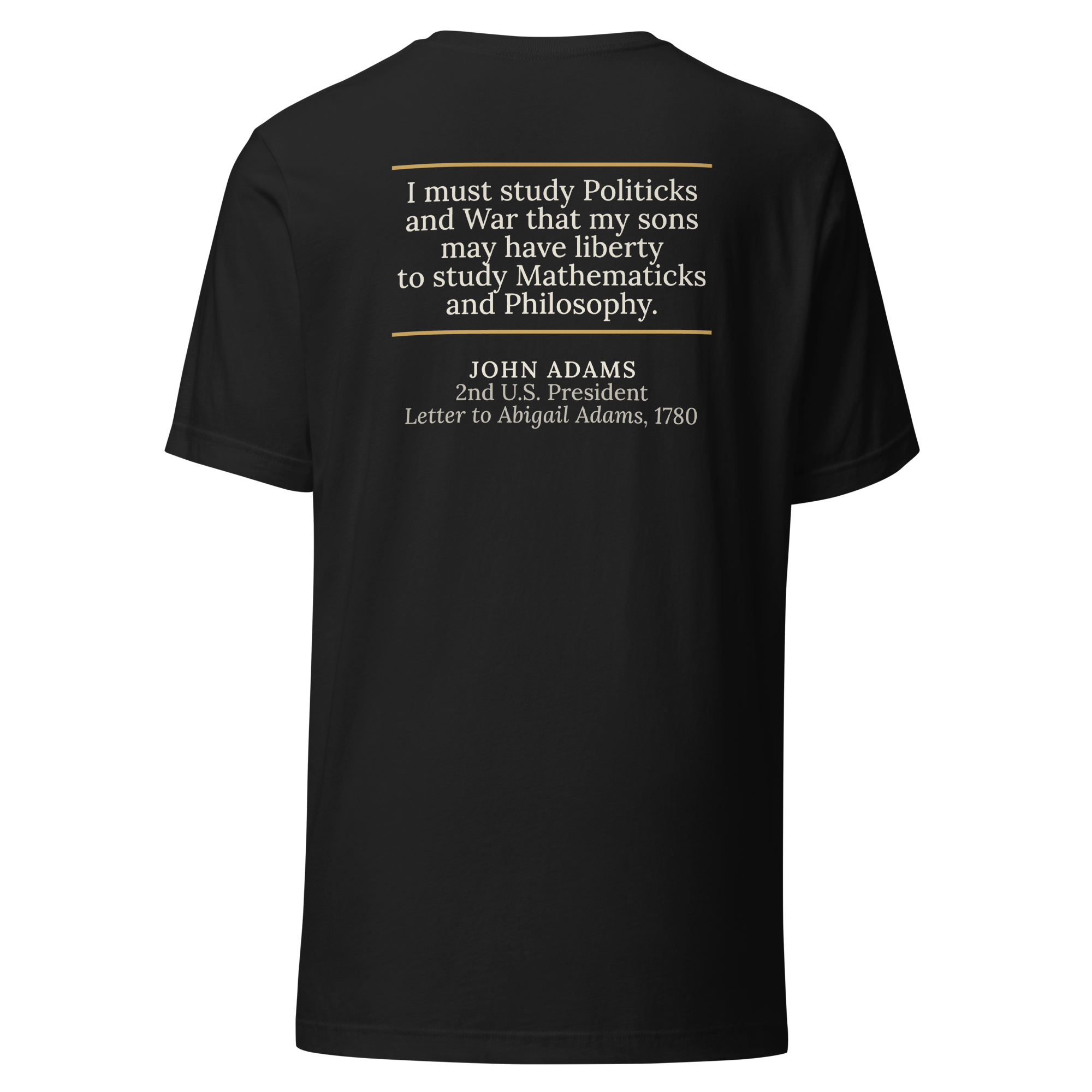
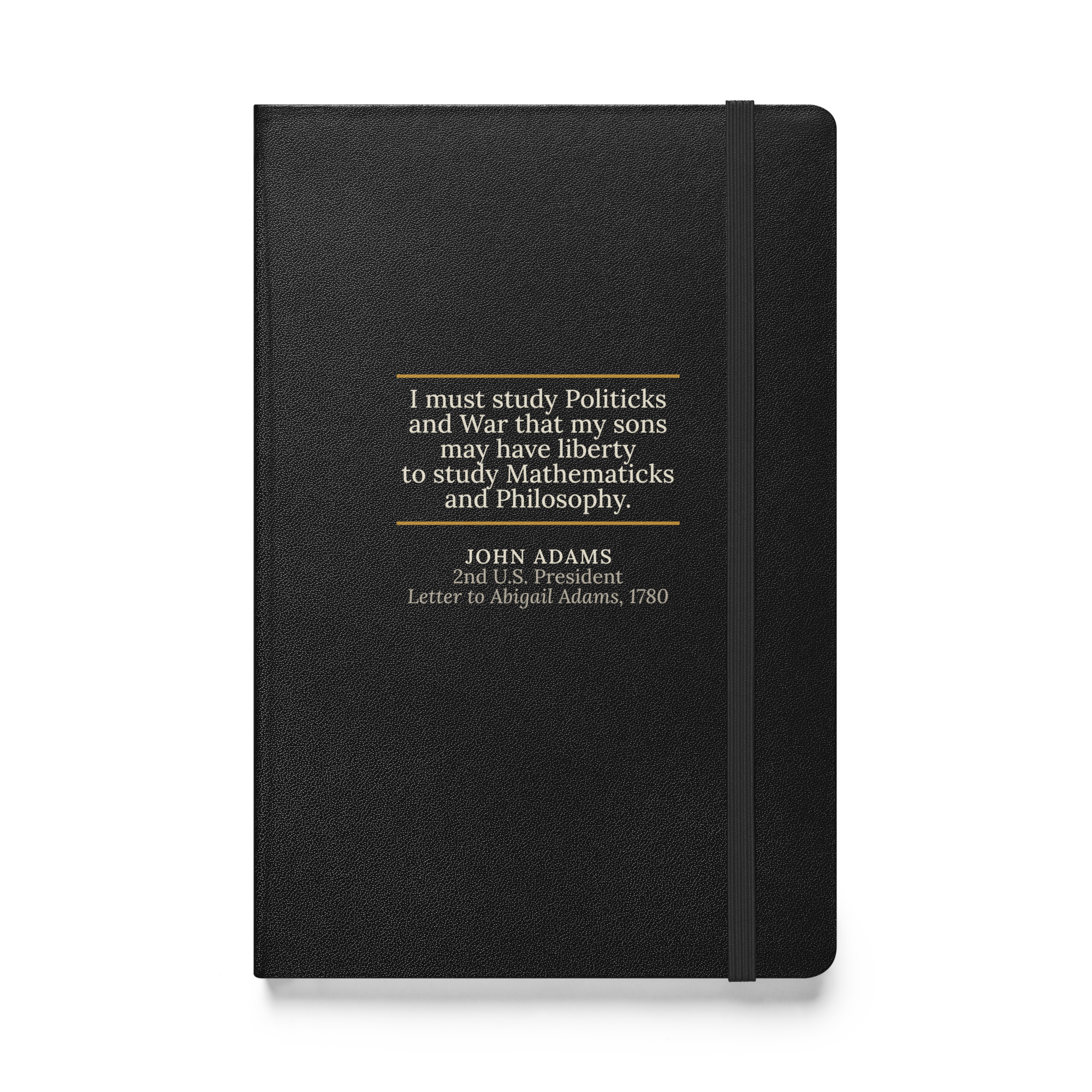
“I must study Politicks and War that my sons may have liberty to study Mathematicks and Philosophy.”
Letter to Abigail Adams, 1780 (Adams Family Papers, Massachusetts Historical Society)
About John Adams
John Adams wanted to be a philosopher. He became, instead, one of the people who made philosophy possible for everyone who came after him. He was a Harvard-educated lawyer from Braintree, Massachusetts — meticulous, argumentative, constitutionally incapable of flattering anyone — and he understood before most of his peers that the work of building a republic was not glorious. It was procedural. It was thankless. It required someone willing to be disliked for saying the right thing at the wrong moment.
On December 4, 1770, he stood before a Boston jury and delivered the closing argument in the trial of British soldiers charged after the Boston Massacre. Adams was a committed patriot. He had agreed to defend the soldiers anyway — because he believed no accused man should go unrepresented, regardless of the political cost, and because he thought the principle was worth more than the popularity. Six of the eight soldiers were acquitted. Two were convicted of manslaughter. Adams considered the case one of the most important things he ever did — more important, by his own account, than most of what he accomplished in office.
He served as the first Vice President under Washington and the second President, governed through an undeclared naval war with France, and lost his re-election to Thomas Jefferson in 1800. The two men spent years in bitter political silence. Then, in 1812, after Dr. Benjamin Rush brokered a reconciliation, they began to write to each other again — on politics, philosophy, religion, and old age. They corresponded for fourteen years. On July 4, 1826 — the fiftieth anniversary of the Declaration of Independence — both men died. Adams’s reported last words were “Thomas Jefferson still survives.” Jefferson had died hours earlier.
The Work
From the Journal
What the Founders Actually Said (And Why It Matters in 2026)
Adams, Madison, Jefferson, Roosevelt — what they actually wrote, and what the internet got wrong.
ReadThe Declaration of Independence Is Great Literature — Here’s How It Works
The document Adams helped bring into the world — and why the sentences hold.
ReadIn Their Orbit